Stacey Higginbotham Concludes Influential Internet of Things Media Venture After Seven Years of Industry Analysis

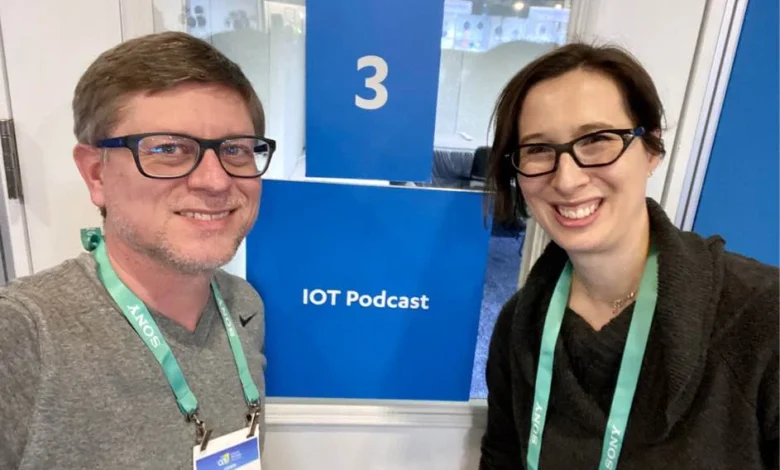
Stacey Higginbotham, a veteran technology journalist and a preeminent voice in the field of connected devices, has officially announced her departure from the weekly "Stacey on IoT" newsletter and podcast. The move, effective as of late August 2023, marks the conclusion of a seven-year independent media operation that became a cornerstone for industry professionals, engineers, and consumer electronics enthusiasts. Higginbotham, who previously served as a senior editor at Fortune, cited a need to step back from the relentless pace of daily news cycles to focus on broader systemic issues within the technology sector, including cybersecurity and privacy.
The cessation of the weekly newsletter and podcast represents a significant shift in the landscape of niche technology journalism. Since its inception in 2016, "Stacey on IoT" provided deep-dive analysis into the "Internet of Everything," a period during which the number of connected devices globally grew from approximately 6.4 billion to more than 15 billion. Higginbotham’s work was characterized by a focus not merely on the technical specifications of new hardware, but on the social, economic, and ethical implications of embedding computing and connectivity into everyday objects.
A Chronology of Independent Tech Journalism
The trajectory of Stacey on IoT mirrors the maturation of the smart home and industrial internet sectors. Higginbotham’s transition from a secure editorial position at a major publication to an independent creator was initially met with skepticism by industry peers. However, the timing coincided with a massive influx of venture capital into IoT startups and the aggressive expansion of ecosystem players like Amazon, Google, and Apple.
- 2012–2015: Higginbotham begins intensive coverage of the smart home while at Fortune and Gigaom, identifying early risks associated with corporate surveillance and the lack of interoperability between devices.
- 2016: Launch of the "Stacey on IoT" newsletter and podcast. This period saw the rise of voice assistants, with the Amazon Echo and Google Home becoming central hubs for the domestic IoT market.
- 2017–2019: The venture expands, securing major industry sponsors. Coverage shifts toward the Industrial Internet of Things (IIoT), edge computing, and the rollout of 5G networks as the backbone for future connectivity.
- 2020: The COVID-19 pandemic accelerates the adoption of connected health devices and remote monitoring technologies. Higginbotham and co-host Kevin Tofel continue coverage through major industry events like CES, despite the shift to virtual formats.
- 2021–2022: The emergence of the Matter standard becomes a primary focus. Higginbotham provides critical analysis of the industry’s attempt to solve the fragmentation issues that had plagued the smart home for a decade.
- August 2023: Final publication of the weekly newsletter. Higginbotham announces a consulting role with the Consumer Reports Innovation Lab, focusing on the security and privacy of connected products.
The Evolution of the IoT Market: 2016–2023
When Higginbotham launched her independent venture in 2016, the IoT market was often characterized as a "Wild West" of incompatible protocols and security vulnerabilities. According to data from IDC and Statista, the global spending on IoT in 2016 was approximately $737 billion. By 2023, that figure surpassed $1 trillion, reflecting the ubiquity of the technology in manufacturing, logistics, and consumer lifestyles.
Throughout this growth period, Higginbotham’s reporting highlighted a recurring tension: the trade-off between convenience and autonomy. In 2016, the Mirai botnet attack demonstrated how insecure IoT devices—specifically cameras and DVRs—could be weaponized to take down major portions of the internet infrastructure. This event validated Higginbotham’s long-standing insistence that security must be foundational rather than an afterthought in product design.
As the industry moved toward 2023, the focus shifted from hardware sales to recurring revenue models. Higginbotham was a vocal critic of the "subscription-ification" of hardware, where companies began charging monthly fees for features that were previously included in the purchase price. This shift in business strategy, combined with the frequent "sunsetting" of cloud-dependent devices—where products become useless "bricks" once a company shuts down its servers—became a central theme of her later work.
Critical Analysis of Industry Implications
The departure of a specialized journalist like Higginbotham highlights a growing challenge in the media landscape: the difficulty of maintaining deep, critical expertise in a rapidly evolving field. Her analysis often went beyond the "specs" to address the Environmental, Social, and Governance (ESG) impacts of technology.
The Privacy and Surveillance Paradox
One of Higginbotham’s most consistent contributions was the interrogation of data-sharing practices. As devices became more sophisticated, the potential for corporate and government surveillance increased. The integration of microphones, cameras, and biometric sensors into the home environment created a "data grab" economy. Analysts suggest that the loss of Higginbotham’s regular oversight may leave a vacuum in the scrutiny of how these data points are leveraged by tech giants.
Industrial Efficiency and Labor
Beyond the consumer smart home, Higginbotham tracked the deployment of IoT in the workplace. While these technologies promised "optimization" and "bottom-line efficiency," she pointed out the potential for these tools to be used for the excessive monitoring of employees. The use of sensors to track worker movement and productivity has raised significant ethical questions regarding labor rights in the digital age—a topic Higginbotham explored with increasing frequency toward the end of her newsletter’s run.
The Burnout Factor in Tech Reporting
Higginbotham’s decision to step back also reflects a broader trend of "burnout" among technology journalists. The constant demand for "daily and immediate news" often precludes the ability to engage in long-term, investigative reporting. In her final address to readers, she noted that the relentless pace had led to a sense of cynicism that hindered her ability to appreciate genuine innovation. This sentiment is echoed by many in the industry who find the hype cycles of technologies like AI and the Metaverse to be exhausting and often disconnected from practical utility.
Future Directions and Official Transitions
While the weekly newsletter has ended, Higginbotham’s influence on the sector is expected to continue through her new role at Consumer Reports. This transition marks a move from reporting on the industry to actively shaping the standards by which it is judged. The Consumer Reports Innovation Lab is at the forefront of developing a "Digital Standard" for products, which evaluates privacy, security, and consumer rights.
Industry reactions to the news have been a mix of professional respect and concern for the future of independent tech analysis. "Stacey was one of the few voices who could bridge the gap between deep technical engineering and the social consequences of technology," noted one industry analyst. "Her absence in the weekly news cycle will be felt by those who relied on her to cut through the marketing jargon of the major tech firms."
Higginbotham has indicated that she will maintain a presence on the Bluesky social media platform and may contribute occasional freelance pieces or "special edition" newsletters when significant industry shifts occur. Her focus will remain on cybersecurity and the fundamental right to privacy in an increasingly connected world.
The Legacy of Stacey on IoT
The legacy of "Stacey on IoT" is defined by its commitment to the idea that "adding computing to everything" is a profound social experiment. By documenting the successes and failures of the IoT industry for seven years, Higginbotham provided a historical record of a transformative era in human history.
As the industry moves into the era of "AIoT" (the integration of Artificial Intelligence and the Internet of Things), the questions she raised remain more relevant than ever. How do we ensure that connected devices are secure? How do we protect the privacy of the domestic sphere? And how do we build a sustainable business model for hardware that does not rely on the exploitation of user data?
While the weekly podcast and newsletter have reached their conclusion, the framework Higginbotham established for evaluating connected technology continues to inform the work of engineers, policymakers, and consumers. Her move to a consulting and advocacy role suggests that while she is stepping back from the newsroom, her mission to make connected devices "safer, more secure, and better for everyone" is entering a new, perhaps more influential, chapter.