Microsoft Unveils Record-Breaking 570+ Security Patches in July, Citing AI for Accelerated Vulnerability Discovery

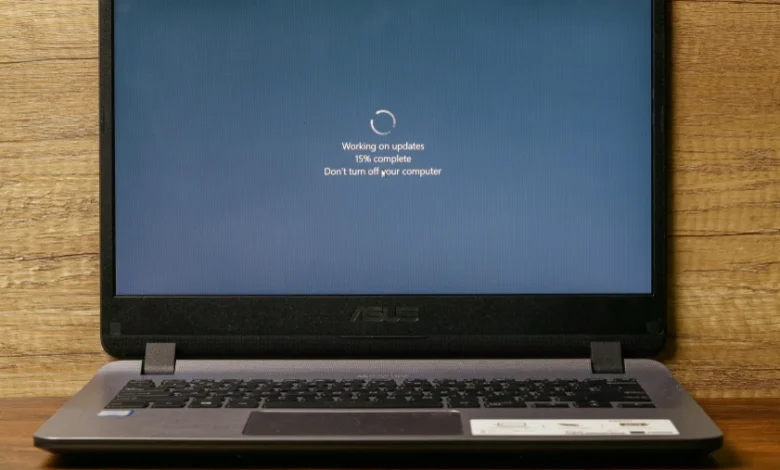
Microsoft Corp. today released an unprecedented volume of software updates, addressing at least 570 security vulnerabilities across its Windows operating systems and other software. This staggering figure represents nearly triple the number of fixes included in last month’s already record-smashing Patch Tuesday release, signaling a significant shift in the landscape of cybersecurity. The software giant attributes this burgeoning patch count directly to the advancements in artificial intelligence, which are increasingly aiding in the discovery of new vulnerabilities at an accelerated pace. This development underscores a pivotal moment where AI’s capabilities are profoundly influencing both the defensive and offensive aspects of digital security, pushing software vendors to adapt their patching strategies rapidly.
A Surge in Patches: The AI Factor
The sheer scale of this month’s security release is unparalleled in recent memory, with Microsoft pushing out fixes for over 570 distinct security flaws. This massive update package impacts a wide array of Microsoft products, from the ubiquitous Windows operating systems to critical enterprise software components. The company has explicitly stated that the significant increase in vulnerability discoveries is a direct consequence of artificial intelligence tools being deployed to scour codebases for potential weaknesses.
Pavan Davuluri, Microsoft Executive Vice President, articulated this evolving reality in a blog post on July 9, anticipating a "higher volume of security updates included in each security release." Davuluri elaborated, "The pace of vulnerability discovery is changing with advances in AI making it possible to find more issues, faster, across more code, with new mechanisms that can accelerate both discovery and analysis." This statement confirms that the industry is entering a new era where AI-powered analysis is becoming a cornerstone of proactive security, fundamentally altering the traditional cadence of vulnerability management.
This trend is not isolated to Microsoft. Cybersecurity experts across the industry have noted a broader shift. Chris Goettl, from Ivanti, observed that other major software developers are also increasing their patch frequency. Adobe, for instance, announced a move to twice-monthly security bulletins, to be published on the second and fourth Tuesdays of each month, also citing AI as a factor in accelerating their patch cycles. Companies like Cisco, Mozilla, and Oracle are similarly shipping updates more frequently. Google’s patch batches in June 2026 alone totaled more than 900 security fixes, further illustrating the widespread impact of AI-driven vulnerability discovery and the growing complexity of securing modern software ecosystems. This collective industry response highlights a shared recognition that the traditional, slower cycles of vulnerability identification and remediation are no longer sufficient in the face of AI-accelerated threats.
Critical Vulnerabilities and Exploited Zero-Days
Among the hundreds of vulnerabilities addressed in July’s Patch Tuesday, nearly 60 were assigned a "critical" severity rating. This designation is reserved for flaws that pose the highest risk, meaning that malicious actors or malware could exploit them to gain remote control over a Windows device with minimal or no interaction from the user. Such vulnerabilities represent direct pathways for attackers to compromise systems, steal data, or deploy further malicious payloads, making immediate patching paramount for maintaining system integrity and user security.
Furthermore, Microsoft tackled three "zero-day" flaws, which are particularly concerning as they are vulnerabilities that were either publicly known or actively being exploited by attackers before a patch was available. Two of these zero-day weaknesses are already being exploited in the wild, underscoring the immediate threat they pose.
Specifically, the zero-day vulnerabilities include:
- CVE-2026-56155: An Elevation of Privilege (EoP) bug affecting Active Directory Federation Services (ADFS). ADFS is a critical component in enterprise environments, providing single sign-on capabilities for users to access applications across different networks. An EoP flaw in ADFS could allow an attacker to escalate their privileges within an organizational network, potentially gaining control over sensitive resources and user accounts.
- CVE-2026-56164: Another Elevation of Privilege vulnerability found in Microsoft SharePoint. SharePoint is widely used for collaboration, document management, and intranet portals in businesses. Exploiting an EoP flaw in SharePoint could grant an attacker elevated access to sensitive corporate data, manipulate documents, or even compromise the entire SharePoint infrastructure. This particular vulnerability was already being exploited in the wild and had been added to CISA’s Known Exploited Vulnerabilities list on July 1, days before Microsoft’s official patch release.
- CVE-2026-50661: A security feature bypass in Windows BitLocker. BitLocker is Microsoft’s full-disk encryption feature designed to protect data by encrypting entire volumes. This bypass flaw could potentially allow attackers to gain access to encrypted data if they have physical access to the device. While Microsoft has stated that this bug has been detailed publicly, they are not aware of any active exploitation in the wild yet. However, the potential for physical access attacks makes it a significant concern for devices that might be stolen or left unattended.
In addition to these critical and zero-day vulnerabilities, the July update package addressed approximately 250 other Elevation of Privilege flaws, emphasizing the persistent challenge of securing system privileges against unauthorized escalation. Elevation of Privilege vulnerabilities are a common target for attackers once they have an initial foothold on a system, allowing them to gain higher access rights necessary for more impactful attacks, such as data exfiltration or system compromise.
Jack Bicer, director of vulnerability research at Action1, specifically highlighted CVE-2026-48561, a remote code execution (RCE) flaw in Microsoft Copilot, Microsoft’s AI-powered assistant. This vulnerability carries a high CVSS (Common Vulnerability Scoring System) threat score of 9.6 out of 10, indicating severe risk. An unauthorized attacker could exploit this bug to execute arbitrary code over the network. Microsoft detailed a potential exploitation scenario where an attacker could host a malicious website that causes Microsoft Edge for Android to automatically send crafted prompts to Copilot when a user visits the site, leading to remote code execution. The emergence of high-severity flaws in AI-powered tools like Copilot further underscores the new attack vectors introduced by integrating advanced AI capabilities into widely used software.
The Evolving Landscape of Exploitability: AI’s Dual Edge
While AI is proving to be a powerful ally in discovering vulnerabilities, it simultaneously presents a formidable challenge by accelerating the development of exploits. The same AI capabilities that can efficiently scan code for flaws can also be leveraged by malicious actors to quickly devise working exploits for newly disclosed or even unpatched software weaknesses. This creates a rapidly evolving threat landscape where the window between vulnerability disclosure and active exploitation is shrinking dramatically.
Microsoft has historically used an "exploitability index" to gauge the likelihood that attackers will be able to develop a reliable exploit for a given vulnerability. This index, a prediction of how quickly and easily a flaw might be weaponized, has served as a crucial guide for IT professionals in prioritizing their patching efforts. However, with the advent of AI, the efficacy of this human-centric prediction model is now under scrutiny.
Satnam Narang, a senior staff research engineer at Tenable, argues that Microsoft’s exploitability index needs significant revision to keep pace with the machine speed of AI-powered exploit development. Narang points to the SharePoint zero-day (CVE-2026-56164) as a prime example of this disconnect. Microsoft initially rated this flaw as "less likely" to be exploited. Yet, the vulnerability was actively exploited in the wild and subsequently added to CISA’s Known Exploited Vulnerabilities list on July 1, well before Microsoft’s Patch Tuesday release. This discrepancy highlights a critical lag in traditional assessment methodologies.
Further evidence supporting Narang’s argument comes from the findings of Anthropic’s Red Team. Their research into known vulnerabilities (n-days) demonstrated how fragile the current exploitability assessment system has become. Anthropic’s Mythos Preview model, an advanced AI, was able to produce proof-of-concept exploits for 13 out of 14 vulnerabilities that Microsoft had rated as "Exploitation Less Likely" or "Exploitation Unlikely." This alarming success rate from an AI model underscores the profound shift in the attacker’s capabilities.
Narang summarized the implications, stating, "What this means is that our way of looking at Patch Tuesday has changed, because the exploitability index is centered around humans, not AI tools, and as these tools continue to improve, defense needs to improve alongside it." This analysis suggests that the industry must urgently re-evaluate and re-tool its vulnerability assessment and prioritization strategies to account for the accelerated pace of AI-driven exploit generation. The traditional timelines for exploit development are being compressed, demanding a more agile and responsive defensive posture.
Broader Industry Trends: A Shifting Patch Cadence
The record-breaking patch numbers from Microsoft are not an isolated incident but rather indicative of a broader industry trend. As noted by Chris Goettl of Ivanti, several other major software makers are also increasing their patch cadence. Adobe, for instance, has shifted to a twice-monthly security bulletin schedule, publishing updates on the second and fourth Tuesdays of each month, explicitly citing AI as a factor in accelerating their patch cycles. This mirrors Microsoft’s acknowledgment and suggests a widespread impact of AI on the software security lifecycle.
Beyond Adobe, companies like Cisco, Mozilla, and Oracle are also shipping updates more frequently, reflecting a collective response to the escalating threat landscape. Google’s security updates in June 2026, which totaled over 900 security fixes, further underscore this accelerated pace. This industry-wide shift is driven by a confluence of factors: the increasing complexity of modern software, the growing sophistication of cyber threats, and the emergent capabilities of AI in both discovering and exploiting vulnerabilities.
For IT departments and system administrators, this accelerated patch cadence translates into a significantly increased workload. More frequent and larger updates necessitate more rigorous testing, planning, and deployment strategies to avoid disruptions. The risk of "patch fatigue" among administrators is a growing concern, as they grapple with the sheer volume of updates while striving to maintain system stability and business continuity. The implications extend to the need for continuous education and adaptation for cybersecurity professionals, who must stay abreast of these rapidly evolving threats and the tools available to combat them.
Recommendations for Users and Administrators
Given the unprecedented volume of patches released this month and the inherent complexities of integrating such extensive updates, both individual users and organizational IT departments should approach this Patch Tuesday with heightened caution and strategic planning. While applying security updates promptly is generally a best practice, the sheer scale of this release introduces a greater potential for unforeseen system stability issues or software conflicts.
For individual users, it is always a prudent measure to back up your Windows system and critical data before applying any significant operating system updates. This simple step can prevent data loss in the rare event of a problematic patch. Furthermore, given the gigantic patch count released today, it may be wise for end users to wait a few days before applying these fixes. This allows time for the broader cybersecurity community and early adopters to identify and report any widespread issues that might arise from the updates. If critical bugs or stability problems are discovered, Microsoft often issues out-of-band patches or provides workarounds, which waiting a short period can help you avoid.
For enterprise IT administrators, a more structured and cautious approach is highly recommended. Deploying such a massive update immediately across an entire network could introduce significant operational risks. Instead, a phased rollout strategy is advisable. This involves:
- Backup and Snapshot Creation: Ensure comprehensive backups and system snapshots are taken for all critical systems before initiating any patching.
- Testing Environment Deployment: Apply the updates first to a small, representative group of non-production systems or a dedicated testing environment. This allows for thorough testing of critical applications and workflows to identify any regressions, compatibility issues, or performance degradations introduced by the patches.
- Staged Rollout: After successful testing, deploy the updates to a limited pilot group of production machines. Monitor these systems closely for any anomalies.
- Gradual Production Deployment: Only after confirming stability and compatibility in the pilot phase should the updates be gradually rolled out to the broader production environment, allowing for monitoring and quick rollback if necessary.
- Prioritization: Focus on critical vulnerabilities and zero-day exploits first, ensuring these highest-risk items are addressed promptly, even within a staged rollout.
This methodical approach helps mitigate the risks associated with large-scale patching, ensuring that security improvements do not inadvertently compromise operational stability. The changing pace of vulnerability discovery and exploitation, largely driven by AI, necessitates a more adaptive and resilient approach to patch management, prioritizing both security and continuity.
In conclusion, Microsoft’s July 2026 Patch Tuesday marks a significant inflection point in cybersecurity. The record-breaking number of fixes, driven by AI-powered vulnerability discovery, underscores a new reality where the speed of threat evolution is matched by an unprecedented pace of defensive action. While this increased vigilance is crucial, it also brings challenges, particularly concerning the accuracy of exploitability assessments and the operational burden on IT professionals. As AI continues to reshape the cybersecurity landscape, continuous adaptation, strategic planning, and a renewed focus on resilient security practices will be paramount for protecting digital assets against an increasingly sophisticated array of threats.