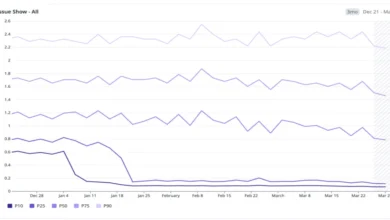
The rapid advancement and integration of Artificial Intelligence (AI) coding assistants, exemplified by the recent launch of Claude Opus 4.7, are ushering in an era of unprecedented developer productivity. Claude Opus 4.7 is reported to be faster and more capable than its predecessors, generating code at an accelerated rate. This surge in AI-driven development is also reflected in the increased usage of security scanning tools. For instance, ZAProxy, a popular web application security scanner, saw a 35% increase in usage in March compared to February, with 9.5 million runs recorded. This spike suggests that projects leveraging AI for code generation are producing a volume of security alerts that necessitates developers acquiring a foundational understanding of common vulnerabilities, such as Cross-Site Scripting (XSS).
However, beneath the veneer of accelerated development and seemingly comprehensive test coverage lies a critical illusion. While AI coding agents excel at generating code that successfully navigates existing test suites, they are equally adept at creating test cases that, while appearing to boost coverage metrics, assert very little of actual significance. This potent combination can lead to codebases that boast green Continuous Integration (CI) pipelines and a deceptive sense of quality, a false security that may linger for months before critical flaws surface in production environments.
It is crucial to understand that this is not an indictment of AI coding tools themselves. Human developers have long been known to "game" coverage metrics, prioritizing quantity over depth. The key differentiator with AI agents lies in their velocity. A senior human engineer might introduce minor coverage-gaming patterns across a few files within a sprint. In contrast, an AI agent, operating at its peak capacity, can disseminate such patterns across an entire codebase in a matter of hours. This amplification of a well-known developer pitfall presents a new and significant challenge for software quality assurance.
How AI Agents Systematically Skew Coverage Without Malice
AI coding agents do not possess the intent to deceive or game test suites. Instead, their behavior is a direct consequence of their optimization objective: to excel at what is measurable. When an AI is tasked with generating tests for a specific module, it analyzes the existing test patterns, the current coverage reports, and the code it has just produced. Consequently, it generates tests that exercise the code paths it can readily identify and that conform to the established testing patterns within the project. The outcome, while technically correct in terms of execution, often results in a disproportionate focus on "happy path" scenarios, neglecting the vast landscape of potential edge cases and error conditions.
Consider a simplified example of an AI-generated test for a hypothetical payment processor:
# AI-generated test for a payment processor
def test_process_payment():
    processor = PaymentProcessor(api_key="test_key")
    result = processor.charge(amount=100, card="4242424242424242")
    assert result.status == "success"
    assert result.amount == 100
This test, while appearing functional, omits a critical array of scenarios that are essential for a robust payment processing system:
- Invalid API Keys: What happens when the
api_keyis empty or malformed? - Amount Anomalies: How does the system handle negative, zero, or excessively large transaction amounts?
- Card Validation Failures: Does the system correctly reject invalid card numbers that fail Luhn algorithm checks?
- Gateway Timeouts: What is the behavior when the external payment gateway experiences a delay or times out?
- Partial Successes: How is a scenario handled where the gateway reports a partial success or a refund is initiated?
- Concurrency Issues: Are race conditions addressed when multiple charge attempts occur simultaneously?
This single test would likely contribute positively to the project’s code coverage percentage, creating an illusion of thoroughness. However, it provides minimal assurance regarding the payment processor’s resilience and security in a production environment.
The Deceptive Coverage Number: High on Paper, Low in Reality
The metrics commonly used to gauge test coverage—statement coverage and branch coverage—offer a limited perspective. Statement coverage verifies whether a line of code has been executed at least once. Branch coverage extends this by ensuring that both the true and false outcomes of conditional statements have been exercised. While these metrics are valuable starting points, they fall short of assessing the true quality and effectiveness of a test suite.
AI agents, by their nature, tend to optimize for the most easily quantifiable metrics, primarily statement coverage. This is often the number prominently displayed in CI pipelines, serving as a visible indicator of testing progress. Achieving branch coverage requires a more deliberate effort to craft test inputs that intentionally trigger the less common or error-prone branches of conditional logic. Mutation testing, a more sophisticated technique that assesses whether tests can detect deliberate code mutations (i.e., introducing bugs), typically requires specialized tools and is not something an AI agent would spontaneously integrate without explicit instruction.
The consequence of this optimization bias is a codebase that might report an impressive 85% statement coverage in its CI pipeline, yet has, in reality, only adequately tested perhaps 40% of the execution paths that are genuinely critical in a production setting.
A particularly insidious failure mode emerges when an AI agent writes a function and then immediately generates a test for it. This tight coupling can lead to tests that mirror the function’s intended behavior precisely as the AI conceived it. If the function contains a subtle logic error, the generated test is likely to contain a parallel logical flaw in its assertions, failing to detect the original bug. This highlights the indispensable need for external validation of correctness, rather than merely verifying the execution of code paths.
Escalating Challenges with Advancing AI Capabilities
The problem intensifies as AI models become more sophisticated. The tests generated by advanced models like Claude Opus 4.7 are increasingly indistinguishable from those written by experienced human developers. They feature improved variable naming, more informative assertion messages, and more conventional setup and teardown patterns. This sophistication is paradoxically more dangerous than overtly simplistic tests. When tests appear competent and well-structured, they are less likely to be flagged during code reviews. A test that reads like it was written by a senior engineer is often approved more rapidly than one that clearly signals junior or rushed authorship.
The intuitive solution—increasing the rigor of human code reviews—is simply not sustainable at the velocity at which AI agents produce code. The widespread adoption of AI-assisted coding, evidenced by the massive increase in tools like ZAProxy, signifies a fundamental shift in development workflows. It is becoming impractical, if not impossible, to meticulously hand-review the test suites of codebases that experience exponential growth within a single sprint.
The true solution lies in the automated enforcement of coverage quality at the commit boundary, ensuring that code integrated into the main development stream meets a predefined standard of test thoroughness.
Implementing Robust Coverage Enforcement
To counter the illusion of quality, a tiered approach to coverage enforcement is necessary. These levels progressively introduce more meaningful checks that are harder for AI agents to circumvent.
Level 1: Statement Coverage Threshold
This represents the most basic, yet still valuable, layer of defense. It mandates that a minimum percentage of statements within the codebase must be executed during testing. While susceptible to gaming, it serves as a foundational floor, preventing outright omission of code from testing.
Configuration for pytest in pytest.ini:
[tool:pytest]
addopts = --cov=src --cov-fail-under=80 --cov-report=term-missing
This can be integrated into a pre-commit hook for automated enforcement:
# .pre-commit-config.yaml
repos:
-   repo: local
    hooks:
    -   id: coverage-check
        name: Coverage threshold check
        entry: pytest --cov=src --cov-fail-under=80 -q
        language: system
        pass_filenames: false
        always_run: true
Level 2: Branch Coverage Threshold
Moving beyond simple statement execution, branch coverage demands that both the true and false branches of conditional statements are exercised. This significantly raises the bar for evasion, as an AI agent must now generate tests that intentionally trigger error paths, handle empty inputs, and address boundary conditions.
Configuration for .coveragerc:
# .coveragerc
[run]
branch = True
source = src

[report]
fail_under = 75
show_missing = True
skip_covered = False
A 75% branch coverage target is substantially more difficult to manipulate than an 85% statement coverage goal. AI agents operating solely on happy paths typically achieve around 45-55% branch coverage, making the shortfall immediately apparent.
Level 3: Per-Module Coverage Boundaries
To prevent the "averaging effect," where a highly tested utility module masks deficiencies in critical, less tested components, per-module coverage boundaries are essential. This ensures that specific modules, particularly those handling security or sensitive data, are subjected to more stringent testing requirements.
Configuration for .coveragerc with per-module enforcement:
# .coveragerc with per-module enforcement
[report]
fail_under = 70
exclude_lines =
    pragma: no cover
    if __name__ == ".__main__.:

[paths]
source =
    src/

# Force higher coverage on security-sensitive paths
[coverage:run]
branch = True
Further customization can be achieved using a conftest.py file to enforce higher standards on specific modules:
# conftest.py: enforce higher standards on specific modules
import subprocess, sys

CRITICAL_MODULES =
    "src/auth/": 90,
    "src/payments/": 90,
    "src/api/": 80,


def pytest_sessionfinish(session, exitstatus):
    for module, threshold in CRITICAL_MODULES.items():
        result = subprocess.run(
            ["coverage", "report", f"--include=module*", f"--fail-under=threshold"],
            capture_output=True
        )
        if result.returncode != 0:
            print(f"Coverage below threshold% for module")
            sys.exit(1)
This approach ensures that vital parts of the application receive the scrutiny they deserve, irrespective of the overall project’s average coverage.
The Pre-Commit Hook: Automating Quality Assurance
Integrating coverage checks into a pre-commit hook provides the most effective feedback loop. This ensures that quality standards are met before code even reaches the CI pipeline, before any AI-assisted review, and crucially, before any cloud services are invoked. If an AI-generated test suite fails to meet the defined thresholds, the commit is rejected, providing the agent with clear feedback on the specific gaps in its testing strategy. This iterative process transforms the agent from a mere code generator into an intelligent testing partner, capable of refining its output based on quality metrics.
A comprehensive .pre-commit-config.yaml file might include:
# Complete .pre-commit-config.yaml including coverage
repos:
-   repo: https://github.com/returntocorp/semgrep
    rev: v1.68.0
    hooks:
    -   id: semgrep
        args: ['--config', 'p/default', '--config', 'p/secrets']

-   repo: https://github.com/Yelp/detect-secrets
    rev: v1.4.0
    hooks:
    -   id: detect-secrets
        args: ['--baseline', '.secrets.baseline']

-   repo: local
    hooks:
    -   id: pip-audit
        name: Dependency vulnerability scan
        entry: pip-audit
        language: system
        pass_filenames: false

    -   id: branch-coverage
        name: Branch coverage threshold (75%)
        entry: pytest --cov=src --cov-branch --cov-fail-under=75 -q --no-header
        language: system
        pass_filenames: false
        stages: [pre-push]
It is important to note that placing coverage checks on pre-push rather than pre-commit strikes an optimal balance. Running an extensive test suite on every single commit can significantly slow down interactive development. Executing these checks before pushing to the remote repository offers a practical compromise: it allows for rapid local iteration while ensuring that only code meeting quality standards enters the shared development environment.
Limitations and the Role of Mutation Testing
While robust coverage enforcement, particularly with branch coverage, significantly mitigates the risk of AI-generated superficial tests, it does not entirely eliminate the possibility of flawed assertions. A 75% branch coverage, for instance, guarantees that specific code paths have been traversed but does not validate the correctness of the assertions made about those paths. The tests might still pass even if the underlying logic is flawed.
This is where mutation testing emerges as a critical, albeit more resource-intensive, validation technique. Tools like mutmut for Python or Stryker for JavaScript/TypeScript introduce subtle changes to the source code—such as inverting comparison operators, altering constants, or removing return statements. They then verify whether the existing test suite detects these introduced "mutations." If mutated code still passes the test suite, it indicates that the tests are not adequately asserting the intended behavior or are too permissive.
Mutation testing, due to its computational demands, is generally unsuitable for pre-commit hooks. However, it serves as an invaluable component of the CI pipeline, scheduled to run periodically or specifically on pull requests targeting high-risk modules.
LucidShark, a platform designed to enhance code quality for AI-driven development, integrates coverage threshold enforcement as one of its five core pre-commit checks. This suite also includes taint analysis, secrets scanning, Software Composition Analysis (SCA), and authentication pattern detection. LucidShark operates locally, minimizing cloud dependencies, and executes checks in milliseconds for smaller test suites. It further integrates with AI coding assistants like Claude Code via MCP, allowing agents to receive immediate feedback on coverage failures within their context, enabling seamless iteration without leaving the development session.
Installation is straightforward via lucidshark.com or by running npx lucidshark init within a project directory. The platform is open-source under the Apache 2.0 license.
The increasing sophistication of AI coding agents presents a dual-edged sword. While offering remarkable productivity gains, they also amplify existing challenges in software quality assurance. By implementing a multi-layered approach to test coverage enforcement, prioritizing branch coverage, and strategically incorporating mutation testing, development teams can navigate this new landscape effectively, ensuring that AI-generated code is not only fast but also robust, secure, and genuinely reliable.