The Internet of Things Podcast Concludes Eight-Year Run with Episode 437 Marking a Significant Transition in Smart Home Media

The landscape of technology journalism saw the end of a definitive era this week as Stacey Higginbotham and Kevin Tofel released the final installment of The Internet of Things Podcast. After eight years of consistent weekly coverage and 437 episodes, the program concluded its run, shifting from a primary news vehicle to a retrospective and resource-sharing finale. The departure of one of the industry’s most prominent independent voices comes at a pivotal moment for the smart home and industrial IoT sectors, as the market moves away from early-adopter experimentation toward standardized infrastructure and consolidated ecosystems.
A Legacy of IoT Coverage and Media Evolution
The Internet of Things Podcast launched at a time when the "Smart Home" was largely a collection of disparate, often incompatible gadgets. Throughout its tenure, the show tracked the rise and fall of various standards, the acquisition of startups by tech giants, and the slow, often arduous march toward interoperability. Higginbotham, a veteran technology journalist formerly of Gigaom and Fortune, transitioned the show into a full-time endeavor in 2016, a year she cites as the point when her personal home environment became a permanent laboratory for connected devices.
The decision to conclude the podcast was not based on a single market event but rather a personal and professional choice by the hosts to step back and evaluate new directions. This move reflects a broader trend in the tech media landscape where long-form niche audio content is increasingly competing with fragmented social media updates and high-level corporate newsletters. Despite the cessation of the podcast, the archive of 437 episodes serves as a historical record of the IoT’s "teenage years," documenting the transition from the early days of Zigbee and Z-Wave to the current era of Matter and Thread.
Current Market Context: Arm, Leviton, and Industry Maturity
While the final episode focused on the legacy of the show and future resources, it coincided with several major shifts in the semiconductor and smart home hardware markets. The planned Initial Public Offering (IPO) of Arm, the British chip designer owned by SoftBank, represents a massive milestone for the underlying architecture of the IoT. Arm’s technology powers the vast majority of the world’s smartphones and a significant portion of the microcontrollers used in connected devices. Industry analysts suggest that Arm’s valuation and its ability to capitalize on artificial intelligence (AI) will dictate the pace of hardware innovation for the next decade.
In the consumer hardware space, the podcast noted the arrival of new solutions from established players like Leviton. The company recently introduced its second-generation smart circuit breakers and whole-home energy monitors. This shift from simple smart bulbs to integrated electrical infrastructure highlights a major theme in the industry: the "smart home" is increasingly becoming synonymous with "smart energy management." As utility costs rise and electrical grids face strain, the ability to monitor and toggle power at the breaker level is seen as a more valuable value proposition than simple remote lighting control.
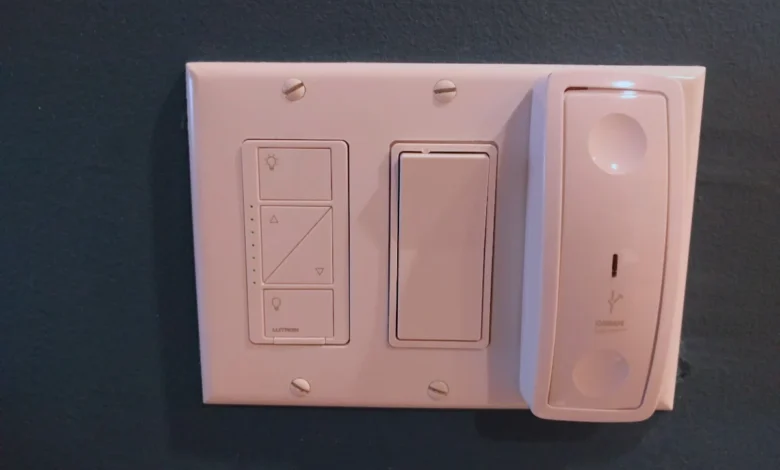
Additionally, the emergence of new interface options, such as the latest plug-in panels from Brilliant, suggests that the industry is still searching for the "ideal" control point. While voice assistants dominated the mid-2010s, there is a renewed interest in dedicated wall-mounted displays and physical interfaces that do not require a smartphone to operate, addressing a common pain point for multi-person households.
Expert Analysis: The State of Matter and Business Models
The final episode featured Jennifer Pattison Tuohy, a senior reporter at The Verge, who provided a deep dive into the current state of the industry. A primary focus of the discussion was Matter, the interoperability standard backed by Apple, Google, Amazon, and Samsung. Although Matter was initially hailed as the solution to the "walled garden" problem, its rollout has been met with technical hurdles and a slow adoption curve among legacy device manufacturers.
Tuohy and Higginbotham analyzed the shifting business models for connected devices. The industry is currently grappling with the sustainability of "one-time purchase" hardware that requires "lifetime" cloud support. This has led to an influx of subscription-based models, which have been met with resistance from consumers. The discussion suggested that for the smart home to reach mass-market penetration, manufacturers must find a balance between hardware sales, privacy-conscious data utility, and value-added services that justify ongoing costs.
The Connectivity Standards Alliance (CSA), the body behind Matter, is reportedly looking toward future iterations of the standard that will include more complex device types, such as household appliances and energy management systems. The shift from "gadgets" to "infrastructure" is seen as the necessary step to move the smart home out of the enthusiast niche and into the mainstream housing market.
A Roadmap for the Future: Recommended Resources
Recognizing the void left by the podcast’s conclusion, the hosts provided a curated list of resources for those seeking to stay informed on IoT developments. This list reflects the diversification of the field into industrial, consumer, and design-centric sub-sectors:
- Podcasts: The Mr. Beacon Show remains a vital resource for those interested in the technical aspects of Bluetooth and low-power sensing, while The IoT Podcast offers a UK-based perspective on the global market.
- Journalism and Analysis: The Verge and TechHive continue to lead in consumer-facing smart home reviews. For a deeper look at the aesthetic and functional design of the home, The Ambient provides specialized coverage.
- Industrial and Academic Insights: The Journal of Innovation, published by the Industrial IoT Consortium, serves as a high-level resource for the "Industry 4.0" sector. For updates on cellular IoT and 5G integration, the work of James Blackman at RCR Wireless was highlighted as essential reading.
- Strategic and Financial News: The Axios Pro Rata newsletter remains a primary source for tracking venture capital flow into the IoT space, while Iskander Smit’s Target is New offers a more philosophical and design-oriented take on the intersection of AI and physical objects.
Data and Trends: The Smart Home at a Crossroads
Supporting data suggests that while the "hype" around IoT has stabilized, the actual deployment of devices continues to grow. According to market research from IDC, the global market for smart home devices is expected to see steady growth through 2027, driven largely by security systems and smart lighting. However, the "trough of disillusionment" remains a factor for many consumers who find the setup and maintenance of these systems overly complex.
The final listener question addressed in the podcast—what makes a "complete" smart home—points toward a future where the technology becomes invisible. The consensus among experts is that a successful smart home is not one with the most gadgets, but one where automation occurs without manual intervention. This requires a level of "contextual awareness" that the industry is still striving to achieve through better sensors and more localized AI processing.
Conclusion and Broader Implications
The closure of The Internet of Things Podcast marks a transition in how technology news is consumed and produced. As the IoT matures, it is no longer a standalone "thing" to be discussed in isolation; rather, it has become the underlying fabric of modern computing, real estate, and industrial operations. The challenges identified in the show’s early years—security, interoperability, and user experience—remain the primary hurdles today, though the scale of these challenges has grown alongside the billions of devices now connected to the internet.
Stacey Higginbotham’s departure from the weekly podcast format signifies a broader shift toward specialized newsletters and consulting roles for veteran tech journalists. As the industry looks toward the full implementation of Matter and the integration of Generative AI into home automation, the foundation laid by eight years of rigorous reporting will continue to influence how developers and consumers approach the connected world. The "goodbye" from Episode 437 is less a finality and more a hand-off to the next generation of analysts and engineers who will build upon the insights shared over nearly a decade of broadcasting.