The commercial real estate sector is currently undergoing a fundamental transformation, driven by the rapid integration of the Internet of Things (IoT) into the physical infrastructure of modern workspaces. While smart lighting and climate control often capture headlines, it is the evolution of access management that is proving to be the most significant catalyst for change. What was once a rudimentary security function—relying on mechanical locks, brass keys, and handwritten logbooks—has matured into a sophisticated, interconnected layer of technology. This digital evolution is not merely a hardware upgrade; it represents a paradigm shift in how facilities are managed, how data is harvested, and how people interact with the built environment.
The Evolution of Building Entry: From Mechanical to Digital
To understand the current state of connected access, one must examine the chronological progression of security technology. For decades, the gold standard of commercial security was the master key system. While effective for basic restriction, it offered zero visibility into who entered a building and when. The first major shift occurred in the late 20th century with the introduction of electronic proximity cards and RFID technology. This allowed for basic logging and the ability to revoke access without rekeying locks, but these systems remained siloed, often requiring a dedicated, air-gapped server and manual updates.
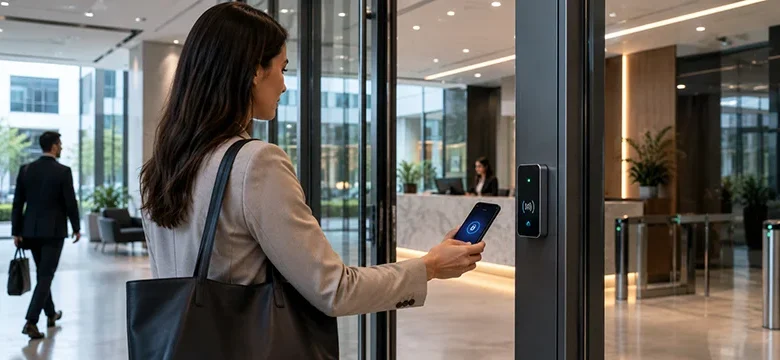
The current era, beginning roughly around 2015, saw the rise of cloud-based access control and mobile credentials. The proliferation of smartphones equipped with Near Field Communication (NFC) and Bluetooth Low Energy (BLE) technology provided the necessary hardware for a truly connected experience. Today, the "connected" aspect of these systems refers to their ability to communicate in real-time with centralized management software, other building systems, and the personal devices of every occupant.
Defining the Connected Access Framework
A connected access system is characterized by its interoperability. Unlike legacy systems that treat every door as an isolated checkpoint, modern frameworks link every entry point—from the main lobby turnstiles to the server room and even individual storage lockers—into a unified digital network.
The architecture typically consists of three primary components:
- The Credential: This has shifted from physical plastic cards to encrypted digital tokens stored on smartphones or wearable devices. Biometric identifiers, including facial recognition and fingerprint scanning, are also becoming standard features in high-security environments.
- The Hardware: Smart readers and controllers that are connected via Power over Ethernet (PoE) or wireless mesh networks. These devices do more than just unlock doors; they act as IoT sensors that monitor door status, temperature, and even ambient noise levels.
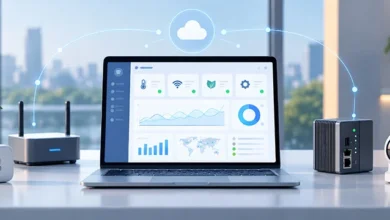
- The Management Platform: A cloud-based dashboard that allows facilities managers to grant, revoke, or modify access permissions from anywhere in the world. This platform serves as the brain of the operation, collecting data and generating actionable insights.
Market Data and the Economic Imperative
The shift toward connected access is backed by significant market momentum. According to recent industry reports, the global smart building market is projected to grow from approximately $80 billion in 2022 to over $325 billion by 2030, representing a compound annual growth rate (CAGR) of over 20%. Within this sector, physical security and access control represent one of the fastest-growing segments.
The economic drivers for this growth are clear. Research from McKinsey & Company suggests that commercial buildings utilizing integrated smart technologies can see a reduction in operating costs by as much as 15% to 20%. These savings are realized through optimized staffing—since receptionists and security guards no longer need to manually manage guest logs or physical keys—and through the energy efficiencies gained when access data is used to control HVAC and lighting systems.
Furthermore, the "flight to quality" in the commercial office market means that landlords must offer premium, tech-enabled experiences to attract high-value tenants. In a post-pandemic world where hybrid work is the norm, the ability to provide a seamless, touchless, and secure entry experience is no longer a luxury; it is a baseline requirement for Grade-A office space.
Enhancing the Occupant Experience and Safety
For the thousands of employees and visitors who move through commercial buildings daily, the most immediate benefit of connected access is the elimination of "friction." The traditional experience of waiting in a lobby to show identification, receiving a printed sticker, and then fumbling for a badge at every elevator bank is being replaced by a "frictionless" journey. A visitor can receive a temporary QR code via email, which grants them access to the parking garage, the lobby, and the specific floor of their meeting, all without interacting with a single human or touching a physical surface.
Beyond convenience, the safety implications are profound. In the event of an emergency, such as a fire or a security breach, a connected system can execute a "global lockdown" or, conversely, a "global unlock" to facilitate evacuation. Real-time occupancy data allows first responders to know exactly how many people are in a building and which zones they are located in. This level of granular visibility was impossible under old-fashioned security models and represents a significant advancement in life-safety technology.
Operational Intelligence: Turning Access into Insight
The true power of connected access lies in the data it generates. Every time a credential is used, a data point is created. When aggregated and analyzed, this data provides facilities managers with a map of how the building is actually used.
- Space Optimization: If access logs show that certain conference rooms or entire floors are consistently underutilized, building owners can repurpose that space or adjust their real estate footprint.
- Predictive Maintenance: Smart locks can report their own mechanical health. If a door motor is drawing more current than usual or if a latch is failing to engage properly, the system can automatically generate a maintenance ticket before the hardware fails completely.
- Janitorial Efficiency: Rather than cleaning every restroom on a fixed schedule, facilities teams can use occupancy data to prioritize high-traffic areas, ensuring that resources are deployed where they are most needed.
Technical Considerations and Implementation Strategies
For building owners considering an upgrade, the transition requires careful planning. One of the most critical decisions involves the choice between "on-premise" and "cloud-based" infrastructure. While some high-security government facilities still prefer on-premise servers for total control, the vast majority of commercial enterprises are moving to the cloud for its scalability, ease of remote management, and automatic security updates.
Integration with existing infrastructure is another hurdle. Many modern systems are designed with "open APIs" (Application Programming Interfaces), allowing them to "talk" to other software, such as HR databases (to automatically revoke access when an employee leaves the company) or tenant experience apps.
Industry experts recommend a phased rollout approach:
- The Pilot Phase: Implementing the system in a controlled environment, such as a single floor or a specific department, to test the user interface and network stability.
- Data Integration: Linking the access system with the building’s identity management software to ensure a single source of truth for user permissions.
- Full Deployment: Scaling the system across the entire portfolio, often coinciding with a communication campaign to educate tenants on the benefits of the new technology.
Addressing Cybersecurity and Privacy Concerns
As access control systems become more connected, they also become potential targets for cyberattacks. A compromised access system could allow unauthorized entry or, perhaps more dangerously, serve as an entry point into the building’s broader corporate network.
To mitigate these risks, modern systems employ end-to-end encryption (such as AES-128 or AES-256) for all communications between the credential, the reader, and the cloud. Furthermore, the adoption of the Open Supervised Device Protocol (OSDP) is replacing the older, more vulnerable Wiegand protocol, providing a much higher level of security for the physical wiring of the building.
Privacy is another critical consideration, particularly in regions with strict data protection laws like the GDPR in Europe. Building owners must be transparent about what data is being collected and how it is being used. Most modern systems are designed with "privacy by design" principles, ensuring that personal identifiable information (PII) is anonymized or encrypted, focusing on occupancy patterns rather than individual tracking.
The Broader Impact on the Smart City Ecosystem
Connected access systems do not exist in a vacuum; they are a vital component of the broader "Smart City" movement. As buildings become more intelligent, they can share data with city-wide infrastructure. For example, a building’s occupancy data could inform public transit schedules or help municipal power grids manage peak demand.
In the context of sustainability and ESG (Environmental, Social, and Governance) goals, connected access is a silent hero. By ensuring that lights and climate control are only active in occupied zones, these systems directly contribute to the reduction of a building’s carbon footprint. For institutional investors, this data provides a verifiable metric of a building’s operational efficiency, which is increasingly tied to property valuation.
Conclusion
The transformation of commercial buildings through connected access systems is a testament to the maturing of the IoT landscape. No longer a niche technology for tech giants, these systems have become the backbone of modern property management. By prioritizing interoperability, data analytics, and user experience, building owners are doing more than just securing their premises; they are creating environments that are more responsive, efficient, and human-centric.
As artificial intelligence continues to integrate with these systems, the next frontier will likely involve predictive access—where a building anticipates the arrival of a tenant and prepares their workspace before they even reach the front door. For now, the focus remains on building a solid foundation of connectivity that supports the safety and convenience of every person who walks through the door. For the commercial real estate industry, the message is clear: the future of the building is connected, and it begins at the entrance.