The Unavoidable Reckoning: Tech’s Trillion-Dollar Wealth and the Impending Push for Redistribution


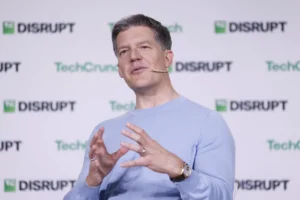
In late May, a profound observation from Neil Rimer resonated deeply during a conversation held in Athens, a city increasingly establishing itself as a nexus for technological innovation. At the inaugural Panathenea tech festival, amidst discussions surrounding the unprecedented accumulation of wealth fueled by advancements in artificial intelligence, Rimer, a co-founder of the highly successful venture capital firm Index Ventures, articulated a conviction that has since become a focal point of debate: "I have a strong sense that there will be some sort of a redistribution. It’ll either be voluntary or it’ll be involuntary, but it’ll happen, and I hope it’s voluntary." He further stressed the pivotal role tech leaders could play in "seeing that through."
Coming from an ordinary observer, such a statement might be dismissed as conventional populist rhetoric. However, emanating from Rimer, a figure instrumental in shaping the technological landscape over the past three decades through one of the venture capital industry’s most prolific firms, his public pronouncement carries significant weight and signals a growing unease within the very circles benefiting most from the current economic paradigm.
Neil Rimer’s Perspective: A VC Titan’s Call for Change
Neil Rimer’s journey reflects a unique blend of entrepreneurial success and a growing commitment to broader societal concerns. Having stepped back from the day-to-day investing operations of Index Ventures in 2021, Rimer now divides much of his time in Athens, a city deeply connected to his family through his wife’s heritage and where his children proudly hold Greek passports. His appearance at the interview, characterized by a rumpled button-down shirt and jeans, stood in stark contrast to the more polished, corporate attire often favored by his industry peers, subtly underscoring a personal ethos that perhaps prioritizes substance over superficiality.
Despite his semi-retirement from active investment, Index Ventures’ financial performance has remained stellar. Since its inception, the firm has attracted approximately $15 billion from external investors. The year prior saw exceptional exits, including the high-profile initial public offering (IPO) of Figma and Google’s acquisition of the cybersecurity firm Wiz, collectively netting Index Ventures an estimated $9 billion. These figures highlight the firm’s remarkable ability to identify and nurture transformative companies, thereby generating substantial wealth for its founders and investors.
Beyond his professional triumphs, Rimer has actively engaged in various philanthropic endeavors, demonstrating a personal commitment to giving back. He serves on the board of Endeavor Greece, an organization dedicated to mentoring entrepreneurs in emerging markets, fostering innovation and economic growth in regions that often lack robust support systems. From 2019 to 2025, he chaired the board of Human Rights Watch, an internationally recognized non-governmental organization focused on human rights advocacy and research. A significant philanthropic contribution came in late 2021, when Rimer, alongside his father and two brothers, donated $13 million to McGill University. This substantial gift facilitated the renovation of a campus building, now aptly named the Rimer Building, and established a new Institute for Indigenous Research and Knowledges, reflecting a commitment to education and cultural preservation. These actions underscore a pattern of giving that predates his recent public statements, lending credibility to his concerns about wealth distribution.
The Retreat from Philanthropy: A Troubling Trend
Rimer’s call for redistribution emerges at a particularly critical juncture for philanthropy, where signs point to a significant decline in voluntary giving among the ultra-wealthy. The "Giving Pledge," initiated by Warren Buffett and Bill Gates in 2010 with the ambitious goal of persuading billionaires to commit at least half of their fortunes to charity, appears to be losing momentum, if not becoming increasingly irrelevant.
The Fading Promise of the Giving Pledge:
In its initial five years, the Pledge garnered commitments from an impressive 113 families. This momentum, however, has waned considerably, with subsequent five-year periods seeing 72, then 43 new signatories. Alarmingly, in the entirety of 2024, only four new families joined the initiative. A March report from The New York Times starkly highlighted this trend, noting how philanthropy has fallen out of fashion among some of the wealthiest individuals in the tech sector. The report notably quoted Elon Musk, the world’s wealthiest person, who asserted that his businesses "are philanthropy," a sentiment that encapsulates a different philosophy where wealth generation and business innovation are seen as inherently beneficial to society, obviating the need for traditional charitable donations.
Broader Trends in American Charitable Giving:
The decline extends beyond the specific context of the Giving Pledge. While total American charitable giving reached a record $592.5 billion in 2024, a closer examination reveals a worrying underlying trend: the number of Americans actively donating has decreased for five consecutive years, dropping by 4.5% in 2024 alone, according to the Stanford Social Innovation Review. This represents a significant shift from the year 2000, when approximately two-thirds of U.S. households contributed to charity; today, that figure stands at roughly half. Even among affluent households, typically considered the bedrock of philanthropic support, data from Bank of America and the Lilly Family School of Philanthropy shows a discernible slip, from 90% giving in 2017 to 81% last year. This suggests a systemic erosion of a culture of widespread giving, impacting both the general population and the top echelons of wealth.
Philanthropy in the Tech Ecosystem: The Anthropic Case Study:
This pattern is also observable within Index Ventures’ own portfolio, which includes Anthropic, a prominent AI startup. Business Insider recently explored the philanthropic inclinations of newly wealthy clients of financial planner Alex Caswell, many of whom are Anthropic employees with ties to the effective altruism movement. While Anthropic offers a generous program matching employee donations of up to 25% of their equity to charity, Caswell observed that while some clients utilized it, the majority were not integrating significant philanthropy into their long-term financial plans. Instead, their focus gravitated towards angel investing or establishing their own companies. "That’s what I’m seeing more than the desire to become philanthropic," Caswell informed the outlet, indicating a preference for reinvesting wealth within the entrepreneurial ecosystem rather than channeling it into traditional charitable avenues.
The Involuntary Path: Legislative and Governmental Responses
The apparent reluctance of the wealthy to engage in voluntary, large-scale redistribution is inevitably paving the way for legislative and governmental interventions, pushing the "involuntary" path Rimer alluded to.
California’s Proposed Wealth Tax:
This year, California voters are poised to decide on a highly controversial measure: a 5% one-time wealth tax specifically targeting the state’s billionaires. The mere prospect of such a tax has already triggered defensive maneuvers from some of the state’s most prominent figures. Google co-founders Sergey Brin and Larry Page, for instance, have reportedly changed their primary residences to South Florida, a state without an income tax, presumably to safeguard their assets from potential taxation.
The timing of this proposed tax also has implications for major tech companies anticipating public offerings. OpenAI, a leading AI research and deployment company, is reportedly considering going public in 2027. Cynical observers suggest that one reason for this timeline, among others, could be to preempt the California wealth tax, which, if passed, would calculate net worth based on an individual’s worldwide assets as of the end of the current calendar year. This potential for capital flight and strategic timing underscores the significant impact such legislative measures can have on the movement of wealth and the plans of ultra-high-net-worth individuals and companies.
Opposition and Historical Precedent for Wealth Taxes:
Unsurprisingly, there is substantial opposition to wealth redistribution measures of this scale. California Governor Gavin Newsom has voiced his concerns, and numerous economists have cautioned against such taxes. They frequently point to historical examples of industrialized countries that have repealed similar wealth taxes since 1990 after observing their wealthy residents and capital relocating elsewhere. Countries like France, Germany, Sweden, and Denmark, for instance, all experimented with wealth taxes only to eventually abandon them due to challenges like administrative complexity, capital flight, and limited revenue generation. These historical lessons highlight the difficulties in implementing and sustaining such policies without adverse economic consequences.
OpenAI’s Equity Stake Proposal: A Novel Approach?
Other, equally controversial, options are also being explored. OpenAI has reportedly engaged in discussions about offering the U.S. federal government a 5% equity stake in the company. CEO Sam Altman has framed this audacious proposal as a mechanism for sharing AI’s immense upside with the broader public, ensuring that the benefits of this transformative technology are distributed more widely. Critics, however, view it with skepticism, interpreting it primarily as a strategic move to gain political favor and "buy political cover" in Washington D.C., especially given the increasing scrutiny and regulatory challenges faced by large tech entities. The idea of Uncle Sam holding a significant stake in a Silicon Valley titan is historically unprecedented and runs counter to the industry’s long-standing ethos of minimal government interference. Veteran investor Roelof Botha famously quipped, echoing a common sentiment within the tech world: "[Some] of the most dangerous words in the world are: ‘I’m from the government, and I’m here to help.’" This sentiment reflects a deep-seated apprehension within Silicon Valley about government involvement potentially stifling innovation or imposing undue control.
The Unprecedented Scale of Modern Wealth Concentration
The backdrop to these discussions is an astounding and rapidly accelerating concentration of wealth, particularly within the burgeoning AI sector.
The Rise of the Trillionaires:
Elon Musk recently made history, becoming the first person to achieve a net worth exceeding $1 trillion following the IPO of SpaceX. This milestone highlights the unprecedented scale of wealth accumulation in the current technological era. Forbes’ 2026 rankings alone identified 45 new AI billionaires, whose combined fortunes amounted to an staggering $2.9 trillion. This figure is all the more remarkable considering it predates the potential public offerings of major AI players like Anthropic and OpenAI, which are expected to generate even more multi-billionaires and further consolidate wealth. The Business Insider story on Anthropic employees further illustrated this phenomenon, noting that once Anthropic and OpenAI complete their IPOs, their combined employees would hold enough wealth to purchase nearly a third of all homes in the San Francisco metropolitan area, a stark indicator of the localized impact of this tech-driven wealth surge.
Historical Comparisons: A New Gilded Age?
While the current situation "feels" unprecedented, whether it represents a truly historic extreme is a matter of ongoing debate among economists and historians. The share of wealth held by the top 1% of U.S. households reached 31.7% in the third quarter of last year, a record high since the Federal Reserve began tracking this data in 1989. This figure is roughly equivalent to the combined wealth held by the remaining 90% of households outside the top decile.
However, when comparing this to the "Gilded Age" peak of 1916, the top 1% commanded an even larger share, approximately 45% of total wealth. The picture shifts dramatically, though, when the lens is narrowed to the "tippy top" — the absolute wealthiest individuals. Renowned economist Gabriel Zucman’s calculations reveal a more alarming trend: at the height of the first Gilded Age, around 1910, America’s four largest fortunes represented a combined 4% of U.S. GDP. Today, that same sliver of the population — now comprising 19 households instead of four — holds an astonishing 14% of the national GDP. This indicates a much more extreme concentration of economic power at the very apex of the wealth pyramid, potentially surpassing even the Gilded Age in its intensity and implications for democratic institutions and economic stability.
Echoes of History: Voluntary vs. Forced Redistribution
Rimer’s proposed dichotomy of "voluntary or forced" redistribution finds strong precedents in American history, particularly during periods when wealth concentration reached similar, or even greater, levels.
The Gospel of Wealth: Andrew Carnegie’s Vision:
In 1889, at the zenith of the first Gilded Age, industrialist Andrew Carnegie published his seminal essay, "The Gospel of Wealth." In it, Carnegie argued that a rich man should consider his fortune a sacred trust, to be actively distributed for the public good within his own lifetime, famously declaring it a "disgrace to die wealthy." This essay became the foundational document of modern philanthropy, advocating for the wealthy to use their resources to uplift society through institutions like libraries, universities, and research foundations. It stands as the intellectual ancestor of initiatives like the Giving Pledge, emphasizing the moral imperative of proactive, voluntary giving. Carnegie himself became one of the world’s most prolific philanthropists, endowing thousands of libraries and establishing numerous educational and scientific institutions.
The "Soak-the-Rich" Era: Huey Long and FDR:
However, Carnegie’s vision of voluntary redistribution alone proved insufficient to address the deep-seated economic inequalities and social unrest of the early 20th century. By the mid-1930s, Louisiana Senator Huey Long had amassed a national following with his populist "Share Our Wealth" program. Long’s radical platform demanded steep taxes on the wealthy to fund a guaranteed income for every American family, along with other social welfare programs. Worried about losing working-class support to Long’s powerful movement, President Franklin D. Roosevelt pushed through what the press dubbed the "soak-the-rich tax." This legislative package significantly raised the top marginal income tax rate, climbing as high as 79%. While it may not have redistributed wealth to the extent Long advocated, it remains the clearest example in American history of politically forced redistribution arriving as a direct response to public pressure and the perceived failure of voluntary efforts to adequately address systemic economic disparities.
The Moral Center of Tech: A Deeper Concern
For Rimer, who has spent his entire career immersed in the tech industry, these historical parallels are not merely academic. His concerns extend beyond economic models to what he describes as "the moral center of tech companies." This fascination, he traces back to his time as a Stanford undergraduate in 1984, an era when Apple discounted its first Macintosh computers for students, and figures like Steve Jobs and Apple’s other founders were, in Rimer’s words, "heroes" for building something he genuinely believed was good for the world.
What troubles him profoundly now is the stark contrast in perception. He hears his own children discussing certain tech companies in a manner akin to how an earlier generation might have spoken about defense contractors or cigarette manufacturers. This shift in public sentiment, particularly among younger generations, suggests a broader disillusionment with the tech industry, moving away from its utopian ideals towards a more critical view of its societal impact, ethical practices, and contribution to wealth inequality. It speaks to a growing accountability crisis for an industry that once championed disruption and progress but now faces scrutiny over privacy, data manipulation, labor practices, and its role in widening economic divides.
Conclusion: A Pivotal Choice for Tech’s Future
Neil Rimer, as a direct beneficiary and architect of the very wealth he discusses, is in a unique and perhaps uncomfortable position. Yet, his message is clear and urgent. He would rather witness his fellow beneficiaries of the AI boom proactively choose to return a portion of their unprecedented fortunes to society than face the inevitable alternative of having it legislated away. This choice, as Rimer frames it, is between an "easy way" and a "hard way," a voluntary path of philanthropic engagement and societal investment versus an involuntary path of legislative imposition and potentially disruptive social unrest.
The burgeoning wealth generated by artificial intelligence, coupled with a discernible decline in traditional philanthropic engagement among the ultra-rich, sets the stage for a critical inflection point. History offers compelling precedents for both voluntary and forced redistribution, demonstrating that when the former fails to adequately address economic disparities and social pressures, the latter often emerges. Rimer’s candid remarks from Athens serve as a potent warning and a powerful plea to the tech elite: the opportunity for proactive leadership and voluntary action remains, but the window may be closing, leaving society to choose the path of redistribution for them. The decision facing Silicon Valley today is not merely economic but fundamentally moral, with profound implications for the future trajectory of wealth, power, and social cohesion in the 21st century.