Reimagining the Software Development Life Cycle for the Age of Artificial Intelligence

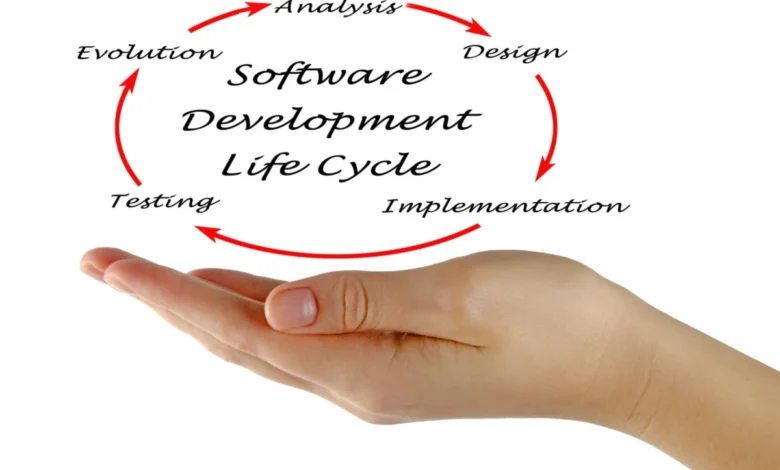
The established tenets of the traditional Software Development Life Cycle (SDLC) — planning, analysis, design, coding, testing, deployment, and maintenance — were meticulously crafted to ensure the safety, stability, and risk mitigation of software from its initial conception through to its final delivery. This structured methodology has served as the bedrock of software engineering for decades, providing a predictable framework for complex projects. However, the inherent rigidity and fixed assumptions that define the classic SDLC are increasingly proving to be a significant impediment in the rapidly evolving landscape shaped by artificial intelligence (AI). The protracted delivery pipelines, the constraints placed upon engineers’ creative and iterative development processes, and the limitations on organizational agility are now starkly apparent as AI ushers in an era of unprecedented speed and potential.
The imperative to rethink the SDLC does not signify a wholesale abandonment of time-tested best practices. Instead, it calls for an evolution of these practices to harmoniously integrate the distinct strengths of both human developers and AI. This evolution aims to strike a crucial balance between the imperative for secure and stable code and the necessity for the rapid, iterative development cycles that characterize modern enterprises. The anticipated outcome of this recalibration is a significant compression of software delivery timelines, achieved without compromising either system stability or the paramount focus on customer needs and satisfaction.
A New Paradigm: The AI-Augmented Division of Labor in Software Engineering
For years, the SDLC has been instrumental in managing inherent risks, orchestrating complex team efforts, and delivering high-quality software at scale. While AI does not negate the fundamental need for such a structured approach, it is undeniably reshaping the very fabric of how software is conceived, built, and deployed. The true value of AI in this domain lies not in replacing human engineers, but in augmenting their capabilities. AI tools excel at tasks involving synthesis, pattern recognition, rapid iteration, and the execution of straightforward, repetitive operations, thereby freeing human talent for higher-value contributions.
The transformative impact of AI is expected to be most profound across several key areas of the software development lifecycle:
Streamlining Foundation and Maintenance: The AI Advantage in Boilerplate and Toil Reduction
One of the most immediate and impactful applications of AI in software development is its ability to generate foundational code and automate the often tedious and time-consuming maintenance tasks that have historically consumed significant engineering bandwidth. AI can produce boilerplate code, which forms the initial structure of applications, thereby accelerating the commencement of development. Furthermore, it can efficiently handle the batch processing of repetitive work, such as routine dependency upgrades and critical security fixes across vast codebases and numerous repositories simultaneously. This proactive automation liberates engineers from the drudgery of these tasks, allowing them to focus on more complex problem-solving and innovative feature development even before the core building process has substantially begun.
This shift in task allocation means that while AI is fundamentally altering the how of code delivery, the why remains constant. The end-users, their challenges, and the intrinsic value that engineers strive to deliver continue to be the guiding principles. The foundational elements of sound engineering—robust architecture, clear ownership, and unwavering reliability—do not diminish in importance. In fact, as AI democratizes code generation and development at an accelerated pace, these fundamentals become even more critical. The proliferation of code generation tools, while empowering, also broadens the potential for errors and security vulnerabilities, thereby amplifying the significance of human oversight and expertise.
The Indispensable Human Element: Judgment, Context, and Empathy
As AI increasingly shoulders the burden of repetitive and time-intensive tasks within software development, the role of the human engineer necessarily evolves towards a more strategic and oversight-driven capacity. Humans bring to the table uniquely irreplaceable qualities: nuanced judgment, profound contextual understanding, and genuine empathy. These are not mere soft skills; they are critical capabilities that operate at a systemic level, enabling engineers to dismantle organizational silos, make pivotal architectural decisions, enforce production discipline, and strategically allocate engineering resources for maximum impact. In practical terms, the day-to-day activities of an engineer in this new paradigm will increasingly resemble less of manual coding and debugging, and more of precisely defining problems, meticulously evaluating complex trade-offs, and making high-stakes decisions that are informed by real-world experience and a deep understanding of business objectives.
In this evolving human-AI collaborative model, the most highly valued engineers will undoubtedly be those who possess the foresight and skill to oversee and direct AI tools. They will operate in strategic roles, leveraging their innate judgment and understanding of subtle complexities to guide AI-driven development. Crucially, these engineers will retain ultimate accountability for project outcomes. This involves diligently reviewing AI-generated code to rigorously assess its quality, identify potential security vulnerabilities, meticulously identify and address edge cases, and ensure the overall reliability and robustness of the deployed software. This oversight function is paramount in mitigating risks that AI, despite its advancements, cannot fully comprehend or manage.
Forging a New Standard: The Future of Software Delivery
The integration of AI into the software development process is not a simple matter of offloading manual tasks to automated systems. Organizations that approach this transformation with such a limited perspective are likely to encounter disappointment, achieving only incremental gains at best. The true, transformative opportunity lies in a more fundamental reimagining of the entire software delivery model. This involves rebuilding the SDLC from its foundational elements, creating a symbiotic relationship where humans and AI work in concert, each contributing their unique strengths to forge a new gold standard in software development.

The benefits of successfully navigating this transition will extend far beyond the confines of engineering teams, permeating the entire business. As humans and AI collaborate—with AI accelerating the pace of execution and humans providing the indispensable judgment, contextual awareness, and accountability that technology alone cannot replicate—the entire organization undergoes a profound transformation. Products can be brought to market with unprecedented speed, systems can achieve higher levels of reliability and resilience, and valuable engineering resources can be strategically redirected towards solving the most pressing and impactful customer problems. Consequently, organizations that proactively rebuild their development frameworks around this synergistic human-AI model will not only operate with greater velocity but will also produce software of superior quality and impact.
Supporting Data and Industry Trends
The rapid adoption of AI tools in software development is not merely theoretical; it is a burgeoning trend supported by significant market data and industry projections. A recent report by Gartner predicted that by 2025, AI-assisted development tools could increase developer productivity by as much as 30%. This surge in productivity is largely attributed to AI’s ability to automate repetitive coding tasks, generate test cases, and assist in debugging.
Furthermore, the market for AI in software development is experiencing explosive growth. According to a study by MarketsandMarkets, the global AI in software development market is projected to grow from USD 1.6 billion in 2023 to USD 7.2 billion by 2028, at a Compound Annual Growth Rate (CAGR) of 35.0%. This substantial growth underscores the industry’s recognition of AI’s potential to revolutionize the development lifecycle.
The historical trajectory of software development has seen cycles of innovation, from the Waterfall model’s emphasis on sequential phases to the Agile methodology’s focus on iterative development and customer feedback. Each shift has been driven by a need for greater efficiency, adaptability, and quality. The current AI-driven evolution represents the next significant leap in this ongoing journey, promising to redefine the boundaries of what is achievable in software engineering.
Broader Implications and Potential Challenges
The integration of AI into the SDLC presents a wealth of opportunities, but it also introduces new complexities and potential challenges that require careful consideration and proactive mitigation strategies.
The Risk of Code Drift and Standardization
A significant concern is the potential for "AI-generated code drift." Without robust standardization layers that embed approved architectural patterns, libraries, and security requirements into every AI agent’s operational framework, the code generated by different AI instances or even across different sessions can diverge significantly. This divergence can lead to inconsistent quality, introduce new forms of technical debt, and, critically, increase security exposure. As more developers embrace AI code generation tools, the risk of decentralized, non-compliant codebases escalates, necessitating strong governance and oversight mechanisms. This concern is echoed by industry experts who emphasize the need for "AI governance frameworks" to ensure consistency and adherence to organizational standards.
The Evolving Role of the Software Engineer
The question of whether AI will replace software engineers is a frequent topic of discussion. The prevailing industry consensus, however, positions AI as a powerful augmentation tool rather than a direct replacement. The human role is shifting, becoming more focused on higher-order cognitive tasks. This includes crucial responsibilities such as defining system architecture, evaluating complex trade-offs between competing technical solutions, conducting thorough security reviews of AI-generated code, and ultimately bearing the accountability for the reliability and performance of software in production environments. Engineers who cultivate strong oversight capabilities for AI toolchains and develop a deep understanding of AI’s limitations are expected to be the most indispensable in this evolving landscape.
The Democratization of Development and its Double-Edged Sword
AI’s ability to lower the barrier to entry for code generation promises to democratize software development. This could empower a wider range of individuals and teams to contribute to software creation. However, this democratization also presents a double-edged sword. As more individuals with varying levels of experience gain access to powerful code generation tools, the potential for introducing errors, security flaws, and poorly architected solutions increases. This heightened risk underscores the continued, and indeed amplified, importance of human judgment, rigorous testing, and robust security practices. The human factor, in its capacity for critical evaluation and ethical consideration, becomes more vital than ever in ensuring the integrity and safety of the software ecosystem.
Conclusion: A Collaborative Future
The journey to integrate AI into the software development life cycle is not about replacing human ingenuity with algorithmic efficiency. It is about forging a powerful synergy, where AI handles the heavy lifting of repetitive tasks and complex pattern matching, while humans provide the strategic vision, contextual understanding, and critical judgment that are essential for building truly robust, secure, and impactful software. Organizations that embrace this collaborative future, by thoughtfully redesigning their SDLCs to accommodate this new division of labor, will be best positioned to innovate faster, deliver higher quality products, and ultimately thrive in the AI-powered era of software engineering. The future of software development is not human or AI; it is unequivocally human and AI.