Qodo unveils Approval Workflows and Agent Session Review to streamline autonomous software development

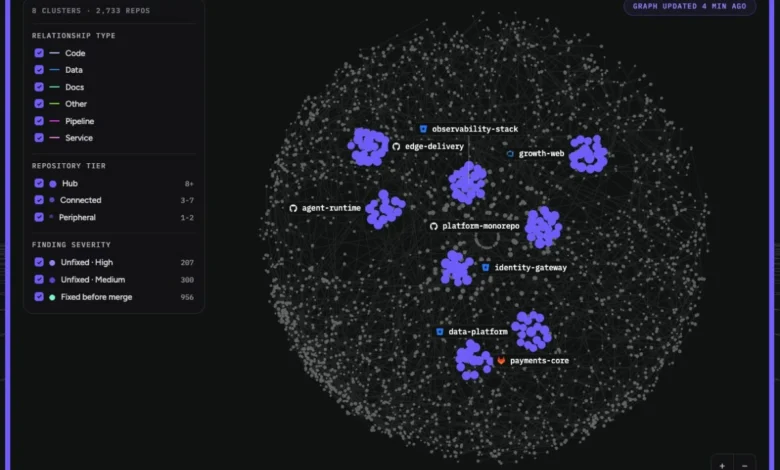
The software engineering landscape is currently undergoing a structural shift as organizations transition from human-centric coding practices to autonomous software factories. As generative AI tools become more adept at taking technical tickets and transforming them into functional pull requests (PRs), the velocity of code production has surged. However, this progress has exposed a significant friction point: the human approval process. To address this bottleneck, Qodo, a prominent AI Code Quality and Governance platform, has officially announced the launch of its new Approval Workflows and Agent Session Review features, marking a strategic pivot toward policy-governed, high-trust autonomous development.
The Growing Bottleneck in Modern Engineering
In traditional software development, the PR approval process is a cornerstone of quality assurance. Yet, as AI-driven coding agents proliferate, the sheer volume of generated code has begun to outpace the capacity of human reviewers. The implications of this mismatch are profound. According to Google’s 2025 DORA (DevOps Research and Assessment) report, teams that have embraced aggressive AI adoption are seeing significant changes in their development metrics. The data indicates that these teams are managing pull requests that are, on average, 154% larger than those of their peers. Consequently, the time required for human review has ballooned, with teams reporting a 91% increase in review duration.
This data highlights a growing paradox: while AI reduces the time required to write code, it simultaneously increases the cognitive load required to verify it. Engineers are frequently tasked with stitching together multiple PRs across disparate repositories to understand how individual AI-generated changes impact a larger feature. When approval processes remain manual and disconnected, the "factory" effectively stalls, negating the speed benefits gained during the coding phase.
Qodo’s Strategic Response
Qodo’s introduction of Approval Workflows and Agent Session Review is designed to automate the triage of these contributions. By implementing policy-governed automation, Qodo allows low-risk, high-confidence changes to move through the pipeline without requiring immediate manual intervention. Conversely, changes that trigger specific risk parameters are flagged for human oversight, ensuring that critical architectural decisions remain under human control.

The "Agent Session Review" feature, currently in a research preview phase, represents a departure from single-file or single-PR assessments. Instead, it utilizes Qodo’s proprietary Agentic Toolbox to aggregate all PRs generated by an AI agent within a specific development session. By grouping these related changes, the system provides a holistic assessment of the work, mapping out the intended merge order and highlighting areas where the agent’s output may have deviated from the original architectural plan.
Chronology of AI Governance
The evolution of Qodo’s platform follows a broader industry trend toward "agentic" software development. Over the past twenty-four months, the industry has progressed through three distinct phases:
- Phase One (Code Assistance): The initial wave of tools focused on autocomplete and snippet generation (2022–2023).
- Phase Two (Agentic Coding): The emergence of autonomous agents capable of handling end-to-end tasks, such as ticket resolution and PR submission (2024–2025).
- Phase Three (Governance and Trust): The current shift toward systemic oversight, where platforms like Qodo provide the guardrails necessary to deploy autonomous code into production environments at scale (Late 2025–Present).
Qodo’s latest update positions the company at the forefront of this third phase, addressing the requirement for "explainable" and "verifiable" AI code. By providing a clear record of every approval decision and tying risk metrics directly to evidence within the codebase, the platform seeks to solve the "black box" problem that has historically deterred large enterprises from fully automating their CI/CD pipelines.
Perspectives on Autonomous Quality
"A software factory is only as good as its quality controls," says Itamar Friedman, CEO and co-founder of Qodo. "Teams have successfully automated how code gets written and reviewed, but the approval layer remains stuck in a manual, time-intensive model. The current reality is that whoever happens to be available must drop what they are doing to approve a PR. Qodo changes that dynamic by intelligently approving changes that meet strict engineering standards while reserving human talent for the complex decisions that require genuine technical intuition."
Industry analysts note that this approach addresses the "autonomy-quality trade-off." For many engineering managers, the fear of deploying buggy or insecure AI-generated code has been the primary barrier to adoption. By integrating policy-governed approvals, Qodo provides a mechanism for teams to maintain high throughput without compromising their internal quality standards.

Implications for the Enterprise
The introduction of these features has several immediate implications for enterprise software teams:
- Reduction in "Review Fatigue": By filtering out routine, low-risk code changes, senior engineers can focus their efforts on high-level architectural design and complex edge cases, rather than routine syntax and standard compliance checks.
- Standardization of Engineering Quality: Approval Workflows act as a programmatic enforcement layer for engineering best practices. Because the policy is baked into the platform, organizations can ensure that every PR—regardless of whether it was written by a human or an agent—adheres to the same security and performance benchmarks.
- Improved Traceability: The Agent Session Review provides a clear audit trail. This is critical for industries with strict regulatory requirements, where every change to a production system must be documented, justified, and reviewed.
Looking Ahead
The shift toward an autonomous software factory is no longer a theoretical exercise but a competitive necessity. As the volume of code generated by AI continues to grow, firms that fail to implement governance layers will likely find themselves mired in technical debt and review backlogs.
Qodo’s Auto Approval Workflows, now in Beta, provide the immediate functional relief that many development teams require. The research preview of Agent Session Review suggests a future where the AI agent is not just a coding assistant, but a transparent participant in the software development lifecycle, whose entire session—from inception to completion—can be audited and validated in one fluid motion.
As the industry observes the performance of these tools in production environments, the focus will likely turn toward the integration of these governance platforms with broader DevOps ecosystems. The goal remains clear: to build a software development environment where autonomy does not mean a lack of control, but rather an acceleration of verified, high-quality output. Organizations interested in evaluating these capabilities can access the tools directly through the Qodo platform, marking the next step in the professionalization of AI-assisted engineering.
Related posts: