The Promise and Limitations of Generative AI in Professional Technical Consultation

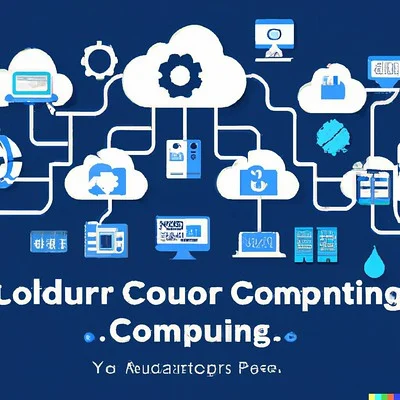
The rapid ascent of Large Language Models (LLMs) like ChatGPT has prompted a fundamental re-evaluation of how professional knowledge is accessed, synthesized, and deployed within the technology sector. While these tools demonstrate a remarkable capacity to generate coherent, grammatically fluid prose, a critical examination of their performance in technical domains reveals a persistent gap between linguistic fluency and deep, contextual insight. When subjected to professional-level inquiries regarding cloud architecture, infrastructure strategy, and industry trends, these systems often function more as "zeitgeist oracles"—aggregating broad, commonly accepted industry consensus—rather than as strategic advisors capable of nuanced, bespoke decision-making.
The Evolution of the AI Consultation Model
The current wave of generative AI, spearheaded by OpenAI’s models, marks a significant departure from previous iterations of machine learning. Unlike earlier expert systems that relied on rigid, rules-based logic, LLMs utilize transformer architecture to predict the next token in a sequence based on vast training datasets. This allows the AI to mirror the cadence and structure of human discourse with uncanny accuracy.
In a controlled experiment testing the limits of this technology, the model was tasked with explaining complex computing paradigms. The resulting output was characterized by a high degree of technical correctness regarding general definitions, yet it remained notably detached from specific, real-world operational challenges. This dichotomy highlights a critical reality for industry professionals: AI is currently an augmentation tool, effective for summarizing existing documentation, but limited in its ability to navigate the proprietary, context-dependent variables that define corporate IT strategy.
Chronology of AI Integration in Technical Support
The trajectory of AI’s role in technical consultation has accelerated significantly since 2020:
- 2020-2021: Early LLMs were primarily utilized for code completion and basic documentation drafting. These systems struggled with multi-step reasoning and often produced "hallucinations" in technical specifications.
- Late 2022: The public release of ChatGPT marked a shift toward conversational, context-aware interaction. The model demonstrated the ability to explain complex concepts like cloud-native architecture at various levels of abstraction.
- 2023-2024: Industry focus shifted toward "Retrieval-Augmented Generation" (RAG) and specialized training, attempting to bridge the gap between general knowledge and specific, proprietary organizational data.
- Present: Organizations are currently navigating the "Proof of Concept" phase, where they must decide whether to trust AI for high-level architectural guidance or restrict its use to lower-stakes administrative support.
Analysis of Technical Proficiency: Cloud Computing and Serverless Paradigms
When asked to explain cloud computing, the model provided a textbook definition focusing on scalability, cost efficiency, and resource abstraction. It correctly identified the core value proposition: the transition from capital expenditure (CapEx) on hardware to operational expenditure (OpEx) on managed services.
However, when pressed for strategic advice—such as whether a specific organization like Basecamp should repatriate infrastructure to on-premises servers—the model retreated into a safety-oriented, neutral stance. This is a deliberate design feature of current LLMs. By abstaining from taking a side on contentious industry debates, the AI avoids liability and potential misinformation. For the CTO or system architect, this means that while the AI can offer a list of "pros and cons" to consider, it cannot perform the risk-reward calculation required for a definitive business decision.
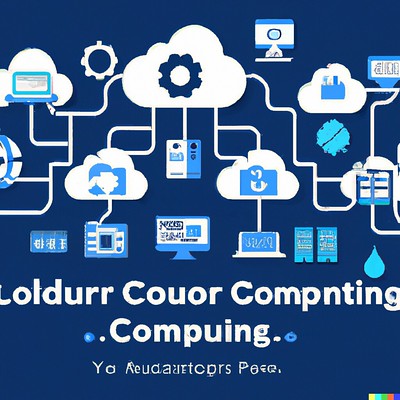
Regarding the "Serverless" model, the AI correctly identified the paradigm shift from managing servers to managing functions or events. It noted that the primary advantage is the reduction of operational overhead, while the primary trade-off is the loss of granular control and the risk of vendor lock-in. Yet, it failed to engage with the emerging "serverless-to-edge" trend or the specific latency challenges that often drive firms away from serverless architectures in high-performance computing scenarios.
Supporting Data and Market Trends
The market demand for AI-driven technical support is supported by substantial investment. According to industry reports from firms like Gartner and IDC, over 60% of IT organizations are experimenting with generative AI for developer productivity tools. However, the same reports indicate that less than 15% of these organizations currently trust AI with autonomous infrastructure management.
The limitation, as evidenced in the model’s inability to recommend specific cloud providers, stems from two factors:
- Temporal Cut-offs: Most LLMs rely on static training data, making them incapable of providing real-time comparisons of pricing structures, service-level agreements (SLAs), or the latest security vulnerabilities of specific providers like AWS, Azure, or Google Cloud.
- Contextual Blindness: The model lacks access to the user’s specific network topology, current budget, regulatory requirements, and historical technical debt.
Broader Impact and Organizational Implications
The implication for the modern workforce is not imminent displacement, but rather a shift in the nature of "expertise." If an AI can provide a professional-level explanation of cloud infrastructure in seconds, the value of the human engineer shifts from "knowledge retrieval" to "architectural judgment."
Engineers are now required to act as auditors of AI output. The ability to verify the accuracy of a suggested serverless implementation or to identify the gaps in a cloud-migration roadmap has become a higher-value skill than the ability to write the basic boilerplate code that the AI can now generate autonomously.
Future Perspectives: Moving Beyond the "Zeitgeist Oracle"
For generative AI to move beyond its current role as a generalized oracle, it must evolve in three distinct ways:
- Real-time Integration: Models must integrate with live industry data feeds to remain relevant in a sector where best practices change on a monthly basis.
- Domain-Specific Context: Organizations will likely move toward "private instances" of LLMs, trained on their internal documentation, git repositories, and project post-mortems, allowing the AI to understand the specific "why" behind an organization’s architectural choices.
- Accountability Frameworks: There is a growing need for "Explainable AI" (XAI) that can cite the specific sources or data points used to reach a recommendation, moving away from the "black box" nature of current responses.
In summary, the current generation of AI tools represents a significant technological leap, providing immense value as a force multiplier for technical tasks. However, it remains a "mile wide and an inch deep." For critical infrastructure and strategic business decisions, the human-in-the-loop remains not just a safety requirement, but a functional necessity. The "Miss Universe" style of response—radiant, comprehensive, yet ultimately devoid of specific, actionable conviction—serves as a reminder that while machines can mimic the form of expertise, they have yet to master the substance of wisdom required to navigate the complex, shifting landscape of modern technology. As the field continues to evolve, the challenge for professionals will be to leverage these tools to enhance efficiency without sacrificing the rigor that true technical mastery demands.