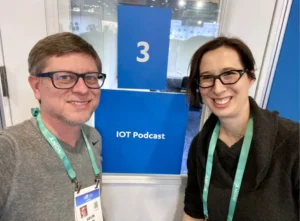
The landscape of technology journalism marked a significant transition this week as "The Internet of Things Podcast," a foundational resource for the connected device industry, released its final episode. After eight years of weekly analysis, hosts Stacey Higginbotham and Kevin Tofel concluded their 437-episode run, opting to focus on the evolution of the industry and the personal motivations behind their departure rather than the immediate news cycle. This conclusion comes at a pivotal moment for the Internet of Things (IoT) sector, which is currently navigating the complexities of the Matter interoperability standard, a shifting venture capital environment, and the highly anticipated initial public offering (IPO) of semiconductor giant Arm.
A Legacy of IoT Documentation and Analysis
Since its inception in 2015, "The Internet of Things Podcast" has served as a primary chronicle for the rise of consumer and industrial connectivity. When the show began, the "smart home" was largely a fragmented collection of proprietary ecosystems, and the industrial IoT (IIoT) was still in its infancy. Over nearly a decade, Higginbotham and Tofel tracked the transition from early-stage experimentation to the current era of standardized protocols and integrated infrastructure.
The decision to conclude the podcast was not spurred by a single event but rather a collective realization regarding the current state of the industry and the personal trajectories of the hosts. Higginbotham, who has been a prominent voice in tech journalism for over two decades—including tenures at Gigaom and Fortune—noted that the landscape of smart home coverage has matured to a point where the "pioneer" phase has ended. The show’s conclusion reflects a broader trend in tech media where long-running niche programs are re-evaluating their roles as technologies move from "emerging" to "ubiquitous."
The Final Guest: A Deep Dive into Matter and Market Maturity
For the series finale, the podcast featured Jennifer Pattison Tuohy, a senior smart home reviewer at The Verge. The discussion provided a comprehensive overview of the current challenges facing the IoT market. A primary focus was the "Matter" standard, the industry-backed protocol designed to ensure that devices from different manufacturers—such as Apple, Google, Amazon, and Samsung—work seamlessly together.
Tuohy noted that while the promise of Matter remains high, the implementation has been slower and more complex than many industry insiders initially predicted. The conversation highlighted that the Connectivity Standards Alliance (CSA) is currently working on expanding Matter to include more device categories, such as household appliances and energy management systems. However, the transition remains hindered by legacy hardware limitations and the need for more robust software updates across various ecosystems.
The guests and hosts also analyzed the shift in business models for connected home devices. As hardware margins remain thin, many companies are pivoting toward subscription-based services. This shift has met with varying degrees of consumer resistance, creating a tension between the need for sustainable long-term cloud support and the consumer expectation of a "one-time purchase" for home hardware.
Contextualizing the Industry: From Silicon to Smart Breakers
While the final episode prioritized reflection, it occurred against a backdrop of significant industry movement. The mention of Arm’s planned IPO serves as a critical data point for the IoT sector. Arm, owned by SoftBank, provides the architecture for the vast majority of IoT processors. Its valuation and subsequent performance on the public market are widely viewed as a bellwether for the future of hardware investment. Analysts suggest that a successful Arm IPO could stimulate further investment in edge computing and low-power silicon, both of which are essential for the next generation of autonomous IoT devices.
Simultaneously, the podcast highlighted new hardware from Leviton and Brilliant, illustrating the move toward "infrastructure IoT." Leviton’s second-generation smart circuit breakers represent a shift from superficial "smart" gadgets—like light bulbs—to integrated home energy management. This reflects a broader industry trend where the most significant innovations are moving behind the walls, focusing on energy efficiency and grid stability rather than just user convenience.
A Curated Transition: Resources for the IoT Community
Recognizing the void left by the podcast’s conclusion, the hosts provided a comprehensive list of resources for professionals and enthusiasts to continue their education in the field. This curated list underscores the diversification of tech media into specialized silos:
- Industrial and Technical Insights: For those focused on the industrial sector, the Journal of Innovation published by the Industrial IoT Consortium and the reporting of James Blackman at RCR Wireless were cited as essential. These sources track the deployment of 5G private networks and the integration of AI in manufacturing.
- Consumer Trends and Reviews: The Verge, TechHive, and The Ambient remain the primary outlets for consumer-facing smart home news, focusing on product testing and ecosystem compatibility.
- Specialized Newsletters: Iskander Smit’s "Target is New" was recommended for its focus on the intersection of IoT, AI, and design, while the Axios Pro Rata newsletter remains a critical resource for tracking the financial health of the sector, including venture capital rounds and acquisitions.
- Community Forums: The r/smarthome and r/homeautomation communities on Reddit were identified as the leading spaces for real-world troubleshooting and peer-to-peer advice, highlighting the importance of community-driven support in a still-complex technical environment.
Defining the "Complete Smart Home"
In response to their final listener question, Higginbotham and Tofel offered a vision of what constitutes a "complete" smart home in 2023. The consensus moved away from the quantity of devices and toward the quality of automation. A complete smart home, they argued, is one that functions invisibly—where sensors and logic engines handle routine tasks like climate control and lighting without requiring manual intervention via a smartphone app.
This perspective aligns with the industry’s push toward "ambient computing," where the environment responds to the user’s presence and needs. The hosts emphasized that future innovation will likely focus less on new types of gadgets and more on the reliability of the underlying infrastructure. This includes the adoption of Thread networking for better device-to-device communication and the use of local processing to enhance privacy and reduce latency.
Chronology of the IoT Media Evolution
The trajectory of "The Internet of Things Podcast" mirrors the broader timeline of the industry it covered:
- 2015-2016: The "Early Adoption" phase. The podcast launches as the industry grapples with the failure of early hubs and the rise of voice assistants like Amazon Alexa.
- 2017-2019: The "Ecosystem Wars." Coverage focuses on the competition between Google Home, Apple HomeKit, and Amazon Alexa. Security vulnerabilities in IoT devices become a recurring theme.
- 2020-2022: The "Standardization" phase. The industry announces Project CHIP (now Matter). The podcast tracks the delays and the eventual release of the Matter 1.0 specification.
- 2023: The "Maturity" phase. The focus shifts to energy management, professional installations, and the sustainability of IoT business models, culminating in the show’s final episode.
Broader Impact and Industry Implications
The end of the podcast signifies a transition in how IoT information is consumed. As the technology becomes more integrated into mainstream consumer electronics and industrial operations, the need for a standalone "IoT" category is diminishing. Instead, IoT is becoming a foundational layer of general technology, automotive, and energy sectors.
For the industry, the loss of a dedicated, high-level analytical platform like Higginbotham’s podcast means that stakeholders will need to rely more heavily on fragmented technical journals and broad-market tech sites. However, the legacy of the show persists in the eight years of archived data, interviews with nearly every major CEO in the space, and a community of listeners who have been educated on the nuances of privacy, security, and interoperability.
As the IoT market moves toward a projected valuation of over $1 trillion by 2030, the questions raised during the 437 episodes—regarding who owns user data, how to ensure device longevity, and how to create truly helpful automation—remain more relevant than ever. The departure of "The Internet of Things Podcast" marks the end of a chapter, but the industry it documented continues to accelerate toward a more connected, albeit more complex, future.