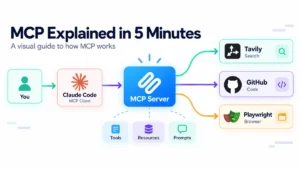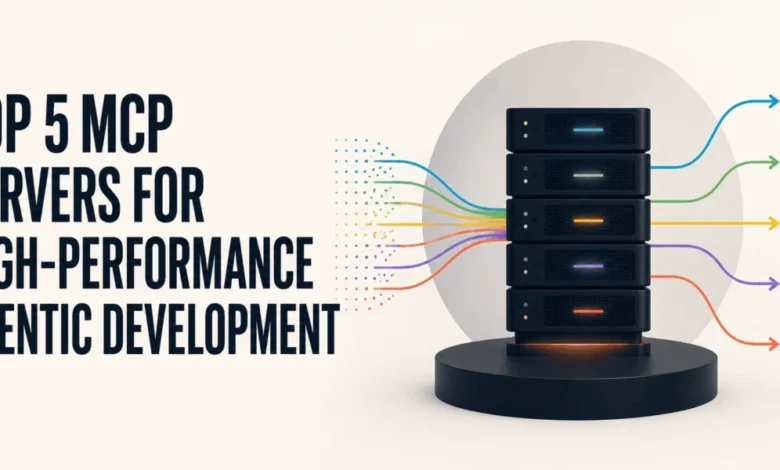
The emergence of MCP addresses a critical bottleneck in the development of AI agents: the fragmentation of integration. Previously, developers were required to build custom "glue code" for every unique API or database an agent needed to access. This manual process was not only time-consuming but also prone to failure as APIs updated or documentation drifted. By establishing a unified protocol, the industry has moved toward a "plug-and-play" architecture, where any MCP-compliant server can provide tools and context to any MCP-compliant client, such as Anthropic’s Claude, OpenAI’s GPT-4o, or localized development environments.
The Chronology of MCP and the Shift Toward Standardization
The trajectory of the Model Context Protocol is a testament to the industry’s desire for interoperability. In late 2024, Anthropic introduced MCP as an open-source initiative, aiming to solve the "context isolation" problem where models remained trapped within their training data. By providing a structured way for models to query local files, web services, and databases, Anthropic laid the groundwork for what is now known as agentic development.
By the first half of 2025, the protocol saw unprecedented adoption rates. Major industry players including Microsoft, Google, and OpenAI integrated MCP support into their respective AI ecosystems. This cross-industry alignment culminated in late 2025 when the protocol was officially donated to a Linux Foundation body—specifically the LF AI & Data Foundation—ensuring that its future development remains vendor-neutral and community-driven. This move solidified MCP as the industry standard, comparable to the role of USB-C in hardware or REST in web services.
As the ecosystem matured, the volume of available MCP servers grew exponentially. However, this growth also introduced noise, with many early repositories becoming obsolete or archived as more robust, officially maintained versions emerged. For developers building high-performance agents, selecting the right servers is no longer about the quantity of tools, but the reliability, precision, and performance of the data they provide.
1. GitHub MCP Server: The Foundation of Autonomous DevOps
The official GitHub MCP server stands as the primary infrastructure for any agentic workflow involving software engineering. Unlike third-party wrappers, this server is maintained by GitHub (a Microsoft subsidiary), ensuring it remains synchronized with the latest updates to the GitHub API, Actions, and security protocols.
For an AI agent, the GitHub MCP server provides more than just access to code; it provides "hands" within the development lifecycle. It exposes tools that allow an agent to read repositories, manage issues, handle pull requests, and monitor GitHub Actions. This allows for a closed-loop system where an agent can identify a bug via an issue report, write a fix, run tests via CI/CD, and submit a PR for human review—all through a single interface.
Data indicates that agents utilizing the official GitHub MCP server experience significantly lower latency in repository indexing compared to traditional REST API calls. With approximately 30,000 GitHub stars, the project has become the most widely adopted server for developers seeking to automate maintenance tasks, triage security vulnerabilities, and streamline documentation updates.
2. Microsoft Playwright MCP: Deterministic Web Interaction
Browser automation has historically been a point of failure for AI agents. Traditional methods often relied on vision-based models to interpret screenshots, leading to high token costs and frequent errors due to the model miscalculating pixel coordinates or failing to understand dynamic web elements. Microsoft’s Playwright MCP addresses these issues by bypassing visual interpretation in favor of the browser’s accessibility tree.
By driving the browser through structured DOM (Document Object Model) data and the accessibility tree, Playwright MCP allows agents to interact with web pages with deterministic precision. The server provides over 40 distinct tools that allow an agent to click, type, scrape, and navigate without needing a vision model in the loop. This architectural choice results in faster execution times and a reduction in the "hallucinations" that occur when a model guesses at the layout of a page.
In high-performance environments, Playwright MCP is the preferred choice for agents tasked with web scraping, automated testing, or complex multi-step web transactions. Its current popularity, sitting at roughly 31,000 stars, reflects its status as the industry standard for reliable web-based agentic behavior.
3. Context7 by Upstash: Solving the API Hallucination Problem
One of the most persistent challenges in AI-assisted coding is "knowledge cutoff." LLMs are often trained on snapshots of documentation that may be months or years out of date. This leads to agents generating code using deprecated APIs or non-existent functions. Context7, developed by Upstash, mitigates this by serving as a bridge to real-time, version-specific library documentation.
Context7 works by injecting up-to-date documentation directly into the agent’s context window. This ensures that when an agent is tasked with writing code for a fast-moving framework—such as Next.js, LangChain, or various cloud SDKs—it is working with the exact syntax and requirements of the current version.
The impact of this server on code quality is measurable. Developers report a drastic reduction in the "write-fail-fix" cycle, as the agent is less likely to produce syntactically correct but functionally broken code. With nearly 59,000 stars, Context7 has become a critical component of the "RAG for Code" (Retrieval-Augmented Generation) movement, prioritizing accuracy over the model’s static training data.
4. Serena by Oraios: Semantic Code Editing via LSP
While basic file access allows an agent to read and overwrite text, it lacks the nuance required for large-scale codebase management. Serena, developed by Oraios, elevates an agent’s capabilities by integrating the Language Server Protocol (LSP). This gives the agent a semantic understanding of the code, similar to how a modern Integrated Development Environment (IDE) like VS Code functions.
Instead of performing crude string replacements, Serena allows an agent to identify symbols, navigate to function definitions, and perform refactoring across 40-plus programming languages. This semantic approach is significantly more token-efficient than sending entire files back and forth between the model and the server. By only reading and modifying the specific symbols or blocks of code relevant to a task, Serena reduces costs and increases the speed of agentic edits.
With approximately 24,000 stars, Serena is increasingly utilized in enterprise environments where agents must navigate massive monorepos. Its ability to provide a "map" of the code rather than just the "text" of the code makes it indispensable for high-performance agentic development.
5. Official Reference Servers: The Essential Primitives
Rounding out the top five is the collection of official reference servers maintained by the Model Context Protocol organization. While individual servers like GitHub or Playwright offer specialized capabilities, the reference collection provides the fundamental primitives required for any agent to function. This includes:
- Filesystem: Secure, controlled access to local files.
- Sequential Thinking: A specialized server that forces the agent to use a structured reasoning process (Chain of Thought) before taking action, reducing impulsive or incorrect outputs.
- Memory: Allows agents to persist context across different sessions, creating a sense of "long-term memory."
- Git and Fetch: Basic tools for version control and simple HTTP requests.
The reference repository has garnered over 80,000 stars, reflecting its role as the foundational "toolkit" for the MCP community. However, industry analysts note a shift in this repository; several early servers, such as the standalone Postgres and Puppeteer implementations, have been archived in favor of more specialized or integrated solutions. This highlights the importance for developers to verify the active maintenance status of a server before integrating it into a production stack.
Broader Implications and Industry Impact
The standardization of tool access through MCP has profound implications for the future of software development. By decoupling the "intelligence" (the model) from the "tools" (the MCP servers), the industry has created a modular ecosystem where improvements in one area immediately benefit the other.
From an economic perspective, this modularity lowers the barrier to entry for AI startups. Rather than spending resources building complex integrations, developers can leverage existing MCP servers to give their agents immediate, high-performance capabilities. Furthermore, the donation of the protocol to the Linux Foundation ensures that no single corporation can act as a gatekeeper for agentic interoperability.
However, the rise of MCP also brings new challenges, particularly in the realm of security. Giving an AI agent the ability to execute code, manage repositories, and navigate the web requires robust permissioning frameworks. The current trend in MCP development is focused on "human-in-the-loop" confirmations and granular access controls to ensure that agents remain helpful without becoming liabilities.
Conclusion
The transition from bespoke integrations to a standardized Model Context Protocol marks a turning point in the AI era. The five servers highlighted—GitHub, Playwright, Context7, Serena, and the Official Reference Servers—represent the current state of the art in agentic development. They provide the precision, data, and reasoning capabilities necessary for agents to move beyond simple chat interfaces and into the realm of truly autonomous, high-performance digital workers. As the ecosystem continues to evolve, the focus will likely shift from basic connectivity to advanced security and more sophisticated semantic understanding, further cementing MCP as the backbone of the next generation of software.