LimeWire Re-emerges as a Web3 Generative AI Powerhouse, Offering Creators New Avenues for Content Creation and Monetization

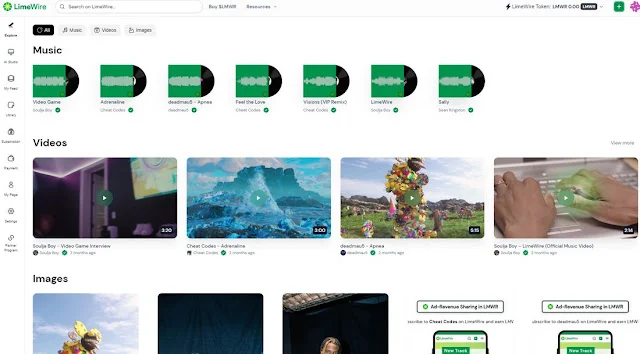
In a significant pivot from its controversial past, LimeWire, a name once synonymous with peer-to-peer file-sharing, has officially relaunched as a cutting-edge generative artificial intelligence (AI) content publishing platform. This strategic transformation positions the company at the nexus of the burgeoning AI and Web3 economies, aiming to empower creators with innovative tools for content generation, sharing, and monetization. The platform’s re-entry into the digital landscape underscores a broader industry trend towards decentralized content ecosystems and AI-driven creative processes, promising a fresh approach to digital asset ownership and revenue distribution.
A Phoenix from the Ashes: LimeWire’s Evolution
The original LimeWire gained notoriety in the early 2000s as one of the most popular free file-sharing applications, enabling users to exchange music, movies, and software. Its widespread use, however, led to extensive legal battles with the Recording Industry Association of America (RIAA) and other copyright holders. Following years of litigation, a federal court injunction in 2010 forced LimeWire to cease operations, marking what many believed to be the definitive end of the brand.
Fast forward to 2022, and the dormant brand was acquired by Austrian entrepreneurs Julian and Paul Zehetmayr, who unveiled ambitious plans for its revival. Their vision was not to resurrect the old file-sharing model but to reimagine LimeWire for the modern digital era, specifically targeting the then-nascent Web3 and NFT spaces. This initial relaunch focused on an NFT marketplace for music, with celebrity endorsements from artists like Deadmau5 and Soulja Boy. The evolution continued swiftly, integrating generative AI capabilities to address the exponential growth and demand for AI-created content. This timeline highlights a deliberate strategic shift, adapting to technological advancements and market opportunities rather than clinging to a defunct business model. The company’s current iteration, LimeWire Studio, is a testament to this adaptive strategy, marrying AI’s creative potential with Web3’s promise of decentralized ownership and creator empowerment.
Democratizing Creativity with AI Image Generation
At its core, the revamped LimeWire Studio offers a robust suite of generative AI tools, with a current primary focus on AI image generation. This move aligns with the explosive popularity of text-to-image models that have captivated both professional artists and casual users since late 2022. The platform supports industry-leading AI models, including Stable Diffusion 2.1, Stable Diffusion XL (SDXL), and DALL-E 2. These advanced algorithms enable users to translate textual prompts into high-quality visual art, ranging from photorealistic images to intricate digital paintings.
The integration of multiple sophisticated AI models provides creators with unparalleled flexibility. Stable Diffusion, an open-source model, is renowned for its versatility and ability to generate diverse image styles. SDXL, its more advanced successor, offers enhanced image quality, finer detail, and improved prompt understanding, leading to more aesthetically pleasing and coherent outputs. DALL-E 2, developed by OpenAI, is celebrated for its ability to generate highly creative and contextually relevant images from natural language descriptions. By offering access to these varied models, LimeWire ensures that users can experiment with different AI strengths and artistic outputs.
Beyond raw generation, LimeWire Studio provides extensive customization options. Users can initiate creations with simple keyword prompts or delve into more complex, descriptive instructions to fine-tune their artistic vision. The platform also features a variety of design styles, including cinematic, digital art, pixel art, anime, and analog film, allowing creators to impart a distinct visual identity to their AI-generated art. Additional features such as samplers enable granular control over the quality and detail levels, while prompt guidance assists both novices and experienced users in crafting effective instructions for optimal results. The development of LimeWire’s own proprietary AI model signals an ongoing commitment to innovation, promising unique features and potentially specialized capabilities tailored to its platform ecosystem. This continuous enhancement ensures LimeWire remains competitive in a rapidly evolving AI landscape.
Web3 Integration: Ownership, Monetization, and the Creator Economy
Perhaps the most distinctive aspect of LimeWire’s new incarnation is its deep integration with Web3 technologies, specifically Non-Fungible Tokens (NFTs) and cryptocurrency. This integration provides creators with novel monetization avenues that differentiate LimeWire from traditional content platforms.
Once a creator completes an AI-generated piece of content, LimeWire offers the option to publish it directly onto the platform. Crucially, the platform automates the process of minting this creation as an NFT on either the Polygon or Algorand blockchain. This automatic minting process is a significant feature, removing the technical barriers often associated with NFT creation. Polygon, a popular Layer 2 scaling solution for Ethereum, is known for its lower transaction fees and faster processing times, making it an attractive choice for creators. Algorand, a pure proof-of-stake blockchain, offers similar benefits with a strong emphasis on security and scalability. By leveraging these efficient blockchains, LimeWire ensures that creators can secure authenticity and verifiable ownership of their digital assets with minimal friction.
Creators retain full control over the accessibility of their NFT creations. They can opt for a public release, making their content discoverable by anyone on the platform and opening opportunities for community engagement and trading. Alternatively, creators can choose to share their posts exclusively with premium subscribers, fostering a more intimate and personalized experience for dedicated fans. This flexibility empowers creators to build diverse revenue streams, catering to both broad audiences and loyal supporters. A key incentive for creators is the 2.5% royalty they earn each time their content is traded on the platform, establishing a continuous income stream from the secondary market.
Beyond NFT sales and royalties, LimeWire introduces an innovative ad revenue-sharing model. Creators publishing content on LimeWire receive 70% of all ad revenue generated from users viewing their images, music, and videos on the platform. This model represents a significant departure from the typically lower revenue shares offered by conventional social media and content platforms, which often retain a much larger percentage. For designers, artists, and future musicians leveraging AI tools, this revenue share can provide a substantial supplementary income, incentivizing high-quality content creation and engagement.
All earnings on LimeWire are distributed in LMWR tokens, the platform’s native cryptocurrency. This token-based economy aligns with the broader Web3 philosophy, where digital assets facilitate transactions and reward participation. LMWR tokens can be traded on major crypto exchanges such as Kraken, ByBit, and UniSwap, providing liquidity and convertibility into other cryptocurrencies or fiat currency. Furthermore, LMWR tokens can be used within the LimeWire ecosystem, for instance, to pay for prompts when utilizing the generative AI tools, thereby creating a self-sustaining economic loop.
Artist Endorsements and the Future of Content Creation
The platform’s appeal is further validated by the involvement of acclaimed artists and musicians. The fact that figures like Deadmau5, Soulja Boy, and Sean Kingston have embraced LimeWire to publish their content, often in the form of NFT music, videos, and images, lends credibility to the platform’s vision. These artists, known for their innovative approaches to music and fan engagement, recognize the potential of Web3 and AI to forge new connections with their audience and explore novel revenue models outside traditional industry structures. Their participation signals a growing acceptance of AI-generated and blockchain-secured content within mainstream creative circles.
LimeWire’s strategic roadmap includes ambitious plans to expand beyond image generation into AI music and video generation tools. This expansion is critical for positioning LimeWire as a comprehensive creative hub. AI music generation, while still in its nascent stages, holds the promise of assisting artists in composing, arranging, and producing tracks, potentially democratizing music creation. Similarly, AI video generation tools could revolutionize filmmaking, animation, and visual storytelling, allowing creators to produce complex visual narratives with unprecedented ease. These future capabilities underscore LimeWire’s commitment to continuous innovation and its aspiration to become a leading platform for multimodal AI-powered content creation.
Pricing Structure and Accessibility
LimeWire offers a tiered pricing structure designed to cater to a wide range of creators, from hobbyists to professional artists. The platform is accessible for free upon registration, providing users with 10 credits and the ability to generate up to 20 AI images per day. Free users also receive a 50% share of ad revenue, allowing them to experiment with the tools and earn a modest income.
For creators seeking more extensive capabilities and higher revenue shares, LimeWire offers several premium plans:
- Basic Plan ($9.99/month): Provides 1,000 credits (up to 2,000 image generations), early access to new AI models, and a 50% ad revenue share.
- Pro Plan ($29/month): Offers 3,750 credits (up to 7,500 image generations), early access, and a 60% ad revenue share.
- Premium Plan ($49/month): Includes 5,000 credits (up to 10,000 image generations), early access, and a 70% ad revenue share.
- Elite Plan ($99/month): Delivers 11,250 credits (up to 22,500 image generations), early access, and a 70% ad revenue share.
All premium plans come with additional benefits such as a Pro profile badge, full creation history, faster image generation, and an ad-free experience. This structured pricing ensures that creators can scale their usage and revenue potential according to their needs, making professional-grade AI tools and monetization accessible at various investment levels.
Broader Implications and Market Positioning
LimeWire’s re-emergence in the AI and Web3 space carries significant implications for the broader creative industry. It exemplifies the ongoing convergence of advanced AI capabilities with blockchain technology to redefine content creation, ownership, and distribution. By democratizing access to powerful AI tools and providing robust monetization frameworks, LimeWire aims to empower a new generation of digital artists, musicians, and content creators.
However, the platform also navigates a complex landscape. The generative AI sector faces ongoing discussions around copyright, ethical use, and the potential displacement of human creative labor. Similarly, the NFT and cryptocurrency markets are subject to volatility and regulatory scrutiny. LimeWire’s success will depend not only on the technological prowess of its tools but also on its ability to address these challenges, build a thriving community, and adapt to evolving market conditions. Its differentiation lies in combining a comprehensive AI creation suite with seamless Web3 monetization, aiming to create an all-in-one ecosystem for digital content.
In conclusion, LimeWire has undergone a remarkable metamorphosis, shedding its past notoriety to embrace the future of digital content. By integrating cutting-edge generative AI with the principles of Web3, the platform offers an inclusive environment where anyone can unleash their artistic potential, secure ownership of their creations, and earn revenue. As LimeWire continues to innovate and expand its offerings into AI music and video, it stands poised to play a significant role in shaping the evolving creative landscape, promising a future brimming with new possibilities for artistic expression and economic empowerment for creators worldwide.