AI Coding Agents Help Researchers Slash Quantum Computing Benchmarks for Bitcoin and Ethereum Cryptography

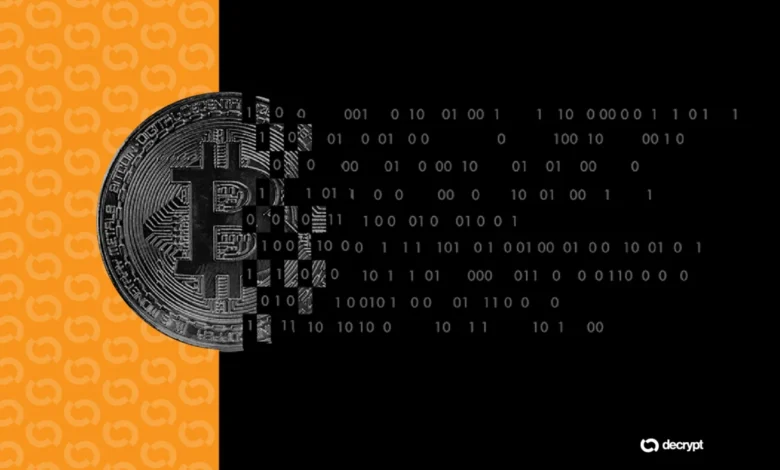
The intersection of artificial intelligence and quantum computing has yielded a sobering milestone for the cryptocurrency sector. A collaborative research paper published on Wednesday details how investigators leveraging AI coding agents successfully reduced a key resource benchmark for executing a potential quantum attack on Bitcoin and Ethereum by an astonishing 86%.
While the breakthrough does not mean cryptocurrencies are in immediate danger—nor does it crack any active digital wallets—it represents a significant leap forward in optimizing the quantum algorithms required to target classical public-key cryptography. The findings stem from a specialized open competition known as ECDSA.Fail, illustrating how rapidly computational efficiencies can be realized when human ingenuity is paired with autonomous machine-learning agents.
The Mechanics of the Breakthrough: Decoding ECDSA.Fail
The findings emerged directly from ECDSA.Fail, an open-source research competition launched in late May by Eigen Labs. The initiative drew more than 100 participants, ranging from independent cryptographers to researchers from prominent Web3 and blockchain infrastructure firms. Collaborators on the subsequent paper included personnel from Theta Labs, MultiVM Labs, Eigen Labs, Trail of Bits, StarkWare, and the Ethereum Foundation.
The primary objective of the competition was to design, test, and optimize quantum circuits capable of performing calculations targeting secp256k1. This specific elliptic curve underpins transaction signatures across the Bitcoin and Ethereum networks. By focusing on a vital intermediary step—recovering a wallet’s private key from its public key—participants aimed to drive down the hardware and computational demands necessary to complete the calculation.
In quantum computing assessments, efficiency is measured through a composite score combining logical qubits and Toffoli gates—a specialized, highly complex quantum logic gate originally theorized by physicist Tommaso Toffoli in 1980. Because physical and logical quantum resources are exceptionally scarce and error-prone, lowering the product of qubits and Toffoli gates is critical to making a theoretical quantum algorithm feasible in the real world.
When the competition concluded its initial milestone phase on July 26, participants had managed to compress the benchmark resource score from an initial 10.75 billion down to 1.496 billion. The winning configuration utilized 1,151 logical qubits alongside approximately 1.3 million Toffoli gates. According to the research team, this optimized score is roughly half of the benchmark published by Google Quantum AI in March of the same year, though differences in verification methodologies mean direct apples-to-apples comparisons remain complex.
Importantly, the researchers emphasize that their experiments verified the mathematical correctness of the quantum circuits rather than mounting a live attack against actual blockchain assets. No Bitcoin or Ethereum funds were compromised.
The Rise of Open Autoresearch: Human-AI Collaboration
A notable takeaway from the new paper is the methodological framework employed by the investigators. The team highlighted what they termed "Open Autoresearch"—a verifier-gated research paradigm wherein human experts and autonomous AI coding agents collaborated in iterative cycles.
In this workflow, AI agents were tasked with writing, debugging, and optimizing candidate code implementations for the quantum circuits. A strict verification gate tested each iteration against predefined mathematical and computational objectives. If an AI-generated script improved the circuit’s efficiency without introducing logical flaws, it was integrated into the shared research pool.
This iterative loop allowed the collective to bypass traditional bottlenecks in academic research. By automating the trial-and-error phases of circuit design, the AI coding agents enabled researchers to explore a vastly wider design space in a fraction of the standard time. Industry analysts view this approach as a harbinger of how complex cryptographic and cybersecurity problems will be tackled in the future, as AI tools become increasingly adept at specialized software and hardware engineering.
Understanding "Q-Day" and the Threat Landscape
The specter of a quantum computer capable of breaking modern encryption—a milestone colloquially dubbed "Q-Day"—has long haunted the cybersecurity and cryptocurrency communities. Cryptocurrencies rely heavily on asymmetric cryptography, including ECDSA (Elliptic Curve Digital Signature Algorithm) for transaction signing and RSA or similar algorithms for secure communications.
While classical computers would require billions of years to guess an ECDSA private key via brute force, a sufficiently powerful quantum computer running Shor’s algorithm could theoretically solve the underlying mathematical problem in a matter of hours or minutes. Once Q-Day arrives, any wallet address that has publicly exposed its public key—such as addresses that have previously sent outgoing transactions or legacy Bitcoin addresses—could theoretically be targeted by malicious actors looking to drain funds.
However, the exact timeline for Q-Day remains a subject of intense debate among physicists and computer scientists. While state-backed laboratories and tech giants like IBM, Google, and various startups are making steady incremental progress in scaling quantum hardware, building a fault-tolerant quantum computer with millions of error-corrected physical qubits remains an extraordinarily difficult engineering challenge. Estimates for when such a machine might materialize range anywhere from a decade to several decades away.
Regulatory Timelines and the Post-Quantum Migration
Recognizing the long-term risk, standardization bodies and financial institutions are already proactively planning for a post-quantum future.
In their published paper, the researchers pointed to mounting regulatory and institutional pressures to phase out legacy cryptographic standards. "Although its timing remains uncertain, migration away from vulnerable cryptography is already under way," the authors wrote. They noted that the U.S. National Institute of Standards and Technology (NIST) has already finalized initial post-quantum cryptography standards. Furthermore, the initial public draft of NIST IR 8547 proposes formally deprecating classical public-key algorithms operating at the 112-bit security level after 2030, and completely disallowing them by 2035.
Because upgrading an entire decentralized blockchain network like Bitcoin or Ethereum is a monumental coordination challenge requiring broad consensus among node operators, developers, and users, preparation must begin long before Q-Day becomes a reality.
Capital Influx: The Crypto Industry Fortifies Its Defenses
In response to accelerating quantum research and milestones like the ECDSA.Fail breakthrough, the cryptocurrency industry has dramatically ramped up financial commitments toward quantum-resistant defenses.
The urgency has catalyzed significant private capital deployment over recent months:
- July Financial Commitments: Financial services firm Galaxy Digital earmarked up to $5 million specifically targeted toward researching and preparing Bitcoin infrastructure for the quantum threat.
- The 15 Million Dollar Coalition: A consortium of nine financial and technology heavyweights—including Wall Street giant BlackRock, cryptocurrency exchange Coinbase, and software intelligence firm Strategy—pledged a combined $15 million over a three-year period. This funding is dedicated to comprehensive Bitcoin security research, which heavily emphasizes auditing and developing quantum-resistant upgrade paths.
These initiatives are aimed at designing, testing, and ultimately implementing quantum-resistant signature schemes—such as lattice-based cryptography or hash-based signatures—into future hard forks or protocol upgrades for Bitcoin, Ethereum, and other major layer-1 networks.
Broader Implications and Next Steps
The 86% reduction in quantum resource benchmarks achieved via AI agents serves as both a warning and a validation. On one hand, it demonstrates that threat actors—whether nation-states or sophisticated criminal syndicates—will likely have access to increasingly powerful, AI-accelerated tools to optimize attacks against legacy cryptographic systems. On the other hand, the exact same research methodology provides blockchain developers and security researchers with the computational firepower needed to model vulnerabilities and stress-test proposed post-quantum upgrades long before a viable threat materializes.
As the race between quantum computing development and cryptographic migration accelerates, events like the ECDSA.Fail competition underscore that network security can no longer rely on obscurity or long hardware timelines. The transition to quantum-resistant blockchains is no longer a distant theoretical exercise; it has become an active, well-funded engineering race against the clock.