Dataclasses for Structured Application Data: Replacing Fragile Dictionaries with Robust Models

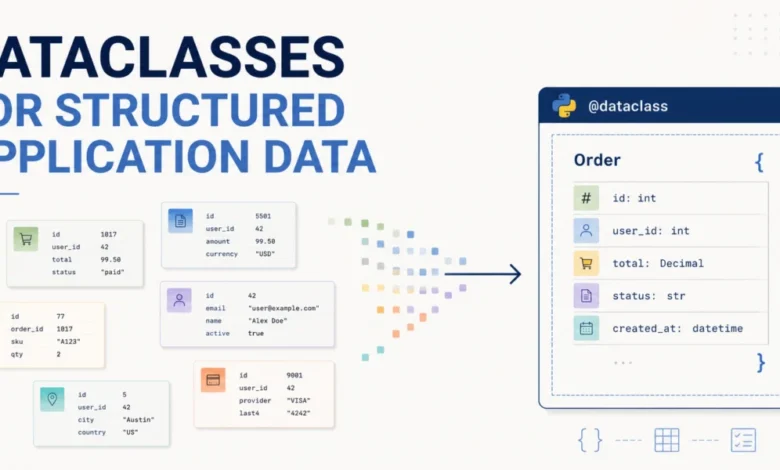
The evolution of modern software architecture in Python has increasingly favored type safety and structural clarity over the permissive nature of legacy data structures. For years, the Python dictionary has served as the default container for configuration management, batch job parameters, and API payloads. While dictionaries offer unparalleled flexibility, their lack of a formal schema often leads to "silent failures"—situations where misspelled keys, unexpected data types, or inconsistent nesting patterns propagate through an application, only to trigger runtime exceptions deep within the execution stack.
The introduction of the dataclass decorator in Python 3.7, formalized under PEP 557, marked a significant shift in how developers handle internal data modeling. By providing a standard, low-overhead way to define data containers, the dataclasses module allows developers to replace brittle, untyped dictionaries with structured, readable, and maintainable objects. This transition is not merely a stylistic preference; it is a critical engineering decision that impacts the reliability and long-term maintainability of complex data-processing pipelines.
The Problem with Dictionary-Based Configurations
In many enterprise-scale batch processing environments, configuration dictionaries often grow organically. A typical configuration file might start as a simple set of parameters: batch_size, max_attempts, and output_format. As the application scales, these dictionaries frequently become nested, with different modules assuming responsibility for different portions of the configuration tree.
The inherent risk lies in the lack of validation. If a developer at a remote call site introduces a typo—such as config.get("batchsize") instead of batch_size—the system may silently default to a fallback value of 100 instead of the intended 500. Because the dictionary does not enforce its own structure, this discrepancy remains hidden until a downstream process fails to match the expected throughput, often resulting in complex debugging scenarios that could have been avoided with a more rigid structure.
The Structural Shift: From Dictionaries to Dataclasses
The dataclass decorator addresses these issues by generating boilerplate code, including __init__, __repr__, and __eq__ methods, based on type-annotated field definitions. By shifting from a dictionary to a class, the developer gains immediate feedback from IDEs and static analysis tools like Mypy or Pyright. An attempt to access a non-existent attribute now results in an AttributeError at the point of failure, rather than a silent logic error.
However, it is vital to acknowledge the boundaries of this tool. As noted in the original design specifications of PEP 557, dataclasses use annotations for discovery but do not enforce type checking at runtime. A field defined as an integer will accept a string unless additional validation logic is implemented. Consequently, a dataclass serves as a contract—a readable, structured representation of the data—rather than a full-fledged validation engine.
Building Complexity through Composition
As applications mature, the "flat" configuration model becomes insufficient. Effective software design utilizes composition, breaking down monolithic configuration structures into smaller, reusable blocks. By creating dedicated classes for specific domains—such as RetryPolicy for error handling or OutputConfig for data storage—developers ensure that each component is responsible for a single, coherent aspect of the application.
This approach simplifies testing and maintenance. When the RetryPolicy is defined as a standalone dataclass, it can be tested in isolation, ensuring that backoff logic and attempt counts are handled consistently across different services. During construction, using field(default_factory=...) is a crucial practice. This ensures that every instance of a configuration object receives its own fresh instance of the nested structure, preventing the "shared state" bugs that often plague developers who use mutable default arguments in Python.
The Role of Post-Initialization Validation
While dataclasses provide the structure, the __post_init__ method provides the guardrails. This hook executes immediately after the generated __init__ method, offering a designated space for value checking. For instance, if a batch_size must be a positive integer or a retry count must fall within a specific range, these invariants can be explicitly defined.
By placing this logic inside __post_init__, developers ensure that any "impossible" configuration fails at the moment of object instantiation. This creates a fail-fast environment, where the system identifies invalid states before they can influence the business logic, effectively narrowing the gap between system definition and system operation.
Immutability and State Management
In many high-throughput systems, configuration data should be immutable once the application begins its execution cycle. Setting frozen=True in the dataclass decorator enforces this principle, raising a FrozenInstanceError if an attempt is made to modify an attribute after creation.
This design pattern encourages a "snapshot" mentality. If a modification is required—such as scaling a batch job up for a specific workload—the dataclasses.replace() function allows developers to generate a new, validated instance based on the old one. This preserves the integrity of the original configuration while providing the flexibility required for dynamic operations.
Strategic Serialization and Boundary Control
Serialization remains a major challenge when moving from dictionaries to objects. The asdict() utility provides a way to export dataclass structures to JSON, but the return journey is not automatic. Because asdict() flattens the structure, a naive attempt to rebuild an object using **data will result in the loss of nested types.
To bridge this, developers must implement factory methods, such as a custom from_dict() class method. This explicit approach is a feature, not a bug. It forces the developer to handle the serialization boundary intentionally, defining exactly how raw, untrusted data from an external API or file should be coerced into the internal application model.
Decision Matrix: Dataclass vs. Pydantic vs. Dictionary
The choice of data structure should be dictated by the source of the data and the level of trust the application places in it:
- Plain Dictionaries: Best reserved for transient, short-lived, or highly flexible data where the cost of defining a schema outweighs the benefit of strictness.
- Dataclasses: Ideal for trusted, internal application data. They provide a clear contract, require no external dependencies, and offer excellent support for IDEs and type checkers.
- Pydantic: The superior choice when dealing with untrusted input, such as user-submitted payloads or external API responses. Pydantic offers advanced features like runtime type coercion and sophisticated multi-field validation, which are necessary when the application cannot guarantee the quality of incoming data.
Future Implications and Best Practices
The industry-wide move toward structured data models represents a broader trend toward professionalizing Python codebases. As systems grow in complexity, the "move fast and break things" philosophy often gives way to "build robustly and maintain longer."
The adoption of dataclasses is a low-friction entry point for teams looking to improve code quality. By moving from implicit, string-keyed dictionaries to explicit, type-checked dataclasses, developers reduce the cognitive load on their peers, improve the efficacy of their automated testing, and build systems that are fundamentally easier to reason about.
While dataclasses are not a silver bullet—they do not replace the need for input validation or architectural design—they provide the necessary foundation for clean, reliable code. In an era where data integrity is paramount, the ability to put the "agreement in writing" via a formal class definition is a significant asset to any development project. Moving forward, teams that prioritize these structural improvements will likely see fewer production incidents related to configuration errors and a more cohesive development workflow across their entire stack.