Interpretable Text Classification: Probing Scikit-LLM Embedding Spaces to Demystify Large Language Models

The rapid adoption of Large Language Models (LLMs) has fundamentally altered the landscape of natural language processing (NLP). While these models provide unprecedented accuracy in text classification, sentiment analysis, and semantic retrieval, their inherent "black-box" nature presents a significant hurdle for enterprises and researchers who require transparency and accountability. As developers increasingly rely on LLMs to transform raw text into dense numerical vector representations—known as embeddings—the necessity to audit and understand these internal spaces has become paramount. By utilizing tools such as probing classifiers, UMAP (Uniform Manifold Approximation and Projection) visualization, and SHAP (SHapley Additive exPlanations) values, practitioners can now effectively peel back the layers of these models to inspect how semantic information is encoded and utilized.
The Evolution of Text Classification
Historically, text classification relied on manual feature engineering or simpler statistical models like Naive Bayes and Support Vector Machines. These models offered high degrees of interpretability, as specific features (such as word frequency) could be directly mapped to classification outcomes. The rise of Deep Learning and, more recently, Transformer-based architectures, shifted this paradigm. LLMs excel at capturing complex linguistic nuances, sarcasm, and context-dependent meanings, yet they store this information in high-dimensional vector spaces that are not inherently human-readable.
This shift has created a "transparency gap." When a system classifies a movie review as "positive," it often does so through thousands of mathematical operations across hidden layers, leaving engineers unable to explain the rationale to stakeholders or regulatory bodies. The methodology of "probing" serves as a bridge, allowing researchers to evaluate the quality of embeddings by testing them against simpler, transparent models to verify whether the semantic signals are robust enough for downstream tasks.
Implementing a Probing Framework
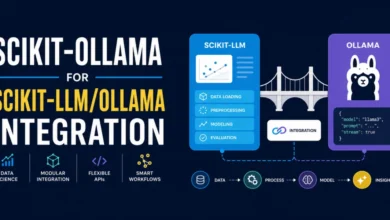
To assess the quality of LLM-generated embeddings, the current industry standard involves a systematic workflow: model configuration, vectorization, and interpretability analysis. This process can be executed locally using the Scikit-LLM library in conjunction with local runtime environments like Ollama. This approach ensures data privacy and lowers computational costs by avoiding constant API calls to proprietary cloud services.
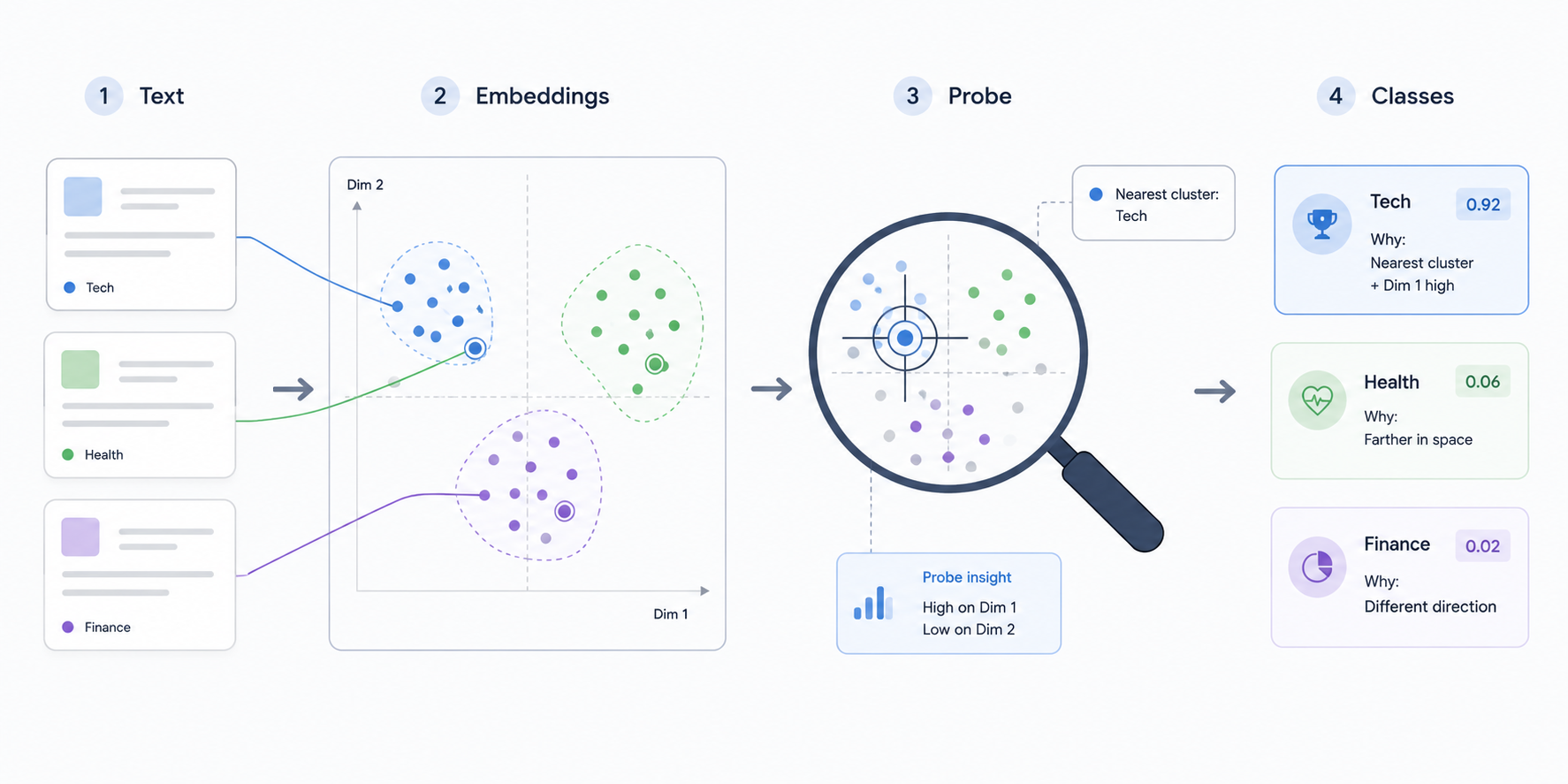
The technical workflow begins with the integration of an embedding model, such as the all-minilm architecture. This model is tasked with processing a standardized dataset, such as the Stanford IMDB movie review corpus. By selecting a balanced subset of 1,000 reviews—500 positive and 500 negative—researchers can create a controlled environment to measure model performance. The data is subjected to stratified sampling to ensure the model does not suffer from class imbalance during the training phase.
Once the embeddings are generated, a logistic regression model is deployed as a "probe." The logic here is deliberate: if a simple linear model can achieve high classification accuracy using these embeddings as input, it confirms that the LLM has successfully distilled the raw text into a linearly separable format. If the probe fails, it suggests that the LLM’s embeddings may be noisy or that the model requires fine-tuning to better capture the specific nuances of the target domain.
Visualizing Latent Spaces with UMAP
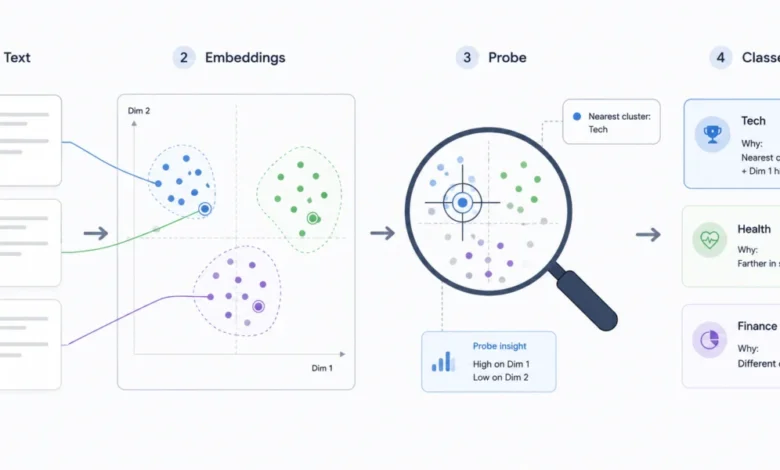
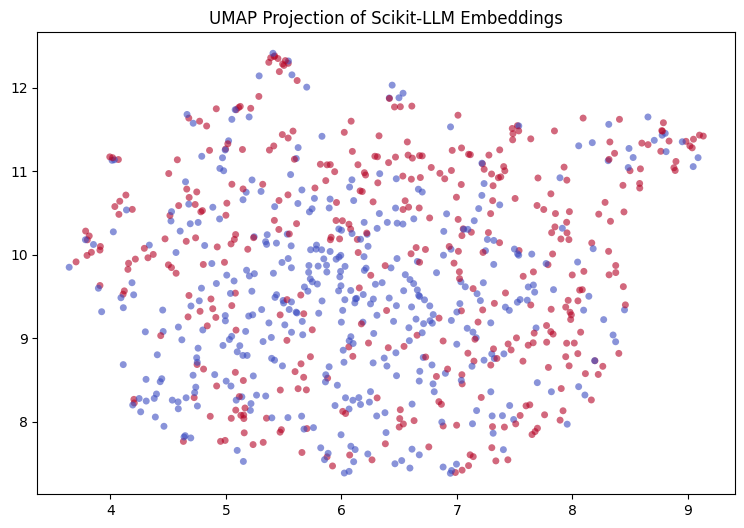
Once the probing model is trained, the next step involves spatial visualization. High-dimensional data (often comprising 384 or more dimensions) is impossible to interpret visually. UMAP, a manifold learning technique, serves as the primary tool for reducing these dimensions into a two-dimensional coordinate system.
The application of UMAP to embedding spaces provides a macroscopic view of how the LLM categorizes text. In recent benchmarks using the IMDB dataset, the visualization reveals a clear, albeit imperfect, clustering effect. While there is no rigid boundary between positive and negative sentiments—reflecting the subjective nature of human language—the spatial separation demonstrates that the LLM effectively encodes sentiment polarity into distinct regions of the vector space. This visualization confirms that the model is not merely guessing, but is utilizing a structured geometric representation of semantic meaning.
Deconstructing Decisions via SHAP Values
While UMAP provides a global view of the data, SHAP values offer granular, feature-level insights. SHAP is based on game theory and attributes a "contribution value" to every dimension of an embedding vector. By calculating the impact of each latent feature on the final classification decision, developers can identify which specific dimensions are most responsible for a prediction.
Data analysis indicates that specific dimensions within the embedding vector act as "indicators" for sentiment. For instance, in current experiments, specific latent features (such as dimension 208) consistently emerge as strong signals for negative sentiment, while others (like dimension 139) act as positive indicators. This capability is critical for enterprise applications; if a model consistently misclassifies a specific type of text, SHAP analysis allows engineers to trace that failure back to specific dimensions, effectively identifying where the model’s "reasoning" goes awry.
Broader Implications and Future Outlook
The ability to probe and interpret embedding spaces has profound implications for the development of ethical and reliable AI. As regulatory frameworks such as the European Union’s AI Act begin to mandate transparency for high-risk AI systems, the use of interpretability tools will transition from an optional research practice to a compliance requirement.
Furthermore, this methodology allows for the "debugging" of LLMs. If an embedding space is found to be biased or to contain irrelevant noise, developers can refine the preprocessing steps or the choice of embedding model accordingly. This iterative loop of generation, probing, and refinement is essential for building resilient systems that move beyond the "black box" stigma.
In conclusion, the integration of Scikit-LLM, UMAP, and SHAP represents a significant step forward in making AI systems observable. By treating embeddings not as immutable outputs, but as interpretable data structures, researchers and developers can ensure that the next generation of text classifiers is not only more powerful but also more accountable. As these techniques become standardized, they will provide the foundation for a more transparent ecosystem where the internal decision-making processes of machine learning models are no longer obscured, but rather open to rigorous scientific inquiry and continuous improvement.