Build a Multi-Modal RAG Pipeline in Python to Retrieve and Reason Over Text and Images in Complex Documents.

The modern corporate landscape relies heavily on complex, unstructured documentation. From quarterly financial reports replete with intricate data tables to technical engineering manuals filled with schematic diagrams, the information required for critical decision-making is rarely contained in plain text alone. Historically, Retrieval-Augmented Generation (RAG) systems have been optimized for textual data, often failing when encountering visual information. This limitation has created a significant "information gap" for enterprises attempting to automate knowledge management. By implementing a multi-modal RAG pipeline, developers can now bridge this gap, treating images as first-class citizens within the retrieval process.
The Evolution of Retrieval Systems
Traditional RAG frameworks operate on a linear logic: documents are chunked into text segments, converted into vector embeddings, and stored in a database. When a user poses a query, the system retrieves the most semantically similar text segments. However, this approach inherently ignores the visual context of a document. In a PDF document, an embedded chart often provides the primary evidence for a business trend, while the surrounding text may only offer a cursory explanation.
Standard text-based chunking often destroys the structural integrity of tables and completely bypasses visual assets. According to recent industry benchmarks, as much as 40% of the critical information in technical documentation is embedded in non-textual formats. This shift toward multi-modal architectures—systems capable of processing both text and imagery—marks a fundamental transition in how artificial intelligence interacts with human-generated content.
Chronology and Architecture of the Multi-Modal Pipeline
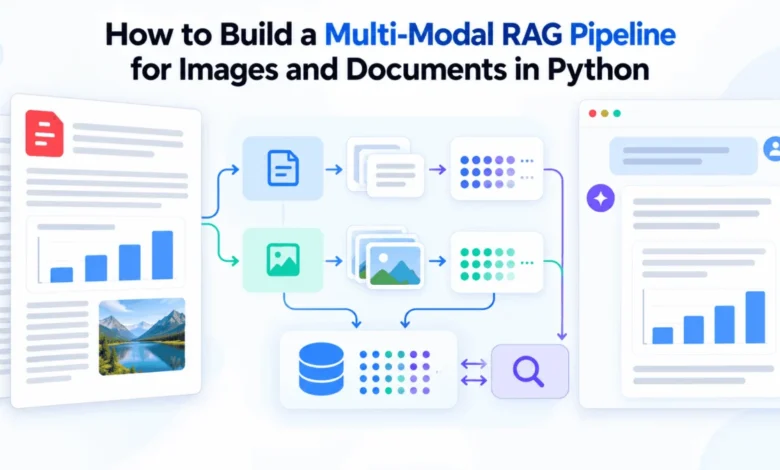
The architecture for a robust multi-modal RAG pipeline follows a structured four-stage lifecycle: parsing, summarization, storage, and retrieval. This methodology replaces the "flat stream" approach with a granular, object-oriented parsing strategy.
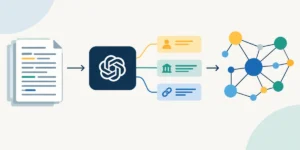
The process begins with document ingestion. Using specialized libraries such as unstructured, developers can partition a document into discrete categories: paragraphs, headers, tables, and images. Unlike standard scrapers, these tools maintain the metadata of the document structure, ensuring that the spatial relationship between text and images is preserved.
Following extraction, the second phase—summarization—serves as the bridge between visual content and linguistic indexing. Because current vector databases are optimized for text, raw images must be transformed into semantic descriptions. By passing these images through high-capacity vision models like GPT-4o, the system generates detailed, searchable summaries that represent the content of the image.
The third stage involves the creation of a "Multi-Vector Store." This is an architectural departure from traditional RAG. It utilizes two distinct storage mechanisms: a vector store for the embedding of text and image summaries, and a "docstore" (document store) that acts as a repository for the raw source material, linked to the vector store via unique identifiers. Finally, the retrieval phase occurs at query time, where the system retrieves both the relevant text segments and the visual evidence, aggregating them for a final synthesis by the language model.
Technical Implementation Requirements
To deploy this architecture, developers must establish a robust development environment. Prerequisites include the Python programming language, an OpenAI API key for access to GPT-4o, and the installation of specific libraries: langchain, langchain-openai, unstructured, chromadb, and pillow.
System-level dependencies, such as poppler-utils, are also required to handle the rendering of PDF image blocks. Once the environment is configured, the initial parsing operation utilizes the partition_pdf function. This step is critical, as it categorizes document elements into lists of text and image paths, ensuring that subsequent processing can be handled by the appropriate modality-specific logic.
Data-Driven Insights and Optimization
The economic and operational implications of this pipeline are substantial. One primary concern for developers is the cost of indexing. Every image processed by an API-based vision model incurs a computational cost. To mitigate this, developers often implement a filtering layer, excluding images below a certain pixel threshold or file size, such as logos or decorative icons, which do not contribute to the information density of the document.
Furthermore, the choice of embedding model—such as text-embedding-3-small—impacts the precision of the search. Because the retrieval accuracy relies on the quality of the image summaries, the prompt design for the vision model is paramount. A prompt instructing the model to "describe this image in detail for use in a search system" yields far better retrieval results than a generic captioning prompt.
Official Perspectives and Industry Adoption
Industry experts from organizations like LangChain and various AI research consortiums emphasize that the shift toward multi-modal RAG is not merely a feature addition, but a necessity for business-grade AI. While early AI implementations focused on chatbots and simple Q&A, the current trend is toward "Knowledge-Intensive RAG."
By treating the document as a holistic entity rather than a series of strings, businesses can ensure that the AI provides answers grounded in visual evidence. This is particularly vital in sectors such as healthcare, where medical imaging must be cross-referenced with diagnostic reports, and in finance, where audit trails often exist across multiple visual and textual formats.
Broader Implications for Enterprise AI
The impact of this technology is widespread. The ability to automatically parse and reason over complex documents allows for a significant reduction in the manual labor required for document analysis. As these systems move from proof-of-concept to production, they are expected to influence fields ranging from regulatory compliance to automated research.
The scalability of the multi-vector architecture is a key advantage. By decoupling the vector store (used for search) from the document store (used for retrieval), developers can maintain high performance even as the volume of documents grows. Furthermore, the modular nature of the pipeline allows for future upgrades. For instance, as vision-language models like ColPali evolve to skip the explicit parsing phase by embedding pages as images directly, the current infrastructure can be adapted to accommodate these advancements without requiring a complete system overhaul.
Future Outlook
Looking forward, the integration of multi-modal RAG is likely to become a standard component of the enterprise AI stack. The next phase of development will focus on refining retrieval precision through advanced re-ranking algorithms and enhancing the persistence of vector stores. As AI systems become more adept at processing the visual nuances of documents, the reliance on human-curated metadata will decrease, leading to more autonomous and reliable knowledge discovery systems.
This transformation in document processing represents a significant step forward in the quest to create AI agents that can truly "read" and "see" the world of information as humans do, effectively turning stagnant archives of data into dynamic, actionable knowledge bases. The implementation of this pipeline is a necessary step for any organization aiming to maintain a competitive edge in an increasingly data-dense global market.