AI Workflows vs. Agents: A Strategic Framework for Enterprise AI Development

The rapid proliferation of Large Language Models (LLMs) has introduced a significant nomenclature crisis within the software engineering industry. Terms like "AI agent" are increasingly applied as catch-all descriptors for any software system incorporating machine learning, regardless of whether that system follows a rigid, developer-defined path or exhibits autonomous, goal-oriented behavior. This ambiguity presents a tangible risk to organizations, as the deployment of overly complex agentic architectures for tasks better suited to structured workflows can lead to increased operational costs, unpredictable outputs, and maintenance burdens. Understanding the fundamental architectural distinction between AI workflows and AI agents is no longer an academic exercise; it is a prerequisite for building reliable, production-grade applications.
The Evolution of AI Architecture
To understand the current confusion, one must examine the timeline of AI application development. The initial phase of LLM integration, beginning around 2022, focused on simple prompt engineering. By 2023, developers began building "chains"—sequences of LLM calls where the output of one step became the input for the next. This evolution led to the rise of frameworks like LangChain, which popularized the "workflow" model.
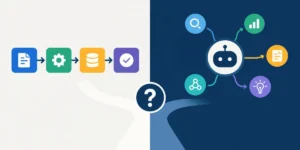
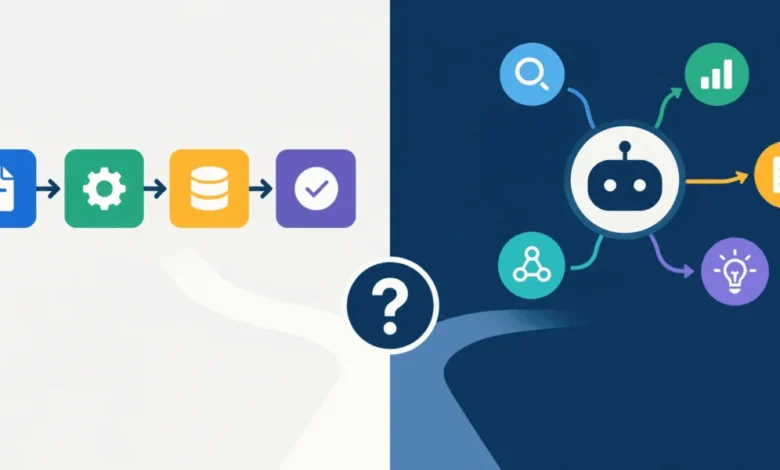
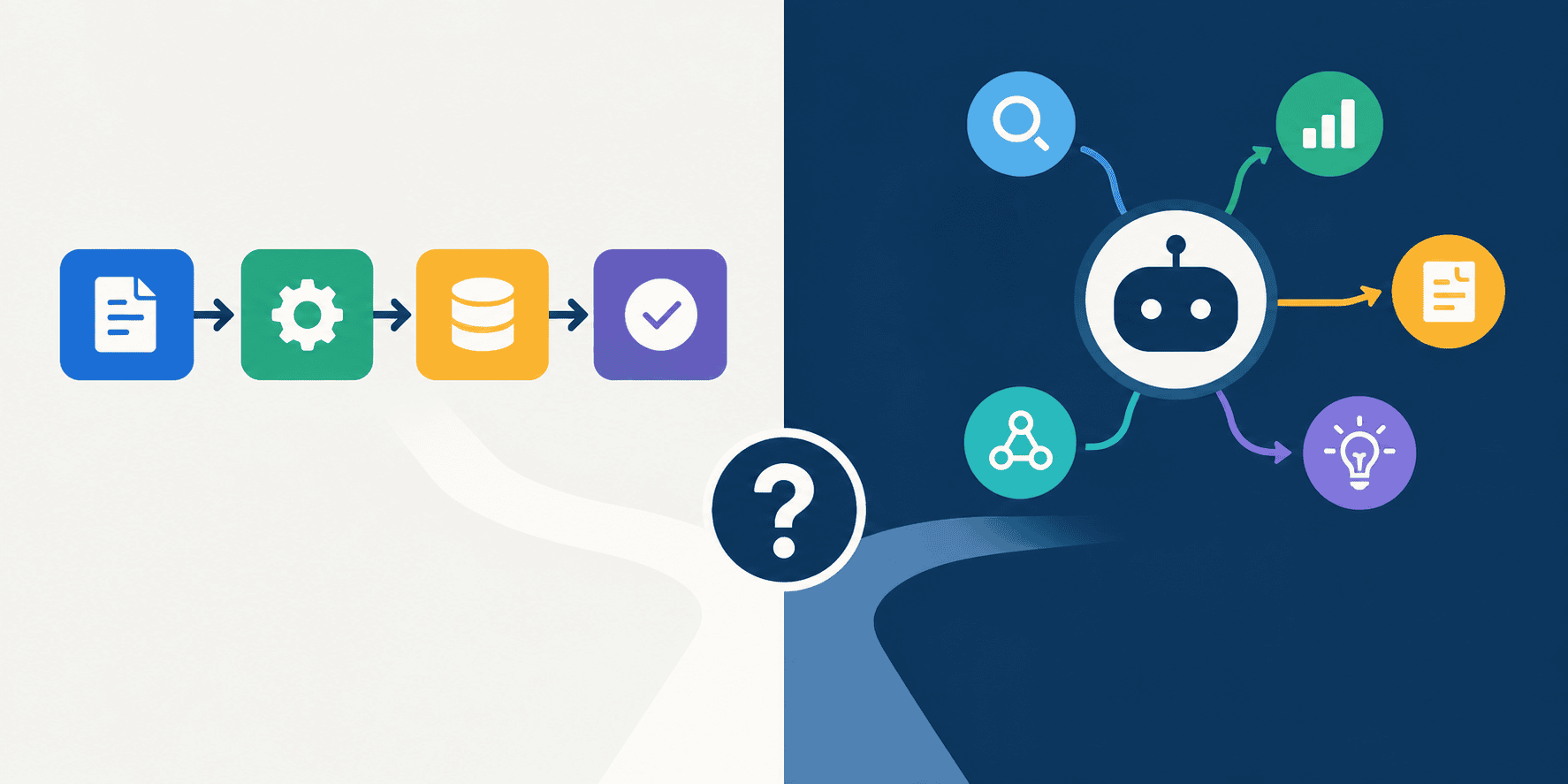
The subsequent shift toward "agents" occurred in late 2023 and throughout 2024, driven by the release of more capable reasoning models like GPT-4 and Claude 3.5. An agent is defined by its ability to engage in a "thought loop"—a process of planning, executing an action, observing the environment, and updating its strategy. While a workflow is a static map designed by a human engineer, an agent is a dynamic navigator that constructs its own path based on real-time feedback.
Distinguishing Workflows from Agents: The Core Mechanics
A workflow operates on the principle of predetermined control flow. Even when integrated with advanced LLMs, the developer retains authority over the logic. If a business needs to process customer refunds, the workflow remains bounded: classify the refund request, verify the account status, calculate the amount based on policy, and execute the payment. Every branch of this process—such as what happens if the user lacks a valid receipt—is explicitly coded into the state machine.
Conversely, an agentic system delegates the control flow to the model. Upon receiving a high-level objective, such as "Identify the root cause of the current latency spike in the checkout API," the agent does not follow a pre-written script. Instead, it assesses available tools—such as log aggregators, metrics dashboards, and incident documentation—and selects the most logical next step. If the first step fails to yield a result, the agent observes the failure, re-evaluates its approach, and chooses a different tool. The key differentiator here is the locus of control: in a workflow, the developer decides "how" the task is done; in an agent, the developer defines "what" the goal is, and the model determines the "how."
Supporting Data and Operational Implications
Recent industry analysis from engineering operations platforms suggests that roughly 70% of enterprise AI use cases currently labeled as "agentic" would perform more reliably and cost-effectively as structured workflows. The primary drivers for this include latency and token consumption.
Agentic loops often require multiple "thought" iterations before arriving at a final answer. If an agent performs four cycles of reasoning to answer a simple FAQ, it consumes four times the input tokens and significantly increases the time-to-first-byte. Data indicates that for high-volume, low-variability tasks, the overhead of agentic reasoning often results in a 3x to 5x increase in operational costs compared to a chain-of-thought workflow. Furthermore, in highly regulated industries—such as banking, healthcare, and law—the non-deterministic nature of agents can pose significant compliance risks. Auditability is a cornerstone of enterprise software; a fixed workflow provides a clear, repeatable, and verifiable trail of operations, whereas an agent’s internal reasoning process can be opaque, making it difficult to debug or recreate the exact steps taken in a given incident.
The Practical Decision Matrix
Before an engineering team writes a single line of code, they should apply a rigorous "flowchart test." If a senior engineer can sit at a whiteboard and draw the entirety of the process, including all conditional branches and error-handling mechanisms, the application should be built as a workflow.
The following criteria should guide the decision-making process:
- Complexity and Variability: If the input is highly structured and the possible outcomes are finite, a workflow is superior. Agents are only necessary when the input space is so vast and the potential paths so numerous that hard-coding them is logically impossible.
- Performance and Budgetary Constraints: If the system is intended to handle high-volume traffic, such as a customer-facing support bot or a real-time data parser, the latency and cost of agents are prohibitive. Workflows leverage optimized, linear execution that is far more scalable.
- Compliance and Determinism: Where legal or security requirements mandate that a specific sequence of checks (e.g., identity verification or credit scoring) must occur in an exact order, an agentic approach is often rejected during technical due diligence because of the risk of the model deviating from mandated procedures.
Synthesis of Expert Perspectives
Leading voices in the AI infrastructure space have begun to advocate for a "workflow-first" philosophy. The consensus among lead architects is that the industry has prematurely jumped to agents without exhausting the capabilities of structured pipelines.
"We are seeing a trend where companies build complex autonomous agents only to realize that 90% of their operations are standard, repeatable business processes," notes a lead AI researcher in a recent industry forum. "By moving these back into structured workflows, they achieve 99.9% reliability, whereas the agentic version struggled to hit 85%."
This does not imply that agents lack utility. They are invaluable for "open-ended" tasks, such as autonomous research, complex system debugging, or creative content synthesis, where the solution is not known in advance. However, these represent a minority of enterprise use cases.
Broader Impact and Future Outlook
The shift toward more disciplined AI development has profound implications for the software engineering lifecycle. As businesses mature in their AI capabilities, the focus is moving away from "AI-driven" as a marketing term and toward "AI-integrated" as a stable architectural standard.
The future of enterprise AI likely lies in a hybrid model: systems that utilize rigid workflows for the majority of their operations, with "agentic nodes" embedded only at specific decision points where flexibility is strictly required. For instance, a loan processing system might use a rigid workflow for 90% of the document verification, but trigger a specialized agent to analyze an anomaly in a rare, complex financial statement.
Ultimately, the most successful implementations of the coming decade will be those that prioritize maintainability and predictability over the allure of autonomous novelty. By treating AI agents as specialized tools for uncertainty, and workflows as the bedrock of reliable production systems, developers can build applications that are both intelligent and commercially viable. The mandate for engineering teams is clear: start with the whiteboard, define the flow, and only invite the agent when the complexity of the task outgrows the capacity of human-authored logic.