In the rapidly evolving landscape of artificial intelligence, the ability to manage the lifecycle of machine learning models has become a critical operational requirement for enterprises and developers alike. As Large Language Models (LLMs) move from experimental curiosities into the backbone of production-grade software, the necessity for robust versioning, tracking, and reproducibility has intensified. Bridging the gap between traditional machine learning workflows and the non-deterministic nature of generative AI, the integration of Scikit-LLM and MLflow provides a structured, industry-standard approach to managing LLM-integrated pipelines. This article explores the technical methodologies for building, auditing, and registering these pipelines, ensuring that development teams can maintain rigorous standards of software engineering even when dealing with complex, black-box LLM backends.
The Evolution of Model Lifecycle Management
The integration of LLMs into standard Scikit-learn pipelines presents a unique challenge: unlike static regression or classification models, LLMs often involve external dependencies, varying inference backends, and distinct model artifacts. The Scikit-LLM library has emerged as a bridge, allowing developers to treat LLM inference as a standard Scikit-learn component. By wrapping these models within a familiar API, teams can leverage existing infrastructure. However, as the complexity of these models grows—ranging from lightweight local models like Orca Mini to more sophisticated architectures like Falcon—the risk of "experiment drift" increases.
MLflow, an open-source platform designed to manage the entire machine learning lifecycle, addresses this by providing a centralized repository for tracking parameters, metrics, and code versions. When combined with Scikit-LLM, it allows for the granular tracking of specific model weights and configurations, providing an essential audit trail for production environments where model performance must be reproducible and explainable.
Establishing the Development Environment
To initiate this workflow, developers must ensure a clean, isolated environment. The installation of the necessary libraries—specifically the Scikit-LLM package with the gpt4all extension—allows for local execution of models, which is a significant advantage for privacy-focused or cost-sensitive development. The configuration of a local database backend, such as SQLite, for the MLflow Model Registry serves as the foundational architecture for long-term version control.
The initialization process involves defining dummy credentials for the Scikit-LLM configuration, which facilitates local model execution without requiring persistent API calls to external services. This setup is crucial for developers working within restrictive network environments or those who require low-latency prototyping. Once the environment is configured, the creation of a dedicated MLflow experiment, titled "Scikit-LLM-Versioning," provides a siloed space for tracking iterative improvements, separating experimental noise from stable, production-ready code.
Implementing and Logging Baseline Pipelines
The initial phase of the development cycle involves creating a baseline pipeline. By utilizing the ZeroShotGPTClassifier, developers can instantiate a model trained on a specific, lightweight pre-trained LLM. The importance of the logging phase cannot be overstated; by explicitly tracking the LLM backend type and the specific model file within the MLflow start_run block, developers create a permanent record of the environment at the time of execution.
This process utilizes cloudpickle as a serialization format, an essential choice for complex Python objects that standard pickle might struggle to serialize. This ensures that the entire pipeline—including the underlying LLM configuration—can be restored exactly as it was during the training phase. The resulting output, characterized by a unique Run ID, serves as the definitive reference point for all subsequent analysis, allowing teams to compare performance across multiple iterations of the pipeline.
Iterative Improvement and Model Swapping
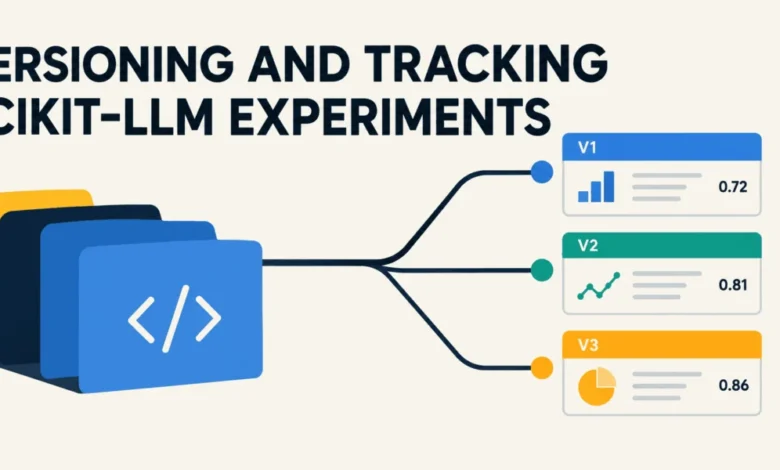
A primary advantage of using MLflow is its capability to handle model-swapping scenarios seamlessly. In a real-world setting, a developer might start with a compact, efficient model to test the efficacy of the pipeline architecture, only to later upgrade to a more powerful model for enhanced accuracy. The transition from a baseline model to an "Upgraded_Falcon" model provides a clear demonstration of how MLflow organizes disparate runs.
By wrapping the upgraded pipeline in its own MLflow run, the system effectively partitions the experiment data. Each run captures distinct parameters, including the specific model file and backend version. This granular approach allows stakeholders to perform side-by-side comparisons of different LLM backends, evaluating not just predictive accuracy but also latency, memory consumption, and resource utilization. This data-driven approach to model selection is vital for balancing the trade-offs between computational cost and model performance.
Auditing and Regulatory Compliance
The ability to query and extract experiment data is what separates robust MLOps practices from ad-hoc experimentation. Using the MLflow search API, practitioners can aggregate historical data into a structured Pandas DataFrame. This capability is not merely for convenience; it is a fundamental requirement for regulatory compliance and model auditing. By viewing the status of various runs—including those that resulted in failures—teams can identify patterns, such as which hardware configurations or model versions are prone to instability.
The audit trail provides a clear view of the "evolution" of a project. Seeing a list of finished and failed runs allows for a post-mortem analysis of developmental bottlenecks. For instance, if certain model files consistently cause failures, the registry audit allows for the immediate identification and exclusion of these models from production consideration. This level of visibility ensures that only validated, high-performing models proceed to the registration phase.
Registering Models for Production
The transition from a logged experiment to a registered model is the final, critical step in the pipeline. Registering a model into the MLflow Model Registry creates a formalized version of the model that can be easily accessed by downstream deployment systems. This process involves querying the historical data to identify the optimal model—often based on accuracy metrics—and then formally promoting it to the registry.
This "promotion" process is what enables continuous deployment (CD) workflows. Once registered, a model is assigned a specific version number, effectively decoupling the training and validation lifecycle from the deployment lifecycle. This means that while a team may continue to experiment and log dozens of new runs, the "Production_ZeroShot_Classifier" remains locked at a stable, tested version until a new model is manually or programmatically promoted to take its place.
Broader Implications for AI Infrastructure
The methodology described here highlights a shift in how AI applications are built. The integration of Scikit-LLM and MLflow moves the industry toward a "software-first" approach to machine learning. By treating LLMs as modular components within a standard pipeline, and by using robust tracking tools to manage those components, organizations can significantly reduce the risk associated with deploying generative AI.
The broader implications are clear: as models become more commoditized, the value will shift toward the infrastructure surrounding those models. Teams that can effectively version their LLM pipelines, conduct comparative audits, and automate their registration processes will be the ones capable of scaling AI solutions reliably. In an era where "black box" models are increasingly scrutinized for their performance and reliability, the ability to trace the lineage of a model—from its initial configuration file to its current version in production—is not just a best practice; it is a competitive necessity.
By adopting these patterns, developers ensure that their machine learning projects remain maintainable, reproducible, and ready for the rigors of modern enterprise demands. The era of manual, unrecorded AI experimentation is reaching its end, giving way to a disciplined, engineered approach to building the intelligent systems of the future.