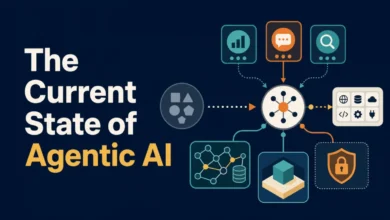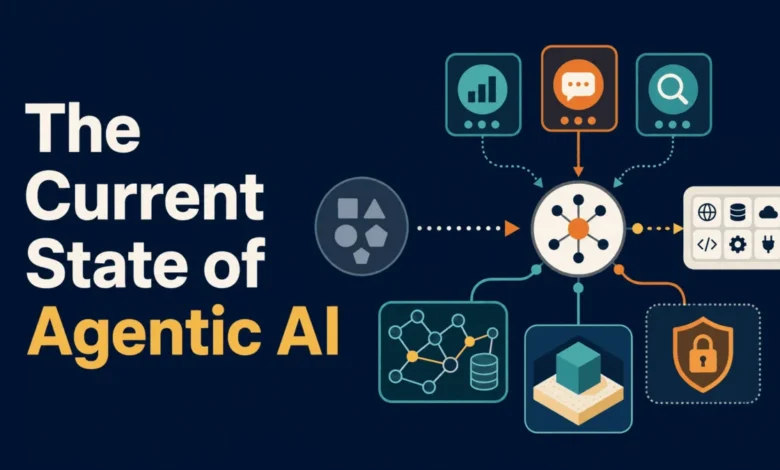
Mid-2026 marks a pivotal moment in the evolution of agentic AI, with the landscape having undergone a radical transformation from the brute-force orchestration methods prevalent just a year prior. The era of monolithic AI agents, burdened by hand-crafted ReAct (Reasoning and Acting) loops and brittle prompt chains, has largely receded. Today, the field is defined by a more specialized and fractured ecosystem, emphasizing native reasoning capabilities within models, standardized tool protocols, and the strategic deployment of multi-agent architectures, often termed "swarms." This paradigm shift reflects a maturation of the AI engineering discipline, moving from a focus on individual agent prompting to the sophisticated design of interconnected infrastructures where specialized agents communicate autonomously.
The Retreat from Orchestrated Reasoning Loops
The most profound architectural shift by mid-2026 lies in how AI agents perform their core cognitive functions. Previously, developers painstakingly constructed external loops—such as Plan-and-Execute or Reflexion patterns—to compel large language models (LLMs) to engage in step-by-step thinking, self-critique, and iterative refinement. These external frameworks, often implemented via libraries like LangChain or LlamaIndex, served as scaffolding to simulate advanced reasoning.
However, the latest generation of foundation models has fundamentally integrated "System 2" thinking directly into their architectures. These advanced models now natively handle complex test-time compute, generating hidden reasoning tokens, exploring multiple solution branches, and engaging in internal self-correction before producing a final output. This internal evolution renders much of the previously essential external orchestration redundant. Industry reports from leading AI labs suggest that models developed in late 2025 and early 2026 demonstrated up to a 40% improvement in internal planning efficiency and error reduction compared to their predecessors, significantly diminishing the need for external correctional loops.
For AI architects, this development carries substantial implications. The engineering effort once dedicated to building complex reasoning frameworks can now be redirected. The orchestration layer’s primary role has narrowed to routing, robust state management across interactions, and environment execution. This change not only reduces latency and token overhead but also liberates computational resources. As Dr. Anya Sharma, lead AI architect at Synapse Corp, commented in a recent industry whitepaper, "The model’s cognitive loop is now largely self-contained. Our job as engineers has evolved from trying to force a model to think, to building the optimal sandbox for its inherent intelligence to operate within." This strategic reallocation of engineering energy has paved the way for the emergence of multi-agent systems.
The Ascendancy of Agent Swarms: Multi-Agent Microservices
With the cognitive burden lifted from individual agents, the question of scope became paramount: what is the ideal responsibility for a single agent? The consensus among production teams by mid-2026 is "as little as possible." The limitations of monolithic agents—those burdened with dozens of tools and sprawling responsibilities—became glaringly apparent by late 2025. Attaching 50 tools to a single large model proved to be a significant bottleneck, creating maintenance nightmares, increasing context window bloat, and making debugging exceptionally difficult.
The solution has been the widespread adoption of agentic swarms, essentially a microservices architecture for AI. This approach involves a collection of smaller, highly specialized agents that communicate and collaborate via standardized protocols. Instead of one generalist agent attempting to perform all tasks, a swarm might feature:
- A Triage Agent for initial request routing.
- A Data Fetcher Agent specialized in writing and executing read-only database queries.
- A Data Analyst Agent proficient in Python pandas for data manipulation and insight generation.
- A Report Generator Agent for synthesizing findings into human-readable documents.
- A User Interface Agent for managing interactions and presenting results.
While the initial concern might be that splitting a monolithic agent merely shifts complexity, the key insight is that this complexity becomes manageable, testable, and replaceable. Each specialized agent can be developed, tested, and updated independently, mirroring best practices in traditional software engineering. Frameworks like the OpenAI Agents SDK and LangGraph Swarm have emerged as leading platforms for building these distributed systems.
Consider a basic swarm pattern: individual agents are stateless per call, with orchestration handled through explicit handoff tools. When a Data Fetcher Agent completes its task of retrieving data, it invokes a "transfer" tool to pass control and the relevant data context to the Data Analyst Agent. This keeps individual agent context windows lean, allowing for the use of cheaper, faster small language models (SLMs) like Qwen3 for specific nodes, reserving larger, more capable models for complex routing or final synthesis tasks. This "stateless-per-agent but stateful-across-the-system" paradigm enhances both efficiency and scalability, making agentic systems suitable for enterprise-grade deployments.
Standardization Through the Model Context Protocol (MCP)
The burgeoning ecosystem of agent swarms necessitated a standardized method for connecting these agents to the myriad real-world systems they interact with. Historically, integrating an AI agent with an external API was a tedious, bespoke process involving custom JSON schemas, HTTP request handling, and error-prone parsing of model outputs. Every new integration meant reinventing the wheel, consuming significant developer time and introducing potential points of failure.
By mid-2026, this fragmented landscape has largely been consolidated by the Model Context Protocol (MCP). MCP is an open standard that functions as a universal adapter, mediating communication between AI models and local or remote data sources. It abstracts away the complexities of API integration, offering a streamlined interface. The shift is stark:
| Feature | Old Paradigm (Pre-2025) | Current State (Mid-2026) |
|---|---|---|
| API Key Management | Hardcoded API keys directly into the agent’s environment. | Agent connects to an isolated MCP server, which manages credentials securely. |
| Tool Definition | Engineer writes custom JSON schemas for every tool. | MCP server automatically exposes available tools and resources via standardized interfaces. |
| Execution | Agent directly executes API calls inline, tightly coupled. | Execution happens securely on the MCP server, separating concerns and enhancing control. |
| Error Handling | Manual parsing and error management. | Standardized error reporting and retry mechanisms via MCP. |
| Scalability | Difficult to scale with increasing integrations. | MCP servers can be horizontally scaled, supporting numerous concurrent agent interactions. |
This standardization means that an enterprise can plug a pre-built GitHub MCP server, a Slack MCP server, or a PostgreSQL MCP server into their agent swarm without needing to write the underlying API wrappers. While careful credential management on the server side remains crucial, the integration surface for developers is dramatically reduced. According to a Q1 2026 developer survey by AI Trends Magazine, companies adopting MCP reported a 60% reduction in integration time for new tools, significantly accelerating deployment cycles for complex agentic systems. This interoperability is a cornerstone of the modern agentic architecture, fostering a more robust and extensible ecosystem.
Continuous Learning via Memory Graphs
A long-held promise of agentic AI—the ability for agents to learn autonomously from their own execution history—is now moving into widespread production through memory graphs. This mechanism leverages a critical distinction: per-call statelessness at the individual agent level versus persistent, system-level memory. While individual agents maintain lean context windows by being stateless per invocation, the overarching system retains and compounds knowledge through specialized graph databases like Neo4j, or through managed memory services injected directly into an agent’s context pipeline.
The operational model involves a dedicated Memory Agent that runs asynchronously in the background. Its sole function is to observe the primary swarm’s task trajectories, extract salient facts, identify emergent patterns, and update the graph database. This process unfolds as follows:
- Task Execution: The main agent swarm performs its assigned task, interacting with tools and exchanging information.
- Trajectory Capture: The Memory Agent captures the entire interaction history, including inputs, outputs, tool calls, and agent handoffs.
- Fact Extraction: Using its own specialized LLM, the Memory Agent identifies key facts, relationships, and successful/unsuccessful strategies from the captured trajectory. For instance, it might note, "When a customer query involves ‘billing discrepancy,’ the optimal first step is to query the ‘invoices’ database via the Data Fetcher Agent."
- Graph Update: These extracted facts are then codified and stored in the graph database, creating nodes (entities like "customer," "task," "tool") and edges (relationships like "performed by," "resulted in," "used tool").
- Context Injection: For future, similar tasks, the Triage Agent or other relevant agents can query the memory graph to retrieve contextually relevant knowledge. This "learned experience" is injected into their prompt, guiding their decision-making and improving performance.
This paradigm shifts the focus from traditional prompt engineering to sophisticated context engineering. The system iteratively improves its performance and decision-making over time without requiring costly and time-consuming fine-tuning of the underlying foundation models. Enterprises deploying these memory-graph-enabled systems have reported up to a 25% reduction in task completion time and a significant decrease in error rates after several weeks of continuous operation, demonstrating the tangible benefits of autonomous learning.
Security: Navigating the Expanded Swarm Attack Surface
The sophisticated interconnectivity of multi-agent systems, particularly when coupled with universal protocols like MCP, has significantly expanded the attack surface for malicious actors. The threat of "AIjacking"—indirect prompt injections designed to hijack automated workflows—has escalated from a theoretical concern to a primary security challenge for enterprise AI adoption by mid-2026.
The fundamental architecture of swarms, which relies on lateral context transfer and control handoffs between specialized agents, inadvertently creates new vulnerabilities. If Agent A, responsible for reading external emails, can transfer context and control to Agent B, which possesses database access, a cleverly crafted malicious instruction embedded within an email could pivot laterally through the swarm. This mirrors traditional network intrusion patterns, where an initial breach can be leveraged to gain deeper access within a system. The very mechanism that makes swarms powerful—their collaborative handoff capabilities—also makes them inherently susceptible to these advanced forms of adversarial attacks.
Three key emerging defenses are converging to address this critical problem:
- Context Verification Agents: These specialized agents act as gatekeepers at handoff points between other agents. Their role is to independently verify the intent and safety of incoming context and commands before allowing the transfer to proceed. They use a separate, hardened model, often fine-tuned for anomaly detection and malicious intent recognition, to scrutinize instructions and data payloads.
- Hardened Execution Sandboxes: Each agent, or group of agents, operates within isolated computational environments. These sandboxes strictly limit the resources and network access available to an agent, preventing unauthorized lateral movement or data exfiltration even if an agent is compromised. Technologies like confidential computing and advanced containerization with granular permission controls are becoming standard.
- Zero-Trust Tool Access with Least Privilege: Rather than granting blanket permissions, tools are accessed via a zero-trust model. Agents are granted the absolute minimum privileges required to perform their specific function, and access is re-verified for each interaction. This prevents a compromised agent from accessing tools or data it doesn’t explicitly need for its current task.
While not yet universally standardized, these represent the active frontier of production agentic security. AI security experts, such as Dr. Kenji Tanaka of Cybersafe AI, emphasize that "any team deploying swarms into production today must treat at least one of these defense mechanisms as a baseline requirement. The days of trusting an agent’s output implicitly are over." The industry is actively working towards more robust, integrated security frameworks, but proactive implementation of these emerging defenses is non-negotiable for safeguarding enterprise AI deployments.
The Path Forward: Engineering Resilient Swarms
Agentic AI has firmly transitioned from a research curiosity to a mature engineering discipline, replete with real-world constraints, identifiable failure modes, and critical design decisions at every architectural layer. The foundational primitives—native reasoning, robust tool calling, and intelligent routing—are maturing at an unprecedented pace.
The primary leverage for innovation and competitive advantage now lies in the systems layer. This encompasses the meticulous design of swarm topologies, the intelligent architecture of memory systems to facilitate continuous knowledge compounding, and the rigorous establishment of security boundaries that enable these sophisticated systems to operate safely and effectively at scale. The leading teams in mid-2026 are not merely chasing marginally "smarter" individual agents; instead, they are investing heavily in building more resilient, specialized, and secure agent swarms.
For organizations just beginning their journey into agentic AI, the path forward is clear: select one of the established architectural patterns discussed, implement it at a manageable scale, and instrument it with comprehensive monitoring. The practical intuitions and operational insights gained from deploying and observing a three-agent swarm are directly transferable and scalable to a thirty-agent or even three-hundred-agent enterprise system. The future of AI is collaborative, distributed, and intelligently orchestrated.