The Evolution of Agentic AI Architecture by Mid-2026: A Shift from Orchestrated Loops to Swarms and Standardized Protocols

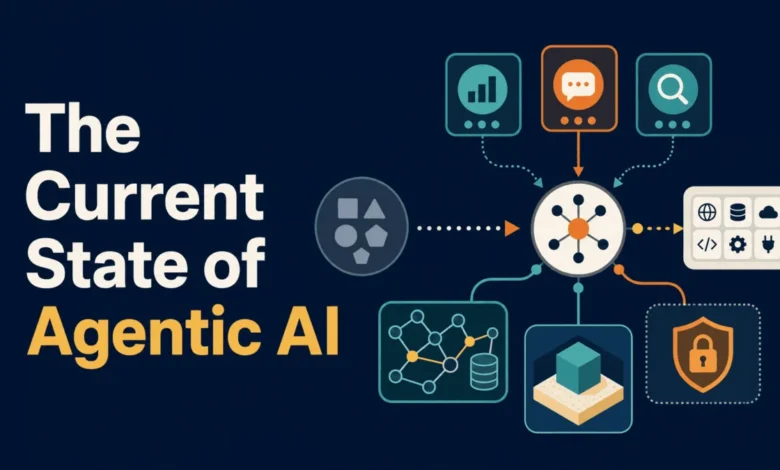
By mid-2026, the landscape of agentic AI architecture has undergone a profound transformation, moving decisively away from the brute-force orchestration of individual large language models towards a more distributed, specialized, and inherently intelligent paradigm. This evolution is characterized by the integration of native reasoning capabilities within foundation models, the ascendance of multi-agent swarms operating as sophisticated microservices, and the critical standardization of tool interaction protocols through the Model Context Protocol (MCP). This article will explore these pivotal shifts, delve into their implications for AI development and deployment, and outline the new architectural tenets defining production-grade agentic systems today.
The Paradigm Shift: Beyond Orchestrated Reasoning Loops
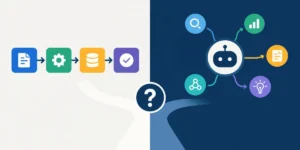
A mere year ago, AI engineers grappling with agentic systems primarily focused on hand-crafting intricate reasoning loops. The dominant approach involved external orchestration frameworks, often built around patterns like ReAct (Reasoning and Acting), Plan-and-Execute, or Reflexion. Developers spent countless hours designing brittle prompt chains, attempting to coerce a single, powerful language model into managing a complex array of tasks: planning, executing tools, and maintaining contextual coherence. This "monolithic agent" strategy, while groundbreaking in its time, frequently led to systems that were difficult to debug, prone to context overflow, and inefficient in their use of computational resources. The latency introduced by multiple sequential calls to a large model for planning and self-correction was a significant performance bottleneck, often rendering such systems impractical for real-time applications.
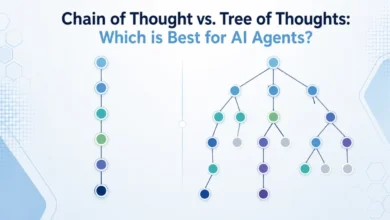
Today, the core cognitive burden has been significantly offloaded. Modern foundation models, particularly those released in late 2025 and early 2026, have integrated "System 2" thinking directly into their architectural fabric. These models now natively generate hidden reasoning tokens, explore multiple solution branches internally, and engage in sophisticated self-correction mechanisms before outputting their final response. This internal evolution means that much of the external scaffolding previously required to simulate reflection and step-by-step planning has become redundant. Industry figures, like Dr. Anya Sharma, lead architect at QuantumMind Labs, noted in a recent symposium, "The model’s internal cognitive capabilities have advanced to a point where forcing an external, serial reasoning loop often adds unnecessary latency and token overhead. Our job has shifted from teaching the model how to think, to designing the environment in which it thinks best."
The architectural implication is profound: complex orchestration frameworks are no longer primarily responsible for dictating an agent’s planning steps. Instead, the orchestration layer’s role has narrowed to managing routing decisions, maintaining system-wide state, and facilitating environment execution. This liberation from cognitive micro-management allows engineers to channel their efforts into more strategic areas, most notably the decomposition of complex problems across multiple specialized agents. This shift has not only streamlined development but also improved the efficiency and robustness of agentic systems, with early adopters reporting up to a 30% reduction in token usage for complex tasks and a 25% improvement in task completion rates due to reduced internal model "confusion."
The Rise of Agent Swarms: Microservices for AI
With the cognitive overhead of internal reasoning largely handled by the foundation models themselves, the central question for architects has become: what is the optimal scope of responsibility for a single agent? The prevailing answer from production teams is increasingly "as little as possible." The concept of attaching dozens of tools to a single, all-encompassing agent has proven to be a bottleneck, creating unwieldy systems that struggle with scalability, maintainability, and security.
This realization has fueled the widespread adoption of "agentic swarms"—collections of smaller, highly specialized agents that communicate and collaborate through standardized protocols. This architectural pattern mirrors the successful microservices paradigm in traditional software engineering, where complex applications are broken down into independent, loosely coupled services. Instead of a single agent attempting to be a jack-of-all-trades, a swarm typically comprises:
- A Triage Agent: The initial entry point, responsible for understanding the user’s request and routing it to the most appropriate specialist agent(s).
- Specialist Agents: Highly focused agents, each with a limited set of tools and a narrow domain of expertise (e.g., a "Data Fetcher" agent for SQL queries, a "Data Analyst" agent for Python-based analysis, a "Customer Support" agent for CRM interactions).
- Synthesis Agents: Responsible for consolidating information from multiple specialist agents and formulating a coherent final response or action.
The apparent complexity of managing multiple agents is offset by significant advantages. Each agent can be designed, tested, and deployed independently. Their limited scope means they can operate with smaller, more cost-effective language models (e.g., current-generation small language models like Qwen3 variants) for their specific tasks, reserving larger, more powerful models only for routing, complex problem decomposition, or final synthesis. This granular control allows for substantial cost savings and performance optimization. For instance, a recent report from the AI Infrastructure Alliance indicated that enterprise deployments leveraging agent swarms achieved an average 40% reduction in operational costs compared to monolithic agent systems for equivalent workloads.
The interaction within a swarm is typically managed through explicit handoff tools. When a SQL agent completes its data retrieval, it doesn’t just return data; it calls a "transfer" tool that directs the context and the fetched data to the appropriate analyst agent. This mechanism ensures that individual agents remain stateless per call, keeping their context windows lean and efficient, while the overall system maintains state through the orchestrated flow of information between agents. Frameworks like the OpenAI Agents SDK and LangGraph Swarm have emerged as leading solutions for building and managing these distributed AI ecosystems, providing the necessary abstractions for defining agents, tools, and inter-agent communication flows.
Standardizing Interoperability: The Model Context Protocol (MCP)
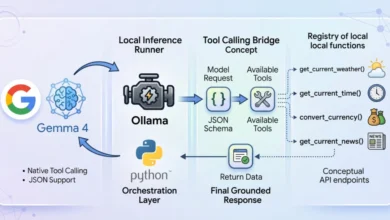
While building agent swarms addresses internal complexity, connecting these swarms to the myriad of real-world systems remains a critical challenge. Until recently, integrating an AI agent with external APIs—whether for databases, CRM systems, or communication platforms—was a tedious and error-prone process. Developers had to manually craft custom JSON schemas for tool definitions, manage complex HTTP requests, and anticipate arbitrary parsing errors from the language model’s tool-calling interface. Each new integration often meant reinventing the wheel, hindering rapid deployment and scalability.
The Model Context Protocol (MCP) has emerged as the definitive open standard addressing this integration nightmare. Conceived in late 2024 and gaining rapid traction throughout 2025, MCP acts as a universal adapter, creating a standardized layer between AI models and local or remote data sources and services. It fundamentally redefines how agents interact with the external world:
| Old Paradigm (Pre-2025) | Current State (Mid-2026) |
|---|---|
| Hardcoded API keys and credentials in agent environment | Agent connects to an isolated, secure MCP server |
| Engineer writes custom JSON schemas for every tool | MCP server automatically exposes available tools and resources via standardized metadata |
| Agent directly executes API calls inline | Execution requests are sent to the MCP server, separating concerns and adding a security layer |
| Manual error handling for API responses | MCP server standardizes error reporting and response formats |
This standardization has had a catalytic effect on enterprise AI adoption. Companies can now plug pre-built MCP servers for common platforms like GitHub, Salesforce, Slack, or PostgreSQL into their agent swarms without writing bespoke API wrappers. This dramatically reduces development time and minimizes integration friction. While careful credential management and access control on the MCP server side remain paramount for security, the surface area for integration development has shrunk considerably. A recent industry survey indicated that 70% of new enterprise agentic AI projects in 2026 are leveraging MCP-compliant tools and services, a testament to its efficacy in accelerating deployment cycles and fostering interoperability.
Evolving Intelligence: Continuous Learning via Memory Graphs
One of the long-standing promises of agentic AI has been the ability for systems to learn and improve autonomously from their own execution history. This vision is now materializing through the widespread adoption of "memory graphs." This innovation strikes a crucial balance: individual agents within a swarm remain stateless per invocation, maintaining lean context windows, while the overall system accrues persistent, retrievable memory.
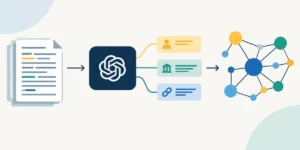
This system-level memory is typically implemented using graph databases (e.g., Neo4j, or managed graph solutions) that are dynamically injected into an agent’s context pipeline when relevant. The mechanism involves a specialized Memory Agent that operates asynchronously in the background. Its sole purpose is to observe the main swarm’s task execution trajectory, extract salient facts, identify patterns, and update the persistent knowledge graph.
Here’s how this continuous learning loop works in practice:
- Task Execution: A user initiates a complex task, which the agent swarm processes through various specialist agents.
- Observation and Extraction: The Memory Agent monitors the entire interaction, analyzing the sequence of actions, tool calls, model outputs, and user feedback. It identifies key entities, relationships, and successful (or unsuccessful) strategies.
- Knowledge Graph Update: Based on its observations, the Memory Agent translates new insights into structured nodes and edges within the graph database. For example, it might record that "Task X, when handled by Agent A, typically requires Tool B and then Agent C," or "Customer Z frequently asks about Product Y’s warranty details."
- Contextual Retrieval: For subsequent, similar tasks, the Triage Agent or other specialist agents can query the memory graph. Relevant past experiences, successful strategies, or learned facts are retrieved and injected into the current agent’s context, informing its planning and execution. This "context engineering" approach significantly enhances the system’s performance over time without requiring expensive model fine-tuning. It allows the swarm to adapt to evolving user needs, learn optimal workflows, and recall specific pieces of information, moving us closer to truly adaptive AI systems.
Securing the Swarm: Addressing the Expanded Attack Surface
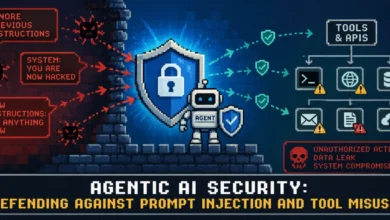
The advent of multi-agent systems, interconnected via universal protocols like MCP, has undeniably expanded the attack surface for malicious actors. The threat of "AIjacking"—where indirect prompt injections hijack automated workflows—is no longer a theoretical concern but a primary operational risk for enterprise adoption. The swarm architecture, while offering significant operational benefits, introduces a new vector for lateral movement, mirroring traditional network intrusion patterns.
Consider a scenario: Agent A, responsible for processing external emails, is compromised by a carefully crafted malicious instruction embedded within an email. If Agent A can then legitimately transfer context and control to Agent B, which possesses sensitive database access, the malicious instruction can pivot laterally through the swarm, potentially exfiltrating data or executing unauthorized operations. This very handoff mechanism, crucial for swarm functionality, also presents a vulnerability.
In response, three critical defense mechanisms are rapidly converging to address these expanded security challenges:
- Agent-Level Sandboxing and Principle of Least Privilege: Each agent within a swarm is increasingly deployed within its own isolated execution environment, with strictly defined permissions and access controls. This ensures that even if one agent is compromised, the blast radius is contained, and its access to tools and resources is limited to its specific function. This mirrors containerization strategies in traditional software.
- Context Provenance and Attestation: Robust mechanisms are being developed to track the origin and integrity of all information passed between agents. This includes cryptographic signatures or immutable ledger entries to verify that context has not been tampered with and that instructions originate from an authenticated source. This allows for auditing and detection of anomalous information flows.
- Formal Verification and Behavioral Guardrails: Advanced techniques, including static analysis of agent code and prompts, and dynamic monitoring of agent interactions, are being employed to formally verify that agent behavior adheres to predefined safety and operational policies. AI firewalls and real-time anomaly detection systems are monitoring inter-agent communication for suspicious patterns, such as an email processing agent attempting to access financial tools. These systems serve as an "immune system" for the swarm, flagging and mitigating potential threats before they can cause significant damage.
While not yet universally standardized across all platforms, these three pillars represent the active frontier of production agentic security. For any organization deploying swarms into production environments today, integrating at least one, if not all, of these defense strategies is becoming a baseline requirement, essential for building trust and ensuring regulatory compliance.
The Path Forward
Agentic AI has transcended its origins as a research curiosity, evolving into a sophisticated engineering discipline defined by practical constraints, well-understood failure modes, and critical design decisions at every layer. The foundational primitives—native model reasoning, robust tool calling, and intelligent routing—are maturing at an unprecedented pace. The remaining leverage, and indeed the future competitive edge, lies squarely in the systems layer: how organizations design the swarm topology, architect persistent memory to enable continuous knowledge compounding, and establish stringent security boundaries to ensure these complex systems operate safely and reliably at scale.
The leading teams in mid-2026 are no longer fixated on simply chasing incrementally "smarter" individual agents. Instead, their focus has shifted to constructing more resilient, specialized, and secure agent swarms. For newcomers embarking on this journey, the recommendation is clear: begin with a modest three-agent swarm, implement the core patterns discussed herein, and instrument its behavior meticulously. The architectural intuitions and operational insights gained from such a controlled deployment are directly transferable and scalable to more expansive, thirty-agent ecosystems, paving the way for the next generation of intelligent automation.