Tool Calling vs. Code Execution for AI Agents: Choosing the Right Action Primitive

In the rapidly evolving landscape of artificial intelligence, the transition from simple chatbots to autonomous agents hinges on one critical development: the ability to take action. As developers scale these systems to handle increasingly complex business workflows, they are finding that the mechanism used to bridge the gap between a model’s reasoning and the real world is no longer just a stylistic choice—it is a foundational architectural decision. The industry is currently bifurcating between two primary paradigms: tool calling and code execution. Each offers distinct trade-offs in terms of computational cost, latency, reliability, and security, and choosing the wrong one can lead to bloated context windows, skyrocketing expenses, and degraded performance.
Defining the Action Primitive
At its core, an action primitive is the bridge between a Large Language Model (LLM) and its environment. It is the standardized interface that allows a model to initiate a process, such as querying a database, invoking an API, or reading a file. While early agent frameworks relied heavily on rudimentary prompt-based triggers, modern systems have standardized these interactions.
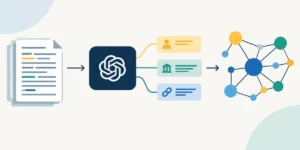
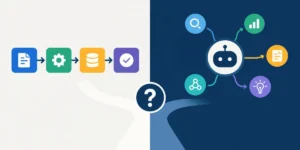
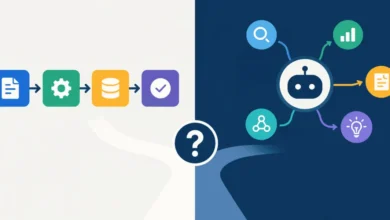
Tool calling represents the traditional approach. Under this model, the LLM is trained to identify when an action is required and outputs a structured JSON payload containing the function name and its arguments. The host application intercepts this, executes the function, and feeds the result back into the model’s context. Conversely, code execution—a more sophisticated, emerging paradigm—allows the model to function as a programmer. Rather than requesting a single, discrete action, the model generates a complete script (typically in Python or TypeScript) that performs multiple, chained, or parallel operations within a secure, sandboxed environment. The model only receives the final output, effectively hiding the intermediate "noise" from its own reasoning engine.
The Problem of Context Bloat and Latency
The technical necessity for these two primitives is best illustrated by a common scenario: financial auditing. Imagine an agent tasked with auditing Q3 travel expenses across twenty employees. If configured with traditional tool calling, the agent must perform twenty separate calls, one for each employee. If each employee has fifty expense line items, the agent must ingest over 1,000 items into its context window. This creates a massive, unnecessary overhead—often exceeding 50KB of raw data—that the model must parse just to perform a simple summation.
This "context bloat" is the silent killer of agentic performance. Because models are billed based on token usage, every unnecessary byte of data fed back into the context increases the financial cost and the latency of the request. Furthermore, as context windows fill with redundant data, the model’s "attention" can be diluted, leading to a higher probability of hallucinations or calculation errors.
Chronology of Architectural Evolution
The shift toward code execution has been driven by the need for more robust, multi-step orchestration. Early attempts at agentic workflows in 2023 and early 2024 were largely confined to single-step tool calling, a limitation that restricted agents to simple queries. By mid-2024, research from academic institutions, including the seminal "CodeAct" paper, began demonstrating that agents capable of writing their own programs significantly outperformed those restricted to rigid tool-use schemas.
By November 2025, major AI laboratories, including Anthropic, began formalizing these findings into production-ready infrastructure. The introduction of "Programmatic Tool Calling" allowed for a hybrid approach: developers could define specific tools as "allowed callers" for a sandboxed execution environment. This effectively allowed the model to decide when it needed a simple lookup versus when it needed to write an automated script to handle a complex, multi-part task.
Data-Driven Impact: Efficiency and Accuracy
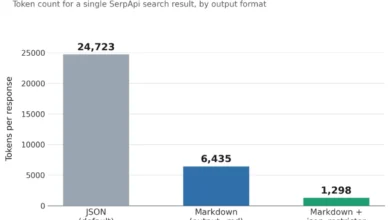
The quantitative benefits of shifting from standard tool calling to code-based orchestration are substantial. Internal benchmarks from major industry players indicate that moving complex, multi-step workflows into a code-execution environment can reduce token consumption by as much as 90% to 98%.
Beyond cost, the impact on accuracy is perhaps the most compelling argument for the shift. On the GAIA (General AI Assistants) benchmark, which tests agents on complex, real-world tasks, systems utilizing code execution have shown a marked improvement in success rates—often rising from the 45% range to over 50%. The reasoning is straightforward: models are notoriously poor at performing arithmetic and logical comparisons in their "heads." By offloading these tasks to a Python interpreter, the agent delegates the precision-heavy lifting to a system built for deterministic logic, while retaining the model for high-level semantic reasoning.
The Strategic Decision Framework
Selecting the right primitive requires a nuanced assessment of the specific use case. Organizations should prioritize tool calling for:
- Single-Turn Tasks: When a simple, one-off lookup is required, the overhead of spinning up a sandbox environment is inefficient.
- Conversational Reasoning: If the model needs to analyze the content of an intermediate result (e.g., summarizing a customer complaint), it must see the raw data in its context.
- Strict Auditability: In regulated industries where every single action must be logged as a discrete, auditable event, standard tool calling provides a cleaner, more granular trail than a opaque, self-contained script.
Conversely, code execution is the superior choice for:
- Aggregations and Fan-Out: When a task requires gathering data from multiple sources, performing calculations, or filtering large datasets.
- Sensitive Data Handling: By keeping large payloads or PII (Personally Identifiable Information) within a sandboxed environment, developers reduce the risk of exposing sensitive data within the model’s broader conversation history.
- Complex Multi-Step Logic: Tasks requiring conditional loops, error handling, or parallel processing are best managed through code.
The Hybrid Future
Industry experts increasingly suggest that the future of agentic design is not a choice between these two, but a sophisticated integration of both. Most production-grade agents now utilize a "tiered" approach. They default to standard tool calling for simple interactions to keep latency low, but dynamically switch to code execution when the complexity of the prompt exceeds a predefined token threshold or requires multi-step computation.
This hybrid model requires robust infrastructure, including secure, sandboxed execution environments and careful management of tool definitions. However, for organizations building the next generation of enterprise agents, the investment is necessary. The "cost" of poor architectural planning is measured not just in dollars, but in the reliability and efficacy of the agent itself.
Implications for Future Development
As LLMs become more capable of generating high-quality code, the boundary between "system software" and "AI agent" will continue to blur. The ability for an agent to write its own tools, test them, and iterate upon its own code represents the next frontier of autonomy. Developers who master the transition from simple, JSON-based tool calling to the more complex, programmatic execution paradigm will be best positioned to build agents that are not only cheaper and faster but fundamentally more capable of executing the nuanced requirements of modern business workflows. In this new era, the most successful agents will be those that treat the model as a strategist and the code execution environment as the precision instrument, balancing the two with surgical accuracy.