AI Workflows vs Agents: A Practical Guide to Choosing the Right Architecture for Your Application

The current landscape of artificial intelligence development is characterized by a significant semantic crisis, primarily centered on the term "agent." As organizations race to integrate large language models (LLMs) into their operational infrastructure, the distinction between a deterministic workflow and an autonomous agent has become increasingly blurred. This confusion frequently leads to over-engineered, costly, and unreliable systems. Industry analysts and software architects are now urging development teams to adopt a more rigorous, evidence-based approach to system design, emphasizing that the choice between these two architectures should be predicated on the predictability of the task rather than the novelty of the technology.
Defining the Architectural Divide
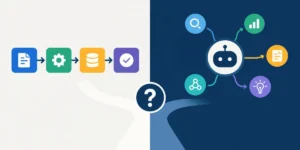
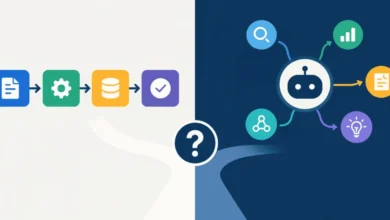
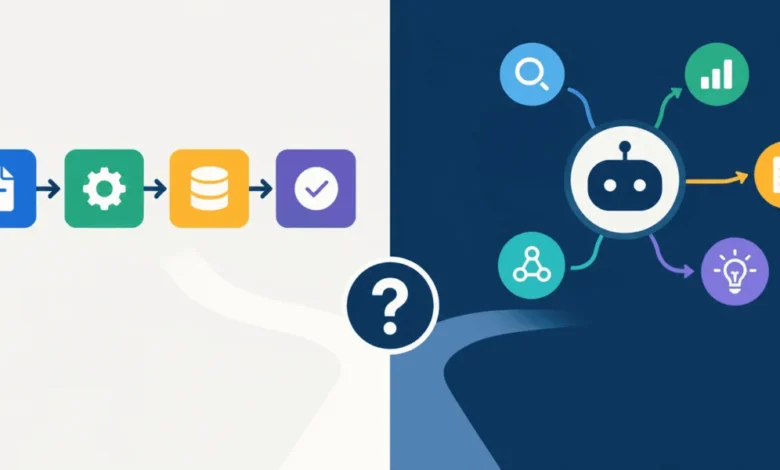
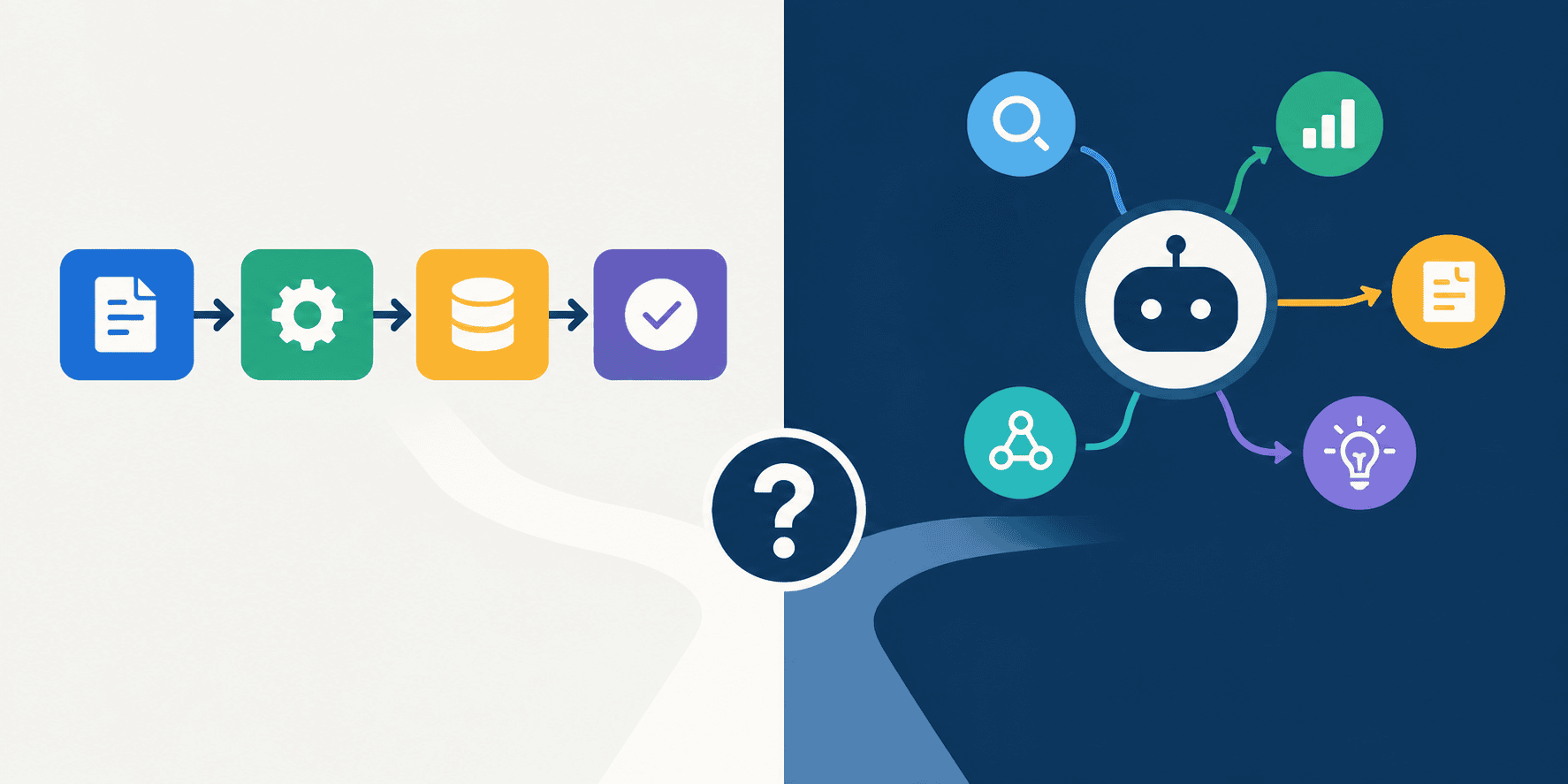
At the core of the debate is the fundamental difference in control flow. An AI workflow, often described as a pipeline or a chain, operates on a predetermined logic structure. In this model, the developer defines the sequence of operations, the branching conditions, and the exit criteria before the system is deployed. While these systems may incorporate LLMs to perform specific sub-tasks—such as summarizing text or classifying sentiment—the overall trajectory remains static.
Conversely, an agentic system delegates the control flow to the LLM itself at runtime. In an agentic architecture, the model is provided with a high-level objective and a set of tools. The model then evaluates the current state, selects the appropriate tool, executes it, observes the output, and iteratively updates its strategy. This recursive loop allows agents to handle tasks where the path to a solution is not known in advance, such as navigating complex, multi-step diagnostic investigations or open-ended research.
Chronology of the "Agentic" Hype Cycle
The rise of the term "agent" gained significant momentum in early 2023 following the release of experimental frameworks like AutoGPT and BabyAGI. These early projects demonstrated the potential for models to operate with minimal human oversight, capturing the imagination of the software development community. However, the subsequent transition from experimental prototypes to production-grade enterprise software revealed a critical performance gap.
By mid-2024, industry leaders began to report that while autonomous agents performed exceptionally well in controlled laboratory settings, they struggled with the "drift" associated with real-world, high-volume production environments. Data from internal technical retrospectives at major cloud service providers indicated that agents often fell into infinite loops or exhausted token budgets on trivial tasks, whereas deterministic workflows maintained a 99.9% success rate for the same categories of work. This realization has sparked a shift in engineering philosophy, prioritizing reliability and cost-efficiency over pure autonomy.
Supporting Data and Operational Trade-offs
The economic implications of choosing an agent over a workflow are substantial. Quantitative analysis of LLM-based applications reveals a direct correlation between agentic autonomy and operational expenditure (OpEx). Because agents typically require multiple iterations of reasoning and tool calling—often referred to as "chain-of-thought" processing—they consume a significantly higher volume of tokens per request compared to a structured workflow.
For example, a standard classification task performed by a deterministic workflow might cost $0.001 per unit and complete in under 500 milliseconds. An agentic approach, which might engage in a multi-step search and verification process to reach the same conclusion, could increase latency by 500% and inflate costs by an order of magnitude. Furthermore, the non-deterministic nature of agentic outputs poses significant challenges for compliance-heavy sectors, such as finance and healthcare, where auditability and identical execution paths are legal requirements.
Analyzing the "Flowchart Test"
The most effective heuristic for engineers currently employed in the field is the "Flowchart Test." Before writing code, architects are advised to attempt to map the entire process on a whiteboard. If a logical flow can be documented—including error handling and decision nodes—the system is, by definition, a workflow.
Industry experts argue that the assumption that "workflow equals simple" and "agent equals sophisticated" is a dangerous fallacy. Many high-performance enterprise systems utilize "Hybrid Workflows." These systems use LLMs as individual components within a structured framework, allowing for the reliability of traditional software engineering combined with the natural language understanding capabilities of modern models. In these configurations, the LLM is not in control of the global state; rather, it is a specialized function called at a specific point in the pipeline.
Institutional Perspectives on Reliability
Leading voices in the machine learning community have recently emphasized the importance of "constrained intelligence." In a recent briefing, architects from prominent AI research labs suggested that the most robust applications are those where the model’s reasoning is constrained by a rigid, programmatic backbone. This perspective holds that by limiting the model’s ability to wander, developers can better manage the inherent probabilistic nature of LLMs.
From an audit perspective, regulatory bodies have begun to scrutinize the use of autonomous systems. In jurisdictions governed by strict AI transparency laws, the "black box" nature of autonomous agents can pose a liability risk. If a system takes an action that results in a financial error, the inability to trace the decision-making path—a common issue with agents—could lead to regulatory sanctions. Workflows, being inherently auditable, provide the documentation necessary to satisfy these compliance standards.
Broader Implications for Product Development
The trend toward prioritizing workflows suggests a maturation of the AI industry. The initial "gold rush" phase, characterized by the desire to automate everything via autonomous agents, is being replaced by a more pragmatic approach to system design.
For developers, the implications are clear: the goal is not to maximize the use of an agent, but to minimize the use of non-determinism. If an application requires high reliability, cost-efficiency, and auditability, the workflow should be the default architecture. Agents should be reserved for niche applications where the complexity of the input is so high that human-defined logic is physically impossible to map.
As the industry progresses, the distinction between these two architectures will likely become a standard component of software engineering education. By utilizing the checklist of evaluating input variability, volume requirements, and audit needs, development teams can avoid the pitfalls of over-engineering. In the final analysis, the most successful AI applications will not be those that act like humans, but those that combine the precision of software with the nuanced reasoning of language models within a strictly defined, reliable framework. The future of AI is not necessarily more autonomy, but rather, more predictable intelligence.