Modern distributed systems face a fundamental paradox: as the number of nodes in a cluster grows to support massive global traffic, the reliability of individual components inevitably decreases. Traditional centralized management systems, such as Apache Zookeeper or Etcd, function as the "source of truth" for cluster membership and state. However, these systems create a bottleneck. When a central controller becomes a single point of failure or struggles to handle the heartbeat signals of tens of thousands of nodes, the entire architecture becomes brittle. To solve this, software architects increasingly turn to the Gossip Protocol—a decentralized communication framework inspired by the way rumors spread through a population.
The Gossip Protocol, often referred to as an epidemic protocol, operates on a simple, elegant premise: instead of requiring every node to report to a central authority, each node periodically shares its state with a small, random subset of its peers. Over time, this information "infects" the entire network, ensuring that all nodes converge on the same state without ever requiring a global view.
The Evolution of Distributed Consensus
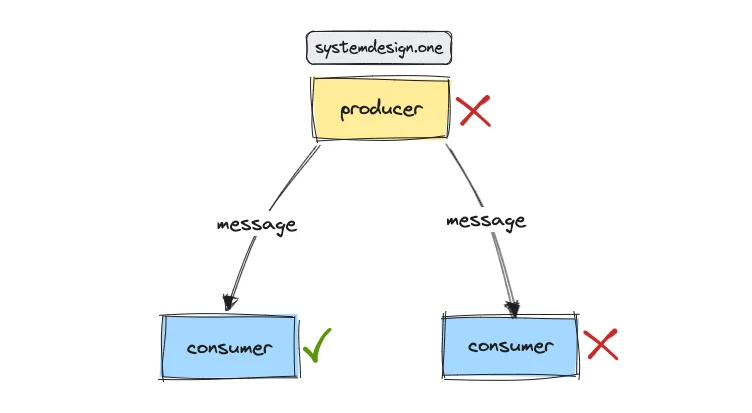
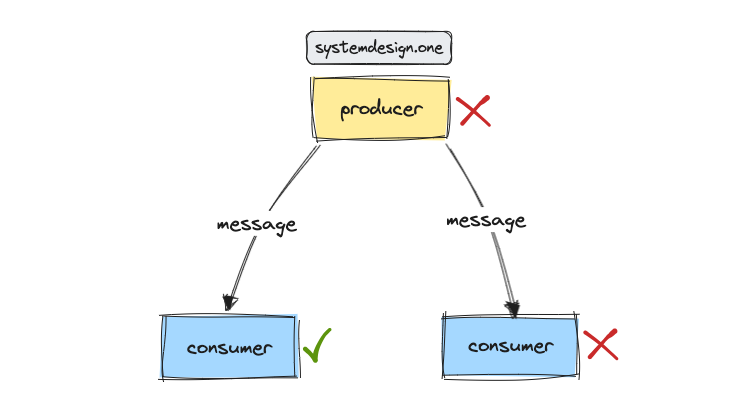
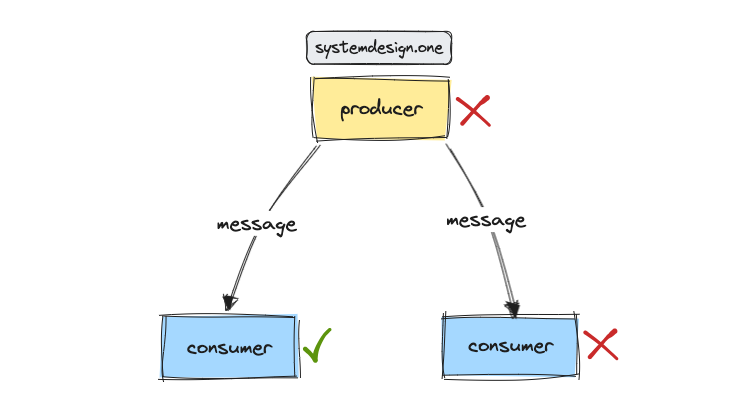
Historically, the challenge of maintaining system state in distributed environments was managed through rigid, synchronous broadcast protocols. In the 1980s, as networks grew, researchers identified that traditional broadcast methods—where a producer sends data directly to every consumer—failed under high load. If a producer or consumer crashed during the process, the state became fragmented.
The formalization of "epidemic algorithms" by researchers like Alan Demers in 1987 marked a turning point. Demers and his team at Xerox PARC demonstrated that by using random peer-to-peer communication, databases could maintain consistency across replicas without needing an "all-knowing" coordinator. This research laid the groundwork for modern cloud-native systems, including Amazon’s DynamoDB, HashiCorp’s Consul, and the Cassandra database, which uses the Gossip Protocol to manage cluster membership and detect node failures.
Mechanisms of Information Dissemination
To understand how gossip propagates, one must analyze the three primary strategies: Push, Pull, and Push-Pull models. In a Push model, a node with new information actively selects a random subset of peers and pushes the update. This is highly efficient during the early stages of an information spread. Conversely, the Pull model involves nodes actively polling their neighbors for updates, which is superior when the network is already saturated with data.
The most robust approach is the Push-Pull model, which combines both strategies. In this configuration, a node pushes its own latest state while simultaneously requesting the state of its peer. This dual-action approach significantly reduces the time to convergence, a metric critical for maintaining high availability. In a large cluster of 25,000 nodes, a properly tuned Gossip Protocol can achieve total system awareness in approximately 15 rounds of communication, often within just a few seconds.
Data Structures: Merkle Trees and Tombstones
Efficiency in gossip is constrained by bandwidth. If every node sent its entire database to every peer, the network would collapse under the weight of redundant data. To mitigate this, modern implementations employ Merkle Trees (or hash trees). By comparing the hash of data blocks rather than the raw data itself, nodes can quickly identify discrepancies between replicas.
When data needs to be deleted in a decentralized system, the challenge is ensuring the deletion is propagated as reliably as an update. Since there is no central "delete" command, systems use "tombstones." A tombstone is a marker attached to a data entry that signifies it has been deleted. When a node receives a message with a tombstone, it removes the corresponding local data. This prevents the "zombie data" problem, where a deleted record might reappear because a node that was offline missed the original deletion request.
Performance Metrics and Reliability
The performance of a gossip-based system is governed by two key parameters: fanout and cycle. Fanout refers to the number of neighbors a node contacts during each gossip round, while the cycle represents the interval between rounds.
Data from case studies indicates that for a cluster of 128 nodes, the overhead is remarkably low, consuming less than 2% of CPU resources and approximately 60 KBps of bandwidth. These figures demonstrate why the protocol is the gold standard for large-scale systems where "eventual consistency" is an acceptable trade-off for high availability. While the system might take a few milliseconds or seconds to reach a globally consistent state, the system as a whole never stops functioning, even if large segments of the network go offline.
Critical Analysis: The Trade-offs of Decentralization
While the Gossip Protocol offers unparalleled scalability and fault tolerance, it is not a panacea for all distributed challenges. The primary criticism leveled against the protocol is its "eventual consistency" model. Unlike systems requiring serializability—where every transaction is ordered perfectly—gossip systems allow for temporary states of inconsistency.
Furthermore, the protocol is notoriously difficult to debug. Because the communication is non-deterministic and randomized, reproducing a specific failure scenario can be complex. When a network partition occurs, the gossip protocol may continue to function within each sub-partition, but the two sides of the network will drift apart. Without external monitoring or a "seed node" to help bridge these partitions, the cluster may effectively split into two independent, inconsistent entities.
Security and Integrity Concerns
A significant challenge in modern implementations is the threat of malicious nodes. In a decentralized environment, any node can theoretically propagate false information. Without authentication or a reputation-based system, a compromised node could potentially broadcast incorrect state metadata, causing a "poisoning" effect across the cluster.
To defend against this, modern architects implement:
- Digital Signatures: Each gossip message is cryptographically signed, ensuring that only authorized nodes can contribute to the system state.
- Reputation Scores: Nodes that frequently provide information that contradicts the majority are flagged and eventually evicted from the gossip cycle.
- Encryption: All peer-to-peer gossip traffic is encrypted to prevent man-in-the-middle attacks.
The Role of Seed Nodes
Despite the desire for complete decentralization, most production systems utilize "seed nodes." These are pre-configured, well-known nodes that act as entry points for new members. When a new node joins a massive cluster, it cannot possibly know the address of all 10,000 existing nodes. Instead, it contacts a seed node to receive a partial membership list. Once the new node is "bootstrapped" with this initial view, it begins the gossip process, gradually discovering the rest of the network.
Future Implications for Edge Computing
As the industry shifts toward edge computing—where compute power is pushed to the literal edge of the internet in thousands of small, geographically dispersed data centers—the importance of the Gossip Protocol is set to grow. Centralized management is virtually impossible when managing thousands of edge locations across multiple continents with variable network latency.
The ability of the Gossip Protocol to operate in "fire-and-forget" mode makes it the ideal candidate for managing metadata, health checks, and service discovery in these expansive, volatile environments. As developers continue to refine the protocol’s convergence speed and bandwidth efficiency, it will likely remain the backbone of the next generation of global, fault-tolerant infrastructure.
Summary
The Gossip Protocol represents a fundamental shift in how we perceive reliability. By moving away from the fragile, centralized models of the past and embracing the chaotic, organic efficiency of epidemic-style communication, architects have built systems that are as resilient as they are scalable. While it requires a change in mindset—accepting that the system may be temporarily inconsistent—the benefits in uptime and performance are undeniable. As distributed systems continue to grow in complexity, the gossip protocol will remain an essential tool in the engineer’s arsenal, proving that sometimes, the most effective way to communicate is to simply keep talking.