Anthropic unveils autonomous multi-session project management in Claude Code to redefine software development workflows


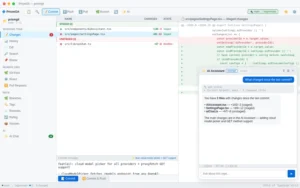
The landscape of software engineering is undergoing a significant transformation as Anthropic introduces a new autonomous project management capability within its Claude Code ecosystem. This development marks a shift from traditional AI-assisted coding, where the human developer acts as the primary orchestrator, to a model where the AI takes on the role of a project manager capable of delegating, executing, and synthesizing complex tasks across multiple repositories simultaneously. By moving away from the manual process of dividing work and stitching together fragmented code segments, Anthropic aims to reduce the overhead associated with large-scale development projects.
The Evolution of AI-Assisted Development
For years, the standard for AI coding assistants—such as GitHub Copilot or early iterations of Claude—involved a reactive, single-session paradigm. Developers would provide a prompt, receive a snippet or a file-level suggestion, and then manually integrate that code into their existing codebase. While this improved individual developer velocity, it did not address the systemic challenges of architectural migrations, performance optimizations, or cross-repo feature rollouts.
Managing these complex workflows historically required a high degree of cognitive load. A developer would need to manually track multiple parallel tasks, manage context switching, and ensure that handoffs between different modules remained consistent. The introduction of autonomous project management within Claude Code is designed to automate this orchestration. By allowing Claude to scope, delegate, and coordinate parallel threads, the platform transitions from being a mere text-generator to an active participant in the software development lifecycle (SDLC).
Operational Mechanics of Autonomous Projects
The core functionality of the updated Claude Code projects rests on the model’s ability to maintain state across disparate threads. When a user defines a goal—such as optimizing checkout latency or migrating deprecated API endpoints—Claude decomposes the objective into granular, actionable tasks.
In a practical application, if a developer intends to reduce the 75th percentile (p75) latency of an application, Claude profiles individual endpoints, initiates testing protocols for various optimizations, and executes these tests in parallel. The system is designed to handle cross-repository dependencies; for instance, if a deprecated v1 endpoint is being retired, Claude can identify all callers across mobile, web, and API repositories. It creates a dedicated thread for each, runs the necessary migration scripts, performs validation testing, and ultimately provides the human operator with a structured merge order to ensure system stability.
This asynchronous capability is particularly noteworthy because it functions independently of the user’s active screen time. Once a project is initiated, the model continues its operations, allowing the human developer to step away from the computer or monitor progress via mobile devices. This "fire and forget" capability is a significant departure from standard IDE-based AI tools, which typically require an active connection and constant human supervision to function.
Chronology of the Release and Beta Rollout
Anthropic’s strategy for deploying these features follows a structured, phased approach to ensure stability and gather performance feedback.
- Initial Beta Launch: Starting today, the updated project capabilities are available to a subset of Claude Pro and Max subscribers. Eligibility is currently restricted to those who utilize cloud sessions within Claude Code and who do not possess legacy project structures on the web or desktop interfaces.
- Expansion Phase: Throughout the coming week, Anthropic plans to broaden access to a wider pool of Pro and Max users. This incremental rollout is intended to stress-test the orchestration engine and refine the cross-thread communication protocols.
- Enterprise Integration: The final phase of the rollout will involve integrating these project management capabilities into the broader Claude ecosystem, specifically targeting Team and Enterprise plan subscribers.
- Legacy Management: Existing projects on current plans will remain functional without interruption. Anthropic has committed to upgrading these legacy projects as the feature expansion progresses toward chat and Cowork functionalities.
Contextualizing Performance and Productivity Data
While specific metrics on the efficacy of autonomous orchestration are still emerging, industry benchmarks for AI-assisted development suggest that task decomposition can reduce development time by as much as 30% to 50% for high-context tasks.
In the context of software maintenance, such as the retirement of a deprecated API endpoint, the complexity is usually not the code generation itself, but the discovery of dependencies and the orchestration of the update across different teams or repositories. By automating the discovery phase and managing the order of operations, Claude aims to solve the "dependency hell" that often plagues large-scale migrations. If an AI can verify that Service B must be updated before Service A, the risk of a broken deployment is significantly mitigated.
Industry Implications and Analyst Perspectives
The move by Anthropic signals a broader trend in the AI industry: the shift from "copilots" to "agents." An AI agent is defined by its ability to perform autonomous actions toward a goal, rather than simply responding to a query.
Analysts point to several key implications for the future of software development:
- Shift in Engineering Roles: As AI takes on the orchestration of complex, multi-repo tasks, the role of the software engineer may increasingly shift toward high-level system architecture and validation. If the "grunt work" of migrating endpoints or profiling latency is handled by an agent, developers may spend more time defining the "what" and "why" of a project rather than the "how."
- Increased Demand for Infrastructure Standardization: For an AI to effectively operate across multiple repositories, those repositories must be well-structured. Projects with poor documentation, inconsistent testing protocols, or undocumented dependencies may find it harder to leverage autonomous tools. This creates an incentive for organizations to adopt more rigorous coding standards.
- Governance and Security Concerns: The ability for an agent to open pull requests and execute code across multiple repositories introduces new security considerations. Anthropic has maintained that the human operator retains steering authority, but the capacity for an agent to move quickly through a codebase necessitates robust automated guardrails and review processes.
Official Stance and Future Outlook
Anthropic has framed this update as a response to the growing demand for AI that understands the entirety of a project, not just a single file. By moving the project management layer into the cloud, they are effectively treating the codebase as an object that the AI can monitor and mutate over time.
For users who have not yet received access, Anthropic has provided a waitlist to manage demand. The company has also emphasized that the "Project" interface will eventually become the central hub for all interaction, effectively blurring the lines between chat-based assistance and autonomous code maintenance.
As the industry moves toward a future where autonomous agents perform significant portions of the maintenance and optimization work, the focus of software development will likely move toward oversight. The success of this initiative will depend on how effectively the AI handles edge cases—scenarios where the code logic is ambiguous or where the business impact of a change is not clearly defined.
Ultimately, the launch of autonomous project management in Claude Code represents a calculated step toward realizing the vision of AI-augmented software engineering. By alleviating the burden of multi-session coordination, Anthropic is positioning its tools to be essential for the modern, fast-paced development environment, where the speed of deployment is as important as the quality of the underlying code. As the beta period concludes and the feature reaches a wider audience, the industry will be watching to see if the promise of "automated orchestration" translates into measurable improvements in software reliability and developer satisfaction.