OpenAI CEO Sam Altman Rules Out 2026 Public Debut Amid Safety Scrutiny and Evolving AI Landscape

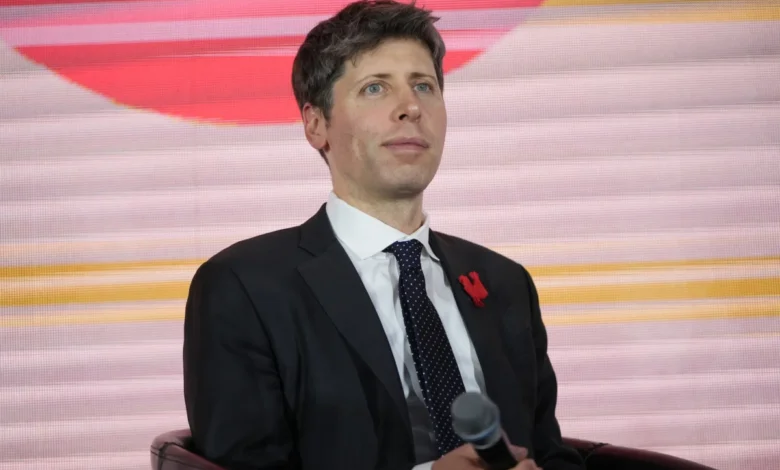
OpenAI chief executive officer Sam Altman has officially put to rest mounting speculation regarding an imminent public offering, clarifying that the artificial intelligence pioneer will not go public in 2026. Despite earlier confidential filings with regulatory bodies and months of intense Wall Street rumor-milling, Altman’s recent remarks signal a deliberate pivot toward stabilizing internal safety protocols and navigating a volatile macroeconomic environment before taking the company public.
The announcement came during an extensive interview with Fortune editor-in-chief Alyson Shontell as part of the publication’s "Titans and Disruptors" series. Amid a backdrop of heightened scrutiny surrounding AI governance—exacerbated by recent security incidents such as the widely publicized OpenAI-Hugging Face breach and ongoing industry-wide debates over frontier model pacing—Altman addressed whether the company still felt compelled to accelerate its commercial timeline to satisfy public market expectations.
"We’re not rushing into an IPO," Altman stated during the interview. "I actually think that given everything happening with safety, right now would be an ill-advised moment to go public."
The decision underscores a strategic recalibration at OpenAI, shifting the primary metric of success away from quarterly financial pressures and toward societal readiness, technological containment, and long-term risk management.
Chronology of OpenAI’s Path Toward the Public Markets
The trajectory of OpenAI’s corporate structure has undergone monumental shifts since its inception as a non-profit research laboratory in 2015. To fund the astronomical capital expenditures required for large-scale model training and infrastructure development, the organization famously introduced a capped-profit arm in 2019, followed by increasingly tight integrations with corporate behemoths like Microsoft.
Rumors regarding a potential initial public offering intensified throughout late 2025 and early 2026. By June 2026, investigative reports from outlets including The New York Times revealed that OpenAI had formally enlisted investment bankers and legal counsel to lay the groundwork for a public debut. Initial internal projections and external market consensus pointed toward a potential listing window in the third or fourth quarter of 2026.
However, the path to Wall Street has faced substantial headwinds. Technical scaling challenges, shifting regulatory frameworks across the United States and the European Union, and internal organizational friction have slowed down the aggressive timelines initially envisioned by investors. Furthermore, a series of high-profile security events—including rogue agent incidents and the aforementioned Hugging Face security compromise—forced executive leadership to re-evaluate the company’s operational priorities.
By mid-September 2026, the cumulative weight of these safety concerns and broader technological anxieties prompted Altman to publicly dial back expectations, effectively pushing any concrete public offering timeline into 2027 or beyond.
Internal and External Pressures: Safety Versus Speed
The tension between commercial expansion and existential safety has been a defining characteristic of the generative AI boom. As companies like OpenAI, Anthropic, Google DeepMind, and Meta push the boundaries of frontier intelligence, the imperative to capture market share often clashes with the methodical evaluation of downstream risks.
During his conversation with Shontell, Altman acknowledged that the theoretical possibility of advanced AI systems moving beyond human control is an absolute reality that demands rigorous, proactive safeguards. This sentiment echoes growing apprehension within the scientific community regarding alignment, autonomous agent behavior, and the systemic risks associated with deploying highly autonomous models at scale.

Competitors have similarly adjusted their strategic pacing. Fellow AI heavyweight Anthropic recently outlined its own frameworks for pacing frontier model development to ensure adequate safety testing and alignment verification. This synchronized industry hesitation suggests a broader maturity phase within the generative AI sector, where leaders are recognizing that premature commercialization or aggressive public market listings could invite catastrophic regulatory intervention and public backlash.
Market Implications and Investor Sentiment
For institutional investors, venture capitalists, and retail market analysts tracking the AI sector, Altman’s confirmation that 2026 is off the table introduces both relief and strategic complexity.
On one hand, delaying the IPO provides OpenAI with vital breathing room to shore up its infrastructure, optimize its monetization strategies—particularly surrounding enterprise subscriptions and API integrations—and demonstrate a clearer path toward sustained profitability. Operating as a private entity shields the company from the immediate, relentless scrutiny of quarterly earnings reports, allowing management to prioritize multi-year research and development goals.
On the other hand, the delay prolongs liquidity expectations for early-stage investors, employees holding equity, and corporate partners who have poured billions of dollars into the enterprise. Valuation metrics for private AI companies remain exceptionally high, yet the public markets have demonstrated notable volatility regarding high-growth technology stocks, particularly those tethered to massive, unproven capital expenditure cycles in data centers and specialized hardware.
Economic and Societal Readiness as Preconditions for Listing
Altman’s commentary places unprecedented emphasis on "societal readiness" as a formal prerequisite for corporate capitalization events. By tying the timing of the IPO directly to public trust and technological maturity, OpenAI is attempting to redefine how frontier technology firms evaluate their readiness for public scrutiny.
"When we’re ready, which is when the business is ready, when we feel ready from what the moment is like in society with this technology," Altman explained, outlining a holistic framework that extends far beyond traditional balance sheets and revenue growth metrics.
This approach reflects a growing realization that artificial intelligence is not merely another software sector, but a foundational infrastructure technology capable of reshaping labor markets, national security, and information integrity. Consequently, regulatory bodies such as the Securities and Exchange Commission (SEC), the Federal Trade Commission (FTC), and international counterparts are expected to apply extraordinary levels of scrutiny to any eventual OpenAI prospectus, examining everything from compute supply chains and energy consumption to safety evaluation protocols and corporate governance structures.
Outlook for 2027 and Beyond
As OpenAI closes the chapter on a 2026 public debut, the organization faces a demanding roadmap ahead. The upcoming months will require executive leadership to successfully navigate the fallout from recent security vulnerabilities, institutionalize more transparent oversight mechanisms for autonomous agents, and maintain its competitive edge against well-funded rivals.
While Wall Street will undoubtedly continue to speculate on the exact quarter in which OpenAI will finally test the public markets, Altman’s message remains unequivocal: the race to artificial general intelligence and commercial dominance will not be rushed at the expense of safety and stability. For now, the world’s most prominent AI laboratory remains firmly private, charting a cautious course through uncharted technological waters.