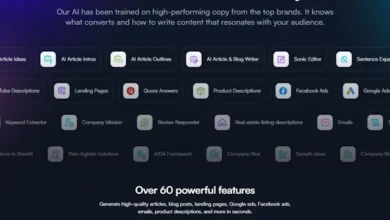
The landscape of technology is undergoing a profound transformation, driven by the rapid advancements and widespread adoption of Artificial Intelligence (AI). In 2023, AI tools are no longer confined to research labs or specialized industries; they are becoming indispensable for businesses and individuals seeking to automate repetitive tasks, enhance efficiency, and unlock new avenues of creativity and productivity. This article delves into ten leading AI tools that are not only shaping the present but also laying the groundwork for a more intelligent future, exploring their functionalities, applications, and broader implications across various sectors.
The AI Revolution: A Broader Context
The evolution of AI has accelerated dramatically in recent years, moving from theoretical concepts to practical, accessible applications. This shift is fueled by advances in computational power, vast datasets, and sophisticated algorithms, particularly in machine learning and deep learning. Industry analysts project the global AI market to continue its exponential growth, with forecasts often placing its value in the trillions of dollars within the next decade. For instance, a report by PwC estimated that AI could contribute up to $15.7 trillion to the global economy by 2030, fundamentally reshaping industries from healthcare and finance to manufacturing and creative arts.
This surge in AI development has led to the democratization of advanced capabilities, allowing non-technical users to leverage sophisticated algorithms for tasks that once required specialized expertise. The tools highlighted here exemplify this trend, offering solutions for natural language processing, content generation, code development, workflow automation, and more. They represent a critical starting point for anyone looking to understand and harness the transformative potential of AI in their professional or personal endeavors.
1. ChatGPT: Revolutionizing Natural Language Interaction
ChatGPT, developed by OpenAI, stands at the forefront of large language models (LLMs), demonstrating an unparalleled ability to generate human-like text responses across a vast array of prompts and topics. Built upon the sophisticated transformer architecture, specifically a variant of the GPT-3.5 series (and now GPT-4), it has been trained on an enormous dataset of text and code, enabling it to understand context, generate coherent narratives, and perform diverse language tasks.
Functionality and Applications:
ChatGPT excels in tasks such as language translation, summarizing complex documents, answering questions comprehensively, generating creative content (stories, poems, scripts), and assisting with coding by explaining concepts or writing basic functions. Its conversational interface has made it highly accessible, leading to its rapid adoption in customer service, content creation, education, and even personal assistance. Businesses leverage it for drafting marketing copy, automating responses to frequently asked questions, and aiding in research by synthesizing information quickly.
Pros:
- Exceptional Fluency and Coherence: Generates remarkably natural and contextually appropriate text.
- Versatility: Capable of handling a wide range of topics, writing styles, and tasks.
- Time-Saving: Significantly speeds up content generation, research, and communication processes.
- Accessibility: Its conversational interface makes it easy for non-technical users to interact with advanced AI.
Cons:
- Factual Inaccuracies (Hallucinations): Can sometimes generate plausible-sounding but incorrect or fabricated information.
- Bias Reflection: May reflect biases present in its vast training data, potentially leading to prejudiced or insensitive outputs.
- Lack of Real-time Information: Its knowledge cut-off means it cannot access or respond to events or data beyond its last training update.
- Ethical Concerns: Raises questions about academic integrity, misinformation, and the future of human-authored content.
Implications: The rise of ChatGPT has sparked considerable debate about the future of work, the nature of intelligence, and the ethical responsibilities in developing powerful AI. It underscores the importance of critical thinking and human oversight even as it augments human capabilities in unprecedented ways.
2. DALL-E: Pioneering Generative Image Creation
DALL-E, another groundbreaking innovation from OpenAI, has redefined the landscape of digital art and visual content creation. As a generative model, it possesses the remarkable ability to produce high-quality images directly from natural language text prompts. This technology is rooted in advanced deep learning techniques, particularly diffusion models, which learn to gradually refine random noise into coherent images based on textual descriptions.
Functionality and Applications:
Users can simply type a descriptive phrase – such as "a futuristic city skyline at sunset" or "a cat wearing a spacesuit riding a bicycle on the moon" – and DALL-E will render unique visual interpretations. This capability has profound implications for graphic design, advertising, game development, and entertainment, allowing for rapid prototyping of visual concepts, creation of unique marketing assets, and even the generation of entirely new artistic styles. Artists and designers use it to brainstorm ideas, create mood boards, and overcome creative blocks, while businesses leverage it for bespoke imagery without the need for traditional photography or illustration.
Pros:
- Unprecedented Creativity: Generates novel and imaginative images from textual prompts, fostering artistic exploration.
- Speed and Efficiency: Drastically reduces the time and cost associated with traditional image creation methods.
- Accessibility: Democratizes image generation, allowing individuals without specialized artistic skills to create visuals.
- High-Resolution Output: Capable of producing images suitable for commercial and professional applications.
Cons:
- Potential for Misuse: Can be used to create misleading or harmful content (e.g., deepfakes), raising ethical concerns.
- Copyright and Ownership Issues: Questions arise regarding the originality and ownership of AI-generated art, particularly when training data includes copyrighted works.
- Prompt Engineering Dependency: Achieving desired results often requires skill in crafting precise and effective text prompts.
- Bias in Training Data: May reflect biases present in its vast image datasets, leading to stereotypes or underrepresentation.
Implications: DALL-E and similar generative AI models (like Midjourney and Stable Diffusion) are fundamentally reshaping creative industries, challenging traditional notions of authorship and creativity. They highlight the need for robust ethical guidelines and legal frameworks to navigate the evolving digital content landscape.
3. Lumen5: Streamlining Video Content Production
Lumen5 is an AI-powered content creation platform specifically designed to simplify and accelerate the process of producing videos, particularly for marketing and social media purposes. Recognizing the growing demand for video content, Lumen5 utilizes artificial intelligence to transform text-based content into engaging video narratives with minimal human intervention.
Functionality and Applications:
The platform allows users to input articles, blog posts, or scripts, which its AI then analyzes to identify key sentences and themes. It intelligently matches this text with relevant video clips, images, and music from its extensive stock media library. Users can customize branding, add voiceovers, and refine the video’s flow. This automation makes it an invaluable tool for marketers, content creators, and businesses that need to produce a high volume of video content for platforms like Instagram, Facebook, and YouTube without investing heavily in traditional video production resources.
Pros:
- Rapid Video Generation: Significantly reduces the time required to create professional-looking videos.
- Ease of Use: User-friendly interface allows individuals without video editing experience to create content.
- Cost-Effective: Offers a more affordable alternative to hiring professional videographers or using complex editing software.
- Access to Stock Media: Provides a vast library of royalty-free video clips, images, and audio tracks.
- Brand Consistency: Enables easy application of brand colors, fonts, and logos across all generated videos.
Cons:
- Limited Customization for Complex Narratives: While efficient, it may lack the granular control needed for highly intricate or artistic video projects.
- Potential for Generic Output: Reliance on stock media and automated processes can sometimes lead to videos that lack a unique creative flair.
- Quality Dependence on Source Material: The effectiveness of the AI’s selection process is heavily reliant on the quality and clarity of the initial text input.
- Subscription Costs: Advanced features and higher-resolution outputs typically require a paid subscription.
Implications: Lumen5 embodies the trend of AI democratizing complex creative tasks. It empowers small businesses and individual content creators to compete in a video-first digital world, making professional-quality video production accessible and scalable.
4. Grammarly: Enhancing Written Communication with AI
Grammarly is a widely adopted writing-enhancement platform that leverages artificial intelligence and natural language processing (NLP) to help users improve their written communication. Beyond basic spell-checking, it provides comprehensive feedback on grammar, punctuation, clarity, concision, and tone.
Functionality and Applications:
Grammarly operates as a digital writing assistant, offering real-time suggestions as users type across various applications, including web browsers, desktop apps, and mobile devices. Its algorithms analyze text for stylistic improvements, identify passive voice, suggest vocabulary enhancements, and even detect plagiarism. This makes it an indispensable tool for students, professionals, content creators, and anyone who writes regularly, ensuring their messages are clear, impactful, and error-free. From crafting professional emails to academic papers and marketing materials, Grammarly aims to elevate the quality and effectiveness of written content.
Pros:
- Comprehensive Error Detection: Identifies a broad spectrum of grammatical, punctuation, and spelling errors.
- Contextual Suggestions: Provides intelligent recommendations for improving sentence structure, clarity, and concision.
- Tone Detection: Helps users adjust their writing to convey the intended tone (e.g., confident, formal, friendly).
- Plagiarism Checker: Assists in maintaining academic and professional integrity by identifying potential instances of unoriginal content.
- Real-time Feedback: Offers immediate suggestions, allowing for instantaneous improvements during the writing process.
Cons:
- Occasional Over-Correction or Misinterpretation: Can sometimes flag grammatically correct sentences or misinterpret nuances of human language.
- Subscription for Advanced Features: Many of its more sophisticated capabilities, such as tone adjustments and advanced clarity suggestions, are locked behind a premium paywall.
- Potential for Over-Reliance: Users might become overly dependent on the tool, potentially hindering the development of their own editing skills.
- Privacy Concerns: As it analyzes user text, some individuals may have concerns about data privacy, although Grammarly emphasizes robust security measures.
Implications: Grammarly represents a significant advancement in assistive writing technology, demonstrating how AI can augment human skills rather than replace them. It fosters better communication standards across digital platforms and empowers individuals to write with greater confidence and precision.
5. OpenAI Codex: Bridging Natural Language and Code
OpenAI Codex is a powerful AI system, also developed by OpenAI, that translates natural language into programming code. It is the underlying technology behind tools like GitHub Copilot and represents a significant leap in the interaction between humans and software development. Built on the same foundational architecture as GPT-3, Codex has been specifically fine-tuned on an extensive dataset of publicly available code and natural language, enabling it to understand programming intent expressed in plain English.
Functionality and Applications:
Codex can generate code snippets, complete functions, or even entire programs based on descriptive text prompts. For instance, a developer might type "create a Python function that sorts a list of numbers in ascending order," and Codex will generate the corresponding code. It supports numerous programming languages, including Python, JavaScript, Go, Ruby, and more. Its primary applications lie in accelerating software development, automating repetitive coding tasks, assisting developers in unfamiliar languages, and even serving as an educational tool for learning programming concepts. It allows developers to focus on higher-level problem-solving rather than syntax and boilerplate code.
Pros:
- Accelerated Development: Significantly speeds up the coding process by generating boilerplate code and suggesting solutions.
- Language Versatility: Supports a wide range of programming languages, making it useful for diverse projects.
- Accessibility for Non-Experts: Lowers the barrier to entry for coding by allowing users to express intentions in natural language.
- Problem-Solving Aid: Can help developers explore different approaches to solving coding challenges.
Cons:
- Potential for Bugs and Inefficiencies: Generated code may contain errors, security vulnerabilities, or suboptimal solutions, requiring thorough review and testing.
- Limited Contextual Understanding: While powerful, it may not fully grasp complex architectural decisions or broader project context, leading to less optimal suggestions.
- Ethical and Copyright Issues: Questions arise about the originality of generated code and potential licensing conflicts if training data includes proprietary or licensed code.
- Over-Reliance Risk: Developers might become overly dependent on the tool, potentially diminishing their own problem-solving and debugging skills.
Implications: OpenAI Codex is transforming the developer workflow, augmenting human coders rather than replacing them. It highlights the evolving nature of software engineering, where AI becomes a collaborative partner, enabling faster innovation and potentially democratizing programming for a broader audience.
6. Tabnine: Intelligent Code Completion for Developers
Tabnine is an advanced AI code completion tool designed to boost developer productivity by predicting and suggesting code snippets in real-time. Unlike simpler autocomplete features, Tabnine leverages deep learning models trained on vast amounts of open-source code to provide highly relevant and context-aware suggestions.
Functionality and Applications:
Integrated directly into popular code editors and IDEs (such as VS Code, IntelliJ, Sublime Text), Tabnine analyzes the code being written and offers intelligent completions, entire lines of code, and even full function bodies. It learns from both publicly available codebases and, in enterprise versions, from a team’s private code, adapting to specific coding styles and project conventions. This dynamic learning allows it to provide personalized suggestions that go beyond basic keyword matching, predicting the developer’s intent and reducing the need for manual typing and looking up documentation. It supports over 30 programming languages, making it a versatile asset for virtually any development environment.
Pros:
- Enhanced Coding Speed: Significantly accelerates the coding process by providing accurate and extensive code completions.
- Reduced Errors: Helps minimize typos and syntax errors, leading to more robust and reliable code.
- Context-Aware Suggestions: Leverages AI to understand the project context and offer highly relevant code snippets.
- Language Agnostic: Supports a wide array of programming languages, making it a versatile tool for diverse development teams.
- Personalized Learning: Adapts to individual coding styles and team conventions, improving suggestions over time.
Cons:
- Potential for Repetitive Code: If not used judiciously, it might suggest common patterns that are not always the most efficient or elegant solution.
- Privacy Concerns (for private code): While enterprise versions are designed to keep private code secure, some developers may have concerns about their proprietary code being processed by an external AI.
- Resource Usage: As an AI-powered tool, it can sometimes consume more system resources compared to basic autocomplete features.
- Over-Reliance Risk: Similar to other AI coding aids, over-dependence could potentially hinder a developer’s independent problem-solving abilities.
Implications: Tabnine represents a critical tool in the modern developer’s arsenal, embodying the concept of "AI augmentation." By streamlining routine coding tasks, it allows developers to allocate more mental energy to complex architectural decisions, innovative problem-solving, and strategic project planning.
7. Jasper AI: Empowering Content Marketing with AI Writing
Jasper AI (formerly Jarvis AI) is a sophisticated content writing and generation tool that harnesses artificial intelligence to assist marketers, writers, and businesses in producing high-quality written content efficiently. It is specifically designed to understand different writing styles, tones, and target audiences to generate optimized content for various marketing channels.
Functionality and Applications:
Jasper AI utilizes advanced AI models to generate a wide range of content, including blog posts, social media captions, ad copy, website content, product descriptions, and email newsletters. Users provide a brief description or keywords, choose a template (e.g., blog post outline, Facebook ad primary text), and specify the tone of voice. Jasper then generates relevant and engaging copy, often optimized for search engines and conversion. This capability is invaluable for marketing teams struggling with content volume, small businesses without dedicated copywriters, and individuals looking to overcome writer’s block or scale their content production.
Pros:
- High Content Velocity: Dramatically increases the speed at which content can be produced, meeting demanding publishing schedules.
- SEO Optimization: Can generate content that is structured and keyword-rich, aiding in search engine ranking.
- Versatile Content Formats: Supports a multitude of content types, from short-form social media updates to long-form articles.
- Overcoming Writer’s Block: Provides a strong starting point or generates ideas when human creativity falters.
- Brand Voice Consistency: Can be trained to maintain a consistent brand voice and messaging across all generated content.
Cons:
- Requires Human Oversight and Editing: AI-generated content often needs significant human review, editing, and fact-checking to ensure accuracy, originality, and adherence to brand guidelines.
- Potential for Generic Output: Without careful prompting and human refinement, the content can sometimes sound generic or lack a unique human touch.
- Subscription Costs: As a premium tool, its advanced features and usage tiers come with a significant recurring cost.
- Limited Deep Understanding: While it generates fluent text, it lacks true understanding or empathy, which can be crucial for sensitive or highly nuanced topics.
Implications: Jasper AI exemplifies the impact of AI on content marketing, enabling businesses to scale their outreach and maintain a strong online presence. It highlights a future where human creativity and AI efficiency work in synergy to produce compelling digital narratives.
8. Surfer SEO: AI-Driven On-Page Optimization
Surfer SEO is an AI-powered software tool specifically developed to assist website owners and digital marketers in optimizing their content for search engines. It moves beyond traditional keyword stuffing, using data science to analyze top-ranking content and provide actionable recommendations for on-page SEO.
Functionality and Applications:
Surfer SEO works by analyzing hundreds of data points from the top-ranking pages for a target keyword. It then provides users with a data-driven content score and recommendations on elements such as optimal keyword density, suggested related keywords, ideal word count, heading structures, image usage, and even the number of paragraphs. Its content editor guides writers in real-time to create content that is not only comprehensive but also aligned with what search engines perceive as high-quality and relevant for specific queries. This tool is crucial for businesses aiming to improve their organic search visibility, drive more traffic, and outperform competitors in search engine results pages (SERPs).
Features:
- Content Editor: Provides real-time feedback and scores as content is being written, based on competitive analysis.
- Keyword Research: Helps identify relevant keywords and topics to target.
- SERP Analyzer: Breaks down what factors contribute to the top-ranking pages for a given query.
- Audit Tool: Analyzes existing content and provides recommendations for improvement.
- Content Planner: Helps organize content strategy by suggesting clusters of related topics.
Pros:
- Data-Driven Recommendations: Provides objective, statistically backed insights rather than subjective guesses.
- Competitive Advantage: Allows users to understand and replicate the on-page strategies of top-ranking competitors.
- Improved Search Rankings: By aligning content with search engine expectations, it can significantly boost organic visibility.
- Time-Saving: Automates much of the manual research and analysis traditionally involved in SEO.
- User-Friendly Interface: Presents complex SEO data in an understandable and actionable format.
Cons:
- Not a Standalone Solution: While powerful, it must be used in conjunction with other SEO best practices (technical SEO, link building, user experience).
- Potential for "Over-Optimization": Blindly following recommendations without human judgment can sometimes lead to unnatural-sounding content or penalties.
- Subscription Cost: As a specialized tool, it typically requires a paid subscription, which might be a barrier for very small businesses.
- Algorithmic Changes: Search engine algorithms constantly evolve, requiring the tool to adapt, which can sometimes lead to temporary inconsistencies.
Implications: Surfer SEO exemplifies how AI and data analytics are transforming the field of digital marketing. By providing precise, actionable insights, it empowers businesses to optimize their online presence effectively and navigate the complex world of search engine algorithms.
9. Zapier: Connecting Applications for Automated Workflows
Zapier is a leading web automation tool that allows users to connect disparate web applications and automate repetitive tasks without requiring any coding knowledge. It acts as a digital bridge, enabling seamless data flow and action triggering between thousands of popular apps.
Functionality and Applications:
At its core, Zapier operates on the principle of "Zaps," which are automated workflows consisting of a trigger and one or more actions. For example, a "Zap" could be configured so that when a new email is received in Gmail (trigger), an entry is automatically created in a Google Sheet (action), and a notification is sent to Slack (another action). This capability is transformative for businesses of all sizes, enabling them to streamline operations, reduce manual data entry, and improve overall efficiency. It is widely used for automating lead management, customer support, marketing campaigns, project management updates, and much more, integrating tools like CRM systems, email marketing platforms, productivity apps, and social media channels.
Features:
- Thousands of App Integrations: Connects with over 5,000 web applications, offering extensive automation possibilities.
- Intuitive Interface: Allows users to create complex workflows with a simple, drag-and-drop builder.
- Multi-Step Zaps: Supports intricate automation sequences involving multiple actions and conditional logic.
- Filters and Delays: Enables precise control over when and how actions are executed.
- Webhooks: Provides advanced options for connecting custom applications.
Pros:
- Significant Time Savings: Automates routine and repetitive tasks, freeing up human resources for more strategic activities.
- Increased Productivity: Streamlines workflows, reduces bottlenecks, and ensures timely completion of tasks.
- Reduced Human Error: Minimizes the risk of mistakes associated with manual data entry and task management.
- Scalability: Allows businesses to automate processes as they grow without needing to hire additional staff for manual tasks.
- No Coding Required: Makes powerful automation accessible to non-technical users.
Cons:
- Initial Setup Complexity: While user-friendly, setting up complex Zaps can still require careful planning and testing.
- Dependency on App APIs: Automation capabilities are limited by the features and reliability of the connected applications’ APIs.
- Subscription Costs: Advanced features, higher usage limits, and premium app integrations typically require a paid subscription.
- Debugging Challenges: Troubleshooting issues in multi-step Zaps can sometimes be challenging, requiring a systematic approach.
Implications: Zapier is a cornerstone of modern digital transformation, enabling businesses to create highly integrated and efficient ecosystems of applications. It underscores the critical role of automation in optimizing operational efficiency and fostering a more productive work environment.
10. Compose AI: Advanced Natural Language Generation
Compose AI specializes in Natural Language Generation (NLG) software, focusing on automatically generating written or spoken text from structured data. While related to large language models like ChatGPT, Compose AI’s core strength lies in its ability to synthesize data-driven narratives rather than purely conversational responses.
Functionality and Applications:
Compose AI’s software ingests structured data—such as spreadsheets, databases, or APIs—and transforms it into coherent, human-readable text. For instance, it can take sales figures from a database and automatically generate a quarterly sales report, detailing trends, highlights, and anomalies. It can also create personalized customer communications, real-time financial summaries, sports recaps from game statistics, or even medical reports from patient data. The system is designed to maintain consistency, accuracy, and brand voice in the generated content, making it invaluable for automating routine reporting, personalizing communications at scale, and extracting insights from vast datasets.
Features:
- Data-to-Text Conversion: Transforms numerical and categorical data into natural language narratives.
- Customizable Templates: Allows users to define specific formats and styles for generated content.
- Scalable Content Generation: Capable of producing a high volume of unique texts from varying data inputs.
- Integration Capabilities: Can integrate with existing data sources and business intelligence tools.
- Multilingual Support: Potential for generating content in multiple languages from the same data.
Pros:
- Automated Reporting and Summarization: Eliminates manual effort in generating routine reports and data summaries.
- Enhanced Data Accessibility: Makes complex data understandable to a broader audience through clear narratives.
- Personalized Communications at Scale: Enables the creation of highly individualized messages for customers or stakeholders.
- Consistency and Accuracy: Ensures factual correctness and uniform messaging when drawing from structured data.
- Increased Efficiency: Frees up analysts and writers from repetitive content generation tasks.
Cons:
- Dependence on Data Quality: The accuracy and coherence of the generated content are directly tied to the quality and structure of the input data.
- Limited Creativity for Nuanced Topics: While excellent for factual reporting, it may struggle with highly subjective or creatively driven content.
- Initial Setup and Customization: Requires careful configuration and template design to achieve desired output, which can be complex.
- Lack of True Understanding: The AI processes patterns in data and language but does not possess genuine comprehension or judgment.
Implications: Compose AI’s NLG solutions are critical for businesses drowning in data but starved for actionable insights and personalized communication. It represents a powerful application of AI in transforming raw data into meaningful narratives, driving better decision-making and more effective engagement.
Conclusion: The Enduring Impact of AI Tools
The array of AI tools available in 2023 underscores a pivotal moment in technological advancement. From conversational AI like ChatGPT and generative art platforms like DALL-E to code assistants such as OpenAI Codex and Tabnine, and automation facilitators like Zapier, these innovations are fundamentally reshaping how we work, create, and interact with information. They are designed not to replace human ingenuity but to augment it, automating mundane tasks, accelerating creative processes, and providing unprecedented analytical capabilities.
The implications of these tools are far-reaching. They promise increased productivity and efficiency across virtually every industry, from marketing and software development to education and creative arts. They democratize access to sophisticated technologies, enabling smaller businesses and individual creators to compete on a level playing field. However, their proliferation also necessitates a thoughtful approach to ethical considerations, including data privacy, bias in AI models, intellectual property rights, and the responsible use of generative content.
As AI technology continues to evolve, we can anticipate even more powerful and versatile tools that will further integrate into daily life and business operations. The "top 10 AI tools" of today are merely a snapshot of a dynamic and rapidly expanding field. For any organization or individual looking to thrive in the digital age, understanding, evaluating, and strategically adopting these intelligent assistants will be paramount to unlocking new efficiencies, fostering innovation, and navigating the future landscape of technology. The journey with AI is just beginning, and these tools are the trailblazers guiding the way.