U.S. Intelligence Memo Alleges Chinese State Security Recruited Executive to Target Nvidia CEO Jensen Huang

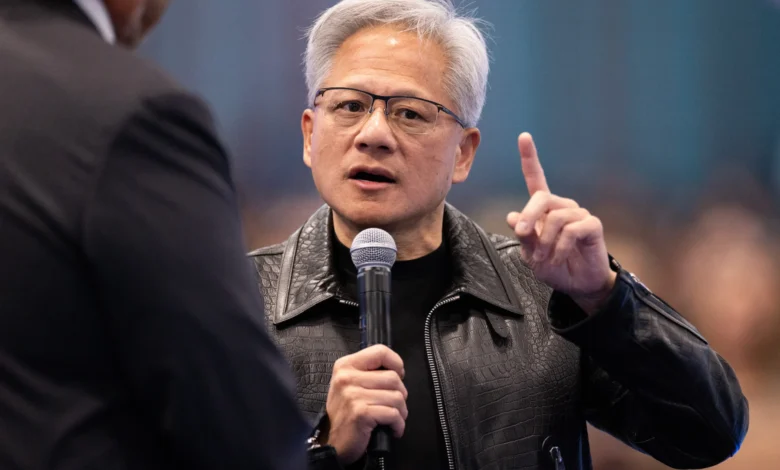
An intelligence memo circulated earlier this year by United States authorities has laid bare an alleged espionage operation targeting the highest echelons of the global technology sector. According to multiple reports, the document claims that technology executive Alice Huang was recruited by China’s Ministry of State Security (MSS) for the explicit purpose of gathering intelligence on Nvidia Chief Executive Officer Jensen Huang. The revelation, stemming from classified U.S. intelligence assessments, highlights the escalating geopolitical stakes surrounding artificial intelligence hardware, semiconductor supply chains, and the intense rivalry between Washington and Beijing for technological dominance.
The existence of the memo first came to light through investigative reporting by The New York Times, which detailed how Chinese intelligence agencies had set their sights on the leader of the world’s most valuable chipmaker. Shortly thereafter, The Financial Times reported further explosive details contained within the intelligence documents, alleging that the purported espionage effort involved a personal dimension. Specifically, the memo claimed that Jensen Huang maintained a romantic relationship with Alice Huang, an executive working for Megaspeed, a technology firm based in Singapore.
The intersection of personal ties and state-sponsored espionage underscores the extreme vulnerabilities high-profile corporate leaders face as technology becomes a primary instrument of national power. As semiconductors transition from consumer electronics to critical infrastructure underpinning global artificial intelligence, leaders of companies like Nvidia find themselves operating at the crossroads of corporate capitalism and geopolitical strategy.
Chronology of the Intelligence Leak and Public Disclosure
The public unfolding of this espionage allegation follows a carefully paced sequence of investigative reports and official acknowledgments that began earlier in the year.
According to U.S. media accounts, the intelligence memo detailing the alleged recruitment of Alice Huang by the MSS was compiled and circulated within select government circles earlier this year. However, the story remained out of the public eye until late autumn.
On November 6, The New York Times published the initial investigative piece revealing that U.S. intelligence assessments had identified Jensen Huang as a specific target of Chinese intelligence operations, utilizing Alice Huang as an operative. The report provided the foundational details of the security warning, framing it within the broader context of aggressive Chinese intelligence gathering in the technology sector.
On the same day or shortly thereafter, The Financial Times corroborated and expanded upon the narrative by publishing details regarding the alleged personal relationship between Jensen Huang and the Singapore-based Megaspeed executive. This added a layer of complexity to the intelligence community’s assessment, suggesting that human intelligence (HUMINT) tactics—such as the cultivation of personal relationships—remain a preferred method for intelligence agencies seeking access to proprietary information and elite networks.
By November 7, the news cycle intensified as The New York Times published a secondary, related investigative report. This piece shifted focus from executive-level targeting to supply chain security, examining a Chinese firm named New Matrix. Although authorized by the U.S. Department of Commerce to purchase advanced Nvidia semiconductors, journalists visiting the company’s officially listed office address discovered an empty, hollow commercial shell. This physical discovery raised immediate red flags among regulators and security analysts, suggesting that New Matrix may be operating as a front company designed to funnel restricted high-end processors to blacklisted entities or military-industrial complexes within China.
Official Responses and Corporate Stance
In the wake of these sweeping allegations, Nvidia has moved quickly to address the media inquiries and reassure stakeholders, regulatory bodies, and customers regarding its security protocols and compliance measures.

An official spokesperson for Nvidia issued a statement to The New York Times addressing the nature of the relationship between its chief executive and the targeted executive. The representative maintained that Jensen Huang’s interactions with Alice Huang were “not unusual” for a prominent technology leader who routinely interacts with executives, partners, and clients across the global semiconductor ecosystem.
Furthermore, the spokesperson firmly pushed back against any insinuation that sensitive or classified corporate information could have been compromised through these channels. The company emphasized that Nvidia does not share classified or proprietary intellectual property with its customers, nor does it grant unauthorized access to its core technological blueprints, software architectures, or unreleased product pipelines.
Regarding the separate investigation into front companies and the diversion of advanced chips, the Nvidia representative reiterated the company’s strict adherence to U.S. export controls. The spokesperson noted that Nvidia consistently prioritizes domestic compliance and commercial integrity, stating that the company sells “the first, best and most of our technology in America,” while strictly complying with the complex web of trade restrictions imposed by the Department of Commerce’s Bureau of Industry and Security (BIS).
Broader Context: The Geopolitical Battleground for AI Chips
The allegations surrounding Jensen Huang and the scrutiny placed on intermediaries like New Matrix cannot be viewed in isolation. They are part of a broader, high-stakes trade and security war between the United States and China centered on artificial intelligence and advanced computing hardware.
In recent years, Nvidia has emerged as the undisputed titan of the AI boom, designing the graphics processing units (GPUs) that power everything from OpenAI’s large language models to complex sovereign AI infrastructure projects worldwide. Because these chips are foundational to training cutting-edge artificial intelligence systems—which have profound dual-use applications in both commercial sectors and military defense—the U.S. government has placed stringent export controls on shipping advanced semiconductors to China.
These restrictions are designed to maintain America’s technological edge and prevent the People’s Liberation Army from utilizing high-performance computing for advanced simulations, hypersonic research, and autonomous weapons systems. However, these regulations have created a massive black market and an array of sophisticated evasion tactics.
Intelligence agencies on both sides have ramped up their operations. While the U.S. seeks to enforce compliance and monitor supply chains, foreign intelligence services like China’s MSS reportedly employ aggressive human intelligence gathering, front companies, and proxy purchasers to acquire restricted hardware or extract proprietary insights directly from industry leaders. The discovery of empty office spaces utilized by authorized buyers like New Matrix illustrates the vast loopholes and illicit networks that investigators must navigate.
Fact-Based Analysis of Implications
The public disclosure of the intelligence memo regarding Jensen Huang and Alice Huang carries several significant implications for the technology industry, corporate governance, and international relations:
- Heightened Security Protocols for Tech Executives: CEOs of foundational technology companies are no longer just business leaders; they are viewed by intelligence agencies as high-value geopolitical assets. Companies may need to fundamentally reassess security protocols, vetting procedures, and travel advisories for their executive leadership teams to protect against foreign intelligence recruitment efforts.
- Stricter Enforcement of Export Controls: The revelation that front companies with nominal physical presence are managing to secure authorizations to buy advanced chips will likely prompt immediate audits by the U.S. Department of Commerce. Lawmakers are expected to demand tighter loopholes, rigorous physical verification of buyers, and enhanced tracking of semiconductor shipments from fabrication plants to end-users.
- Deepening Corporate-State Integration: As the lines between national security and commercial technology blur, companies like Nvidia find themselves increasingly entangled in geopolitical rivalries. Maintaining neutrality becomes nearly impossible when corporate assets are deemed vital to national power, forcing tech giants to walk a tightrope between global market access and compliance with national security directives.
As investigations continue and regulatory bodies scrutinize both executive security and supply chain integrity, the technology sector faces a sobering reality. The era in which Silicon Valley could operate purely on principles of globalized free trade has definitively ended, replaced by a landscape where national security, espionage, and geopolitical competition dictate the rules of engagement.
Related posts: