LG UltraGear 27-inch OLED QHD Gaming Monitor Hits All-Time Low Price with Massive $400 Amazon Discount

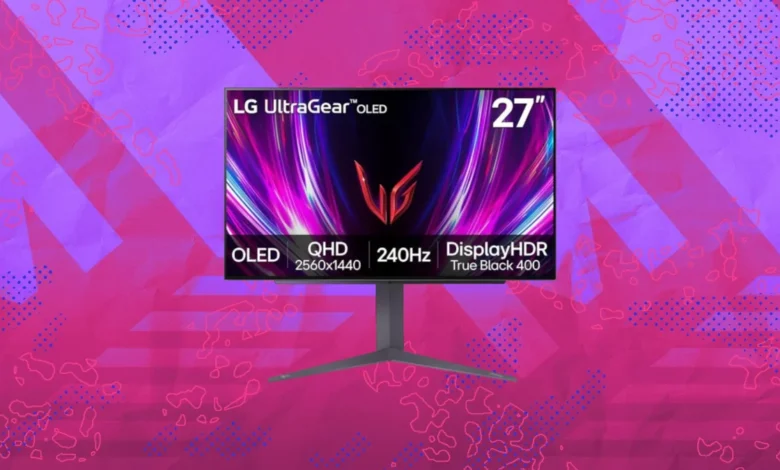
The consumer electronics market has reached a significant milestone for high-performance PC accessories as Amazon introduces a record-breaking price reduction on one of the industry’s most sought-after displays. The 27-inch LG UltraGear OLED QHD Gaming Monitor (model 27GS93QE), widely recognized by hardware enthusiasts and professional reviewers as a benchmark for visual fidelity and motion handling, has dropped to $499.99. This represents a substantial $400 markdown, or 44% off its standard manufacturer’s suggested retail price (MSRP) of $899.99. According to price-tracking archives from platforms like Keepa, this transaction matches the absolute lowest price ever recorded for the unit since its market introduction, signaling an aggressive shift in how premium OLED technology is priced as competition within the desktop monitor sector intensifies.
For years, Organic Light Emitting Diode (OLED) technology—long celebrated in the television and smartphone industries for its unparalleled contrast and true black levels—remained prohibitively expensive for the average desktop user and mainstream gamer. Early adopters faced steep financial barriers, often paying well over a thousand dollars for panels that suffered from early burn-in vulnerabilities or insufficient refresh rates for competitive play. However, recent manufacturing advancements and increased panel production from major display fabricators like LG Display have accelerated a downward trend in retail costs. This current price drop on the 27GS93QE illustrates a broader industry movement: high-end specifications that were once exclusive to luxury hardware tiers are rapidly becoming accessible to a wider demographic of consumers.
Technical Specifications and Performance Metrics
At the core of the LG UltraGear 27GS93QE is a QHD panel featuring a resolution of 2560 by 1440 pixels. This resolution has widely become the "sweet spot" for modern PC gaming, offering a noticeable step up in pixel density and clarity compared to traditional 1080p displays, while remaining far less taxing on a graphics processing unit (GPU) than a full 4K UHD setup.
However, visual resolution is only half of the equation; the monitor’s speed capabilities define its primary appeal. The panel boasts an exceptionally high 240Hz refresh rate, allowing the screen to update up to 240 times per second. When paired with a near-instantaneous 0.03-millisecond gray-to-gray (GtG) response time, the display virtually eliminates motion blur, ghosting, and trailing artifacts during fast-paced sequences. This makes the hardware particularly attractive to participants in competitive esports titles, such as tactical first-person shooters and fast-moving real-time strategy games, where milliseconds can dictate the outcome of a match.
To ensure that high frame rates translate into smooth visual output without hardware artifacts, the monitor incorporates comprehensive adaptive sync technologies. It features official Nvidia G-Sync Compatibility and AMD FreeSync Premium Pro certification. These protocols dynamically synchronize the monitor’s refresh rate with the output frames of a connected graphics card, effectively mitigating screen tearing and input stutter that typically occur when hardware struggles to maintain a locked frame rate during graphically demanding scenarios.
OLED Advantages: Contrast, Color Accuracy, and Coatings
Beyond raw speed, the adoption of self-lit OLED pixels fundamentally transforms the viewing experience. Unlike traditional liquid crystal display (LCD) panels that rely on a communal backlight—often resulting in a hazy, grayish glow during dark scenes—OLED technology allows every individual pixel to emit its own light or turn completely off. This structural difference enables the LG UltraGear to achieve a staggering 1.5 million-to-one contrast ratio, certified by VESA DisplayHDR True Black 400. The result is deep, inky blacks paired with high-luminance highlights, rendering complex lighting scenarios in modern video games with striking realism.
Color reproduction is another critical pillar of the monitor’s performance profile. The panel covers up to 98.5% of the DCI-P3 wide color gamut, ensuring that vibrant hues, subtle gradients, and cinematic color grading are rendered with high fidelity. This makes the display equally capable for creative professionals, such as video editors and digital artists, who require precise color accuracy alongside high-speed gaming responsiveness.
To combat environmental challenges in diverse room setups, LG has equipped the display with an advanced anti-glare and low-reflection (AGLR) coating. Ambient room lighting, overhead fixtures, and nearby windows frequently degrade the contrast of glossy OLED screens. The matte-style treatment on the 27GS93QE diffuses external light sources, preserving the perceived black levels and color saturation even in brightly lit office environments or daylight-filled living spaces.
Ergonomics, Connectivity, and Desk Integration
Hardware flexibility extends beyond the pixel grid to the physical chassis of the monitor. Built with an ultra-thin, slim-bezel frame, the 27GS93QE maximizes screen real estate while minimizing its physical footprint on a desktop. The included ergonomic stand provides extensive adjustment options, allowing users to modify the height, tilt, and pivot of the display. Crucially, the pivot function supports full 90-degree rotation into portrait mode, offering versatility for programmers, document editors, and multi-monitor productivity workflows.
Connectivity options cater to both high-end PC builders and modern console owners. The monitor includes both HDMI 2.1 and DisplayPort 1.4 inputs. The inclusion of HDMI 2.1 is particularly notable, as it provides the necessary bandwidth to support 1440p resolution at high refresh rates when paired with current-generation home video game consoles, such as the Sony PlayStation 5 and Microsoft Xbox Series X, or compatible handheld gaming PCs. Additionally, specialized built-in software features allow users to toggle through predefined visual presets tailored for specific game genres, adjust dark-stabilizer settings to reveal enemies hiding in shadowy areas, and monitor real-time frame rates via an on-screen hardware overlay.
Market Context and Industry Implications
The timing of this $400 discount is strategic within the broader retail calendar. As the consumer technology market navigates post-holiday inventory adjustments and prepares for upcoming product cycles, retailers increasingly rely on aggressive promotions to clear warehouse space and capture market share among budget-conscious enthusiasts. Industry analysts point out that while list prices for premium components often remain artificially high to preserve perceived value, actual transaction prices frequently plummet during promotional windows, creating prime opportunities for value-seeking buyers.
Furthermore, the mainstream adoption of OLED monitors represents a critical turning point for the PC peripheral industry. For years, LCD technology dominated the desktop market due to lower manufacturing costs and higher peak brightness metrics. However, as production yields for OLED panels improve and consumer demand for superior contrast and response times accelerates, traditional LCD monitors—particularly in the mid-to-high tier—face intense pricing pressure. Manufacturers are increasingly forced to lower their margins or innovate faster to remain competitive against aggressive OLED pricing models like the one currently observed on Amazon.
Consumer Guidance and Purchase Considerations
For prospective buyers evaluating this Amazon offer, several practical factors warrant consideration. At $499.99, the 27-inch LG UltraGear 27GS93QE undercuts many competing OLED monitors that typically retail closer to the $700 to $900 range, making it one of the most economically viable entry points into high-end desktop OLED technology currently available on the market.
However, consumers should evaluate their primary use cases and system capabilities before purchasing. To fully utilize the monitor’s 240Hz refresh rate at 1440p resolution, a sufficiently powerful graphics card—such as an Nvidia GeForce RTX 40-series or AMD Radeon RX 7000-series GPU (or their respective successors)—is highly recommended. Additionally, while modern OLED panels incorporate sophisticated software and hardware mitigation strategies (such as pixel shifting and automatic static-element dimming) to minimize the risk of burn-in, users who frequently leave static desktop applications open for extended periods should still practice standard OLED maintenance habits.
As supply levels for discounted high-end electronics can fluctuate unpredictably based on consumer demand and inventory constraints, retailers have not specified an exact expiration date for the promotion. Hardware enthusiasts monitoring price trends suggest that deals of this magnitude on flagship-tier displays rarely persist indefinitely, often concluding once allocated promotional stock is depleted. Consequently, those seeking to upgrade their desktop setups with premium display technology are advised to review retailer availability promptly before standard pricing is reinstated.
Related posts: