The Economics of Agent Optimization: How AI agent governance controls cost and proves ROI


As organizations transition from isolated, proof-of-concept AI experiments to integrated enterprise estates, the paradigm of software management has fundamentally shifted. Unlike traditional, deterministic applications, AI agents—which connect to diverse data silos, utilize various foundation models, and exercise varying degrees of autonomous decision-making—can scale their resource consumption at a velocity that outpaces conventional IT procurement cycles. This rapid expansion creates a critical governance gap: the challenge of maintaining budgetary control without stifling the innovation that AI agents are designed to deliver.

The Evolution of the Agentic Ecosystem
The trajectory of AI adoption has moved through four distinct phases, beginning with initial pilot programs and moving toward a sophisticated, managed investment system. The first phase focused on the fundamental architectural decisions defining system performance. The second shifted the focus to runtime efficiency, specifically optimizing individual requests. The third addressed the lifecycle of workflows over time, emphasizing context engineering. This final phase addresses the most persistent challenge: governing the spend of a system that never stops running.
In traditional software, resource consumption is generally predictable, scaling linearly with user growth or transaction volume. AI agents, however, introduce the "non-deterministic cost" factor. A single agentic loop—where an AI iteratively queries tools, processes data, and retries failed tasks—can inadvertently consume significant compute and token resources if left unchecked. For IT and finance leaders, this necessitates a move beyond simple billing dashboards toward active, in-path governance.

The Triad of Effective Governance: Visibility, Control, and Value
Effective governance in an agentic landscape is defined by three interconnected pillars: visibility into consumption patterns, the imposition of programmatic boundaries, and the validation of business returns.
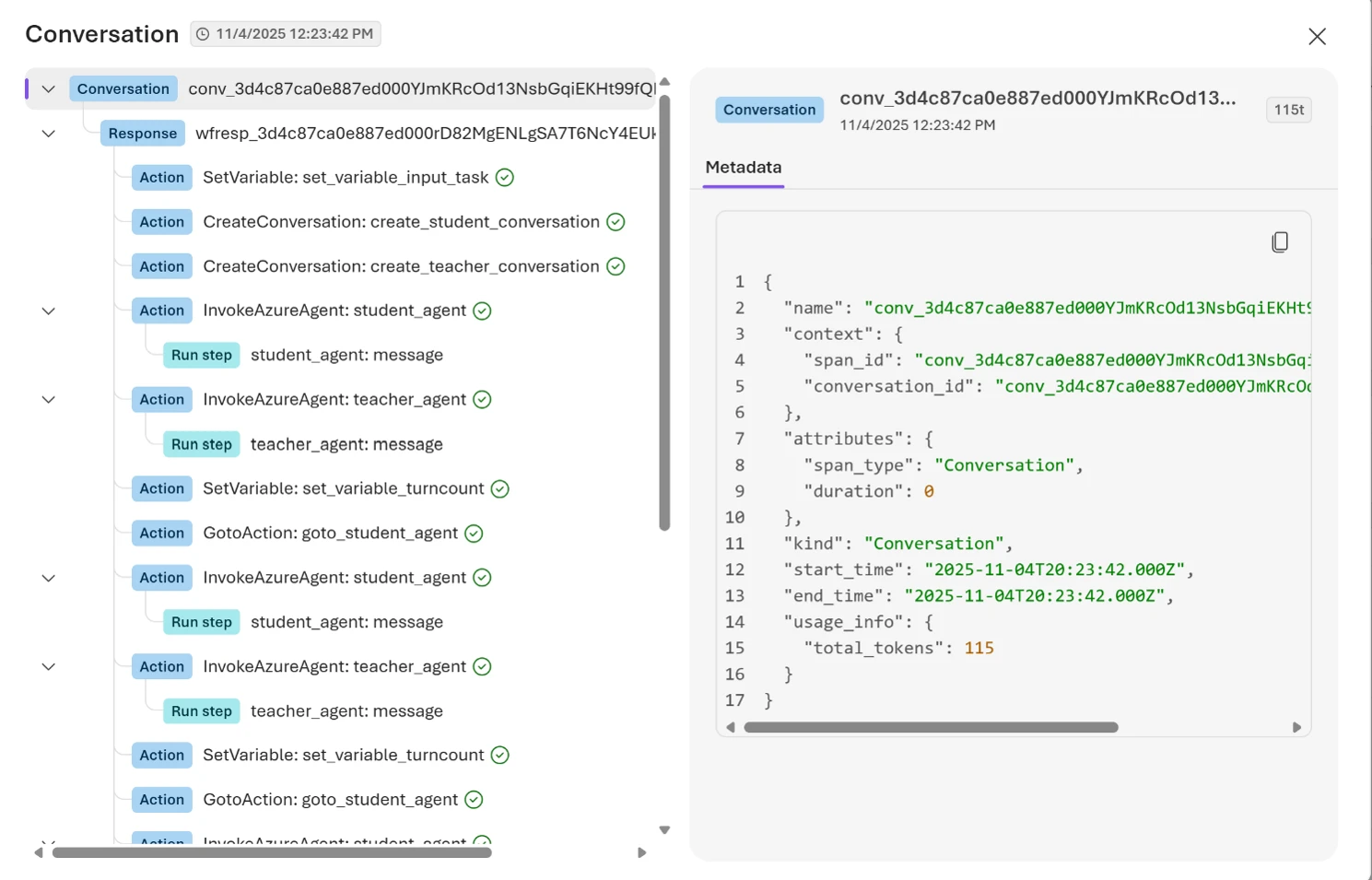
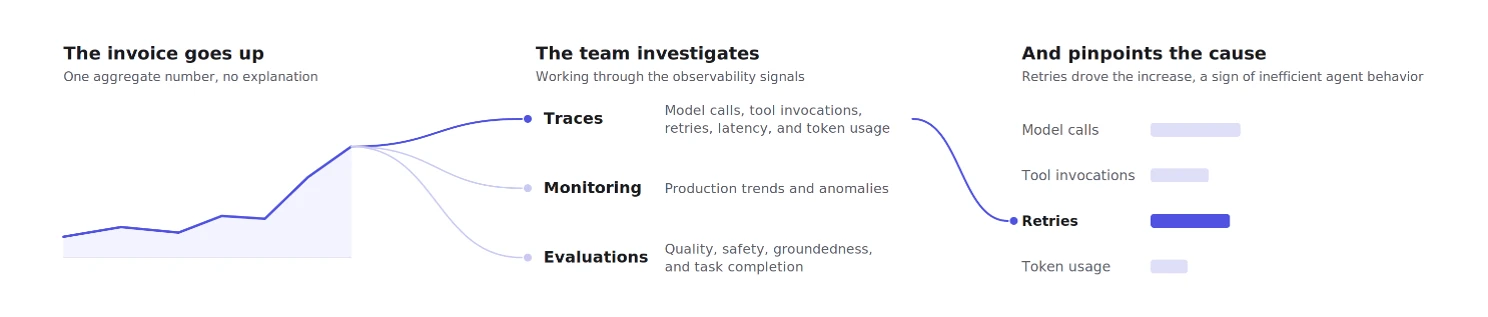
Visibility is the foundational layer. Without granularity, AI costs appear as an undifferentiated aggregate on an invoice, stripping away the business context necessary for informed decision-making. Recent developments within the Microsoft Foundry ecosystem have introduced project-level cost attribution, which automatically tags usage data. This allows FinOps teams to filter expenditure by specific business units, workloads, or individual agents. By integrating this with Azure API Management’s AI Gateway, organizations can now trace token metrics by API, user, and subscription, moving the observability focus from the invoice to the actual request path.
Technical Implementation: From Smoke Detectors to Circuit Breakers
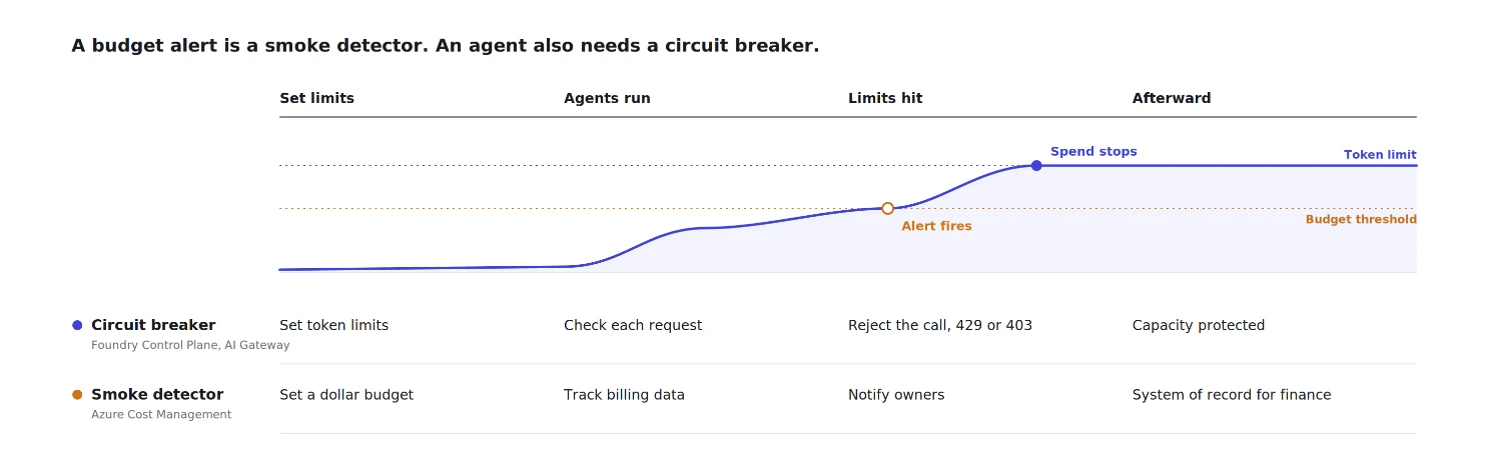
A significant distinction in modern AI governance is the difference between a reactive budget alert and a proactive circuit breaker. Traditional cost management tools function as "smoke detectors," operating on post-consumption billing data. While essential for financial reconciliation, these tools are inherently retrospective. If an agent enters an infinite retry loop, a billing alert may trigger hours or days after the financial damage has occurred.
To address this, organizations are adopting three layers of control:
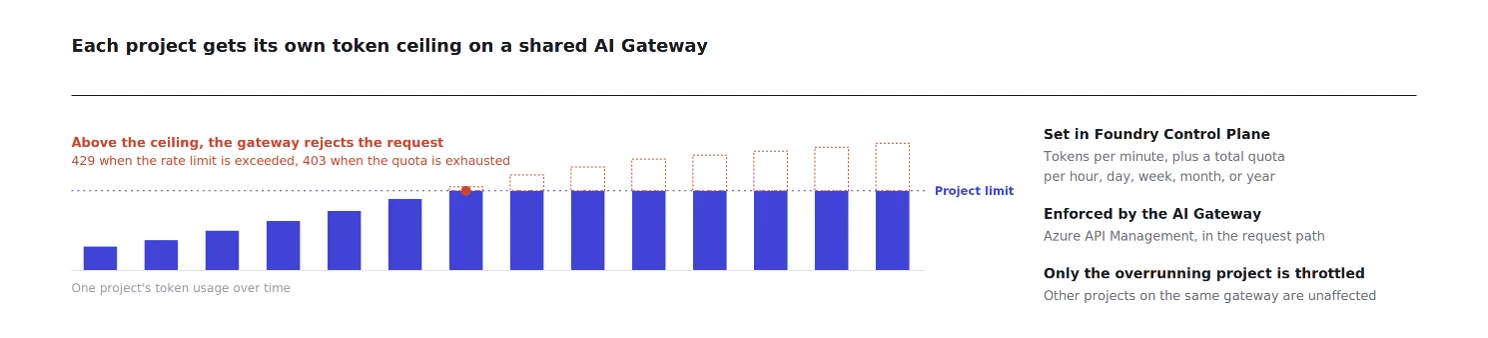
- Foundry-level Enforcement: By utilizing the Foundry Control Plane, teams can set strict tokens-per-minute rate limits and total token quotas at the project level. When a threshold is breached, the system returns a 429 (Too Many Requests) or 403 (Forbidden) response, effectively terminating the rogue process before it exhausts shared capacity.
- Cross-Provider Policy Application: Utilizing LLM-specific token limit policies, organizations can apply governance across a heterogeneous environment, including OpenAI-compatible APIs, Anthropic’s Messages API, and specialized agent-to-agent interfaces. This allows for load balancing across provisioned versus pay-as-you-go capacity.
- Financial Budgeting and Escalation: These are the standard budgetary frameworks that connect to Azure Monitor action groups. They remain the primary mechanism for long-term fiscal accountability, ensuring that human oversight is integrated into the automated lifecycle.
Analyzing the ROI of Autonomous Agents
The most sophisticated aspect of modern agent governance is the transition from managing "cost per token" to "net value per agent." The premise is simple: the least expensive agent is not necessarily the most efficient. An agent that requires a higher token budget but successfully resolves a complex customer service case is arguably more valuable than a low-cost, low-utility counterpart.
New ROI-focused dashboards allow organizations to define business outcomes—such as case deflection rates or task completion metrics—and assign monetary value to them. By calculating the difference between the value generated and the operational cost incurred, firms can identify which agents are yielding a positive return on investment. This data-driven approach allows for a "ruthless prioritization" of the AI portfolio, where underperforming agents are retired or re-engineered, and high-performing agents are allocated additional capacity.
Implications for Enterprise Strategy
The implications of this governance model are profound. By moving toward a system where AI is treated as a "managed investment," enterprises are effectively maturing their AI operations (AIOps). This involves a division of labor: developers manage the efficiency of the agents through prompt engineering and architectural design, while IT and security teams establish the guardrails within the Foundry environment.
Market analysis suggests that as foundational models become more ubiquitous, the competitive advantage will not reside in the model itself, but in the efficiency of the "agentic wrapping." Companies that fail to govern their agentic spend risk significant "AI debt," where the cost of maintaining the infrastructure dwarfs the incremental gains provided by the technology.
A Chronology of the Economics of Agent Optimization
- Phase 1 (Foundation): The establishment of core systems-design principles, emphasizing that agents are not merely prompts but complex software systems requiring structured decision trees.
- Phase 2 (Runtime): The optimization of the request path, incorporating caching, model routing, and deployment strategies to minimize latency and cost per turn.
- Phase 3 (Workflow): The optimization of long-running processes, including the use of memory, persistent tool sets, and iterative evaluation to improve quality over time.
- Phase 4 (Governance): The current shift toward continuous oversight, linking consumption to business KPIs and enforcing real-time programmatic limits.
Conclusion: Toward Disciplined Innovation
The conclusion of this series marks a turning point in the industry’s approach to generative AI. The goal of agent optimization is not the minimization of spending, but the maximization of utility per dollar spent. By implementing granular observability, setting proactive request-path limits, and rigorously measuring ROI, organizations can move beyond the "pilot trap" and build robust, scalable agentic systems.
For enterprises aiming to thrive in the next stage of the AI revolution, the mandate is clear: treat every agent as a formal investment. This requires a shift from viewing AI as a "black box" expense toward a transparent, governed, and outcome-oriented ecosystem. As the industry continues to refine these tools, the focus will likely move toward even more automated governance, where agents themselves may eventually manage their own resource constraints based on the high-level business objectives set by their human supervisors. Through this systematic approach, the potential of the enterprise agentic estate can be fully realized, ensuring that AI remains a driver of value rather than a source of financial friction.