GMKTec NucBox EVO-X1 Pro Review: A Deceptively Powerful AMD AI Mini PC Hampered by High Component Costs

The modern desktop computing landscape has witnessed a remarkable paradigm shift toward small form factor (SFF) systems, driven by soaring consumer demand for high-performance computing housed within minimal desk footprints. Among manufacturers operating in this competitive arena, GMKTec has established a reputation for rapid product iteration, frequently refreshing its hardware lineups before previous generations even leave the spotlight. The latest entry into this fast-paced ecosystem is the GMKTec NucBox EVO-X1 Pro, an AMD-powered AI mini PC that builds directly upon the architecture of its late-2024 predecessor, the EVO-X1. Featuring AMD’s Zen 5 architecture and the Gorgon Point silicon family, the EVO-X1 Pro aims to capture the attention of professionals, enthusiasts, and local artificial intelligence developers alike. However, an analysis of its pricing strategy, performance metrics, and hardware constraints reveals a complex value proposition.
Main Facts and Core Specifications
At the heart of the GMKTec NucBox EVO-X1 Pro sits the AMD Ryzen AI 9 HX 470 processor, a 12-core, 24-thread CPU utilizing a hybrid core layout composed of four full-fat Zen 5 cores and eight energy-efficient Zen 5c cores. The chip operates with a 2 GHz base clock and can achieve boost frequencies of up to 5.2 GHz. Graphics processing is handled by the integrated Radeon 890M GPU, featuring 16 compute units running at up to 3.1 GHz.
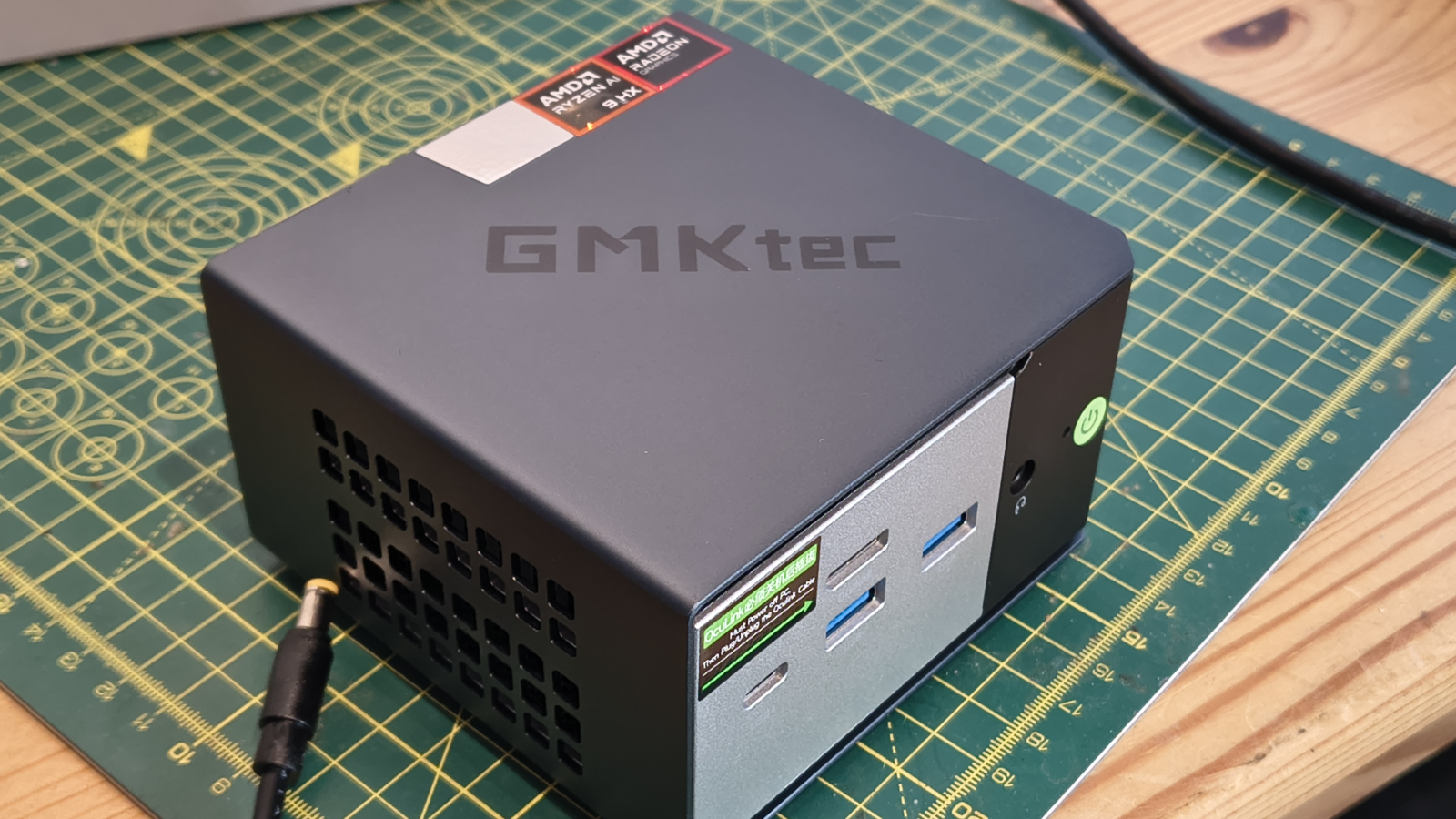
Designed heavily with artificial intelligence workloads in mind, the platform integrates a dedicated Neural Processing Unit (NPU) capable of delivering up to 55 TOPS (Tera Operations Per Second) at Int8 precision. Combined with the CPU and GPU, the system boasts a total platform AI throughput of up to 86 TOPS.
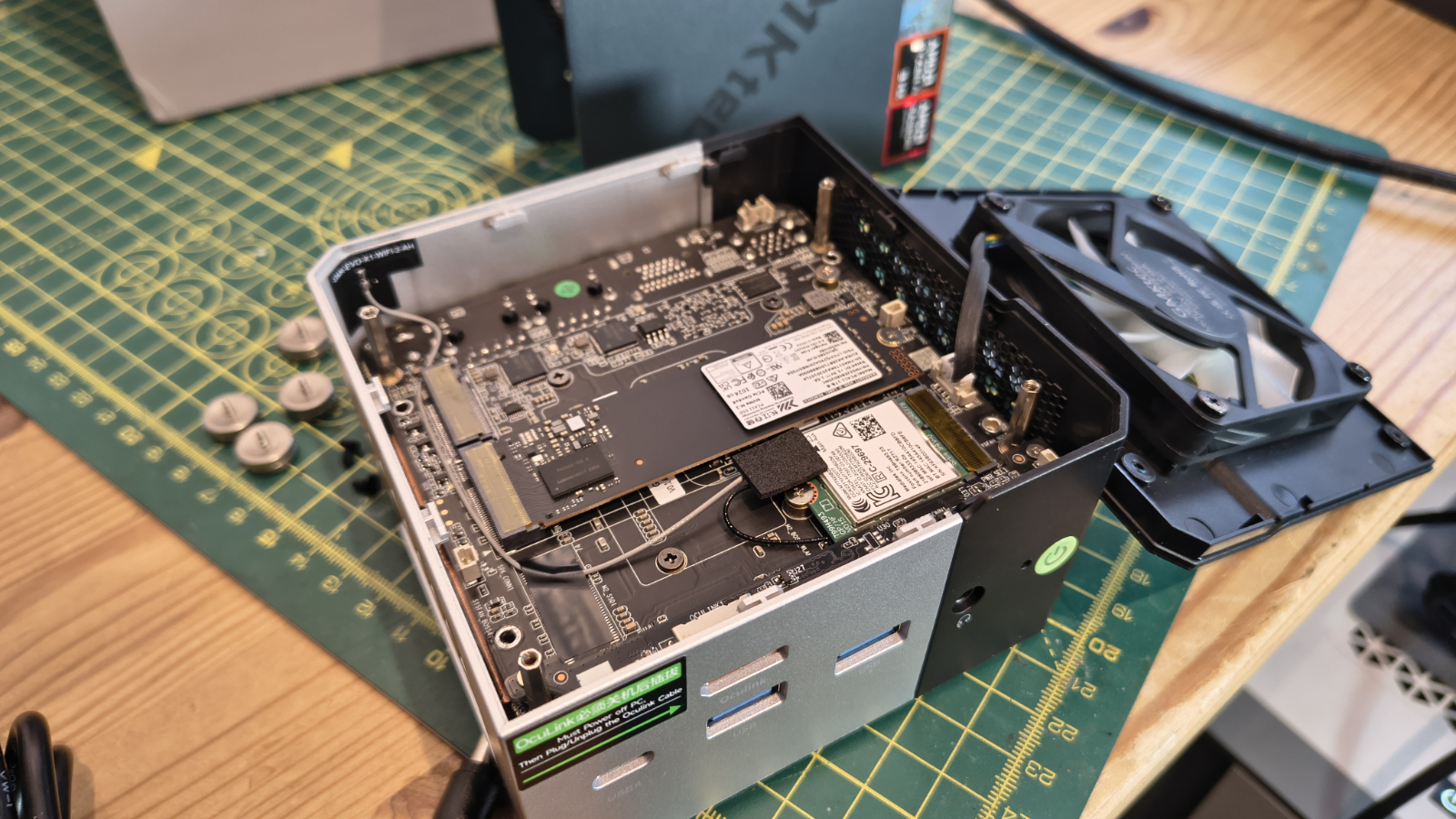
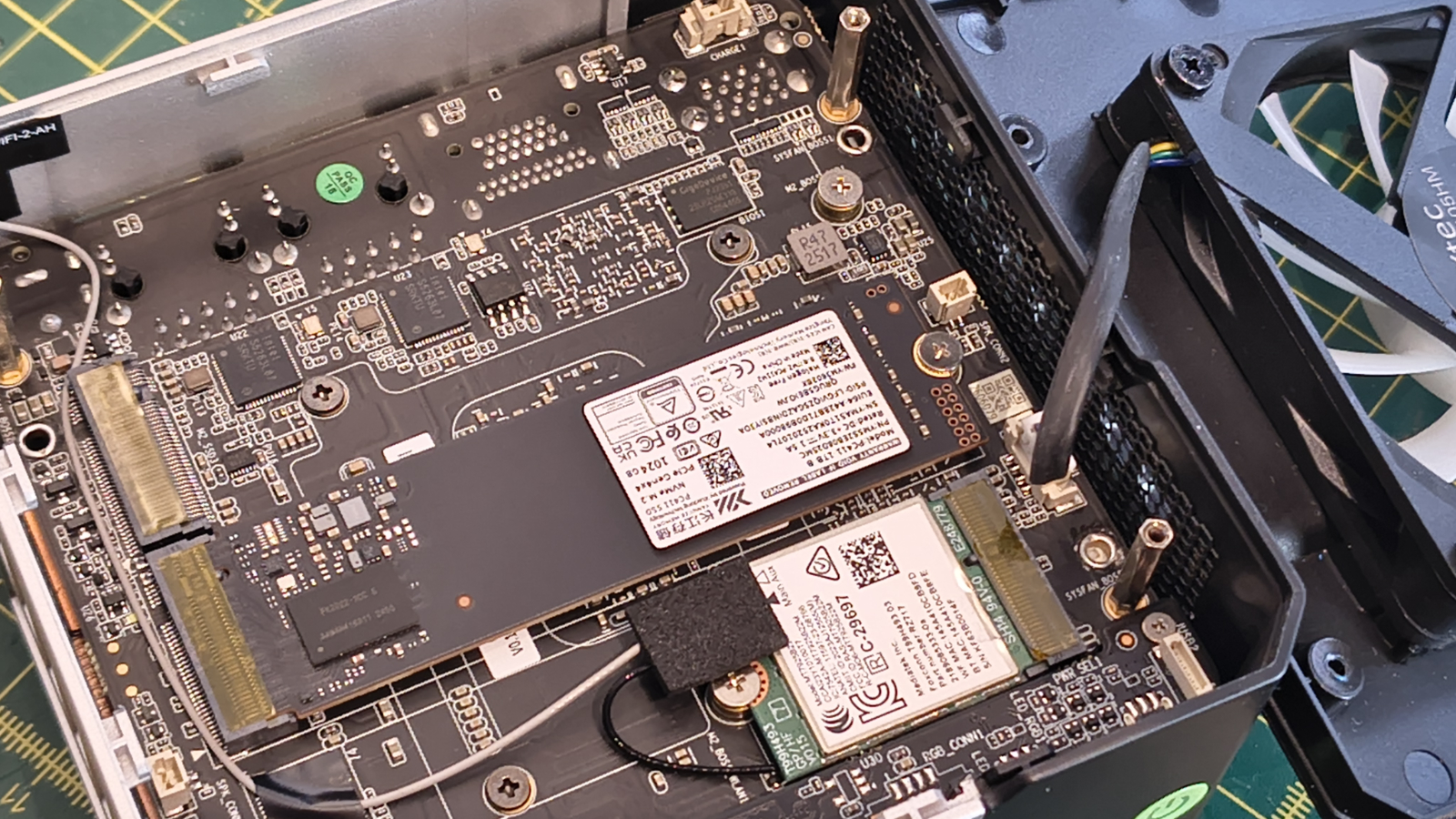
Memory and storage configurations represent a critical focal point of the EVO-X1 Pro. The review configuration ships with 64GB of soldered LPDDR5 memory operating at a rapid 6400 MT/s. While this generous capacity easily handles local large language models (LLMs) and demanding multitasking workflows, the soldered nature of the RAM eliminates any future upgrade path. For storage, the mini PC features a pre-installed 1TB M.2 2280 NVMe PCIe Gen4 x4 SSD, accompanied by a second vacant M.2 2280 slot, enabling users to expand internal storage up to 16TB using dual high-capacity drives.
Design, Port Selection, and Thermal Architecture
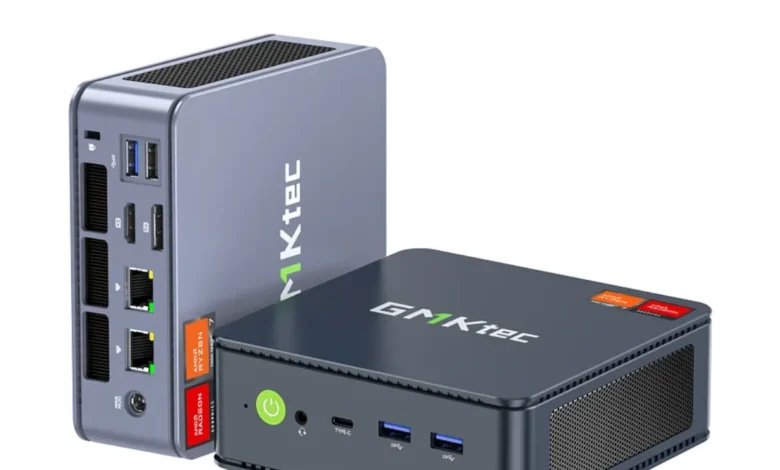
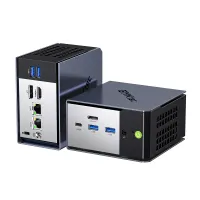
Retaining the compact chassis dimensions of its predecessor, the EVO-X1 Pro measures 107 x 111 x 63 mm and weighs approximately 590 grams. The enclosure is designed for versatile deployment, resting comfortably on a desktop or mounting discreetly behind a monitor via an included VESA bracket.
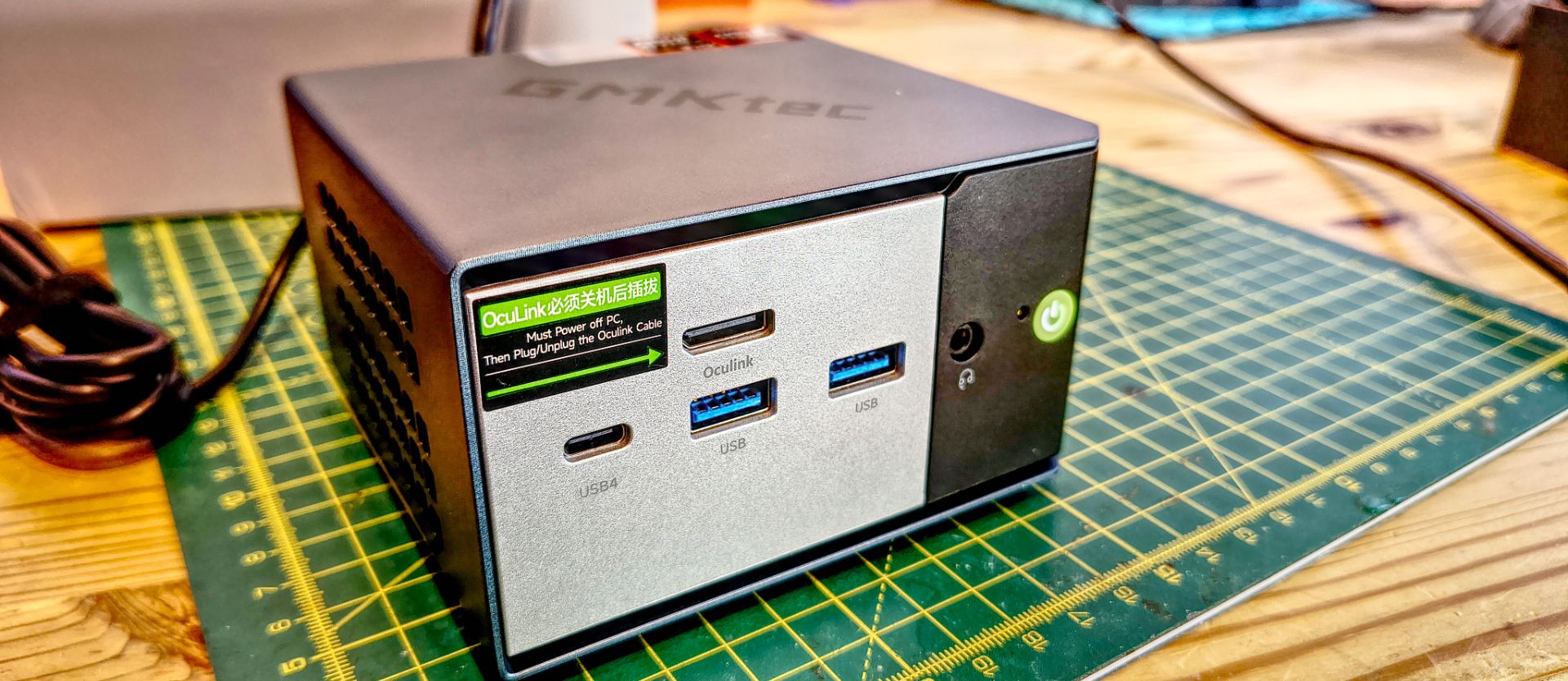
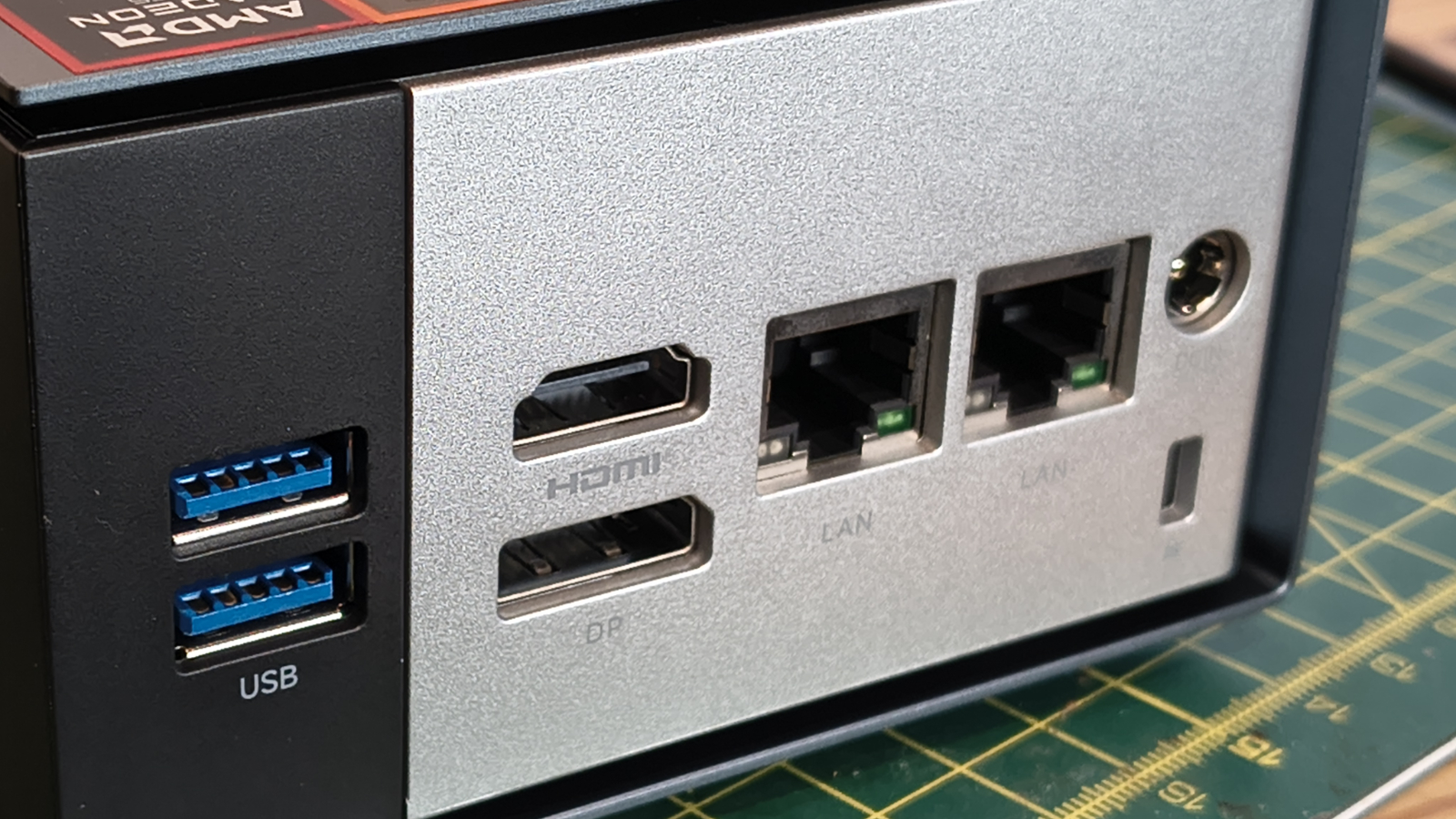
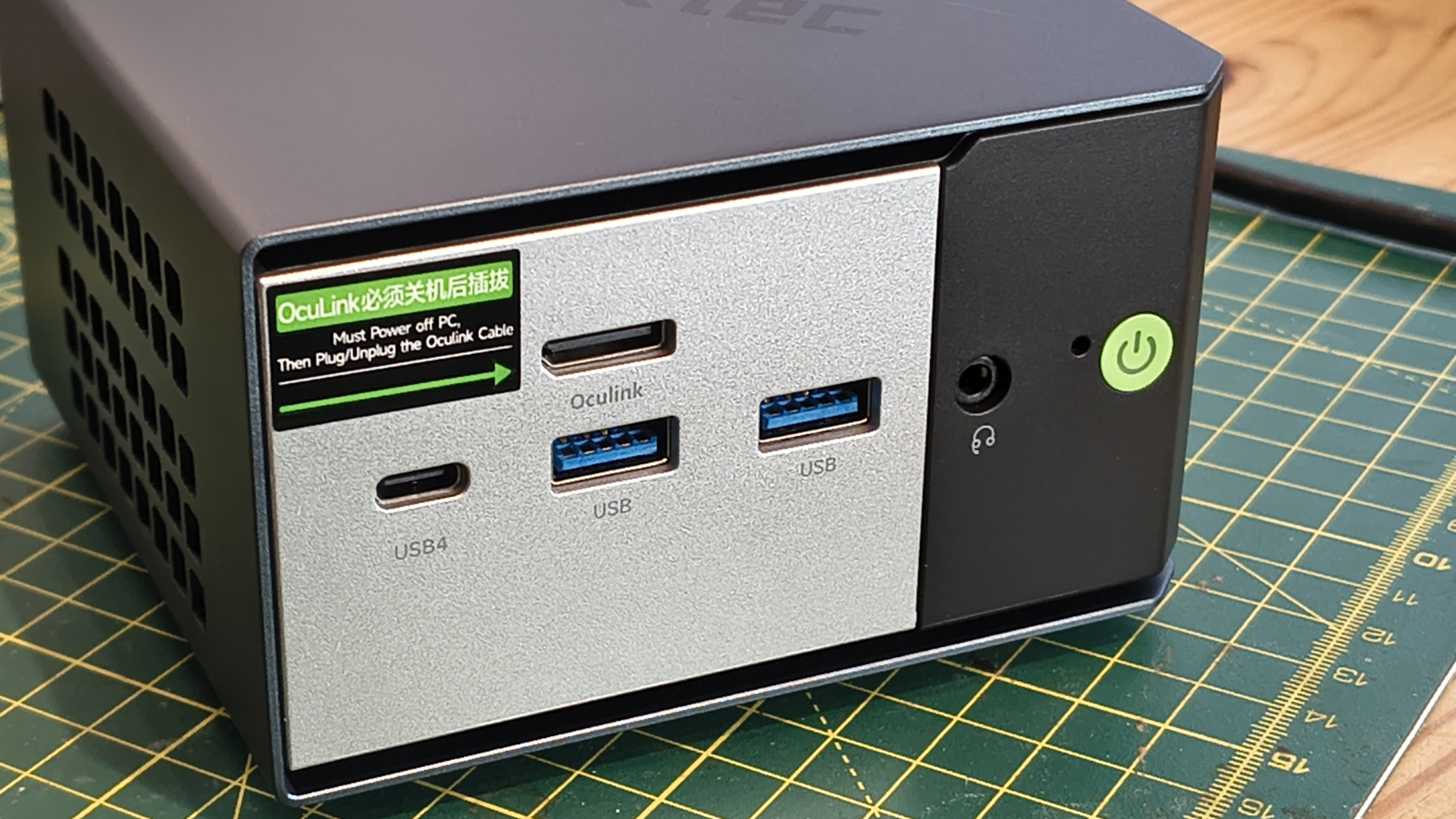
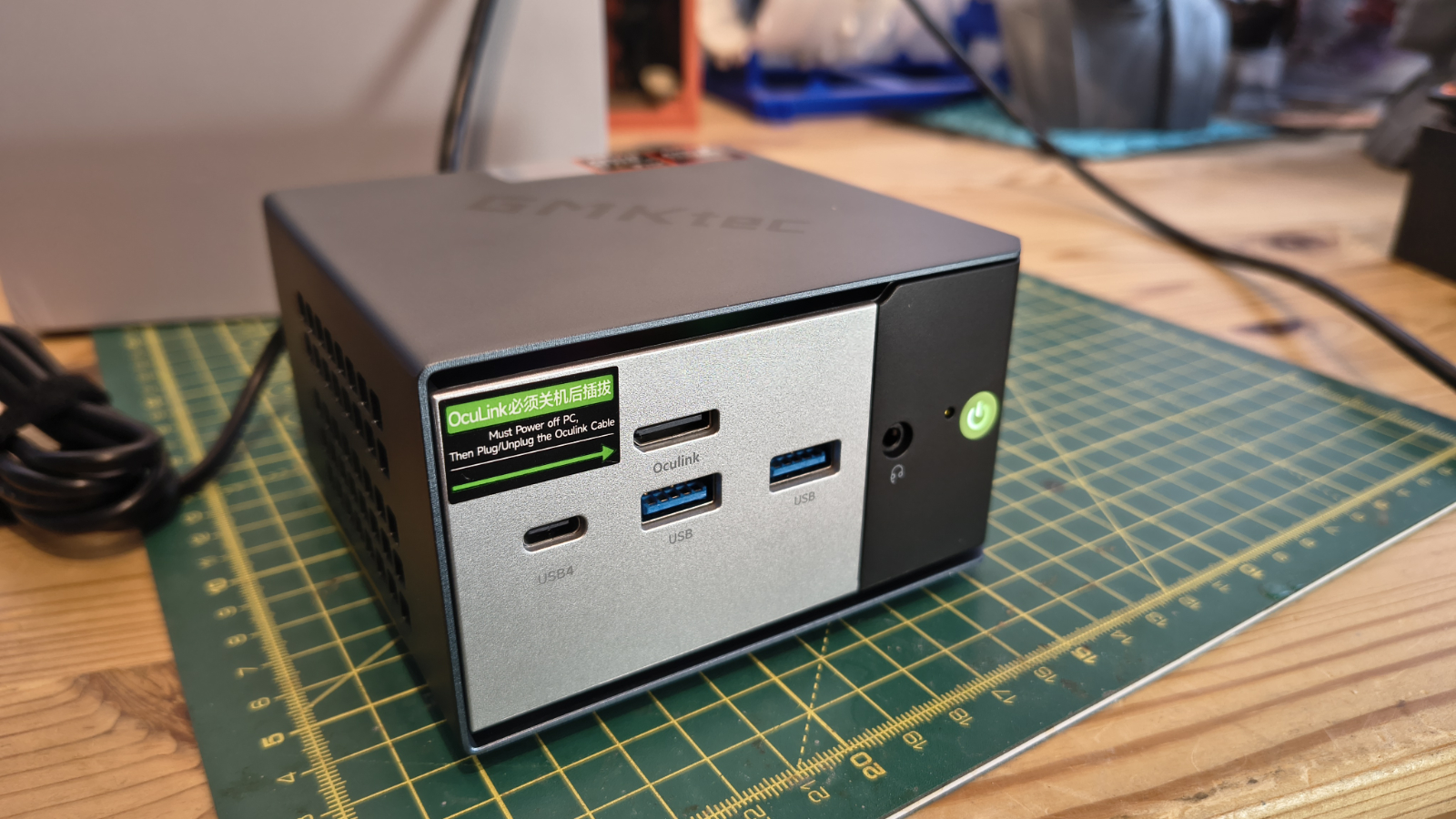
Despite its diminutive physical footprint, GMKTec has engineered a comprehensive connectivity suite. The front panel hosts a single USB4 port (supporting 40Gbps data transfer, Power Delivery 3.0, and display output), two USB 3.2 Gen 2 Type-A ports, a high-speed OCuLink port for external PCIe expansion, a 3.5mm audio jack, and an illuminated power button. The rear panel expands connectivity further with two additional USB 3.2 Gen 2 Type-A ports, dual 2.5GbE Ethernet RJ45 LAN ports, an HDMI 2.1 video output, a DisplayPort 2.1 output, and a DC power input. When combining the onboard ports with a USB4 adapter, the system effortlessly drives a triple-monitor setup at resolutions up to 8K at 60Hz.
Thermal management is handled by a sophisticated vapor chamber dual-fan cooling system. Users can adjust performance profiles via the BIOS, selecting between a Silent Mode (35W), a Balanced Mode (54W), and a Performance Mode that pushes peak power consumption to 65W. During intense benchmarking, the system exhausts noticeably warm air from its side vents while maintaining remarkably low acoustic output, addressing historical complaints regarding excessive fan noise in earlier chassis iterations.
Pricing, Configurations, and Market Positioning
The GMKTec NucBox EVO-X1 Pro enters a fiercely contested market segment dominated by rival SFF manufacturers such as Minisforum, Beelink, and Geekom. Official listings on GMKTec’s US storefront price the 64GB RAM and 1TB storage configuration at $1,599.99, while the 2TB variant commands $1,769.99. For consumers seeking a lower entry barrier, an alternative model utilizing the slightly older AMD Ryzen AI 9 HX 370 processor paired with 32GB of soldered RAM and 1TB of storage is available for $1,149.99.
When evaluated against direct competitors like the Minisforum AI X1 Pro-470—which features socketed, upgradeable DDR5 memory slots but runs at a slightly slower speed and commands a $1,655 price tag for an equivalent specification—the EVO-X1 Pro occupies a middle ground. However, industry analysts and reviewers have noted that inflated global component costs, particularly for memory and NAND flash storage, have driven up retail prices across the entire mini PC sector. Consequently, the EVO-X1 Pro requires a substantial financial commitment compared to equivalent desktop towers or previous-generation mini PCs. Furthermore, GMKTec offers a standard one-year limited warranty, trailing behind competitors like Geekom, which routinely provide three-year warranty coverage for comparable hardware.
Performance Benchmarks and Real-World Implications
Performance testing positions the AMD-powered EVO-X1 Pro neck-and-neck with Intel-based alternatives, such as GMKTec’s own Intel Core Ultra-powered EVO-T1. In multi-core and multi-threaded CPU workloads, the Zen 5 architecture excels, delivering exceptional results in Cinebench and Geekbench 6 multi-core suites. The Radeon 890M integrated graphics solution also proves exceptionally capable, offering robust Vulkan and OpenCL performance that allows for respectable casual gaming and hardware acceleration in creative applications.
For professionals and enthusiasts evaluating the OCuLink port, the interface provides a direct PCIe Gen4 x4 connection to external graphics docks or specialized accelerator cards. GMKTec explicitly warns that the OCuLink port is not hot-swappable; hardware must be connected while the system is powered down, and external peripherals must be activated prior to booting the mini PC. This feature transforms the compact workstation into a formidable gaming or deep-learning rig when paired with an external desktop GPU enclosure.
Comparative Analysis and Purchasing Recommendations
Deciding whether to invest in the GMKTec NucBox EVO-X1 Pro depends heavily on individual computational requirements and budget constraints. While the Ryzen AI 9 HX 470 delivers stellar multi-threaded performance and an impressive NPU footprint, the modest architectural improvements over the preceding HX 370 chip mean that performance gains are incremental rather than revolutionary.
For buyers who do not strictly require 64GB of soldered memory, opting for the HX 370 model with 32GB of RAM provides nearly identical real-world performance at a savings of approximately $450. Conversely, users who require maximum multi-core efficiency, extensive multi-monitor connectivity, and robust local AI processing power within a zero-footprint chassis will find much to admire in the EVO-X1 Pro. As component pricing stabilizes across the global supply chain, future iterations and price adjustments may ultimately allow this brilliantly engineered mini PC to reach its intended audience more effectively.