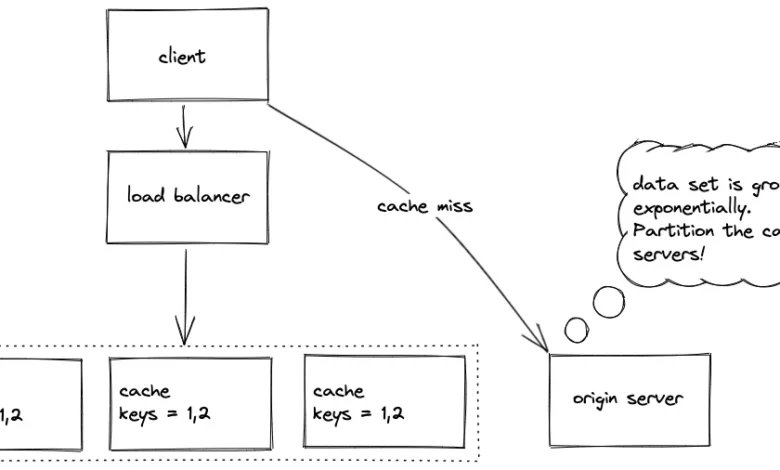
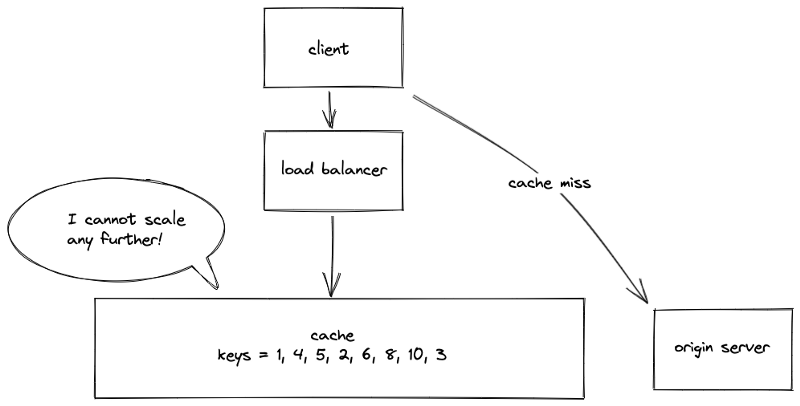
In the era of hyper-scale internet services, maintaining the availability and performance of cache servers is a fundamental challenge for software engineers. As web applications grow from a few thousand to millions of concurrent users, the underlying infrastructure must scale dynamically. Traditional methods of partitioning data across servers often falter when nodes are added or removed, leading to massive cache misses and "thundering herd" problems that can collapse backend databases. Consistent hashing has emerged as the industry-standard solution to this volatility, providing a mechanism to distribute data across a cluster while minimizing disruption during scaling events.

The Evolution of Distributed Caching and the Problem of Static Hashing
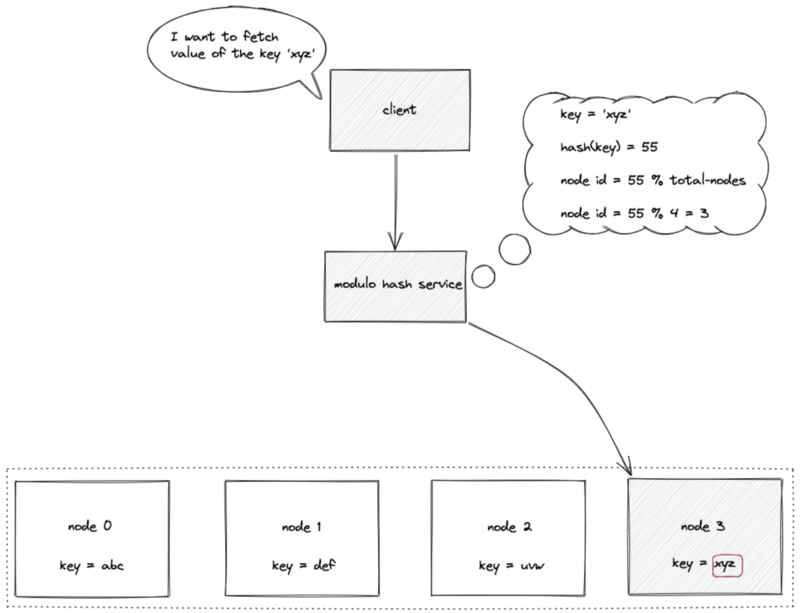
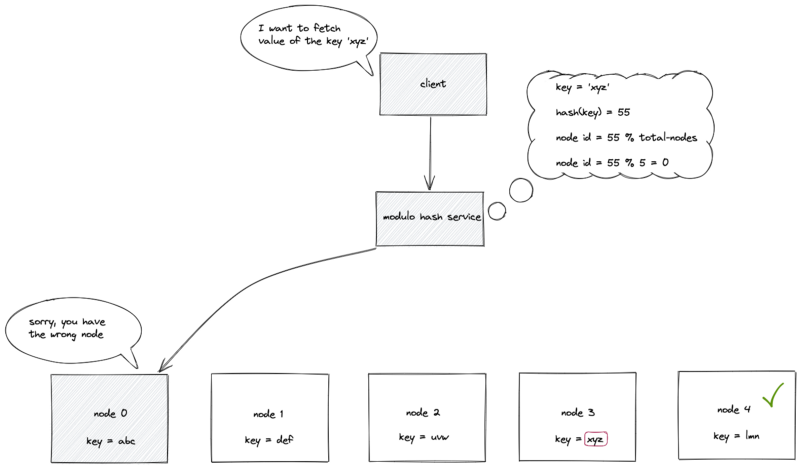
To understand the necessity of consistent hashing, one must examine the limitations of earlier scaling strategies. In the early days of web architecture, engineers utilized static hash partitioning. In this model, the system maps a data key to a specific cache server using a simple modulo operation: node = hash(key) % N, where N is the total number of cache servers. While mathematically elegant and computationally inexpensive, this approach is fundamentally brittle.
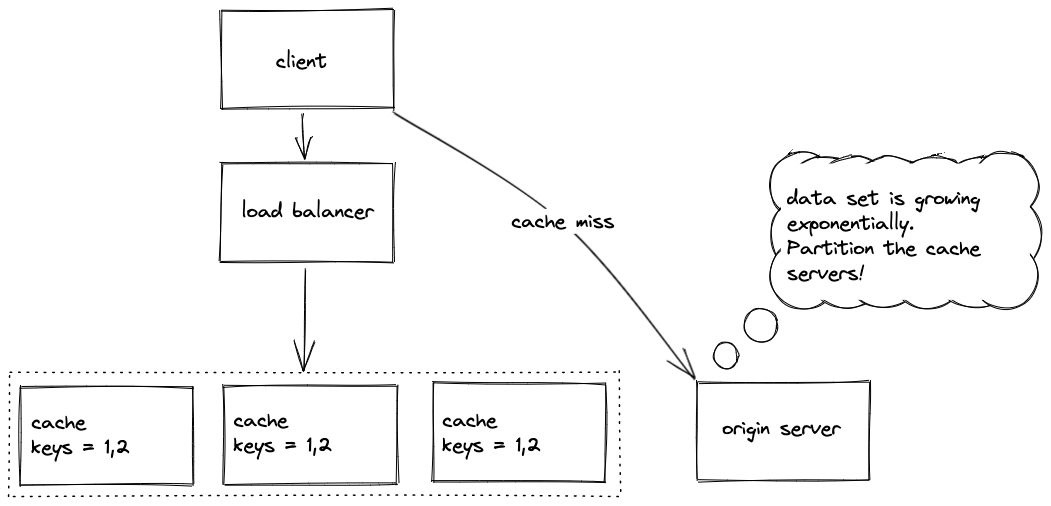
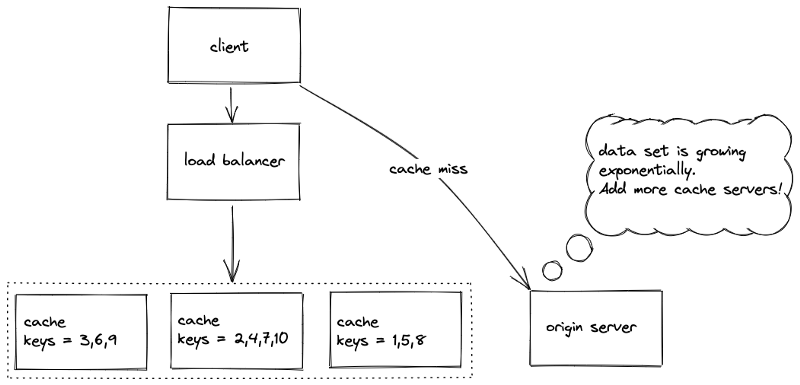
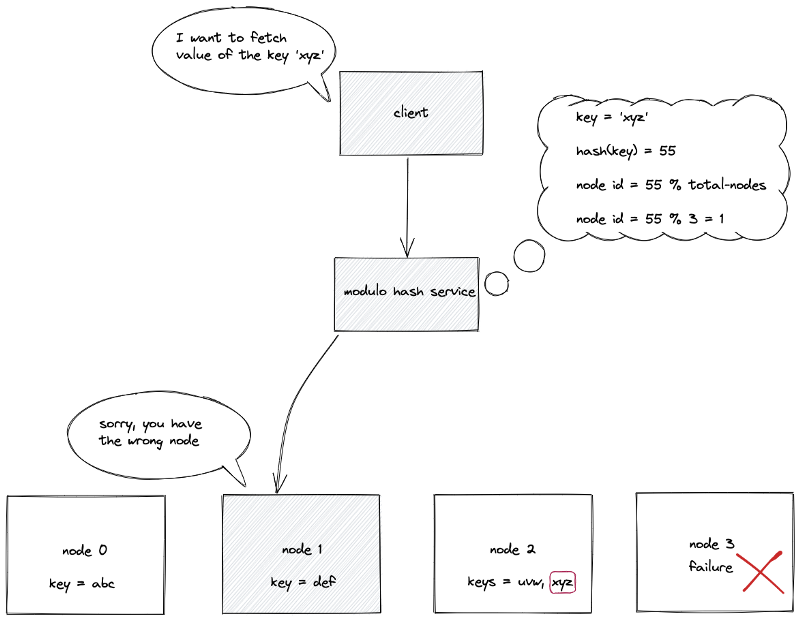
When a server node fails, or when traffic spikes necessitate the addition of new hardware, the value of N changes. Because the mapping is dependent on the total number of nodes, a change in N causes almost every key in the system to map to a different node. In a large-scale environment with terabytes of cached data, this results in a near-total loss of cache state. As the cache is emptied, every subsequent request is routed to the origin server, likely causing a cascading failure due to the sudden, overwhelming load.
The Mechanics of the Consistent Hash Ring
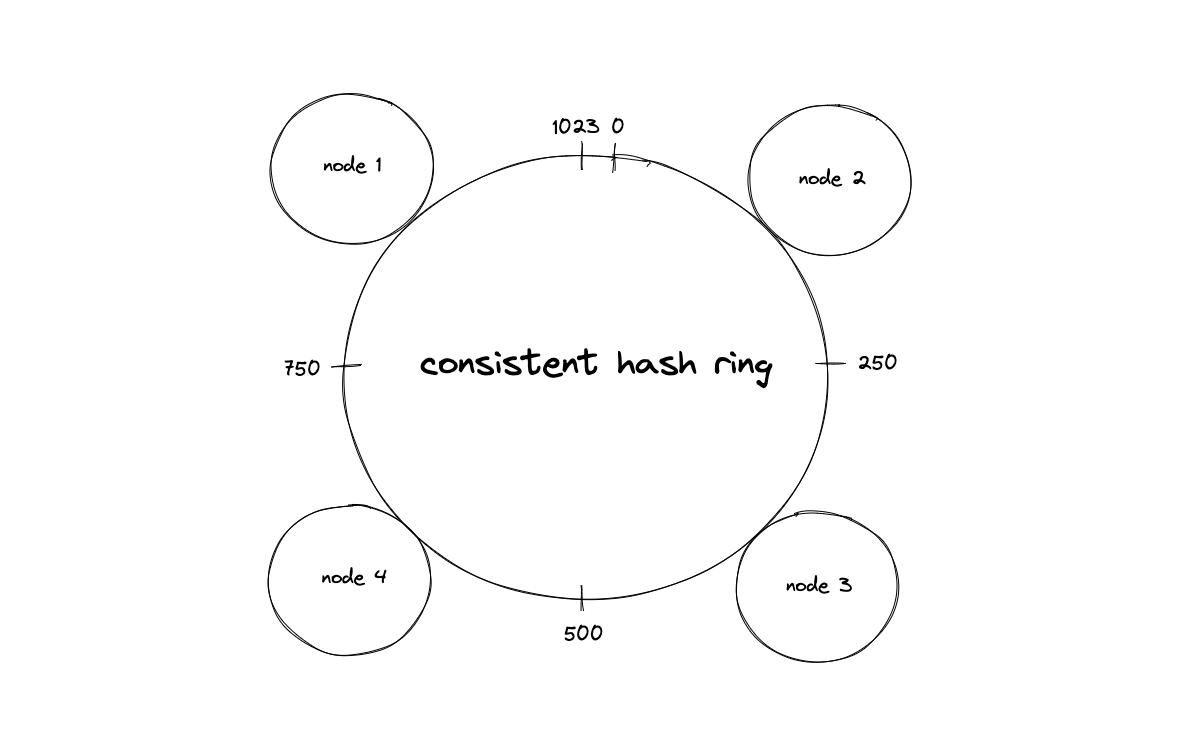
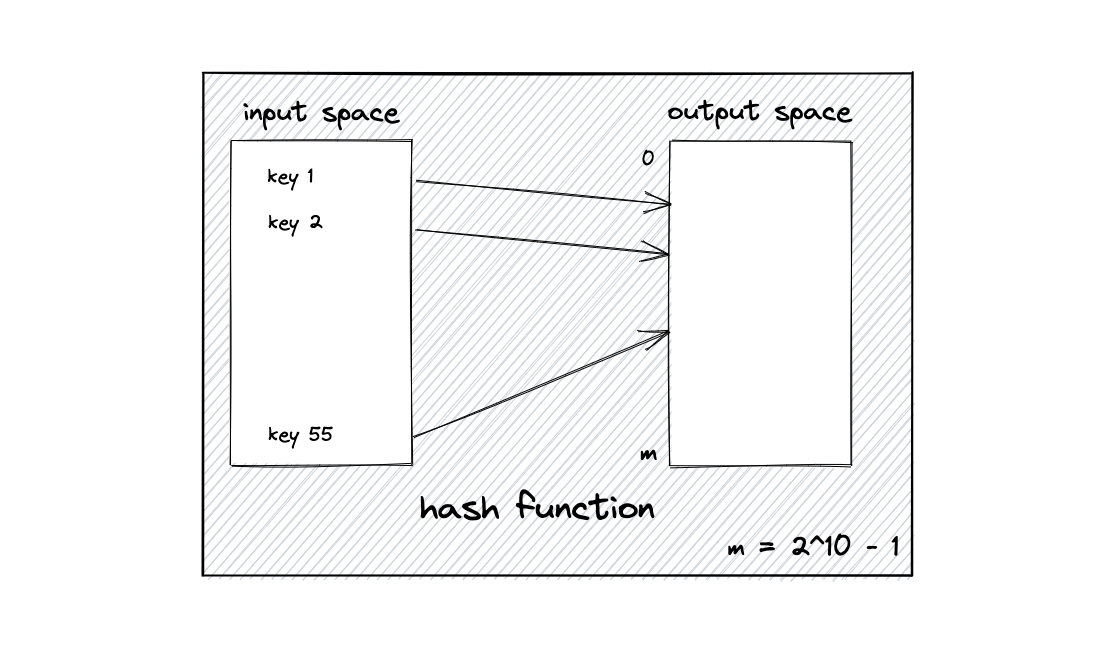
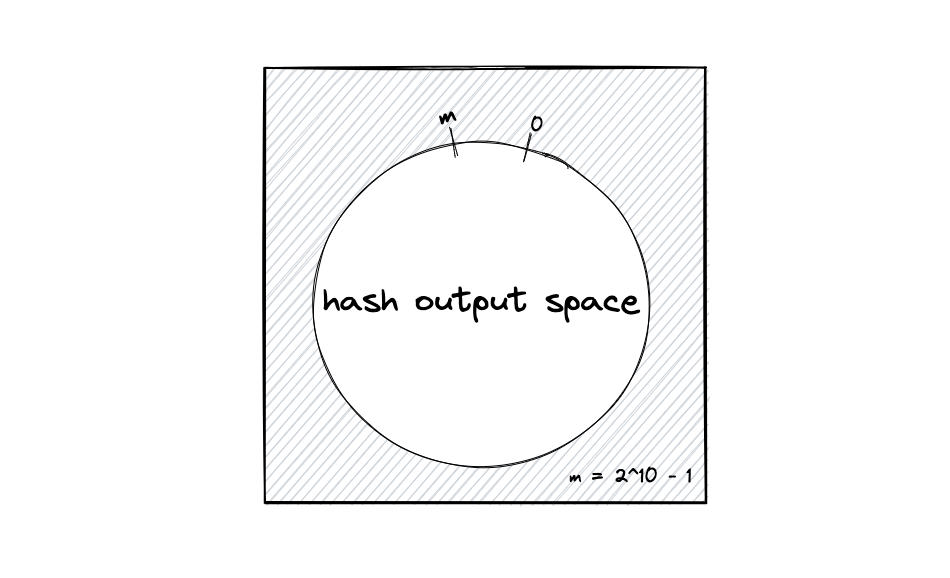
Consistent hashing fundamentally alters this dynamic by shifting from a linear mapping to a circular coordinate system, often referred to as a "hash ring." In this model, the output space of the hash function—typically a 128-bit or 256-bit range—is treated as a continuous loop.
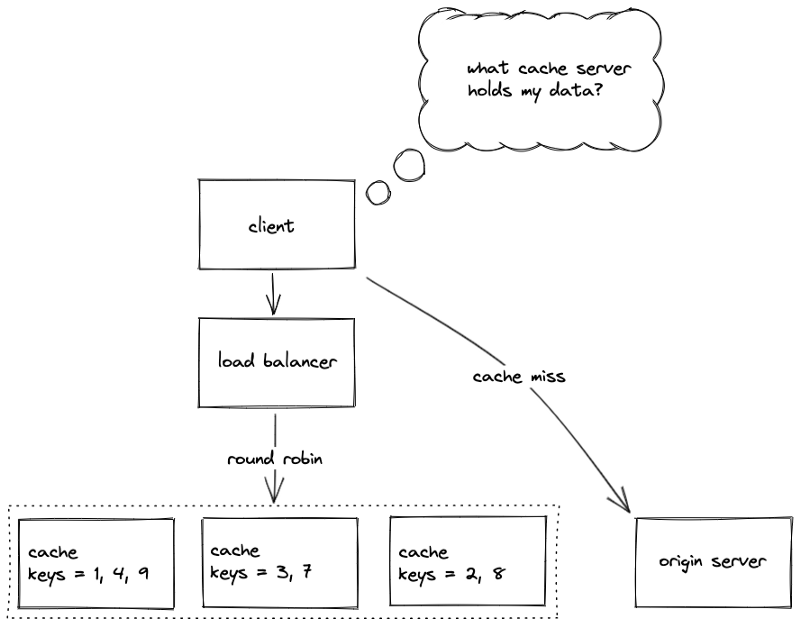
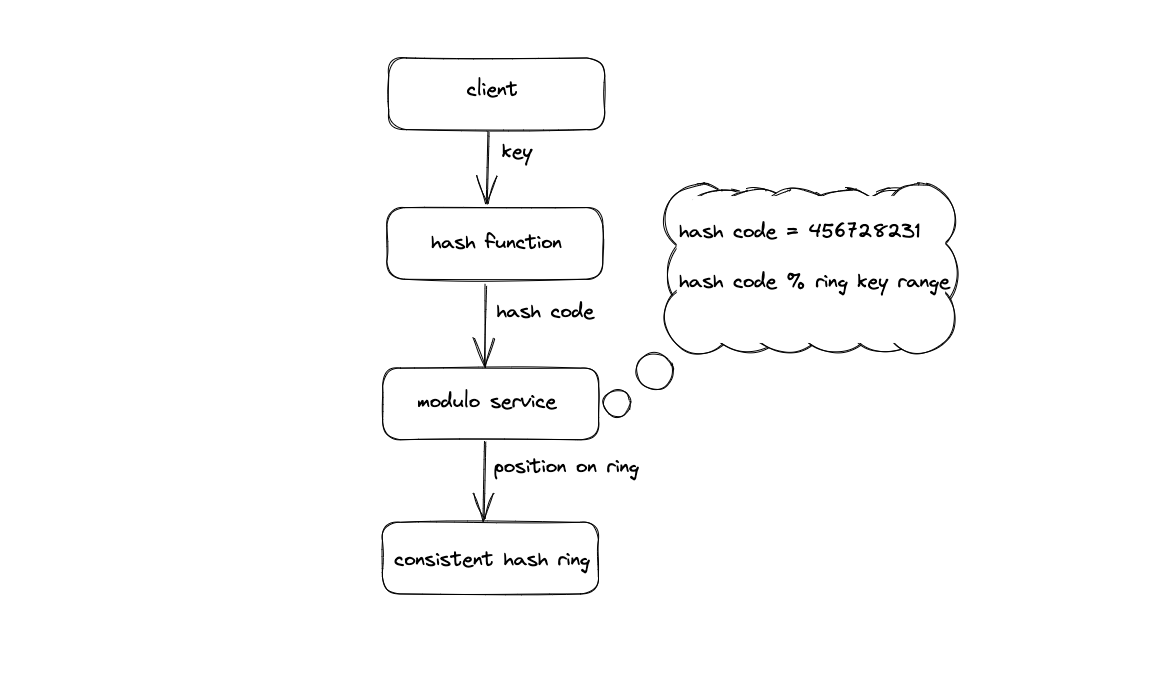
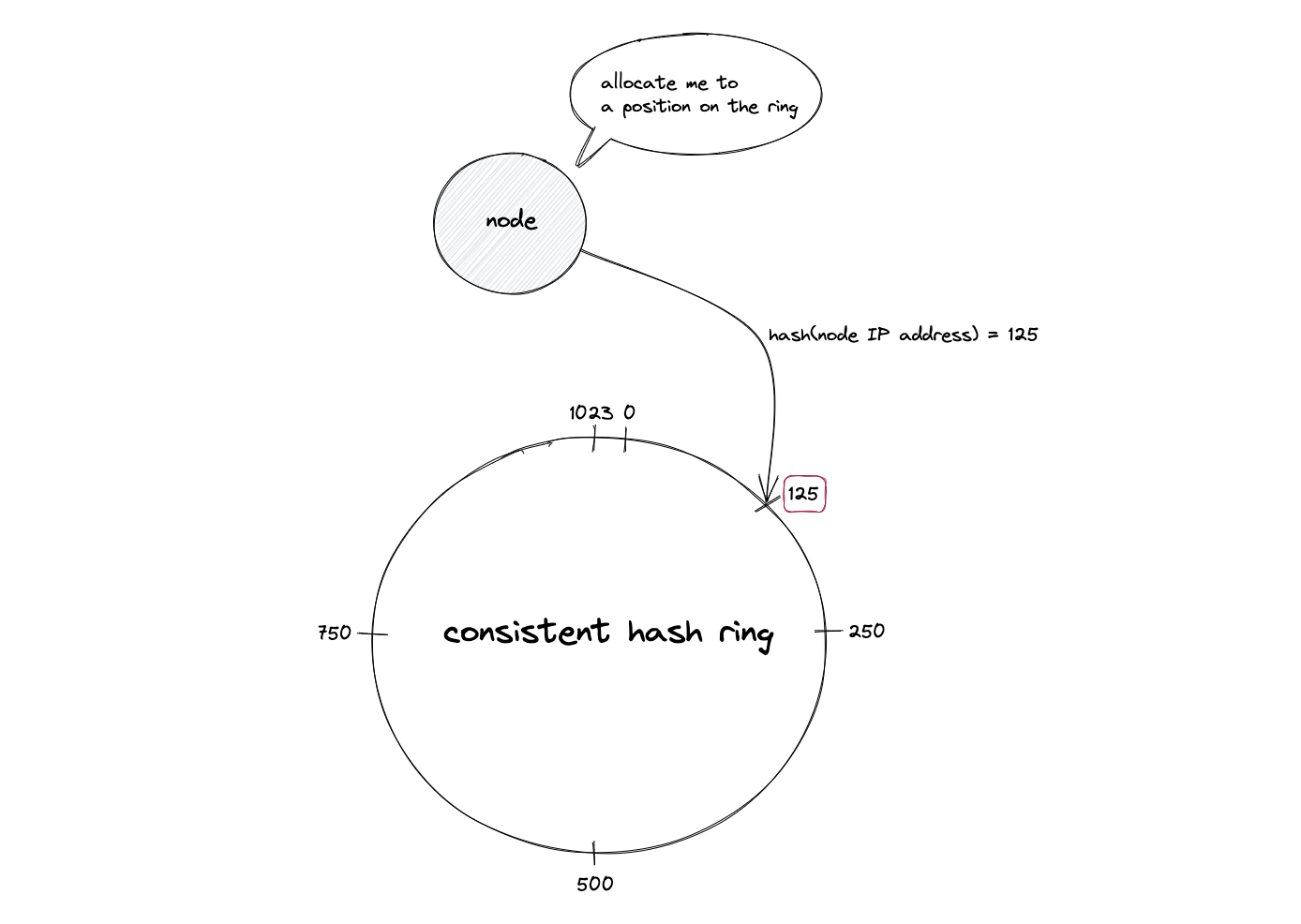
Both the server nodes and the data objects (keys) are mapped onto this ring using the same hash function. When a client needs to store or retrieve a key, it hashes the key to a specific point on the ring and then travels clockwise until it encounters the first available node. That node is then designated as the owner of that specific data object.
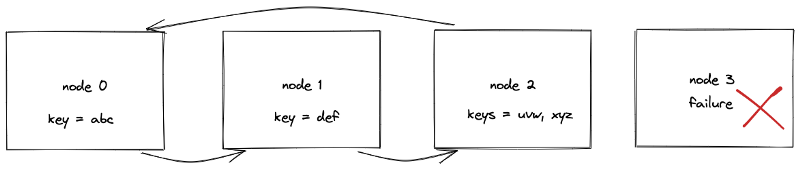
The primary advantage of this topology is its resilience to change. If a node is removed from the ring, only the keys that were assigned to that specific node must be remapped to its immediate neighbor. All other keys remain unaffected and continue to be served by their original nodes. Conversely, when a new node is added, it only "steals" a portion of the keys from its immediate clockwise neighbor. This localized impact prevents the widespread cache invalidation seen in traditional modulo-based systems.
Addressing Non-Uniformity: The Role of Virtual Nodes
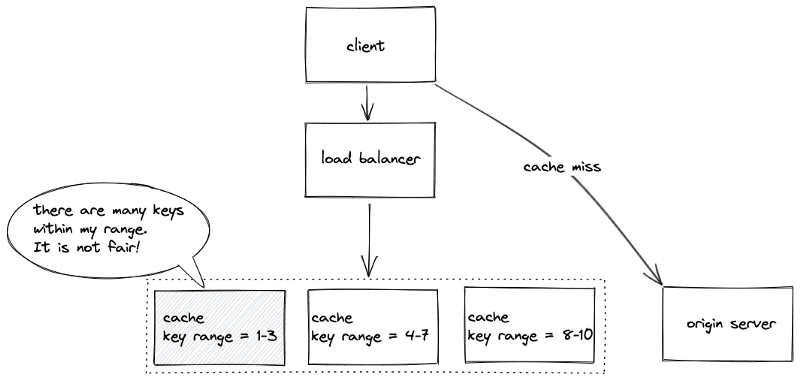
While the basic hash ring design is efficient, it is susceptible to "hotspots"—a scenario where the uneven distribution of nodes on the ring causes some servers to be responsible for a disproportionately large share of the traffic. This can lead to individual nodes becoming bottlenecks, ultimately defeating the purpose of horizontal scaling.
To mitigate this, engineers implement "virtual nodes." Instead of assigning a physical server a single point on the ring, each physical node is mapped to dozens or hundreds of virtual positions. By scattering these virtual nodes across the ring, the system ensures a much more granular and uniform distribution of data. This technique allows for heterogeneity in the cluster; a high-performance server with more memory or CPU cores can be assigned more virtual nodes than a smaller, less powerful machine, effectively balancing the load based on actual hardware capacity.
Industry Adoption and Real-World Implementations
The efficacy of consistent hashing is best evidenced by its adoption in the world’s most demanding distributed systems. Amazon’s Dynamo, the seminal key-value store described in the 2007 paper that arguably launched the modern NoSQL movement, relies heavily on consistent hashing to maintain high availability and partition data across thousands of nodes.
Similarly, Discord, which manages millions of concurrent users in real-time, uses consistent hashing to manage the routing of chat data. By leveraging this algorithm, the platform can dynamically scale its infrastructure as new servers are provisioned to handle fluctuating traffic during peak hours. Content Delivery Networks (CDNs) like those employed by Netflix also utilize consistent hashing to ensure that video segments are distributed optimally across global edge nodes, ensuring that users receive content from the server closest to them with minimal latency.
Asymptotic Complexity and Performance Trade-offs
From an algorithmic perspective, consistent hashing provides a robust balance of speed and scalability. Searching for a node using a self-balancing binary search tree (BST) allows for a logarithmic time complexity, O(log n), where n is the number of nodes. When a node is added or removed, the redistribution of keys—while requiring some network overhead—is limited to a small fraction of the total dataset (k/n), where k is the total number of keys.
The selection of the hash function remains a critical design choice. Cryptographic functions like MD5 or SHA-1, while collision-resistant, are often too slow for high-throughput caching environments. Consequently, modern systems prefer non-cryptographic, high-performance hashes like MurmurHash or xxHash, which provide sufficient uniformity and speed to keep up with the demands of high-frequency trading platforms or massive social media feeds.
Implications for Modern System Design
The transition toward consistent hashing represents a shift in how engineers view infrastructure. Rather than treating servers as fixed, immutable components, consistent hashing treats them as dynamic, interchangeable resources. This elasticity is the cornerstone of cloud-native architecture.
However, the implementation of these systems is not without complexity. Developers must account for concurrency, often using reader-writer locks to ensure that the hash ring remains consistent during rapid node state changes. Furthermore, they must design for failure, ensuring that the "successor" nodes are adequately prepared to absorb the traffic of a crashed peer.
As data volumes continue to explode, the principles of consistent hashing will likely evolve into even more sophisticated variants, such as Multi-probe consistent hashing—which reduces memory overhead by avoiding virtual nodes—and Bounded-load consistent hashing, which introduces strict limits on the number of requests a single node can process. By preventing hotspots and minimizing data movement, these techniques allow companies to build systems that are not only faster but significantly more reliable in the face of the inevitable hardware failures that characterize distributed computing.
In conclusion, consistent hashing is more than just a clever data structure; it is the fundamental mechanism that allows the modern internet to scale, ensuring that whether a user is streaming 4K video or sending an instant message, the underlying data remains accessible, partitioned efficiently, and resilient to the volatility of the global network.