Distributed computing relies on the seamless synchronization of state across a vast network of independent nodes, a challenge that has historically been addressed through centralized entities like Apache Zookeeper. While centralized services offer strong consistency, they introduce a critical single point of failure and scalability bottlenecks. In contrast, the gossip protocol—often referred to as an epidemic protocol—has emerged as a foundational technology for large-scale, decentralized systems. By mimicking the way biological viruses or social rumors propagate, the gossip protocol provides a resilient, highly available, and scalable mechanism for peer-to-peer state management, forming the backbone of modern distributed databases like Apache Cassandra and Amazon Dynamo.
The Evolution of Decentralized Communication
The core dilemma in distributed systems is achieving agreement or "consensus" among nodes that may experience network partitions, latency spikes, or hardware failures. In traditional architectures, a central orchestrator maintains a global membership list. However, as the number of nodes scales into the thousands, the overhead of maintaining this central registry becomes prohibitive.
The gossip protocol shifts this paradigm by delegating responsibility to the individual nodes. Instead of querying a central authority, each node periodically selects a random subset of peers to exchange information with. Through these repeated local interactions, global information—such as node liveness, cluster membership, or configuration updates—eventually permeates the entire system. This approach acknowledges that in a massive distributed environment, absolute, instantaneous consistency is often sacrificed in favor of eventual consistency and high availability.
Broadcast Mechanisms and Fault Tolerance
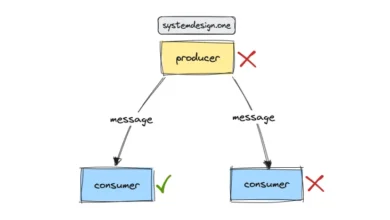
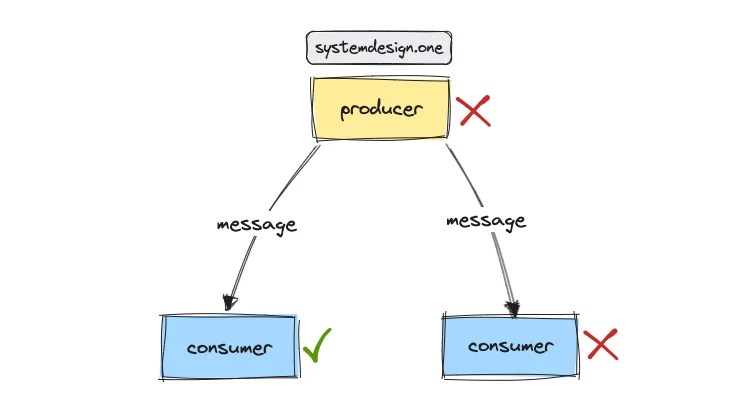
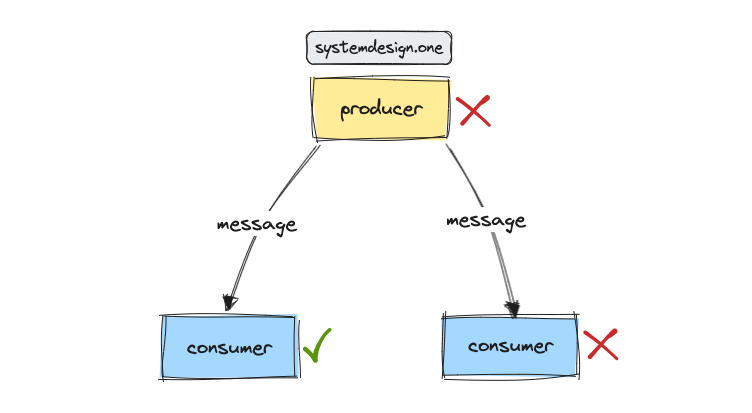
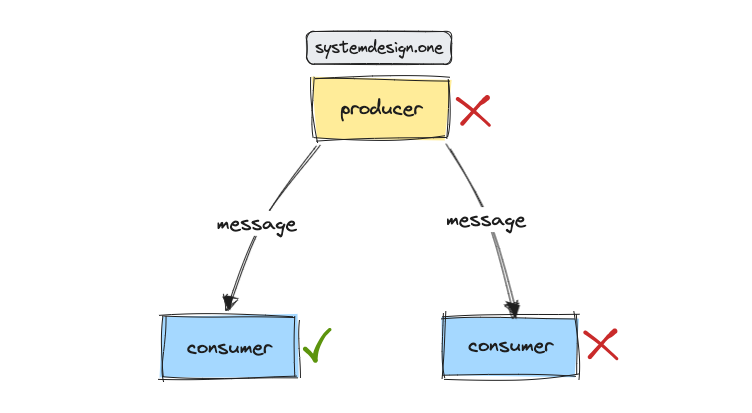
Communication within a cluster is typically managed through broadcast protocols. Point-to-point broadcast is the simplest form, where a producer sends messages directly to consumers. While intuitive, it is brittle; if the producer or consumer fails during the transaction, data loss is inevitable.
To mitigate this, Eager Reliable Broadcast was developed, requiring every node to re-broadcast every message it receives to all other nodes. This significantly improves fault tolerance, as the failure of a single node does not halt the propagation of the message. However, the bandwidth consumption scales quadratically with the number of nodes, making it unsuitable for large clusters.
The gossip protocol solves this by limiting the "fanout"—the number of peers each node contacts—and defining a "cycle" or interval for these exchanges. Mathematically, the time complexity for message propagation in a gossip-based system is O(log n), where n is the total number of nodes. This logarithmic convergence means that even in a cluster of 25,000 nodes, a message can propagate to every member in approximately 15 rounds of communication, often in just a few seconds.
Core Archetypes of Gossip Algorithms
The implementation of gossip protocols varies based on the specific requirements of the service, categorized primarily into three models:
- Anti-Entropy: Designed to reduce discrepancies between replicas, this model ensures that data across a cluster eventually reaches a state of total consistency. Nodes compare their datasets and patch differences. To avoid the massive bandwidth cost of transferring full datasets, engineers often utilize Merkle trees or checksums to isolate and transmit only the divergent data.
- Rumor-Mongering: Also known as dissemination protocols, these focus on spreading new information rapidly. Unlike anti-entropy, which is a continuous background process, rumor-mongering is triggered by events. Once a node has successfully shared the "rumor" with a sufficient number of peers, it marks the information as "removed" to prevent the network from becoming saturated with redundant traffic.
- Aggregation: This advanced form is used to derive system-wide metrics, such as calculating the average load across a cluster. By sampling information from neighbors and combining it, nodes can approximate global state without needing to aggregate data at a single point.
Strategic Message Propagation: Push, Pull, and Hybrid Models
The efficiency of a gossip network is heavily dependent on the communication strategy employed:
- Push Model: Ideal for low-traffic scenarios, a node with a new update "pushes" it to peers. This is fast for disseminating initial updates but can lead to high traffic if every node starts pushing simultaneously.
- Pull Model: In this setup, nodes actively request updates from neighbors. This is highly effective when the cluster is saturated with updates, as the act of polling naturally gathers the latest information.
- Push-Pull Model: Generally considered the optimal strategy for production systems. It combines the speed of the push model (for initial dissemination) with the efficiency of the pull model (to catch up nodes that missed updates), ensuring both high reliability and reduced message redundancy.
Operational Metrics and Performance Simulation
System architects measure the success of gossip implementations through specific performance indicators, including the number of gossip rounds to reach convergence, bandwidth consumption, and message overhead. Case studies of clusters comprising 128 nodes have shown that a properly tuned gossip protocol consumes less than 2% of CPU resources and remains well under 60 KBps of bandwidth, confirming its suitability for high-performance environments.
Crucial to this performance is the "seed node" concept. Seed nodes serve as static, well-known entry points for new nodes joining the cluster, ensuring that the network maintains logical cohesion and avoids fragmenting into isolated sub-partitions during the bootstrapping phase.
Resilience and Challenges in Practice
The primary advantage of the gossip protocol is its robustness against transient network partitions. Because the protocol relies on randomness and redundancy, there is no single point of failure. If a network path becomes unavailable, the system automatically routes around the failure by relying on alternative paths through the peer network.
However, this resilience comes with distinct trade-offs:
- Eventual Consistency: Applications must be designed to handle scenarios where different nodes hold different versions of the truth for a brief period.
- Network Partition Unawareness: If a cluster is physically split, the gossip protocol may continue to function independently within each partition, leading to potential data divergence that must be resolved upon reconnection.
- Debugging Complexity: Because of the non-deterministic nature of random peer selection, reproducing specific system states in a test environment is notoriously difficult. Developers often rely on high-fidelity simulation tools and distributed tracing to observe the "epidemic" spread of messages in real-time.
Industry Implications and Future Outlook
The adoption of gossip protocols has transformed how engineers approach system design. By abstracting communication away from the application logic, gossip protocols allow developers to build systems that are self-healing. When a node fails, the gossip protocol detects the lack of heartbeat updates and propagates this failure state across the cluster. Other nodes can then immediately re-route requests, ensuring that the user experience remains uninterrupted.
Furthermore, the integration of "tombstones"—a mechanism where data is marked for deletion rather than being physically removed immediately—allows the protocol to handle deletions gracefully. This ensures that the deletion status is propagated reliably, preventing "zombie" data from resurfacing due to delayed synchronization.
As distributed systems continue to grow in scale, the reliance on gossip protocols is expected to deepen. From edge computing clusters to massive global data centers, the ability to maintain a consistent view of the world through local, random, and simple interactions remains one of the most elegant solutions to the inherent chaos of distributed computing. While it may not offer the absolute, instantaneous synchronization of a mainframe, its contribution to the uptime and scalability of the modern internet is, arguably, unmatched. The protocol serves as a powerful reminder that in complex systems, local simplicity often produces the most robust global outcomes.