AWS Weekly Roundup: Lambda Web Functions Simplify Deployments and Bedrock Introduces Advanced Autonomous Agent Controls

Amazon Web Services (AWS) has rolled out a series of major architectural updates designed to bridge the gap between application code and live production environments, while concurrently introducing robust governance frameworks for autonomous artificial intelligence agents. The announcements, spearheaded by the release of AWS Lambda Web Functions and strategic insights into AI agent guardrails via Amazon Bedrock, underscore a concerted enterprise push toward reducing developer friction without sacrificing operational security.
These updates arrive as cloud computing paradigms increasingly prioritize rapid developer iteration alongside strict governance, a dual demand driven by the rapid enterprise adoption of serverless architectures and generative AI workflows.
Main Facts and Core Deployments
The most prominent engineering milestone of the week is the introduction of AWS Lambda Web Functions. Traditionally, developers wishing to run standard HTTP web applications on AWS Lambda were required to either rewrite their application logic into specific event handlers or utilize intermediary adapters. This architectural friction often slowed down the migration of existing web applications built on popular frameworks like Express, Hono, Fastify, or Next.js.
With the new Lambda Web Functions form factor, developers can now deploy a standard, port-listening HTTP server directly onto AWS Lambda without code refactoring or adapters. By executing a simple deployment command—aws lambda-web deploy—developers receive a live HTTPS URL in under a minute, completely bypassing traditional infrastructure provisioning steps like configuring API Gateways or complex VPC routing from scratch.
This capability introduces a third distinct form factor to the AWS Lambda ecosystem, joining Event Functions and stateful MicroVMs on the underlying Firecracker microVM isolation technology. Notably, Lambda Web Functions introduce two structural improvements designed to optimize performance and cost:
- Concurrent Request Handling: Each execution environment is now capable of handling up to 128 concurrent requests. This allows sudden traffic bursts to leverage warm environments dynamically, moving away from the traditional one-request-per-environment mapping.
- Precise CPU Billing: Billing meters specifically track the active CPU time consumed by the code rather than wall-clock time. For workloads such as serverless rendering, API backends, and streaming inference endpoints—where a significant percentage of elapsed time involves waiting for network responses or I/O—this billing structure fundamentally alters the economic calculations of serverless computing.
Furthermore, developers can append global flags to deployment scripts to replicate code and configurations seamlessly across multiple AWS Regions, routing traffic via latency-based DNS behind a single global URL. Canary deployments are similarly streamlined, allowing traffic splitting across different application revisions by weight. The service is initially available in five AWS Regions, supporting Node.js 24 running on Arm64 architecture with integrated Virtual Private Cloud (VPC) connectivity. Amazon CloudFront has also updated its integration capabilities, allowing developers to utilize a Web Function endpoint directly as a protected origin via origin access control.
AI Governance and Autonomous Agent Security
Shifting from infrastructure compute to artificial intelligence governance, the week’s secondary major discourse centered on the management of autonomous AI agents. As enterprises scale their deployment of generative AI agents capable of executing multi-step workflows, traditional human-in-the-loop oversight models are proving increasingly unsustainable. Human operators tasked with manually reviewing every minor agent action frequently experience cognitive fatigue, eventually missing critical anomalies or security risks.
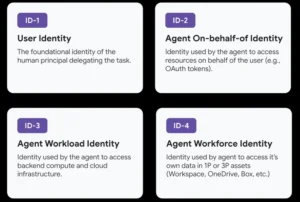
To address this scaling bottleneck, AWS highlighted architectural strategies detailed in its recent technical literature regarding "Trust in Depth." Rather than relying on agents to self-police or forcing continuous human interception, the framework advocates for externalized governance through four core pillars: scope, knowledge, boundaries, and observation.
Crucially, the architecture dictates that an agent’s operational limits must reside entirely outside its internal reasoning loop. By enforcing boundaries within Amazon Bedrock AgentCore policies at the gateway level, organizations ensure that an agent cannot bypass or disable controls that it does not directly manage. This defense-in-depth methodology mirrors automated reasoning engines that AWS has utilized in production environments for over a decade—such as the AWS Identity and Access Management (IAM) service, which securely processes more than 2.1 billion requests per second. Applying these formal verification and automated reasoning principles to generative AI agents represents a critical step forward for enterprises seeking to expand agent autonomy securely.
Chronology and Strategic Context
The timing of these releases reflects a broader multi-year strategy by cloud providers to compress the lifecycle from code creation to global deployment. Over the past several product cycles, AWS has steadily integrated provisioning tools directly into localized developer environments, allowing teams to interact with cloud infrastructure through familiar command-line interfaces without constantly context-switching into the AWS Management Console.
The introduction of Lambda Web Functions directly addresses historical developer complaints regarding serverless framework lock-in and migration overhead. While serverless computing has long been praised for its scalability and zero-idle cost model, the necessity of rewriting existing monolithic or containerized web frameworks into event-driven handlers frequently discouraged enterprises from fully adopting AWS Lambda for standard web applications. By supporting standard HTTP protocols natively, AWS has effectively lowered the barrier to entry for container-to-serverless transitions.
Simultaneously, the timing of the guidance on AI agent trust aligns with broader industry anxieties regarding autonomous systems. As organizations move generative AI from experimental sandboxes into mission-critical production environments, regulatory compliance, data privacy, and operational predictability have become paramount. By decoupling agent policy enforcement from the probabilistic reasoning engines of Large Language Models (LLMs) and anchoring them in deterministic gateway controls, AWS is attempting to establish a new enterprise standard for safe AI deployment.
Background Context and Technical Implications
To fully comprehend the significance of Lambda Web Functions, one must examine the evolution of AWS Lambda since its initial launch. Built upon the Firecracker virtualization technology—which was originally designed to power AWS Fargate and Amazon SageMaker—Lambda established the standard for function-as-a-service (FaaS) computing. However, the requirement to process incoming events via specific JSON schemas meant that standard web frameworks required adaptation layers, such as aws-serverless-express.
These adapters introduced subtle performance latencies, debugging complexities, and maintenance burdens. By bringing native HTTP server capabilities directly into the Firecracker microVM runtime, AWS has essentially combined the operational simplicity of container management with the instantaneous scaling and granular billing of serverless functions.
On the machine learning front, Amazon Bedrock continues to position itself as a comprehensive orchestration layer for enterprise generative AI. The integration of AgentCore policies represents a maturation of the platform, moving beyond simple model hosting and prompt engineering into active runtime governance. Enterprises utilizing Bedrock can now programmatically define boundaries—such as prohibiting an agent from accessing specific databases or executing unauthorized external API calls—thereby mitigating risks associated with model hallucinations or prompt injection attacks.
Broader Impact and Industry Analysis
The convergence of frictionless compute deployment and deterministic AI governance signals a clear trajectory for cloud architecture in the coming years. On one hand, developers are being equipped with tools that eliminate infrastructural bureaucracy, enabling web applications and microservices to go live globally within seconds. On the other hand, organizations are simultaneously erecting tighter, automated guardrails to manage the explosion of automated workloads and AI agents operating within their networks.
Industry analysts note that these dual developments will likely accelerate the migration of legacy web applications to serverless architectures, particularly for organizations seeking to optimize cloud expenditure through consumption-based billing models that discount idle waiting periods. Meanwhile, the enterprise adoption of generative AI agents is expected to receive a substantial confidence boost, as security and compliance teams gain verifiable, deterministic mechanisms to govern agentic behaviors at scale.
As developers continue to explore these new form factors and governance models, the broader cloud ecosystem will undoubtedly watch closely to see how competing hyperscalers respond to this convergence of developer velocity and robust operational control. For now, AWS has firmly established a new benchmark for how modern applications—both human-coded and machine-driven—are deployed, scaled, and secured in the cloud.
Related posts: