Mastering Python Descriptors for Advanced Attribute Control and Data Integrity

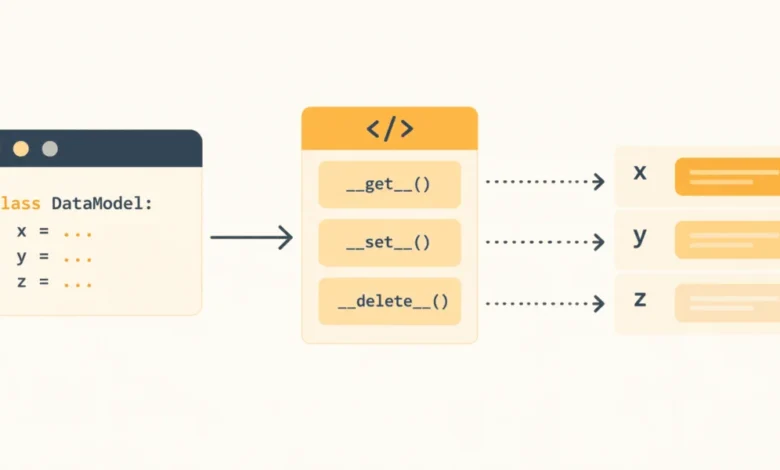
Python descriptors represent one of the most sophisticated features in the Python language, serving as the underlying mechanism for the property decorators and class methods that developers encounter daily. While many programmers rely on standard getters and setters to manage class attributes, descriptors offer a more elegant, reusable, and efficient alternative. By implementing a specific protocol—consisting of methods such as get, set, and delete—descriptors allow for the creation of "controlled attributes" that can handle complex logic, such as data validation, dynamic computation, and resource-intensive lazy loading, without bloating the source code with repetitive boilerplate.
The Architectural Foundation of Descriptors
At the core of the Python object model is the descriptor protocol. When an object accesses an attribute, Python does not simply look up the value in the instance’s dictionary. Instead, it checks if the attribute is a descriptor object. If it is, the descriptor’s methods take precedence, allowing the developer to intercept the attribute access cycle.
This mechanism is what powers Python’s built-in functionalities. For example, when a developer uses the @property decorator, they are effectively utilizing a simplified interface for what is, in the background, a descriptor. However, by defining custom descriptor classes, developers can move beyond simple property wrappers. This approach enables the implementation of "managed" attributes that reside at the class level but operate on instance-specific data. This pattern is essential for large-scale applications where data integrity must be maintained across thousands of object instances, such as in high-traffic travel booking engines or financial modeling platforms.
Building Validated Attributes for Data Integrity
One of the primary use cases for descriptors is enforcing strict data validation. In complex systems, such as a travel management application, ensuring that input data meets specific constraints—such as numerical ranges or type requirements—is critical to preventing runtime errors.
Consider a system designed to handle user ratings for tourism services. Without descriptors, a developer might write a custom setter method for every rating attribute, leading to redundant code. By contrast, a ValidatedRating descriptor can encapsulate the logic for checking types and value boundaries.
class ValidatedRating:
    def __init__(self, min_val=1.0, max_val=5.0):
        self.min_val = min_val
        self.max_val = max_val

    def __set_name__(self, owner, name):
        self.public_name = name
        self.private_name = f"_name"

    def __get__(self, obj, objtype=None):
        if obj is None: return self
        return getattr(obj, self.private_name)

    def __set__(self, obj, value):
        if not isinstance(value, (int, float)):
            raise TypeError(f"self.public_name must be a number.")
        if not (self.min_val <= value <= self.max_val):
            raise ValueError(f"self.public_name must be between self.min_val and self.max_val.")
        setattr(obj, self.private_name, float(value))
The introduction of the __set_name__ method in Python 3.6 was a milestone for descriptor design. It allows the descriptor to automatically determine the name of the attribute it is bound to, eliminating the need for hard-coding attribute names and reducing the likelihood of namespace collisions within the parent object.
Dynamic Computation and Real-Time Data Conversion
Beyond validation, descriptors are exceptionally well-suited for computed attributes—data points that do not exist as static values but are derived from other state variables in real-time. In an international tourism application, where a base price might be stored in a local currency such as the Japanese Yen (JPY) but must be rendered in US Dollars (USD) for a global audience, maintaining parity between these two values manually is error-prone.
A descriptor designed for currency conversion effectively treats the target attribute as a read-only, dynamic interface. By calculating the exchange rate upon every access, the system ensures that the UI always displays the most accurate, up-to-date conversion. This eliminates the risk of "stale data," which often occurs when a base value is updated but the dependent derivative value is not recalculated.
Optimizing Performance with Lazy Loading
Resource management is a hallmark of high-performance software. In scenarios involving large datasets—such as retrieving detailed Shinkansen (bullet train) schedules or loading comprehensive user itineraries—instantiating objects with all available data can lead to significant memory bloat and latency.
Lazy loading is the practice of deferring the retrieval of expensive data until the exact moment it is requested by the user. A "Lazy Descriptor" manages this by implementing a check during the first __get__ call. Upon the initial request, the descriptor performs the expensive operation (such as a database query or a file I/O task), caches the result directly into the object’s __dict__, and serves the result. Subsequent requests bypass the complex logic entirely, accessing the cached value directly from the instance dictionary. This "compute-once-read-many" pattern significantly reduces the overhead associated with object initialization.
Implications for Software Maintenance
The adoption of descriptors has profound implications for the maintainability of large codebases. In traditional object-oriented programming, adding a new validation rule to a class usually requires editing the constructor or individual setter methods, which increases the complexity of the class logic.
Descriptors promote the "Don’t Repeat Yourself" (DRY) principle by separating the concerns of data management from the business logic of the object itself. Once a ValidatedRating or LazyItinerary descriptor is tested and proven, it can be reused across different models within an application without modification. This modularity makes the codebase easier to test, as individual descriptors can be unit-tested in isolation from the complex business entities that consume them.
Chronology and Evolution of the Protocol
The evolution of the descriptor protocol reflects Python’s broader shift toward more robust, production-grade features. While descriptors were present in early versions of Python as part of the new-style class system introduced in Python 2.2, they were often considered an advanced, "black-box" feature reserved for library authors.
The subsequent updates, particularly in Python 3.x, focused on making this powerful tool more accessible. The introduction of __set_name__ effectively resolved long-standing issues related to attribute naming and initialization, while improvements to the data model have made descriptors more performant. Today, they are a recommended tool for any developer seeking to build clean, professional-grade Python libraries that prioritize both readability and reliability.
Conclusion and Best Practices
In summary, Python descriptors offer a powerful mechanism for controlling attribute behavior, ensuring that data is valid, dynamically computed, or loaded only when necessary. By leveraging the __get__, __set__, and __set_name__ methods, developers can write cleaner, more modular code that abstracts away the complexity of object state management.
For teams managing high-scale applications, the use of descriptors should be standard practice when encountering repetitive validation or caching logic. While they require a deeper understanding of the Python object model, the trade-off is a significantly more robust and maintainable codebase. As with all advanced programming patterns, the key to successful implementation lies in simplicity: descriptors should be used to simplify the interface of the object, not to obfuscate the underlying logic. By adhering to these principles, developers can harness the full power of Python to build systems that are as efficient as they are elegant.