AWS Weekly Roundup: Generative AI In Agribusiness, Continuum Security, And ECS Gateway Launches

Amazon Web Services (AWS) has introduced a robust slate of enterprise-grade updates, security tools, and machine learning infrastructure capabilities designed to reshape how modern enterprises manage code vulnerabilities, deploy containerized microservices, and integrate generative artificial intelligence into everyday operations. Highlighting the intersection of cutting-edge technology and traditional industries, recent architectural presentations and platform updates illustrate a broader industry shift toward real-time responsiveness, seamless infrastructure decoupling, and the elimination of traditional software engineering bottlenecks.
The implications of these developments extend far beyond routine maintenance patches. By redefining vulnerability management through automated remediation graphs, streamlining container exposure mechanics via dedicated gateways, and expanding linguistic accessibility through generative text-to-speech engines, AWS is laying the groundwork for a more reactive and resilient cloud computing ecosystem. Industry analysts note that these integrated updates arrive at a critical juncture, where the traditional timelines for software patching and deployment are increasingly misaligned with the velocity of modern automated exploit architectures.
Revolutionizing Agribusiness Interfaces Through Generative AI
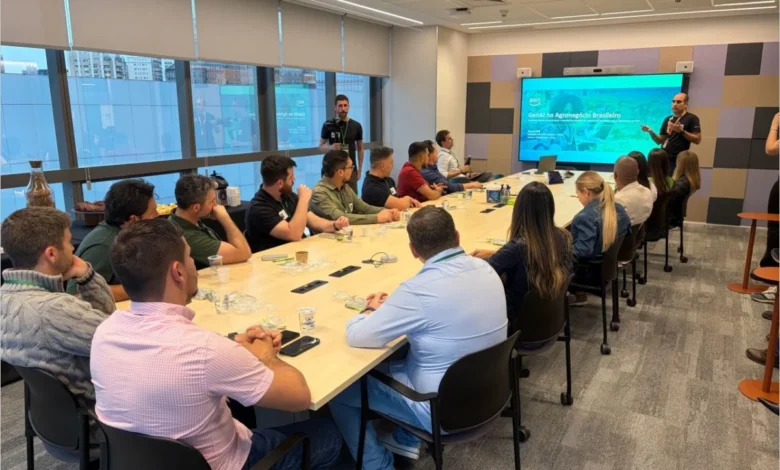
The rapid integration of generative artificial intelligence into traditional sectors was underscored recently during a technology briefing at the AWS regional headquarters in São Paulo, Brazil. Addressing a delegation of commercial and technical leaders from the Brazilian agribusiness sector, technology strategists outlined how generative AI models can be embedded across various stages of agricultural operations—from supply chain logistics and crop yield forecasting to real-time machinery diagnostics.
Discussions during the briefing quickly moved past the theoretical utility of artificial intelligence, focusing instead on practical delivery mechanisms. In agricultural environments, operators are frequently mobile, managing vast tracts of land while navigating between remote farm sites. Under such conditions, traditional graphical user interfaces and text-heavy dashboards are impractical. Instead, the primary interface must be voice-driven.
Addressing this core human-computer interaction challenge, Amazon Polly unveiled a major upgrade to its Generative engine. The platform now features 57 distinct generative voices spanning 11 languages and 25 locales. Notably, the update introduces 14 new voices across nine regional variants, including the platform’s first-ever native support for Hindi and Finnish, alongside two new Brazilian Portuguese voices: Leo and Carolina. Designed as a drop-in architectural upgrade, the enhancement requires no modifications to existing SynthesizeSpeech API calls or pricing structures, yet delivers significantly enhanced natural inflection and conversational cadence. For field operators relying on hands-free, voice-activated telemetry, these improvements provide a more intuitive and reliable communications channel.
Redefining Vulnerability Management With AWS Continuum
Security operations formed the sharpest edge of the week’s architectural announcements, driven by the realization that the historical gap between vulnerability disclosure and active exploitation has effectively vanished. To combat this compressed threat landscape, AWS announced the general availability of AWS Continuum, an end-to-end vulnerability management and remediation service designed to shift security workflows from passive detection to active, context-aware remediation.
Unlike traditional vulnerability scanners that merely output static lists of common vulnerabilities and exposures (CVEs) tagged with severity scores, AWS Continuum constructs a dynamic, comprehensive context graph mapping code repositories directly to running cloud infrastructure. When a potential vulnerability is identified, the service verifies exploitability by safely reproducing findings within an isolated sandbox environment using proof-of-concept code. This empirical verification allows security and engineering teams to observe the actual mechanics of a vulnerability rather than relying solely on theoretical risk metrics.
Continuum further streamlines remediation by ranking identified issues according to their proximity to business-critical systems and data pathways. Once prioritized, the service automatically generates and opens a pull request containing the necessary fix. Currently, AWS has maintained a strict control boundary: every remediation requires explicit human authorization, meaning engineers must review, approve, and merge the pull request before any code changes are deployed. Future iterations are expected to introduce autonomous remediation tiers gated by configurable confidence thresholds. AWS Continuum is currently available in the US East (N. Virginia) and US West (Oregon) commercial regions.
The Empirical Urgency of Modern Threat Intelligence
The necessity for advanced, automated remediation tools like AWS Continuum was starkly illustrated by concurrent telemetry data published by Amazon Threat Intelligence regarding the zero-day exploitation of the PHP2Shell vulnerability framework. According to internal honeypot telemetry from MadPot, Amazon security researchers detected active exploitation attempts against the PHP2Shell remote code execution vulnerability on October 17—a full four days before CVE-2026-109618 and CVE-2026-109619 were formally disclosed to the public.
Furthermore, empirical tracking revealed that functional proof-of-concept exploits were actively circulating across threat actor forums around 02:00 UTC on the official disclosure day, roughly twelve hours before the coordinated embargo was scheduled to lift at 14:00 UTC. This timeline demonstrates that traditional enterprise patch management windows measured in days or weeks are built on an assumption of delayed exploitation that no longer reflects the reality of modern cyber threat operations. Security analysts emphasize that incident investigation and threat hunting must now be initiated from the earliest timestamp of recorded exploitation rather than the official CVE publication date. In response to these findings, AWS simultaneously released targeted AWS WAF (Web Application Firewall) mitigation rules to protect vulnerable systems prior to full patch deployment.
Decoupling Network and Application Ownership With Amazon ECS Gateway
In the realm of container orchestration and cloud architecture, AWS introduced Amazon ECS Gateway, a managed service designed to simplify the exposure of containerized applications while establishing clear boundaries of responsibility between platform engineering teams and application developers.
Historically, configuring ingress traffic, managing Transport Layer Security (TLS) certificates, setting up listener rules, and provisioning Application Load Balancers (ALBs) required deep coordination between network infrastructure teams and software engineering groups. Amazon ECS Gateway splits these duties cleanly. Platform administrators define a single gateway encompassing organizational subnets, security groups, TLS configurations, listener settings, and AWS WAF web access control lists. Application teams then opt in simply by attaching a gateway connector to their individual service definitions.
Upon connection, Amazon ECS automatically provisions a dedicated ACM (AWS Certificate Management) certificate, assigns a unique DNS hostname, generates the necessary listener rules, and establishes target groups with strict security group rules permitting ingress exclusively from the authorized Application Load Balancer. The economic and operational efficiency of the model is substantial: up to 25 individual microservices can share a single ALB, and ECS dynamically provisions ALBs upon initial connection while automatically deprecating them when no longer required. Each gateway can associate with up to 10,000 distinct clusters, supporting up to five gateways per cluster. Enterprises can adopt the service incrementally using standard UpdateService commands without disrupting existing load balancer configurations. Amazon ECS Gateway is available at no additional charge in all commercial regions where Amazon ECS is supported.

Expanding Machine Learning Infrastructure and Optimization
Machine learning infrastructure updates also featured prominently, headlined by the public beta release of TorchNeuron, an open-source PyTorch backend designed to provide native framework support for AWS Trainium chips. TorchNeuron enables machine learning engineers to execute workloads on Trainium hardware simply by changing model execution calls to .to('neuron'), preserving eager execution models and standard torch.compile workflows without requiring extensive code rewrites. Integrating directly with the Neuron Kernel Interface for custom operator development, the backend is fully compatible with Trainium2 and Trainium3 instances, arriving alongside the broader rollout of AWS Neuron 2.33.
Concurrently, Amazon SageMaker AI announced the general availability of dedicated training sessions, giving developers granular control over the post-training lifecycle—including custom loss functions and specialized reward signals—while offloading the operational burden of GPU allocation, distributed execution, cluster fault recovery, and checkpoint storage. Under this metered pricing model, billing applies only to active token processing periods, pausing while custom reward functions evaluate batch outputs. The update also extends native model support to include Muse Glimmer, Qwen 3.8, and Ministral 3 architectures.
Enhancing Enterprise Application Integration
To further simplify generative AI application development, AWS introduced native structured output support for Anthropic Claude models hosted on Amazon Bedrock. Accessible across both bedrock-runtime and bedrock-mantle endpoints, the feature allows developers to enforce strict JSON schema compliance directly at the model inference layer, eliminating the need for complex custom parsing logic, client-side retry loops, or post-processing validation routines. This capability significantly improves the reliability of automated workflows involving complex financial reporting, clinical note parsing, and intent-based customer support routing.
In database and caching operations, Amazon ElastiCache Serverless for Valkey introduced zero-downtime online migration capabilities. Organizations can now migrate self-managed Valkey or Redis OSS databases running on Amazon EC2 directly into ElastiCache Serverless without incurring downtime or returning client errors during the transition. The migration pipeline handles data synchronization and allows for either manual or automated cutovers without requiring third-party replication tooling. The feature is available globally across all commercial regions, China regions, and AWS GovCloud environments.
Broader Industry Implications and Outlook
As cloud architectures continue to evolve toward greater automation, granular security isolation, and hardware-agnostic machine learning integration, these latest AWS releases reflect a concerted push to remove operational friction for enterprise developers. Whether through securing code via autonomous context graphs, streamlining container ingress via ECS Gateway, or enabling natural voice interactions in remote industrial sectors, the focus remains firmly on operational velocity and resilience. Industry professionals and cloud architects will gather to discuss these advancements further at upcoming industry forums, including the upcoming AWS re:Invent conference scheduled for November 30 through December 4 in Las Vegas, where over 2,200 technical sessions will chart the ongoing trajectory of cloud computing.