How AI Voice Cloning and Fake Campaigns Are Transforming Election Season Into a Minefield for Voters

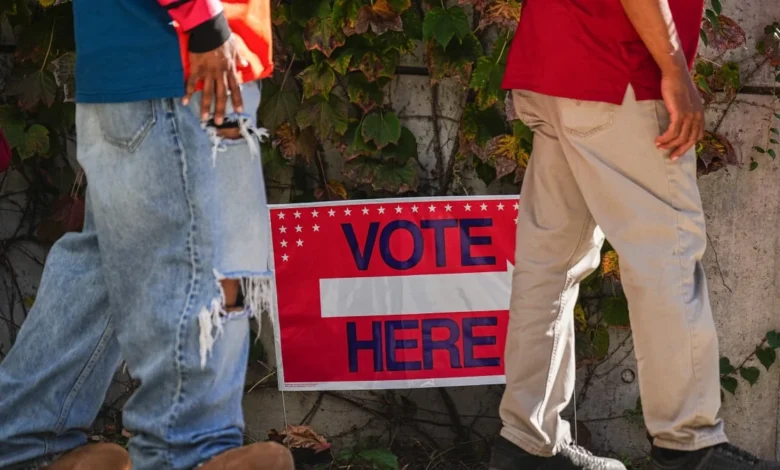
The 2024 and 2026 midterm election cycles have fundamentally altered the landscape of political communication, transforming it from a traditional arena of lawn signs and television commercials into a high-stakes digital battleground. By the time the final ballots are counted in the upcoming midterms, Americans will have received an estimated 60 billion political text messages. On average, a single voter will have read roughly 170 individual text prompts, while total political campaign spending is projected to surpass $11 billion. This staggering deluge of outreach—encompassing millions of emails, automated robocalls, targeted digital advertisements, and peer-to-peer text messages—has created a chaotic information ecosystem. While this hyper-connected environment allows campaigns to mobilize supporters with unprecedented speed, it has simultaneously forged an ideal cover for cybercriminals and fraudsters seeking to exploit voter fatigue, financial vulnerabilities, and civic duty.
According to cybersecurity experts and fraud prevention specialists, the sheer volume of legitimate political communication acts as camouflage for malicious actors. Fraudulent calls and deceptive phishing texts no longer stand out in a landscape where citizens are already accustomed to receiving multiple unsolicited appeals for donations or volunteer data daily. As bad actors harness sophisticated artificial intelligence tools to mimic politicians, public officials, and trusted non-partisan election entities, the challenge of maintaining electoral security extends far beyond traditional cybersecurity parameters. Voters are no longer just fighting misinformation; they are navigating a complex web of technologically advanced financial and identity theft schemes designed to weaponize their democratic participation.
The Evolution of Election Scams: From Simple Phishing to AI Voice Cloning
The convergence of political campaigns and advanced artificial intelligence represents a new frontier in consumer fraud. Historically, election-related scams primarily involved basic phishing emails or fraudulent direct mail solicitations asking for donations to non-existent political action committees (PACs). However, the widespread accessibility of generative AI technologies has dramatically lowered the technical barrier for scammers, enabling them to execute highly personalized and convincing attacks at scale.
Ron Kerbs, CEO of the AI fraud prevention company Kidas, points out that scammers can easily harvest publicly available audio and video data of political candidates. This material is then used to train AI models capable of generating hyper-realistic voice clones. When combined with advanced caller ID spoofing techniques—which allow callers to mask their true origin and display a familiar local or institutional number—these cloned voices can make fraudulent calls appear entirely authentic.
The threat posed by deepfake audio is no longer theoretical. A watershed moment occurred during the New Hampshire primary elections, when AI-generated robocalls impersonating then-President Joe Biden were broadcast to thousands of voters. The fraudulent audio message urged recipients to stay home rather than participate in the primary, directly threatening the integrity of the electoral process. The incident triggered swift, aggressive regulatory interventions at the federal level. The Federal Communications Commission (FCC) responded by expanding the scope of the Telephone Consumer Protection Act (TCPA), formally closing legal loopholes and classifying unsolicited AI-generated robocalls as illegal under federal law. Despite these regulatory cracks down, enforcement remains difficult, as bad actors frequently route their operations through international VoIP providers and decentralized digital networks.
Regulatory Loopholes and the Limitations of Traditional Protections
One of the most persistent frustrations for American voters is the inability to shield themselves from political solicitations using conventional telemarketing defenses. The federal Do Not Call registry, managed by the Federal Trade Commission (FTC), serves as an effective opt-out mechanism for standard commercial telemarketing and sales calls. However, political communications, charitable fundraising, and polling activities are explicitly exempt from these regulations under free speech protections enshrined in law.
While political campaigns and their authorized vendors are still bound by federal regulations restricting automated dialing systems, prerecorded messages, and calls made without prior express consent, these rules do little to deter illicit operations. Scammers operating outside the jurisdiction of domestic campaign finance laws routinely ignore federal oversight entirely. Consequently, the legal exemptions granted to legitimate political actors generate widespread public confusion. When a voter receives a call about an urgent matter related to their ballot or voter registration, they often cannot readily distinguish between a legitimate campaign volunteer, an authorized pollster, and a sophisticated fraudster attempting to steal sensitive information.
Furthermore, public service announcements issued by federal agencies, including the Federal Bureau of Investigation (FBI), highlight how bad actors routinely misappropriate the names, official images, logos, and campaign slogans of recognized candidates. These elements are weaponized to fraudulently solicit campaign contributions, market political merchandise that is never delivered, or execute credential-harvesting schemes designed to compromise personally identifiable information (PII).
The Three Primary Vectors of Election Fraud
Security analysts categorize election-related scams into three distinct operational methodologies, each targeting different vulnerabilities within the electorate:
- Financial Solicitations and Fake Merchandise: Fraudsters set up lookalike websites, send phishing text messages, or make direct phone calls soliciting donations for prominent candidates or newly invented grassroots political movements. Victims frequently provide credit card details or bank account information, believing they are supporting a specific political platform, only to find unauthorized charges or zero fulfillment of promised campaign merchandise.
- Voter Registration and Suppression Schemes: Operating under the guise of election officials or non-partisan voting rights groups, scammers contact citizens to verify, update, or "save" their voter registration status. These bad actors frequently claim that a voter’s registration has lapsed or that their ballot is in jeopardy due to a clerical error. Victims are manipulated into providing sensitive personal data, such as Social Security numbers, driver’s license details, and home addresses, under the false pretense that immediate action is required to preserve their voting rights.
- Deepfake Impersonation and Disinformation: Leveraging AI-generated voice clones and manipulated video, malicious entities impersonate high-profile political figures to spread disinformation regarding polling locations, voting hours, or candidate endorsements. While some of these campaigns aim purely at financial extortion, others are explicitly designed to suppress voter turnout or sow discord within the democratic process.
Identifying the Red Flags of Electoral Deception
Because modern scams are engineered to bypass intuitive skepticism, cybersecurity specialists emphasize that traditional indicators of fraud are no longer sufficient. A communication can sound entirely professional, utilize correct branding, and appear from a recognizable source while remaining fundamentally fraudulent. Nevertheless, certain behavioral and tactical red flags consistently expose malicious operations.
The single most reliable indicator of an election scam is manufactured urgency. Fraudsters rely heavily on psychological pressure, compelling targets to act immediately without pausing to verify facts. If an incoming call or text message asserts that a voter’s registration is about to expire, that a mail-in ballot has been rejected and requires immediate payment to cure, or that a legal penalty will be assessed for non-compliance, the communication should be treated with extreme suspicion.
Legitimate government agencies, election offices, and authorized political campaigns adhere to strict operational standards regarding sensitive data and financial contributions:
- Election officials will never request payment over the phone, nor will they accept financial transactions via unusual methods such as prepaid gift cards, cryptocurrency wire transfers, or peer-to-peer payment apps.
- Government offices do not ask for full Social Security numbers, bank account routing numbers, or multi-factor authentication verification codes over inbound telephone calls.
- Registering to vote or updating one’s voter registration status is entirely free of charge across all jurisdictions in the United States. No official entity will ever demand a fee or sensitive personal credentials to process a voter status update.
Comprehensive Best Practices for Voter Defense
As the boundaries between legitimate civic outreach and criminal enterprise continue to blur, cybersecurity professionals advise Americans to adopt a proactive defense posture throughout the election season. Safeguarding personal data requires shifting from passive consumption of digital media to a structured verification protocol.
First, voters should embrace a zero-trust policy regarding unsolicited inbound communications. Unknown phone calls should consistently be allowed to route directly to voicemail. If a message claims to originate from a vital campaign or an official election office, the recipient should independently locate the official public contact telephone number or verified web portal for that specific entity, rather than calling back the number displayed on caller ID or clicking links embedded within text messages.
Second, individuals must strictly limit the dissemination of personal information over digital channels. Even seemingly innocuous details—such as birthdates, previous residential addresses, or driver’s license numbers—should never be shared with unverified callers claiming to represent campaigns or polling organizations. When combined with data breaches from corporate repositories, even small fragments of personal information can be weaponized by bad actors to construct comprehensive synthetic identities.
Finally, citizens seeking to verify their voter status, check polling locations, or make alterations to their registration records should bypass third-party portals entirely. Voters are strongly encouraged to navigate directly to their state or county’s official election website, or utilize trusted non-partisan platforms sanctioned by state secretaries of state. By maintaining vigilance, exercising skepticism toward urgent demands, and refusing to engage with unverified callers, voters can protect their personal security while safely navigating the complex digital landscape of modern American elections.
Related posts: