Google Caught in a Catch-22 as AI Search Overhaul Threatens Traditional Ad Revenue While Prompting an Aggressive Monetization Pivot

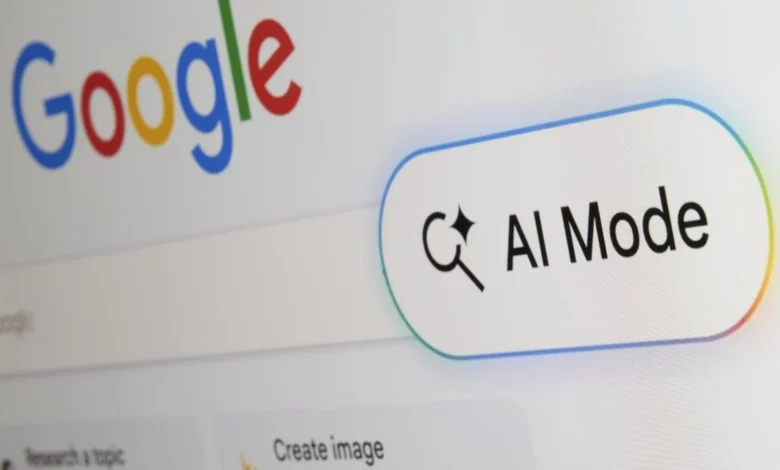
Google’s recent quarterly earnings call sent ripples through Wall Street, triggering a sharp decline in the company’s stock value and forcing investors to confront a stark reality: the tech giant’s signature artificial intelligence search feature is cannibalizing its primary financial engine. For decades, Google has operated as the undisputed tollbooth of the internet, directing billions of users to web pages while generating colossal fortunes through pay-per-click advertising. However, the rapid integration of generative artificial intelligence into search engine results pages has fundamentally altered this dynamic. By delivering comprehensive answers directly to users via AI-generated summaries—a phenomenon industry analysts refer to as "zero-click searches"—Google is inadvertently keeping users on its own platform, starving independent publishers of traffic and, more critically, reducing the visibility of traditional search advertisements.
The structural tension between maintaining a state-of-the-art search experience and protecting a multi-billion-dollar advertising empire has long been anticipated by financial analysts, but Google’s latest disclosures confirm that the worst-case scenario is materializing. Rather than retreating from its heavy investments in artificial intelligence, the company has doubled down on its strategy. Google’s designated solution to the financial shortfall created by AI-generated summaries is both straightforward and controversial: inundating the user interface with even more advertisements. As the company navigates this high-stakes transition, the broader digital ecosystem is left to reckon with the consequences of an evolving internet where traditional search optimization takes a backseat to conversational, AI-driven monetization.
The Anatomy of the Zero-Click Crisis
The financial dilemma facing Alphabet, Google’s parent company, centers on the fundamental shift in user behavior brought about by AI-powered search features. Historically, the user journey on Google Search was linear and transactional: a user entered a query, was presented with a list of blue links interspersed with clearly marked sponsored advertisements, and subsequently clicked through to a publisher or merchant website. This click-through action was the vital catalyst for Google Ads, a pay-per-click auction model where advertisers only incurred costs when a user actively engaged with a link.
With the advent of Google’s AI-generated summaries—designed to synthesize information from across the web and present a definitive answer at the very top of the search engine results page—the necessity of clicking through to external websites has plummeted. Users frequently find all the information they require directly within the AI-generated text block, satisfying their informational needs instantly. This gives rise to the zero-click search, a metric that has steadily climbed across the digital landscape.
While advantageous for users seeking instantaneous answers, zero-click searches represent an existential hurdle for Google’s core business model. Fewer clicks on organic and paid search results translate directly to fewer opportunities to display traditional text ads that yield high conversion rates. Consequently, Google’s financial disclosures revealed a noticeable compression in profit margins derived from standard search queries as generative AI features assumed a larger share of daily user traffic. Wall Street reacted swiftly to the news, leading to a noticeable pullback in Google shares as institutional investors began to question the long-term viability of monetizing conversational AI at the same scale as traditional search infrastructure.
A Chronology of Google’s Search Evolution and Monetization Pressures
The friction between artificial intelligence development and advertising revenue is the culmination of a multi-year technological race sparked by sudden shifts in the competitive landscape. Understanding how Google arrived at this juncture requires examining the timeline of generative AI integration within the search sector.
In late 2022, the launch of OpenAI’s ChatGPT demonstrated the immense consumer appetite for conversational, AI-driven assistants, posing a direct threat to Google’s core search monopoly. Recognizing the potential obsolescence of the traditional blue-links model, Google accelerated its internal artificial intelligence projects, eventually culminating in the widespread rollout of generative search capabilities. Initially introduced as a selective preview under experimental branding, these AI summaries were rapidly scaled to reach hundreds of millions of active users globally.
By 2024 and 2025, the feature transitioned from an experimental add-on to a default component of the user search experience. As adoption rates climbed, internal metrics began to reflect the anticipated cannibalization of ad inventory. Financial analysts noted consecutive quarters where ad revenue growth failed to keep pace with the exponential rise in AI compute costs and user engagement shifts.
The turning point arrived during the recent third-quarter earnings call, where corporate leadership openly acknowledged the financial discrepancy between traditional search ads and AI-generated summaries. Rather than signaling a slowdown in AI development, executives confirmed that the company’s fiscal strategy moving forward relies entirely on successfully re-architecting the advertising apparatus to function natively within conversational, multi-turn AI environments.
Financial Disclosures and the Strategic Pivot to Enhanced AI Ads
According to recent financial filings and regulatory disclosures highlighted by industry publications such as Ars Technica, Google is executing a calculated pivot to safeguard its revenue streams. The company’s primary mechanism for bridging the monetization gap involves embedding a substantially higher volume of advertisements directly into the AI-driven search interface.
At present, Google utilizes contextual ads within its AI mode, displaying sponsored products or services alongside the synthesized text responses. However, upcoming platform updates will dramatically expand this footprint. Google plans to dynamically swap out sponsored links and promotional placements throughout the duration of a user’s interactive session as they converse with the AI chatbot. As users refine their queries or ask follow-up questions within the AI mode, the system will continuously inject targeted advertising units designed to match the evolving context of the conversation.
Furthermore, Google announced plans to aggressively roll out AI mode advertisements across international markets, expanding the monetization surface area beyond the domestic United States. This global deployment is intended to offset domestic softening by capturing ad spend in high-growth international digital economies.
Despite these aggressive expansion plans, Google’s leadership has cautioned investors against expecting immediate financial stabilization. The transition period is anticipated to present sustained headwinds for several key reasons:
- Lower Initial Yields: Currently, Google generates less revenue per query from AI mode ads compared to traditional search ads. This disparity stems from a smaller pool of active advertisers currently bidding on conversational AI inventory.
- Advertiser Adaptation Curve: Traditional search advertising relies on exact-match keywords and static landing pages. Adapting creative assets, bidding strategies, and attribution models to function effectively within dynamic, generative AI chat interfaces requires a learning curve for marketing agencies and corporate brands alike.
- Compute and Infrastructure Costs: Running massive large language models for millions of simultaneous search queries incurs significantly higher server and infrastructure costs than traditional algorithmic indexing, squeezing operating margins while ad revenue catches up.
Broader Industry Implications and Market Reactions
Google’s predicament extends far beyond its own balance sheets, casting a long shadow over the entire digital publishing and marketing ecosystem. For years, independent news organizations, recipe blogs, e-commerce platforms, and educational sites have relied on organic and paid search traffic driven by Google to sustain their operations. As AI summaries keep users anchored to Google’s ecosystem, downstream publishers are reporting precipitous drops in referral traffic, touching off a wave of industry anxiety regarding copyright, fair use, and digital sustainability.
Simultaneously, the digital advertising industry is undergoing a structural transformation. Brand marketers are being forced to rethink their media mix. With Google prioritizing conversational ad placements, brands that fail to optimize their products for AI chat recommendations risk losing visibility at the exact moment consumer decision-making occurs. This has sparked a new sub-sector within digital marketing focused entirely on generative engine optimization (GEO), aimed at ensuring corporate offerings are favorably interpreted and recommended by artificial intelligence algorithms.
Competitors in the search space are observing Google’s maneuvers closely. Alternative search engines and AI startups are experimenting with various monetization models, ranging from subscription tiers to native e-commerce integrations, attempting to solve the very same revenue puzzle that currently plagues Google. However, given Google’s immense market share and deeply entrenched advertiser relationships, its success or failure in monetizing conversational AI will likely set the industry standard for years to come.
Outlook: Navigating the Post-Keyword Era
As Google presses forward with its overarching artificial intelligence strategy, the company is effectively betting its historic dominance on a post-keyword future. The admission that AI search currently yields lower revenue than traditional search is a rare moment of vulnerability for the Silicon Valley titan, yet it underscores the absolute necessity of technological adaptation in an era defined by generative models.
For investors, the coming quarters will serve as a crucial testing ground to determine whether increased ad density and international expansion can successfully close the monetization gap. For everyday users, the immediate future guarantees a transformation in how advertisements are encountered—shifting from static banners and sponsored links at the top of a page to fluid, conversational pitches integrated seamlessly into AI dialogue. Google’s path forward is fraught with financial and regulatory challenges, but the company’s decisive pivot makes one thing unequivocally clear: the era of the traditional search ad is rapidly evolving, and more advertisements are destined to become a permanent, pervasive feature of the modern internet.
Related posts: