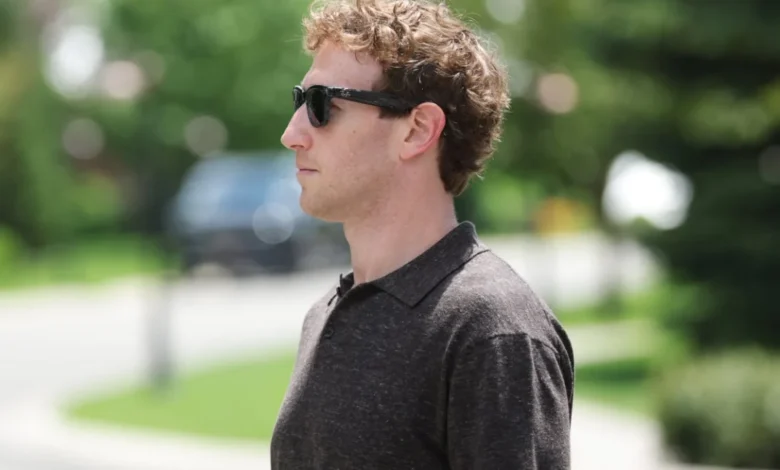
Meta’s smart glasses, designed to offer hands-free recording and advanced AI functionalities, have inadvertently fostered a disturbing trend on social media platforms, prompting a decisive response from Instagram. The popular photo and video sharing service, a subsidiary of Meta Platforms, has announced a stringent new policy aimed at curbing the proliferation of content filmed surreptitiously using these wearable devices for harassment or exploitation. This move, articulated by Instagram head Adam Mosseri, signals a critical juncture in the ongoing debate surrounding privacy, consent, and the ethical boundaries of emerging technology in public spaces.
The announcement, initially reported by Business Insider following Mosseri’s statement on an Instagram Story, specifies that the platform will actively remove videos captured via smart glasses that depict individuals being harassed or taken advantage of. This includes a broad spectrum of content, from so-called "pickup" videos where individuals are unknowingly filmed during romantic overtures, to prank videos targeting unsuspecting service industry employees such as cashiers and fast-food workers. Mosseri unequivocally stated, "If you’re posting content that is taking advantage of people and harassing them, like a lot of these pickup line kind of videos that we’ve heard of and seen, then we’re going to take the content down. We don’t want people to be surreptitiously taking videos of other people and harassing them and then posting them on our platform." This declaration underscores a growing recognition by tech platforms of their responsibility to mitigate the misuse of their services and associated hardware.
The Evolution of Wearable Technology and Privacy Debates
The current controversy surrounding Meta’s smart glasses is not an isolated incident but rather the latest chapter in a long-standing tension between technological innovation and individual privacy rights. The concept of wearable cameras gained significant public attention with the introduction of Google Glass in 2013. While Google Glass offered a glimpse into the future of augmented reality, it quickly became a lightning rod for privacy concerns, with wearers often labeled "Glassholes" due to the device’s ability to record discreetly. Critics raised alarm over the potential for non-consensual recording in private and public settings, leading to bans in various establishments and a general public backlash that contributed to its eventual commercial failure.
Following Google Glass, other companies ventured into the smart glasses market, including Snapchat with its Spectacles. These devices, while less ambitious in their technological scope, still generated discussions about how easy it was becoming for individuals to capture moments without overt consent. Meta’s entry into this space with its Ray-Ban smart glasses in 2021 marked a significant step, leveraging the widely recognized design of Ray-Ban eyewear to make the devices more aesthetically appealing and less conspicuous than their predecessors. This design choice, while boosting adoption, also inadvertently amplified the privacy concerns, making it increasingly difficult for the public to discern when they were being recorded.
Meta’s broader strategy involves a deep commitment to the metaverse, an interconnected virtual world where digital and physical realities converge. Wearable devices like smart glasses are central to this vision, acting as crucial interfaces that bridge the physical world with Meta’s digital ecosystems. The integration of advanced AI capabilities, as seen in newer generations of Meta’s glasses, further enhances their utility, allowing for functions like real-time translation, object identification, and contextual information retrieval. However, this increased capability also brings heightened ethical responsibilities, as the devices become more seamlessly integrated into daily life. The challenge for Meta, and indeed the entire tech industry, is to balance this pursuit of innovation with robust safeguards for user privacy and safety.

Meta’s Smart Glasses: Features and the Ethical Quandary
Meta’s lineup of smart glasses, developed in collaboration with brands like Ray-Ban and Oakley, and featuring partnerships with public figures like Kylie Jenner, are designed to blend seamlessly into everyday life. Depending on the model, these glasses offer a suite of functionalities including taking photos and videos, playing audio, making calls, and interacting with Meta AI for various requests. A key selling point is the ability to capture life’s moments from a first-person perspective, hands-free, making them attractive to content creators, travelers, and individuals seeking to document their experiences effortlessly. Footage captured with these devices is often easily uploaded to Instagram and prominently labeled "Made with Meta Ray-Ban," serving as both a branding exercise and a subtle indicator of the content’s origin.
Central to the privacy debate surrounding these glasses is the small white LED indicator on the front, designed to flash when the camera is actively recording. Meta’s intention with this light was to provide a visual cue to those being filmed, signaling that a recording is in progress and thereby implicitly addressing consent. However, this mechanism has proven to be inadequate. Reports have emerged of users deliberately tampering with or covering the LED light to record surreptitiously. In a July 7, 2026, explainer, Meta acknowledged these concerns, stating that its second-generation glasses automatically disable the camera if they detect the light has been covered. The company also confirmed it actively removes advertisements and listings that offer services for tampering with the Meta Ray-Ban recording indicator. Despite these measures, the inherent discreetness of the glasses, combined with the ease of obscuring the indicator, has fueled a burgeoning ecosystem of content creators who exploit this ambiguity.
A Chronology of Mounting Concerns Leading to the Ban
The journey to Instagram’s explicit ban is marked by a series of escalating incidents and warnings, highlighting a growing awareness of the ethical implications of smart glasses:
- 2021: Meta first introduces its Ray-Ban smart glasses, emphasizing their hands-free recording capabilities and stylish design, positioning them as a lifestyle product.
- October 2025: As reports of misuse begin to surface, Meta issues a public statement warning users that its glasses "shouldn’t be used for engaging in harmful activities like harassment, infringing on privacy rights, or capturing sensitive information." Around the same time, the University of San Francisco sends out a campus safety advisory after multiple women report being approached by a man wearing Ray-Ban Meta glasses who made unwanted comments and inappropriate dating questions, potentially recording the interactions for a pickup artist account.
- January 2026: Mashable publishes an investigative report detailing numerous instances of Meta Ray-Ban glasses being used to film strangers without consent for "pickup" and "prank" content. Following Mashable’s exposé and specific examples provided, Meta takes action, disabling two accounts for violating its policy on adult sexual exploitation, including one that filmed visits to massage parlors with sexually suggestive captions and another that non-consensually filmed women’s bodies.
- July 7, 2026: Meta releases an explainer addressing privacy concerns, highlighting the automatic camera disablement feature in second-generation glasses if the recording indicator is covered, and its efforts to combat tampering services.
- July 23, 2026: Instagram head Adam Mosseri announces the new policy via an Instagram Story, explicitly stating that videos filmed with smart glasses that depict harassment or exploitation will be removed from the platform. This announcement, coming on the heels of Meta’s earlier clarifications, underscores a heightened urgency and a more direct approach to content moderation specific to smart glasses footage.
The Harassment Landscape: Specific Examples of Abuse

The discreet nature of Meta’s smart glasses has enabled a range of objectionable behaviors, transforming public spaces into unwitting stages for content creation. The "pickup artist" genre, for instance, involves creators secretly recording their attempts to solicit phone numbers or engage in romantic interactions with women in various public settings—gyms, airports, bars, stores, and streets. The filmed women, unaware they are part of "content," are then exposed to online audiences who may scrutinize their appearance, sexualize them, or criticize their reactions to an interaction they never consented to share publicly. A notable incident in April 2026 involved a woman discovering online footage of herself after a man, using smart glasses, recorded their conversation despite her refusal to grant permission.
Beyond romantic encounters, service employees have become frequent targets for "prank" videos. These individuals, often in vulnerable positions due to their job roles, are filmed without their knowledge as participants in confrontational, uncomfortable, or outright offensive scenarios. Examples include creators spraying foul-smelling substances on candles and asking Walmart shoppers or employees to smell them, or placing fake feces in fast-food restaurant bathrooms and then asking cashiers to inspect them. These acts not only exploit the employees for viral content but also create hostile work environments.
The problem extends to more egregious forms of exploitation. Reports detailed creators using smart glasses to record visits to massage parlors, employing sexually suggestive captions to tease "pay-per-view" versions of the footage. Another creator built an entire Instagram page around non-consensually filming women’s bodies. These instances highlight how the technology facilitates not just harassment but also potentially illegal or deeply unethical content, exploiting individuals for financial gain or notoriety on social media.
Former prank creator Brad Podray, known online as Scumbag Dad, offered insights into the motivations behind such content. He explained that women and service employees are frequently targeted because they are more likely to provide "usable reactions" for viral content while being less able or willing to confront the person recording them. "They want people who are good on camera, so they’re going to hit fast food employees, and they’re going to hit pretty girls," Podray stated. "A lot of random women walking around aren’t going to want to participate in a skit if you ask them to, so they remove the agency entirely by just running the glasses." This analysis underscores the deliberate nature of the exploitation and the systemic issues it exposes within the creator economy.
The Platform’s Stance: Instagram’s New Policy and Enforcement
Instagram’s new policy represents a crucial step in formalizing its stance against such content. By explicitly targeting smart-glasses footage used for harassment and exploitation, the platform is attempting to draw a clearer line in the sand regarding acceptable behavior. While Meta confirmed the removal of two high-follower pickup-artist accounts for violating its harassment policy, it has not yet provided specific metrics on how many posts or accounts have been removed under this new directive, nor a detailed explanation of how it will precisely determine when an interaction crosses the line into harassment. This ambiguity highlights the inherent challenges of content moderation at scale.

Enforcement will be a significant hurdle. Distinguishing between legitimate use and harassment, especially in nuanced social interactions, often requires human judgment. Instagram, like other large platforms, relies heavily on a combination of AI detection and human moderators. The sheer volume of content uploaded daily means that subtle forms of harassment or non-consensual filming might still slip through the cracks. Moreover, creators are often adept at finding new ways to circumvent policies, potentially leading to an ongoing cat-and-mouse game between platform moderators and bad actors. The policy’s success will hinge on its consistent application, the effectiveness of its detection mechanisms, and its ability to adapt to evolving forms of misuse.
Beyond the Ban: Broader Implications and Challenges
Instagram’s ban on harassing smart-glasses content carries broader implications for both the tech industry and society. For Meta, it’s a vital move to protect its reputation and reinforce its commitment to "responsible innovation." As the company pushes deeper into the metaverse, public trust in its ability to manage user safety and privacy across its hardware and software ecosystems will be paramount. Failure to effectively curb such abuses could damage brand perception, slow product adoption, and invite increased scrutiny from regulators and privacy advocates.
The decision also underscores the ongoing tension between technological advancement and ethical considerations. While smart glasses offer legitimate and beneficial applications—from hands-free documentation of travel and concerts to accessibility tools for the visually impaired—their potential for misuse demands proactive and robust platform governance. The core challenge lies in fostering an environment where innovation can thrive without compromising fundamental rights to privacy and personal safety.
Privacy advocates and civil liberties organizations are likely to welcome Instagram’s move, though they may also push for greater transparency regarding enforcement metrics and more proactive measures from Meta itself, such as stricter design considerations for future smart glasses to prevent tampering. This situation highlights the growing expectation that tech companies not only build powerful tools but also take responsibility for their societal impact.
The public discourse around digital ethics will continue to evolve. As wearable technologies become more integrated into daily life and harder to distinguish from ordinary items, the question of consent in public spaces becomes increasingly complex. What constitutes "public" when individuals can be constantly recorded and broadcast to global audiences without their knowledge? Instagram’s ban is a significant step in defining these digital boundaries, signaling that platforms are willing to intervene when technology facilitates harmful and exploitative behavior. However, the ultimate responsibility also rests with users to employ these powerful tools ethically and respectfully, ensuring that the convenience of hands-free recording does not come at the cost of another person’s privacy or dignity.