Google Public Sector Summit 2026 Convenes Over 2,700 Leaders in Washington, D.C. to Explore Agentic AI and Public Sector Transformation

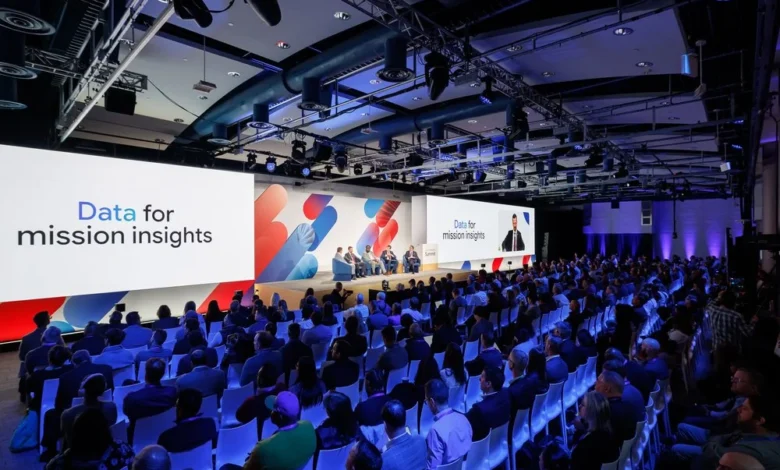
More than 2,700 government leaders, technology innovators, and industry partners gathered in Washington, D.C., for the annual Google Public Sector Summit, a two-day event centered on the theme "Where mission meets moonshot." The conference highlighted the emergence of the agentic era—a paradigm shift where autonomous artificial intelligence agents drive institutional productivity, accelerate public innovation, and fundamentally reshape how government services and educational programs are delivered to citizens.
Against a backdrop of evolving technological capabilities and increasing demands for secure, scalable digital infrastructure, the summit served as a collaborative crucible. Public sector officials, defense experts, and cloud computing specialists convened to discuss how advanced artificial intelligence can transition from theoretical ambition to measurable, real-world mission outcomes.

Main Facts and Strategic Announcements
The summit opened with high-level keynote addresses that established the strategic
trajectory for government technology integration. Karen Dahut, CEO of Google Public Sector, took the stage during the morning keynote to unpack the central theme of the event. Dahut emphasized the necessity of bold leadership, intentional workforce development, and scalable implementation, highlighting ongoing collaborations between Google and high-profile public institutions. Organizations such as NASA, the National Oceanic and Atmospheric Administration (NOAA), the Department of War, the Department of Energy, the State of Connecticut, the U.S. Army, and Case Western Reserve University are actively partnering with Google to operationalize agentic capabilities within their respective domains.
Building upon this vision, Thomas Kurian, CEO of Google Cloud, detailed the latest enterprise-grade innovations integrated into Google’s secure technology stack. Kurian focused heavily on Gemini for government services, a suite purpose-built to address the stringent security, compliance, and functional requirements of public sector missions.

Furthermore, Kurian announced major security and deployment updates. Among them was the integration of the Wiz Red, Green, and Blue agents into Wiz for Gov—operating within Wiz’s FedRAMP Class D High-certified environment. This integration addresses critical compliance benchmarks required for federal agencies handling sensitive workloads. Kurian also outlined how Google is introducing enterprise search capabilities to Gemini on Google Distributed Cloud, providing robust artificial intelligence search functionality for air-gapped deployments where cloud connectivity is strictly prohibited or restricted.
Chris Hein, Field CTO of Google Public Sector, complemented these announcements with a live product demonstration, illustrating the practical applications of Google’s technology stack. The demonstration offered attendees a tangible look at how multi-agent coordination can streamline complex bureaucratic and operational workflows.
Chronology of Event Programming and Specialized Tracks
The two-day summit was structured to provide comprehensive coverage of public sector challenges, moving from foundational cloud infrastructure to specialized national security applications and hands-on technical workshops.

Day One: Visionary Keynotes and Cloud Talks
The first day established the macro-level themes of the conference, featuring keynotes from Google executives and prominent federal leaders. Michael P. Duffey, Under Secretary of War for Acquisition and Sustainment, and Ed Forst, Administrator for the General Services Administration, delivered remarks detailing how their respective agencies are deploying emerging technologies to modernize legacy systems, streamline procurement, and fortify national infrastructure.
Following the general sessions, Elizabeth Moon, Managing Director of Customer Engineering for Google Public Sector, hosted the Cloud Talks series. This dedicated programming explored critical pillars of public sector modernization through specialized presentations:
- Infrastructure for the Agentic Era: Led by Rich Sanzi, Vice President and General Manager for Accelerated Computing Systems at Google Cloud, focusing on the hardware and architectural requirements necessary to power heavy artificial intelligence workloads.
- Building Safely with Google’s Agentic Capabilities: Presented by Michael Gerstenhaber, Vice President of Product Management for Gemini, addressing safety protocols, guardrails, and secure deployment methodologies.
- Proactive Defense at Planet-Scale: Delivered by Sandra Joyce, Vice President of Google Threat Intelligence, detailing cybersecurity strategies, threat detection, and resilience mechanisms in the face of sophisticated state-sponsored and criminal cyber campaigns.
Day Two: Breakout Panels, Partner Connect, and Interactive Labs
The second day shifted toward peer-to-peer collaboration, practical implementation, and specialized national security discussions. Google Public Sector leaders Ron Bushar, Tony Orlando, and Elizabeth Moon hosted interactive breakout panels featuring dozens of customer and partner speakers. These sessions explored niche operational topics, including tokenomics, cloud migration strategies, compliance frameworks, and the application of artificial intelligence in scientific research and healthcare delivery.

Through the Partner Connect initiative, Google underscored the vital role of its partner ecosystem in driving frontline adoption. Executives shared expanded investment strategies designed to empower partners with the tools, training, and resources required to accelerate mission delivery across federal, state, and local agencies.
The interactive showfloor centerpiece, known as the Mission Exchange, served as an experiential hub for attendees. The space featured a flagship Emergency Response Simulation that demonstrated multi-agent coordination in real time. Additionally, experts hosted 19 lightning talks and technical hands-on labs—including "Getting Started with Gemini" and "Build Gemini Agents: From Prompt to Prototype"—allowing participants to construct functional, mission-ready agents directly within the Google Cloud environment.
Supporting Data and Institutional Participation
The scale of the 2026 summit reflects the rapidly accelerating adoption of cloud and artificial intelligence technologies across government institutions. With more than 2,700 participants, the event brought together a diverse cross-section of the public sector economy:

- Federal and Defense Agencies: High-level representation from defense, intelligence, and civilian agencies focusing on national security, data interoperability, and logistics.
- State and Local Governments: Officials addressing citizen services, digital voting infrastructure, and state-level administrative efficiency.
- Higher Education: Research institutions leveraging cloud computing for complex scientific simulations and academic innovation.
- Industry Partners: System integrators, software vendors, and cybersecurity firms collaborating within the FedRAMP-authorized ecosystem.
The inclusion of leaders from diverse sectors underscores a broader trend: public institutions are moving past exploratory discussions regarding artificial intelligence and are actively committing capital, personnel, and institutional focus toward enterprise-wide deployments.
Official Responses and Perspectives
Throughout the summit, participating leaders emphasized that the successful integration of advanced technology relies as much on cultural transformation and visionary thinking as it does on software and hardware.
During the closing session, titled "What’s your moonshot?", Karen Dahut moderated a panel featuring Adam McCarthy of The White House, Laura Baker of the New York State Board of Elections, and Barry J. Schindler of the United States Patent and Trademark Office (USPTO). The panel examined practical strategies for fostering a culture of courageous problem-solving within bureaucratic institutions. Panelists discussed how public sector organizations can overcome risk aversion, leverage modern tools to supercharge public service ingenuity, and maintain operational resilience.

"Answering this question will require bold leadership, ambition, and courage," Dahut remarked during her closing address, reflecting on the summit’s central query regarding organizational moonshots. "It will require partnership and collaboration across teams and organizations; and technology that can help amplify capacity and potential. Leading in the agentic era means being comfortable with stepping into the unknown."
Broader Impact and Industry Implications
The announcements and discussions at the Google Public Sector Summit 2026 carry significant implications for the future of government technology procurement and operational execution.
As federal and state agencies face mounting pressures to secure critical infrastructure, protect sensitive data against sophisticated cyber threats, and meet rising public expectations for digital-first government services, the shift toward agentic artificial intelligence represents a structural evolution. By deploying FedRAMP-certified environments like Wiz for Gov and air-gapped enterprise search solutions via Google Distributed Cloud, technology providers are actively bridging the gap between rigorous government security standards and cutting-edge artificial intelligence innovation.

Ultimately, the consensus emerging from Washington, D.C., is that the success of the agentic era in the public sector will not be measured solely by the raw capabilities of underlying algorithms, but by the intentionality, security, and collaborative framework with which public institutions choose to deploy them. As agencies look toward the remainder of the decade, events like the Google Public Sector Summit provide a vital roadmap for turning audacious technological aspirations into tangible public value.