Kiro Launches Agentic Engineering Platform to Replace Fragmented AI Workflows with Persistent Long-Running Bots

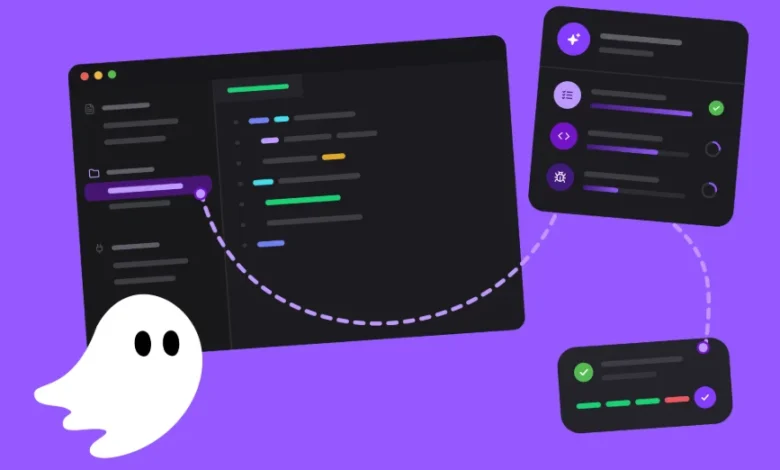
In a significant pivot for the software development industry, Kiro has announced the general availability of Kiro bots within its Kiro Crew platform. This development marks a transition from the industry-standard paradigm of "chat-based" AI interaction—which typically relies on ephemeral, short-lived sessions—toward a model of persistent, goal-oriented agentic workflows. By deploying named, long-running artificial intelligence agents, Kiro aims to solve the persistent issue of context fragmentation that has plagued engineering teams since the initial explosion of generative AI coding tools.
The Problem of Context Fragmentation
For the past two years, the standard developer experience with AI has been defined by the "session-based" model. A typical software engineer’s morning often begins with the initialization of multiple, parallel AI chat threads. One session might be tasked with refactoring a legacy authentication module, another with investigating a series of flaky integration tests, and a third with drafting database migration scripts.
While this allows for parallel processing, it introduces a severe "coordination tax." Engineers are frequently forced to manually bridge the gap between these sessions. If an AI session stalls due to an expired authentication token, a missing directory permission, or a misunderstood architectural requirement, the engineer must intervene to reset the context. Furthermore, because these sessions are isolated, they lack "tribal knowledge" of the broader codebase; the agent working on the database migration is often unaware of the changes being implemented by the agent refactoring the authentication module.
Industry data suggests that developers now spend nearly 30% of their AI-assisted coding time performing "context management"—re-explaining project parameters, re-linking documentation, and manually consolidating results from disjointed AI responses. Kiro’s introduction of persistent bots seeks to reclaim this lost productivity.
Evolution of the Kiro Platform: A Chronology
The release of Kiro Crew follows a rapid cycle of development that began in early 2026. The initial beta phase focused on "spec-driven development," where the platform demonstrated an ability to turn natural language requirements into functional code blocks.
- Q1 2026: Kiro introduces its core engine, focusing on high-accuracy code generation for enterprise-grade repositories.
- Q2 2026: The company implements "workspace awareness," allowing the AI to scan entire repositories rather than single files.
- Q3 2026: Kiro launches its initial "agentic" framework, allowing for multi-step task execution.
- November 2026: The official launch of Kiro Crew and Kiro bots, moving the platform into a persistent, multi-agent architecture.
This trajectory reflects a broader trend in the software engineering sector: the movement away from "copilot" models, where AI acts as a suggestion engine, toward "agentic" models, where AI acts as an autonomous participant in the software development lifecycle (SDLC).
Architecture and Operational Mechanics
The Kiro bot architecture represents a departure from traditional Large Language Model (LLM) interfaces. Instead of relying on a single chat window, each bot acts as a specialized agent with a dedicated workspace, a unique identity (avatar and name), and a persistent memory store.
The mechanism works through a hierarchical delegation system. When an engineer assigns a complex, high-level task to a bot, the bot does not simply output code. Instead, it breaks the task into sub-tasks, spawns secondary worker sessions, monitors the execution of those workers, and performs quality assurance checks against the codebase. If a worker session drifts from the objective or encounters a blocking error, the primary bot intervenes to redirect the flow or escalate the issue to the human developer.
This capability is supported by "inspectable notes." Unlike black-box AI sessions, Kiro bots maintain a running ledger of their reasoning. Engineers can open a bot’s workspace to view not just the current code status, but the "thought process" behind previous decisions. This transparency is critical for enterprise security and auditability, allowing teams to verify why a specific refactoring decision was made during a 3:00 AM automated run.

Scoped Permissions and Security Controls
One of the primary concerns for organizations adopting agentic AI is the risk of autonomous agents taking unauthorized actions. Kiro addresses this by implementing a "scoped permission" model. Each bot is restricted to specific branches, directories, or API keys defined by the engineering team.
Furthermore, the isolation of memory ensures that a "Database Optimization Bot" does not leak sensitive information or environment variables to a "Documentation Bot." By creating "crews" of specialized bots, organizations can delegate authority based on the principle of least privilege. A Junior Developer might have access to a "Testing Bot" that can run unit tests and report results, while only Senior Architects might have access to a "Migration Bot" capable of executing structural database changes.
Broader Industry Implications
The implications of this shift are profound for both the role of the software engineer and the structure of development teams. As agents become capable of handling long-running, asynchronous tasks, the role of the developer is increasingly moving toward that of an "engineering manager for AI."
According to industry analysts, the transition to agentic workflows may redefine the "on-call" rotation. If a bot can be tasked with monitoring logs, identifying root causes, and drafting pull requests for hotfixes overnight, the human burden for emergency incident response could be significantly reduced. Kiro’s scheduling feature, which allows bots to wake up, inspect CI/CD failures, and prepare reports, provides a concrete step toward this "autonomous operations" vision.
However, this transition also raises questions about technical debt and quality control. If a bot is responsible for long-term architectural maintenance, how does the organization ensure that the AI’s "learning" doesn’t drift from the company’s evolving standards? Kiro’s emphasis on "inspectable notes" and human-in-the-loop triggers is clearly intended to mitigate this risk, ensuring that the developer remains the final authority on code quality.
Reactions and Market Outlook
While official statements from competing platforms (such as GitHub Copilot or Cursor) have been guarded, the industry consensus is that Kiro has raised the bar for what constitutes a "productive" AI tool. By shifting the focus from "code completion" to "task completion," Kiro is positioning itself as a platform that doesn’t just write code, but manages projects.
"The move to persistent agents is the logical next step for developer tooling," said one senior software architect familiar with the platform’s beta testing. "We have moved past the novelty of having an AI write a function. We now need an AI that can remember that we decided to switch from SQL to NoSQL three weeks ago and apply that context to every subsequent task."
The shift toward Kiro Crew indicates that the next phase of the AI gold rush will not be defined by model size or parameter count, but by the sophistication of the agentic frameworks that wrap these models. As developers continue to integrate these tools into their daily routines, the ability to manage a "crew" of digital assistants may soon become a core competency for modern software engineering teams.
For organizations currently struggling with the "context tax" of existing tools, Kiro offers a compelling value proposition: an environment where the agent does not just provide an answer and disappear, but stays, learns, and builds. As the platform evolves, the industry will be watching closely to see if this model of persistent, agentic teamwork successfully scales across larger, more complex, and more sensitive enterprise codebases.
Developers interested in testing the platform can configure their first bots at kiro.dev/crew, marking the beginning of what may well be the next era of collaborative, automated software development.
Related posts: