Apple HomeView receives urgent security update ahead of retail launch as Cupertino addresses critical vulnerabilities

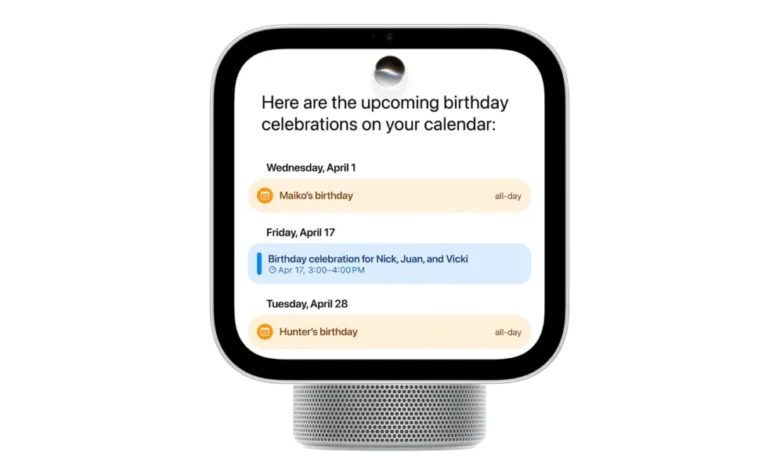
Apple has initiated a critical software intervention for its highly anticipated HomeView smart display, issuing a mandatory update to version 27.2 (build 24V526) just hours before the device reaches its first wave of customers. This preemptive security measure addresses nine distinct vulnerabilities, some of which could have potentially compromised user privacy and device integrity from the moment of activation. As Apple expands its ecosystem with the HomeView—a device designed to serve as the central hub for modern smart homes—the importance of a secure, "out-of-the-box" experience has never been more paramount.
The release of HomeView Software Version 27.2 aligns the new hardware with the security patches recently rolled out across Apple’s broader software ecosystem, including iOS 27.2, iPadOS 27.2, and the macOS 27.2 Golden Gate release. By synchronizing these updates, Apple is attempting to ensure that its new smart display benefits from the same rigorous security infrastructure that protects its mobile and desktop devices. For consumers picking up their units on launch day, performing this update is not merely recommended—it is a critical step in ensuring the device remains resilient against potential bad actors.
A Timeline of the Pre-Launch Security Push
The development of the Apple HomeView has been marked by a rigorous testing cycle, but the discovery of these nine vulnerabilities highlights the persistent challenges of securing interconnected IoT (Internet of Things) hardware. The timeline leading up to this release underscores Apple’s commitment to addressing security threats before they reach the consumer’s home.
In the weeks leading up to the November 13, 2026, launch date, Apple’s internal security teams and external contributors identified a series of flaws within the HomeView’s operating system. The most critical of these involved the device’s communication protocols, specifically Bluetooth and iMessage integration. By November 12, the final build—24V526—was finalized and deployed to servers to ensure that as soon as the HomeView devices were powered on and connected to a Wi-Fi network, they could pull down the necessary protections.
This rapid-response strategy reflects a shift in how hardware manufacturers handle "Day Zero" vulnerabilities. Historically, smart home devices have been criticized for shipping with unpatched firmware, leaving them susceptible to exploitation during their initial setup phase. By pushing this update immediately, Apple is attempting to mitigate the risk window that typically exists between a device leaving the factory and reaching the consumer’s living room.

Technical Breakdown: Addressing Critical Vulnerabilities
The security content of HomeView Software Version 27.2 is extensive, covering everything from memory corruption to unauthorized data access. Among the most concerning vulnerabilities addressed are those related to Bluetooth and iMessage.
Bluetooth and Connectivity Security
Several of the patches focus on the device’s Bluetooth stack, which is essential for pairing with other smart home accessories. CVE-2026-113965 and CVE-2026-113964 detail scenarios where a malicious Bluetooth device could bypass rate limits on pairing codes or force a connection without explicit user interaction. By improving state management and tightening pairing checks, Apple has effectively neutralized the ability for unauthorized devices to hijack or "spoof" their way into a user’s HomeView network.
Furthermore, CVE-2026-113970 addresses a "use-after-free" memory management flaw, which could have allowed an attacker within Bluetooth range to corrupt process memory. Such vulnerabilities are typically high-priority targets for attackers looking to gain elevated privileges on a device.
iMessage and Messaging Integrity
Perhaps the most notable vulnerabilities involve the device’s messaging capabilities. CVE-2026-113961 and CVE-2026-113960 identify flaws that could have allowed an unauthorized remote attacker to join an iMessage group chat and access historical messages. This was largely due to authorization issues and poor validation of group membership. By removing the vulnerable code and implementing more robust authorization checks, Apple has ensured that the HomeView’s communication features remain private and secure.
System-Level Protections
Additional patches cover App Intents—where authorization issues previously allowed apps to access sensitive user data—and brotli compression, which was found to have an out-of-bounds write issue that could lead to memory corruption. These system-level fixes demonstrate the complexity of modern smart displays, which function as miniature computers running a sophisticated, multi-layered operating system.
Implications for the Smart Home Market
The security of a smart display is fundamentally tied to the trust a user places in the device. Because the HomeView is designed to be placed in central locations—kitchens, bedrooms, and offices—it is uniquely positioned to gather vast amounts of data, from calendar events to home security feeds.

Industry analysts note that as Apple enters the smart display market, its greatest advantage is its reputation for privacy and security. However, this also makes its devices high-value targets for security researchers and malicious actors alike. The disclosure of nine vulnerabilities on day one is a double-edged sword: while it highlights the risks inherent in the device, it also demonstrates Apple’s transparency and its ability to respond to threats in real-time.
"The challenge with hardware like the HomeView is that it’s essentially a gateway into the rest of the home," explains one industry consultant specializing in IoT security. "If the display is compromised, the attacker isn’t just getting access to a screen; they are potentially getting access to smart locks, garage doors, and sensitive personal data. Apple’s decision to issue this update immediately is a necessary acknowledgment that they are moving into a space where the stakes for failure are significantly higher than they are with a standard tablet."
Future Updates and the Evolution of Siri AI
While the current update focuses on hardening the system, Apple has already signaled that further functional improvements are on the horizon. In a move that has sparked some debate, Apple confirmed that the HomeView’s current version of Siri lacks the capability to unlock smart doors or open garage doors via voice command. This limitation is reportedly intentional, serving as a "security sandbox" during the initial phase of the device’s release.
Apple has indicated that a follow-up software update, expected to arrive next month, will introduce support for these high-security accessories. This staggered rollout approach suggests that Apple is prioritizing the stabilization of the core operating system before enabling potentially high-risk features. By restricting the ability to control entry points to the home, Apple is giving itself a "buffer" to ensure that the integration is airtight before granting Siri full control over physical security measures.
User Recommendations for Launch Day
For customers receiving their HomeView units, the setup process will be the primary defense mechanism. Upon powering on the device for the first time, users will be prompted through a setup flow that includes a mandatory check for system updates. It is imperative that users do not skip this step.
The update process for the HomeView is automated, but it requires a stable Wi-Fi connection. Given the critical nature of the vulnerabilities resolved in version 27.2, users are advised to ensure the update reaches 100% completion before attempting to configure their smart home devices or connect their Apple IDs.

Broader Context: The State of Consumer IoT Security
The launch of the HomeView comes at a time when global regulators are increasingly scrutinizing the security standards of IoT manufacturers. Legislation in the European Union and the United States has begun to demand higher levels of transparency regarding the "security lifecycle" of connected devices. Apple’s proactive disclosure of these CVEs (Common Vulnerabilities and Exposures) aligns with these evolving expectations.
By providing clear documentation of the vulnerabilities—and identifying the researchers involved, including anonymous contributors and internal teams—Apple is participating in the standard security disclosure practices that characterize professional software development. This transparency is vital for maintaining the confidence of the enterprise and consumer markets alike.
As the HomeView begins its journey in homes worldwide, it will undoubtedly undergo continuous scrutiny. The success of the device will be measured not just by its screen quality or the responsiveness of its Siri integration, but by its ability to remain a secure, private, and reliable member of the Apple ecosystem. The swift action taken by the company on the eve of the launch serves as a clear indication that Apple understands the weight of the responsibility it has assumed in the smart home arena. Whether these early patches will be sufficient to deter future threats remains to be seen, but the initial foundation appears to be built on a commitment to iterative improvement and rigorous security oversight.