Openreach Issues Final Warning to Businesses Ahead of the January 2027 ISDN and PSTN Switch-off

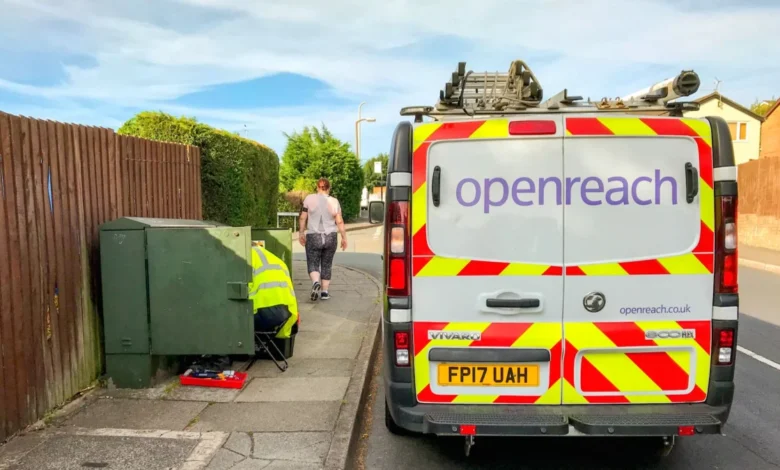
The United Kingdom’s telecommunications infrastructure is currently undergoing its most significant transformation in decades as the industry prepares for the total retirement of the legacy Public Switched Telephone Network (PSTN) and Integrated Services Digital Network (ISDN). Openreach, the infrastructure division of BT Group, has issued a final, urgent advisory to the business community, warning that the deadline of 31 January 2027 represents a definitive end-point for these aging technologies. With approximately 44,000 active ISDN and PSTN Multiline services still currently operational across the country, the potential for service disruption is substantial if organizations fail to finalize their transition to modern, digital-first alternatives before the clock runs out.
The End of an Era: Understanding the Switch-off
The PSTN has served as the backbone of UK communications since the late 19th century, utilizing copper-based analog signals to transmit voice and data. ISDN, introduced in the late 1980s, allowed for the simultaneous transmission of voice and data over digital lines, becoming the industry standard for business switchboards, alarm systems, and high-capacity communication hubs. However, these systems are now considered obsolete, plagued by high maintenance costs, difficulty in sourcing replacement components, and an inability to support the bandwidth requirements of the modern digital economy.
The transition to All-IP (Internet Protocol) networks is not merely an upgrade; it is a fundamental shift in how the nation connects. By moving to Voice over Internet Protocol (VoIP) and fiber-based connectivity, businesses gain access to more reliable, scalable, and secure communication channels. Despite this, the inertia of legacy systems—often hidden deep within physical infrastructure like plant rooms or older office switchboards—poses a significant risk to continuity.
A Chronology of the Migration
The roadmap to the 2027 switch-off has been a long-term strategic initiative, signaled years in advance to allow for a phased withdrawal.
- 2015-2018: Initial Strategy: Openreach begins signaling the intent to retire copper-based services as fiber-to-the-premises (FTTP) rollouts gain momentum.
- 2020: The "Stop Sell" Policy: Openreach implements a "stop sell" policy on new PSTN and ISDN connections in areas where fiber broadband is available. This effectively halted the expansion of legacy services.
- 2023-2025: Intensive Education Campaigns: Recognizing that many organizations were unaware of the specific hardware impacted, the telecoms provider accelerated its outreach, focusing on critical national infrastructure (CNI) providers.
- 2026: The Final Push: With less than a year remaining, the focus has shifted to the "long tail" of legacy users who have yet to migrate, characterized by complex installations and deep-rooted dependencies.
- 31 January 2027: The absolute, non-negotiable sunset date for PSTN and ISDN services.
The Peril of Hidden Dependencies
One of the most significant challenges identified by James Lilley, director of customer migrations at Openreach, is the issue of "hidden" equipment. Many businesses are unaware that their fire alarms, lift emergency call buttons, door entry systems, and point-of-sale terminals rely on these legacy copper lines.
"Time is running out," Lilley remarked in the recent advisory. "The risk is that an old line buried in a switchboard, plant room, or communications cupboard is overlooked because nobody realizes what still depends on it. These services will not simply carry on working after the old network closes. If a connection supports an alarm, emergency call point, monitoring system, or critical switchboard, the consequences of losing it could be serious."
This warning highlights the necessity of a comprehensive audit. IT and facilities management teams, which often operate in silos, must collaborate to map every physical line to its respective hardware. Failure to do so could result in the sudden failure of safety-critical systems, which for schools, hospitals, and emergency services, would be a catastrophic operational failure.
The Last-Resort Safety Net: EVAc
Acknowledging the potential for critical service failure, Openreach has introduced the Emergency Voice Access (EVAc) service. This is a limited, last-resort telephony product designed to provide a basic, low-bandwidth voice connection for essential services that may have been missed during the mass migration.
However, there is a critical caveat: EVAc is not a direct replacement for ISDN or traditional Multiline services. It is technically incompatible with the complex signaling used by legacy PBX (Private Branch Exchange) switchboards. Therefore, businesses that attempt to rely on this as a fallback rather than migrating to a proper digital solution will find their advanced telephony features non-functional, rendering their switchboards essentially dead.
Case Study: The Fire and Rescue Service
The complexity of this migration is best illustrated by the experience of the UK Fire and Rescue Service. As a high-stakes emergency response organization, their reliance on ISDN for 999 call handling necessitated a meticulous approach.
Keith Donnelly, assistant chief fire officer at the Ministry of Housing, Communities and Local Government, described the process as a six-year, multi-stage project. The service had to identify and migrate over 5,000 individual lines. The success of this transition, which has served as a benchmark for other public sector organizations, relied on rigorous testing and a phased approach to ensure that the shift from copper to digital did not result in even a single second of downtime during the cut-over. The key takeaway from this successful implementation is that organizations should not view the switch-off as a simple "plug-and-play" task but as a comprehensive infrastructure project.
Strategic Implications and Economic Impact
The forced transition to digital infrastructure carries broader economic implications. While the upfront costs of replacing legacy equipment and upgrading internal networks can be significant, the long-term benefits are substantial. Digital telephony allows for seamless integration with cloud-based CRM systems, improved voice quality, and the ability to scale capacity instantly without the need for physical line installation.
Furthermore, the retirement of the copper network allows for the decommissioning of vast amounts of energy-intensive legacy exchange equipment, contributing to the UK’s broader sustainability goals. By reducing the physical footprint of the telephony network, the telecoms industry can focus resources on maintaining high-speed fiber-optic connectivity, which is essential for the modern, AI-driven workplace.
However, the "complexity" noted by Openreach is a significant barrier for small-to-medium enterprises (SMEs). Without the internal IT resources of a large government body, many SMEs are at risk of being caught off-guard. Industry analysts suggest that businesses should immediately engage with their communications service providers to obtain a list of all active lines and conduct a "line-by-line" audit to determine if the equipment connected to them is IP-ready.
Recommendations for Business Continuity
To navigate the remaining months before the 31 January 2027 deadline, organizations are encouraged to follow a structured transition plan:
- Immediate Audit: Map every copper-based connection in the building. Do not ignore "silent" lines, as these are often used for security, alarms, or lift monitoring.
- Vendor Coordination: Contact your communications provider and, if applicable, your equipment supplier (e.g., security alarm provider, lift maintenance company) to verify the compatibility of your current hardware with digital services.
- Risk Assessment: Prioritize the migration of lines that support life-safety systems or critical business operations.
- Phased Migration: Rather than waiting until January 2027, implement a phased cut-over. This allows for troubleshooting and testing in a live environment without the risk of a total system failure.
- Staff Training: Ensure that staff are trained on the new digital systems, as the transition may involve changes to how calls are handled, transferred, or recorded.
As the final countdown begins, the mandate from Openreach is clear: inaction is the greatest risk to business continuity. The PSTN switch-off is an inevitable modernization of the UK’s communication foundation, and the organizations that treat this as a priority today will be the ones that avoid the operational paralysis of tomorrow. The time for evaluation has passed; the time for implementation is now.