Pixel Watch 5 Leak Reveals Familiar Hardware Architecture with Significant Memory Upgrade for Gemini Integration

The Google Pixel Watch 5 is poised to maintain the aesthetic legacy of its predecessors while introducing a strategic internal pivot toward artificial intelligence, according to recent leaks originating from the Google Play Console. The device, identified by the internal codename "godric," appears to be a refinement of the existing hardware platform rather than a radical architectural departure. This development suggests that Google is prioritizing software optimization and on-device AI capabilities over raw processing cycles, a move that aligns with the broader industry trend of integrating large language models into compact wearable technology.
The Godric Codenamed Leak: Familiar Silicon in a New Shell
The Google Play Console listing serves as a definitive source for upcoming Android-ecosystem hardware, and the "godric" entry provides a comprehensive look at what to expect from the fifth-generation Pixel Watch. The most striking revelation is the continued utilization of the Qualcomm SW5100 platform. This chipset has served as the backbone for the Pixel Watch 2, 3, and 4, marking a rare instance of a major tech manufacturer utilizing the same base silicon for four consecutive hardware generations.
The SW5100, better known as the Snapdragon W5 Gen 1 architecture, is built on a 4nm process. While the Pixel Watch 4 saw a slight variation with the Snapdragon W5 Gen 2—primarily to accommodate Satellite SOS features and an upgraded ARM Cortex-M55 co-processor—the core CPU and GPU components remain remarkably consistent. The leaked specifications for the Pixel Watch 5 indicate that the CPU configuration remains unchanged from the previous year, featuring the same quad-core arrangement that has powered Google’s wearable lineup since the significant jump from the original Pixel Watch’s aging Exynos 9110.
A Strategic Leap in Memory Capacity
While the processor remains a known quantity, Google is making a significant change to the device’s memory architecture. For the first time since the inception of the Pixel Watch line, the RAM is being upgraded from 2 GB to 3 GB. This 50% increase in system memory is the most substantial internal hardware change noted in the Play Console listing.

Industry analysts suggest that this memory bump is not merely for general performance smoothness but is a prerequisite for "Gemini Intelligence." As Google continues to integrate its Gemini AI suite across its hardware portfolio, the demands on system memory have increased. On-device AI processing, even for lightweight tasks such as smart replies, health data synthesis, and voice assistant interactions, requires a larger memory buffer to maintain low latency and prevent background tasks from being killed by the operating system.
By moving to 3 GB of RAM, the Pixel Watch 5 effectively leapfrogs its primary competitor, the Samsung Galaxy Watch 9, which continues to utilize 2 GB of RAM despite having a more advanced 3nm processor. This suggests a divergence in philosophy: Samsung is focusing on transistor density and power efficiency through its 3nm Snapdragon Wear Elite, while Google is focusing on the "headroom" required for sophisticated software features.
Chronology of the Pixel Watch Hardware Evolution
To understand the significance of the Pixel Watch 5’s specifications, one must look at the trajectory of the series since its debut in 2022:
- Pixel Watch (2022): Launched with an aging 10nm Exynos 9110 processor and 2 GB of RAM. It relied heavily on a Cortex-M33 co-processor to manage battery life.
- Pixel Watch 2 (2023): A major leap forward, switching to the 4nm Qualcomm Snapdragon W5 Gen 1 (SW5100). This moved the series to a modern architecture, significantly improving battery life and performance while maintaining 2 GB of RAM.
- Pixel Watch 3 (2024): Maintained the W5 Gen 1 platform but introduced a larger 45mm size option and improved display brightness (Actua Display).
- Pixel Watch 4 (2025): Utilized the Snapdragon W5 Gen 2, which introduced support for Satellite SOS and upgraded the co-processor to the ARM Cortex-M55 for better always-on display efficiency. RAM remained at 2 GB.
- Pixel Watch 5 (2026): Returns to the base SW5100 platform but increases RAM to 3 GB and introduces the "godric" internal designation.
This timeline highlights a stabilization of the hardware platform. Once Google found a reliable and efficient chip in the W5 series, it chose to focus on incremental improvements to the peripheral sensors, display technology, and now, the memory capacity required for AI.
The Design Continuity and "Neural Expressive" Language
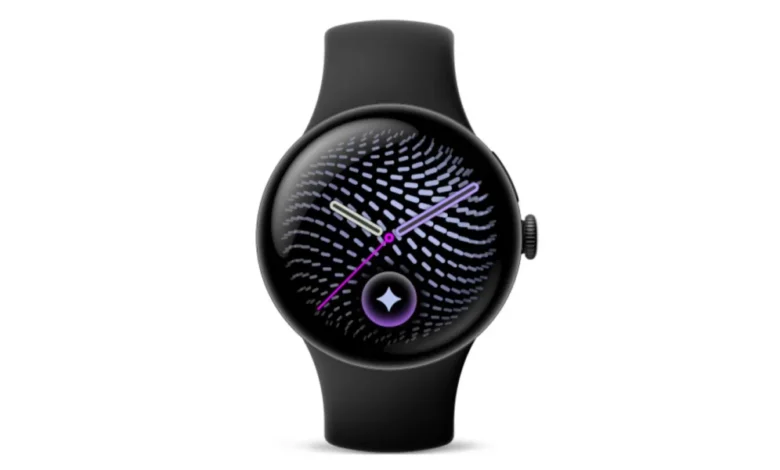
Visually, the Pixel Watch 5 is expected to be indistinguishable from the Pixel Watch 4 and Pixel Watch 3. The leaked images from the Play Console confirm the retention of the domed glass aesthetic and the haptic crown. Google appears to be following the design philosophy popularized by the Apple Watch, where the external chassis remains consistent for several years to build brand identity and ensure compatibility with existing watch bands.
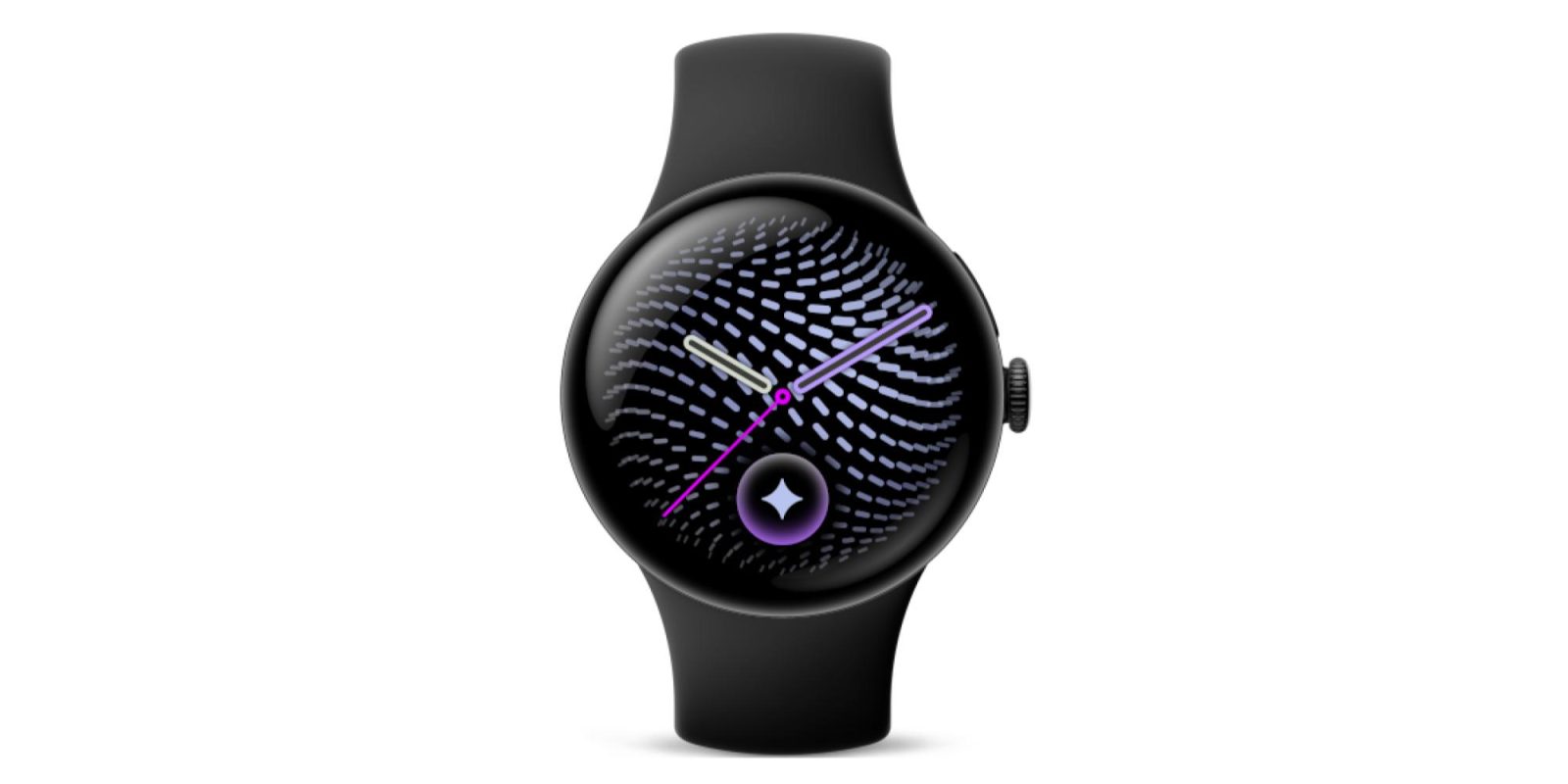
However, the software interface is receiving a visual refresh. The listing showcases a new analog watch face that utilizes Gemini’s "Neural Expressive" design language. This design style is characterized by fluid animations, organic shapes, and a color palette that shifts based on context or user activity. The "Neural Expressive" face is more than just an aesthetic choice; it serves as a visual indicator of the watch’s deep integration with Google’s AI ecosystem.
Comparative Analysis: Google vs. Samsung
The wearable market in 2026 is defined by the rivalry between the Pixel Watch and the Galaxy Watch. The leaked specs of the Pixel Watch 5 highlight a fascinating contrast in engineering priorities.
- Samsung Galaxy Watch 9: Utilizes the Snapdragon Wear Elite, a 3nm chip featuring 1x Cortex-A78 high-performance core and 4x Cortex-A55 efficiency cores. This chip is objectively more powerful and power-efficient than the SW5100. However, Samsung has opted to stay at 2 GB of RAM.
- Google Pixel Watch 5: Utilizes the older 4nm SW5100 platform but compensates with 3 GB of RAM.
The implication is that Google believes Wear OS 6 (or the contemporary version of the OS) performs better with more memory "breathing room" rather than a faster raw processor. For the end-user, this may result in the Pixel Watch 5 feeling more responsive when switching between complex apps or using the Gemini assistant, even if the Galaxy Watch 9 technically has a higher peak processing capability.
Implications for the Wearable Ecosystem
The decision to reuse the SW5100 platform carries several implications for both Google and the consumer. First, it suggests a plateau in wearable silicon development. While mobile phone processors continue to make annual leaps, the constraints of a smartwatch—thermal management and battery size—limit the practical benefits of high-performance cores. By sticking with a known platform, Google can focus its engineering resources on software optimization and battery longevity.
Second, the 3 GB RAM upgrade sets a new benchmark for premium Android wearables. As AI becomes a central selling point for mobile devices, other manufacturers may be forced to follow suit, potentially ending the 2 GB standard that has dominated the market for years.

Finally, the focus on "Gemini Intelligence" suggests that the Pixel Watch 5 will be marketed as a proactive companion rather than a reactive notification center. With more RAM, the device can likely handle more complex health algorithms and "Proactive Intelligence" features—such as predicting fatigue levels or offering more nuanced workout coaching—without needing to offload all processing to a tethered smartphone.
Official Responses and Market Expectations
Google has not officially commented on the "godric" leak, maintaining its standard policy of not addressing rumors regarding unreleased hardware. However, the presence of the device in the Google Play Console is typically a sign that the product is in the final stages of certification and is nearing a commercial launch, likely alongside the next generation of Pixel smartphones.
Early reactions from the tech community are mixed. While enthusiasts often clamor for "new" silicon with every generation, pragmatists note that the Snapdragon W5 platform remains highly capable. The consensus among analysts is that if the Pixel Watch 5 can deliver two-day battery life and seamless AI integration through its upgraded RAM, the "older" processor will be a non-issue for the average consumer.
As the wearable market matures, the Pixel Watch 5 represents a shift toward maturity over novelty. Google is no longer trying to reinvent the watch with every release; instead, it is refining a successful formula, ensuring that the hardware is robust enough to support the next era of AI-driven software. The "godric" leak confirms that while the exterior may look the same, the brain of the Pixel Watch is getting a much-needed expansion to handle the future of the Google ecosystem.