AMD Unveils Rocm.ai at Advancing AI 2026 to Streamline AI Development and GPU Optimization

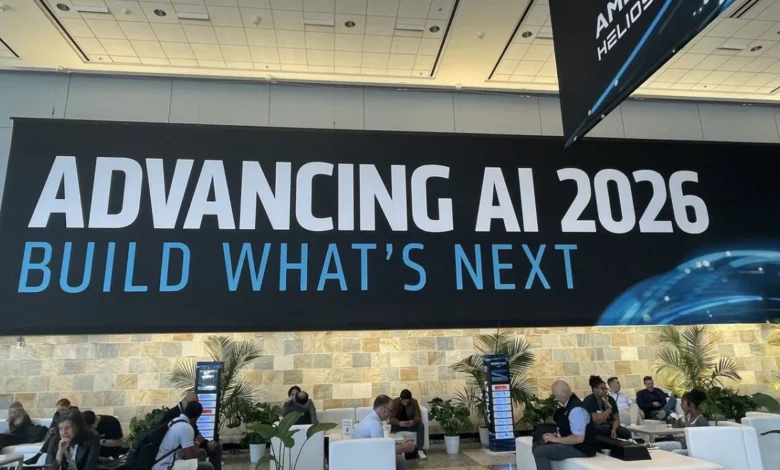
Advanced Micro Devices has officially expanded its open-source software ecosystem with the introduction of Rocm.ai, a new AI-native component of the Radeon Open Compute (ROCm) stack. Announced during the company’s annual "Advancing AI 2026" conference, the platform represents a strategic shift toward agent-driven development, designed to bridge the gap between complex hardware architectures and the rapidly evolving needs of artificial intelligence developers. By integrating AI-assisted development, intelligent deployment tools, and automated software optimization, AMD aims to lower the barrier to entry for its Instinct accelerators and Ryzen AI processors, positioning itself as a more accessible alternative to proprietary competitor stacks.
The launch of Rocm.ai comes at a critical juncture for the semiconductor industry, as the demand for high-performance computing (HPC) and generative AI continues to outpace the supply of specialized software engineers. AMD’s leadership emphasized that the future of software development is no longer purely manual; it is increasingly defined by "agentic" workflows where natural language processing and AI coding assistants handle the heavy lifting of kernel optimization and environment configuration.
The Evolution of the ROCm Software Stack
Since its inception, the ROCm (Radeon Open Compute) platform has been AMD’s primary weapon in the battle for data center dominance, specifically targeting the market share held by NVIDIA’s CUDA. Historically, ROCm was viewed as a functional but sometimes cumbersome alternative, often requiring significant manual effort to port code from other environments. However, over the last three years, AMD has invested billions into its software department to ensure parity with industry standards.
The introduction of Rocm.ai marks the "fourth era" of the stack. The first era focused on foundational support for GPU computing; the second on broad compatibility with frameworks like PyTorch and TensorFlow; the third on performance parity for large language models (LLMs); and this new fourth era focuses on "AI-native" autonomy. By automating the most tedious aspects of development, AMD is signaling that its hardware is no longer just for those with the resources to hire specialized kernel engineers, but for any developer utilizing modern AI coding tools.
The Three Pillars of Rocm.ai: CLI, Skills, and Hyperloom
AMD has structured Rocm.ai around three core technological pillars designed to address different stages of the development lifecycle. These components work in tandem to create a seamless experience from initial installation to final deployment.
1. Rocm CLI: Unified Command and Control
The Rocm Command Line Interface (CLI) serves as the centralized hub for managing AI workloads. In previous iterations of the software, developers often struggled with fragmented tools for installation, validation, and servicing. The new CLI provides a unified environment that automates the validation of hardware-software compatibility, handles updates without breaking dependencies, and offers advanced troubleshooting diagnostics. This is particularly vital for enterprise data centers where "downtime" during a software update can result in millions of dollars in lost compute time.
2. AMD Skills: Empowering AI Coding Agents
Perhaps the most forward-looking aspect of the announcement is "AMD Skills." Recognizing that a significant portion of modern code is written or assisted by AI models like Claude, Cursor, and Codex, AMD has developed a way to "teach" these agents the intricacies of AMD hardware.
AMD Skills integrates proprietary, expert-level knowledge into these third-party coding assistants. This ensures that when a developer asks an AI agent to "write a kernel for an AMD MI355 accelerator," the agent doesn’t hallucinate or provide generic code. Instead, it utilizes AMD-authored best practices, model recipes, and environment variables. This effectively turns popular coding agents into "ROCm superusers," reducing the need for human developers to manually crawl through thousands of pages of technical documentation.
3. Hyperloom: The Optimization Engine
Hyperloom is the performance-focused component of the suite. It is described as an AI-assisted optimization system capable of analyzing specific workloads and automatically selecting the most efficient configurations. During the keynote, Vamsi Boppana, Senior Vice President of AI at AMD, highlighted Hyperloom’s ability to adjust parallelism strategies and choose specific kernels based on the hardware’s real-time performance goals.
Boppana provided a compelling case study involving a lead developer who utilized Hyperloom to process a suite of 14,000 different AI models. Through Hyperloom’s automated optimization, the developer was able to generate valuable performance insights and optimizations that would have previously required a massive team of engineers months to complete. This level of scale suggests that AMD is moving toward a "set and forget" model for AI performance tuning.
Strategic Shift Toward Agentic Development
The philosophy behind Rocm.ai is rooted in the observation that the complexity of modern AI models—such as the hypothetical Vmax entry mentioned during the presentation—has surpassed the limits of manual human reasoning. Optimizing a model for a specific cluster of MI355 accelerators requires getting dozens of variables right simultaneously, including PLLM (Parallel Large Language Model) optimizations, memory management, and rack-level deployment strategies.
"Developers shouldn’t have to manually reason through every layer of model architecture, kernel selection, prompt strategy, and rack-level deployment," Boppana stated. "AI is transforming this experience, and that’s a very, very big shift for AMD hardware and software."
By allowing a developer to simply input a command such as "optimize Vmax entry with Hyperloom," the Rocm.ai agent takes over the expert-level tasks. It pulls a "known good" recipe, runs profiles on the workload, tests various kernel configurations, and iterates until it hits the specified performance target. This shift from "coding" to "orchestrating" is expected to significantly accelerate the time-to-market for new AI applications.
Industry Context and Competitive Landscape
The timing of the Rocm.ai announcement is no coincidence. As NVIDIA continues to hold a dominant position with its CUDA ecosystem, AMD’s strategy has been to embrace "openness" and "automation." While CUDA is a highly optimized but closed ecosystem, ROCm’s open-source nature allows for broader community contribution. However, openness alone was not enough to win over developers who prioritized ease of use.
Rocm.ai is AMD’s direct answer to the "usability gap." By making its software compatible with the tools developers are already using (like Cursor and Claude), AMD is bypassing the need for developers to "learn" a new language. Instead, the software learns the developer’s intent.
Industry analysts suggest that this could lead to an increased adoption of AMD Instinct GPUs in hyperscale data centers. If the cost of migrating a workload from NVIDIA to AMD is lowered through AI-driven automation, the "switching cost" barrier—which has long protected NVIDIA’s market share—could begin to erode.
Hardware Synergy: The MI355 and Beyond
While Rocm.ai is a software-centric announcement, its success is intrinsically tied to AMD’s hardware roadmap. The MI355 accelerator, mentioned as a primary target for these optimizations, represents AMD’s next generation of AI silicon. By launching Rocm.ai ahead of the broad availability of these chips, AMD is ensuring that the software ecosystem is "day-one ready."
The integration of Rocm.ai also extends to the "Ryzen AI" portfolio, which targets PC and edge computing. This suggests that AMD’s vision for AI-native software is not limited to the data center but spans the entire "Cloud-to-Edge" spectrum. Developers building local AI applications on a laptop can theoretically use the same "AMD Skills" and CLI tools to deploy their models to a massive cloud cluster.
Timeline and Availability
AMD has confirmed that Rocm.ai will be made available to the public starting in August 2026. Between now and the launch, the company is expected to run extensive beta programs with key enterprise partners and research institutions to refine the "AMD Skills" library.
The rollout will likely be staggered, with initial support focused on the latest generation of Instinct and Radeon Pro hardware, followed by broader support for consumer-grade GPUs and APUs. This timeline aligns with the expected ramp-up of several major AI infrastructure projects globally, positioning AMD to capture a significant portion of the next wave of capital expenditure in the AI sector.
Fact-Based Analysis of Implications
The introduction of Rocm.ai represents a pivot from "software as a tool" to "software as a collaborator." For the broader technology industry, this move signals several key trends:
- Democratization of Performance: By automating kernel optimization, AMD is making high-performance computing accessible to startups and smaller labs that lack the budget for specialized systems programmers.
- The Rise of the AI Agent: This is one of the first major examples of a hardware manufacturer officially supporting and "training" third-party AI coding agents to interact with its silicon. It sets a precedent for how hardware will be managed in the future.
- Reduced Technical Debt: The "document crawling" mentioned by AMD is a significant source of technical debt and delay. By providing a "unified" CLI and AI-assisted troubleshooting, AMD is addressing the primary complaints of the developer community regarding ROCm’s legacy versions.
As the industry moves toward 2026, the success of Rocm.ai will likely be measured by the "portability" of AI workloads. If AMD can prove that an agent can move a complex LLM from a competitor’s stack to ROCm with minimal human intervention, it may fundamentally change the competitive dynamics of the semiconductor market.
In conclusion, Rocm.ai is not just an update to a software library; it is a declaration of intent. AMD is betting that the winner of the AI era will not just be the company with the fastest chips, but the company that makes those chips the easiest to use. With a launch date set for August 2026, the tech world will be watching closely to see if this AI-native approach can finally break the software monopolies of the past.