Apple expands global accessibility with major language support updates in iOS and iPadOS 27

Apple has officially updated its comprehensive iOS and iPadOS 27 Feature Availability documentation, marking a significant expansion in the company’s efforts to localize its ecosystem for a global user base. The update confirms that over 30 new languages and regional linguistic variants have been integrated across core system features, including advanced dictionary services, Siri voice activation, and the sophisticated Visual Look Up tool. This move represents a strategic effort by the Cupertino-based technology giant to reduce the "digital divide" that often leaves non-English speaking regions with limited access to premium software functionalities.
The update to the support page provides granular detail on how these languages are distributed across various system-level features. While Apple has long maintained a robust framework for internationalization, the sheer scale of this deployment in iOS 27 suggests a concerted push to capture emerging markets and provide a more seamless user experience for bilingual or multilingual users worldwide.
Understanding the Scope of Language Integration
The enhancements are not limited to a single feature but permeate the entire user experience. Apple’s documentation highlights that the additions cover several critical areas: Dictionary definitions and thesaurus entries, QuickType Keyboard enhancements (including autocorrection and predictive typing), Siri wake-word support, and Visual Look Up.
For the average user, these changes may seem incremental, but from a software engineering perspective, they represent a monumental effort in natural language processing (NLP) and machine learning. Each language added requires a deep understanding of syntax, regional idiomatic expressions, and cultural nuances to ensure that features like autocorrect and Siri remain accurate. By expanding these features, Apple is essentially lowering the barrier to entry for users who rely on their native languages for professional and personal communication.
Chronology of Apple’s Localization Efforts
To understand the significance of this update, one must look at the historical trajectory of Apple’s operating systems. In the early iterations of iOS, support for non-English languages was largely restricted to basic interface translations. Over the last decade, however, Apple has shifted its strategy toward functional localization.
- iOS 7–10: Focused on foundational UI translation and basic keyboard support for major global languages.
- iOS 11–15: Introduced the "Intelligence" era, where Siri began to learn regional dialects, and machine learning models were deployed locally on devices to handle predictive text and autocorrect.
- iOS 16–25: Marked an era of aggressive expansion into underrepresented markets, specifically focusing on Asian, African, and Middle Eastern languages.
- iOS 27: This current iteration focuses on "Linguistic Deep Integration," where secondary features like Visual Look Up and advanced thesaurus entries are brought to parity with the English-language experience.
This progression demonstrates that Apple views language support not as a marketing checkbox, but as a critical component of its hardware value proposition. As the company expands into newer markets, the ability to offer a fully localized "Apple experience" becomes the primary driver for device adoption.
The Technical Infrastructure of Multilingual Support
The integration of over 30 new languages involves more than just translating strings of text. It requires a sophisticated backend architecture. When Apple adds a language to its QuickType Keyboard, it must develop custom language models (LMs) that can predict the user’s next word based on context.
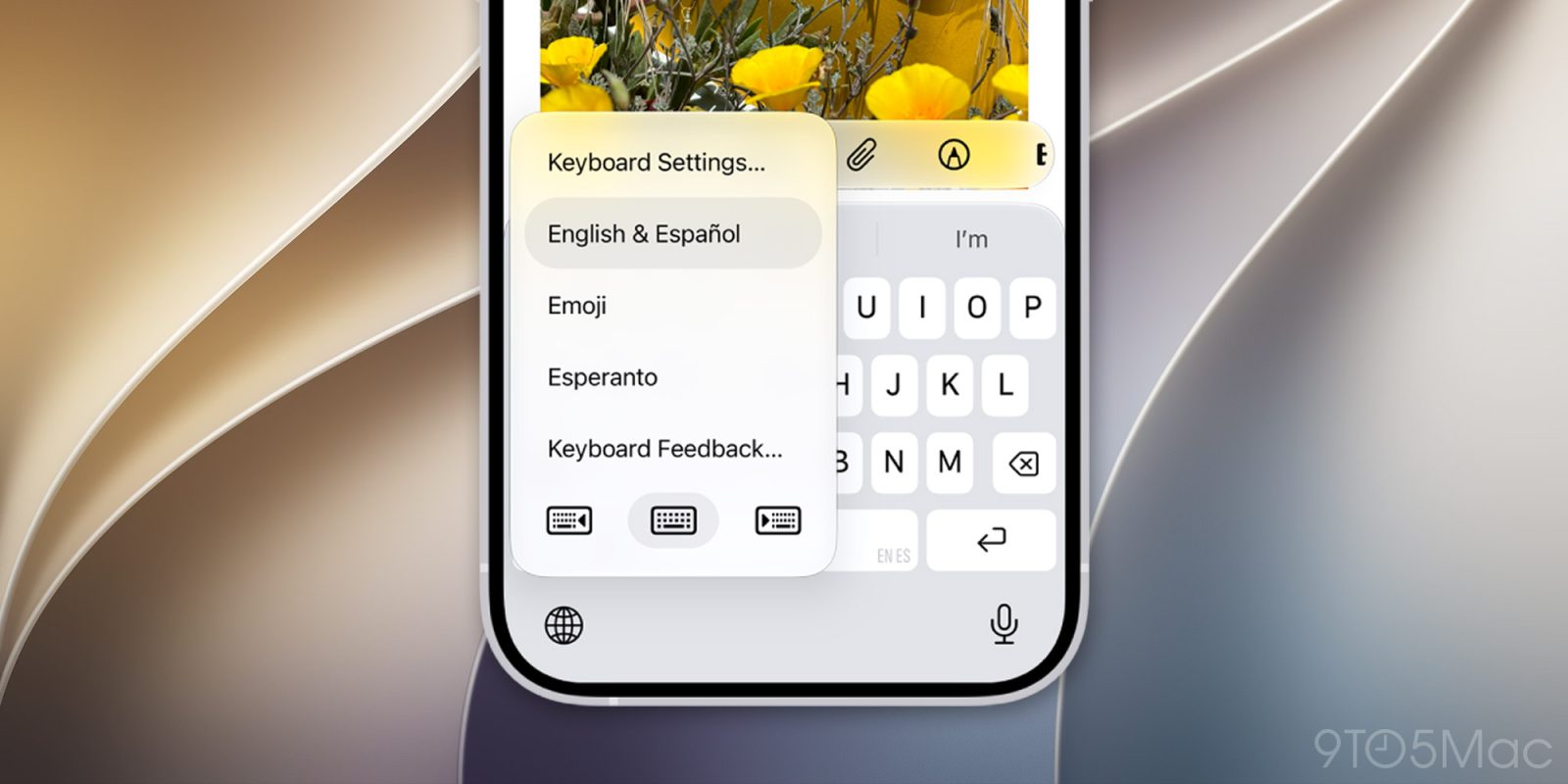
For instance, "Multilingual Typing" in iOS 27 allows users to switch between languages seamlessly without having to manually change keyboard settings. This is a complex task for a neural engine, as it requires the device to recognize the linguistic structure of the input in real-time. By expanding this to 30 additional variants, Apple is utilizing its proprietary silicon (the A-series and M-series chips) to process these complex models locally, ensuring that user privacy remains intact—a cornerstone of Apple’s marketing and operational philosophy.
Broader Impact and Market Implications
The economic implications of this update are substantial. By increasing the utility of the iPhone and iPad in non-English speaking regions, Apple is effectively expanding its total addressable market. In many developing nations, the smartphone is the primary computing device. Providing a robust, localized experience ensures that Apple devices remain competitive against lower-cost Android alternatives, which have historically been quicker to adopt a wider variety of regional languages.

Furthermore, the inclusion of "Visual Look Up" in these new languages is particularly noteworthy. This feature, which allows users to identify objects, plants, landmarks, and art through the camera, relies on computer vision trained on massive datasets. Adding language support to this feature implies that Apple has successfully tagged and classified these objects within the cultural contexts of the new regions, effectively making the iPhone an educational tool that understands the user’s surroundings in their native tongue.
Analysis: The Shift Toward Universal Digital Inclusion
Industry analysts suggest that Apple’s focus on language support is a defensive and offensive maneuver. Defensively, it prevents "platform lock-in" by competitors who might offer better local language support. Offensively, it builds long-term brand loyalty. When a user grows up using a device that understands their native dialect, they are statistically more likely to remain within that ecosystem for the duration of their professional lives.
Moreover, the diversity of the new languages—which spans across continents—indicates that Apple is moving away from a "Western-centric" development model. By prioritizing the nuances of regional variants, the company is acknowledging that language is not monolithic. A user in one region may use the same language as another, but their keyboard preferences, common typos, and predictive typing patterns may differ significantly.
Official Stance and Future Outlook
While Apple rarely comments on its internal development roadmap, the company has consistently emphasized "accessibility and inclusion" as key pillars of its design ethos. In previous developer conferences, executives have hinted that the goal is to create a "universal interface" that feels native to every user, regardless of their location.
The documentation update serves as a signal to developers as well. With the API support now officially rolled out, third-party developers can tap into these localized dictionaries and keyboards to enhance their own applications. This creates a "force multiplier" effect: when Apple updates its system-level language support, the entire ecosystem of apps on the App Store becomes more accessible to global users simultaneously.

Conclusion
The expansion of language support in iOS and iPadOS 27 is a technical achievement that carries significant geopolitical and economic weight. By ensuring that over 30 new languages are supported at a deep system level, Apple is reinforcing its position as a global leader in user-centric technology.
As the digital world continues to shrink, the divide between those who can access advanced features and those who cannot is narrowing. For millions of users, this update is more than just a list of new supported characters or dictionary entries; it is an invitation to engage with the full power of their devices in a language that feels personal and accurate.
For those interested in the specific technical requirements or the full list of supported territories, Apple’s official "Feature Availability" page remains the primary source of truth. As we look toward future iterations of iOS, it is highly probable that this trend of aggressive localization will continue, further bridging the gap between global users and the technology that powers their daily lives. The ongoing investment in linguistic diversity is a testament to the reality that in the modern tech era, software that speaks your language is the most valuable tool of all.