AWS Builder Center Launches Dedicated Mobile App Alongside Interactive Community Polls and the Zero to Shipped Hackathon

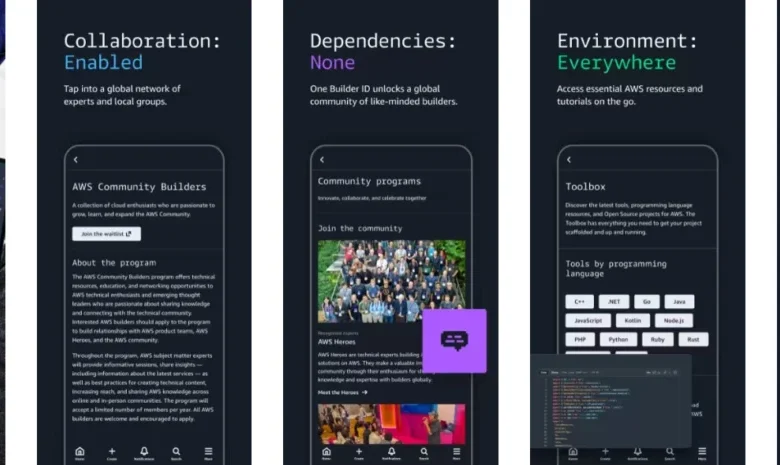
The Amazon Web Services (AWS) developer ecosystem has entered a new phase of mobile accessibility and community engagement with the official worldwide rollout of the AWS Builder Center mobile application. Available now on both the Apple App Store for iOS and the Google Play Store for Android, the new application aims to bridge the gap between desktop-bound cloud development and the increasingly mobile lifestyle of modern software engineers. Designed to integrate seamlessly with the broader AWS infrastructure, the platform allows developers, systems architects, and cloud enthusiasts to remain continuously connected to trending technical discourse, educational curricula, and hands-on laboratory environments directly from their smartphones or tablets.
The launch addresses a long-standing logistical challenge for technical professionals who frequently commute or travel. By eliminating the necessity of opening a laptop or navigating constrained mobile browser tabs, the application streamlines how developers consume documentation, track community updates, and manage professional development during sporadic pockets of free time. This strategic expansion reflects a broader industry trend toward ubiquitous computing platforms, where enterprise tools and developer ecosystems must meet users wherever they happen to be working or traveling.
Core Architecture and Mobile Feature Set
At the technical heart of the new mobile application is deep integration with the AWS Builder ID authentication system. By leveraging a single secure sign-in across multiple sessions, users can maintain continuous access to their personalized feeds, preferences, and developmental resources without repeatedly authenticating.
Once authenticated, users gain immediate access to a comprehensive suite of developer-centric features:
Content Consumption and Discovery: The application curates trending technical articles, deep-dive architectural tutorials, and thought-leadership pieces written by members of the global builder community. Users can follow specific contributors, including officially recognized AWS Heroes, AWS Community Builders, and local User Group Leaders, ensuring their curated feeds align precisely with their technological specializations and geographic interests.
Educational Integration: Through native access to more than 600 AWS Skill Builder courses, the platform transforms idle transit time or waiting periods into productive micro-learning sessions. Developers can explore structured learning pathways, review cloud fundamentals, and study advanced architectural patterns without tethering themselves to a traditional workstation.
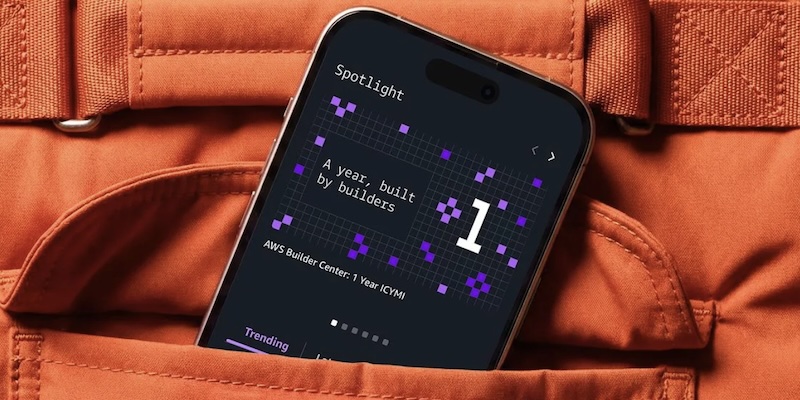
Hands-On Sandbox Environments: Perhaps the most powerful utility integrated into the mobile app is the ability to manage and interact with hands-on workshops backed by free cloud sandbox environments. Developers can provision resources, verify configurations, and test code snippets on the go, accelerating the experimentation phase of cloud-native application development.
Event Management and Networking: The application provides real-time access to the Builder Loft event calendar. Users can track upcoming local meetups, webinars, and hackathons, and set up customizable push notifications for subscribed topics, specific communities, or geographic regions.
Direct Product Feedback Channels: Bridging the gap between the end user and internal product engineering teams, the app incorporates the AWS Wishlist feature. This functionality empowers developers to submit formal product feature requests, report documentation gaps, and offer constructive feedback directly to the teams responsible for building and maintaining AWS services.
Expanding Community Engagement Through Interactive Polls
Alongside the mobile application rollout, the AWS Builder Center web and mobile ecosystems have introduced a native polling feature designed to foster deeper quantitative and qualitative discourse within the developer base. Accessible directly from the main Home feed, the tool enables any community member to pose targeted technical or architectural questions to their peers.
Creators can formulate a question, define between two and five distinct multiple-choice answer options, and establish a definitive expiration deadline. Once published, community members can cast their votes anonymously. The platform automatically aggregates the incoming data, updating percentages and vote counts in real time. To ensure that quantitative data is accompanied by contextual reasoning, the polling feature integrates a threaded comment section directly beneath each active poll, allowing developers to debate architectural trade-offs, share deployment anecdotes, and analyze the resulting metrics collaboratively.
To preserve user privacy and maintain unbiased survey conditions, voter identities remain strictly confidential; creators only have access to aggregated statistics and percentage distributions. Analysts note that this addition transforms the Builder Center from a purely static consumption portal into an active research and feedback mechanism, allowing developers to gauge industry sentiment regarding specific programming languages, containerization strategies, serverless architectures, and DevOps methodologies instantly.
The Zero to Shipped Hackathon: Fueling Autonomous Development

Complementing the platform updates, AWS has officially opened registration and project submissions for the Zero to Shipped hackathon. Running from September 18 through October 2, the competition challenges developers to harness the capabilities of modern coding assistants and autonomous development agents to conceptualize, build, and deploy production-ready applications directly onto the AWS cloud infrastructure.
The hackathon boasts a total prize pool of $28,000, designed to incentivize both rapid prototyping and robust production deployment. According to contest parameters, five distinct winning projects will be selected by a panel of technical judges. Each winning team or individual will be awarded $5,000 in direct AWS credits—enabling them to scale their infrastructure without immediate financial overhead—alongside an exclusive AWS Builder swag bundle.
The core premise of the Zero to Shipped hackathon aligns with the industry-wide shift toward AI-assisted software engineering. By encouraging participants to connect their preferred coding agents to AWS APIs and services, the event explores the limits of autonomous software delivery. Competitors must move beyond local development environments, ensuring their applications successfully build and ship live in a cloud environment within the strict two-week window. This focus on live deployment underscores the practical utility required of modern developers, rewarding those who can successfully bridge generative AI tooling with secure, scalable cloud architectures.
Strategic Implications for the Cloud Ecosystem
Industry analysts point to these simultaneous rollouts—the mobile application, community polls, and AI-focused hackathons—as a coordinated effort by Amazon Web Services to solidify its developer mindshare in an increasingly competitive cloud market. As Microsoft Azure, Google Cloud Platform, and specialized platform-as-a-service (PaaS) providers vie for the loyalty of software engineers, community engagement and frictionless developer tooling have emerged as critical differentiators.
By migrating the Builder Center into the pockets of millions of developers via iOS and Android devices, AWS ensures that its ecosystem remains top-of-mind throughout the entire software development lifecycle. The ability to read documentation on a morning commute, provision a sandbox environment during a lunch break, vote on architectural preferences via community polls, and deploy an AI-generated application to a live cloud endpoint creates a continuous loop of engagement.
Furthermore, the emphasis on peer-to-peer knowledge sharing through polls and direct product feedback channels demonstrates a commitment to listening to the grassroots developer community. As cloud architectures grow exponentially more complex—spanning multi-region deployments, serverless microservices, and advanced machine learning pipelines—the demand for accessible, peer-validated educational content and rapid prototyping incentives has never been higher.
With the global release of the AWS Builder Center application, the immediate commencement of the Zero to Shipped hackathon, and the integration of real-time polling analytics, AWS continues to redefine how cloud developers learn, build, and collaborate in a mobile-first, AI-augmented era.
Related posts: