Amazon Web Services Expands Enterprise AI Portfolio with Next-Generation GPT-6 and Claude 5.5 Models on Amazon Bedrock

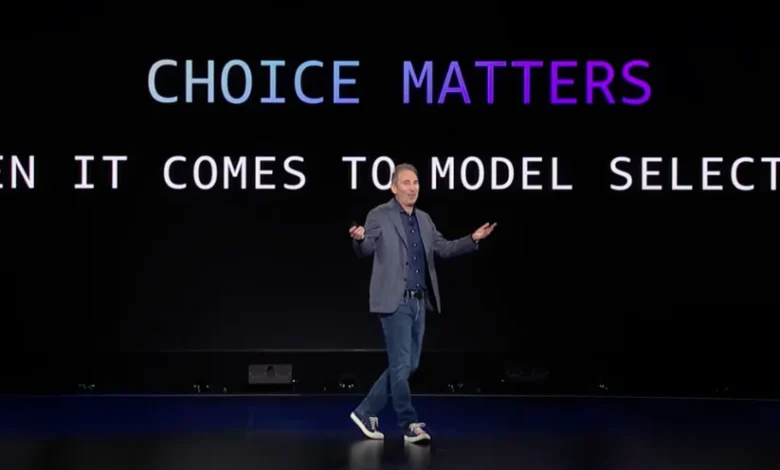
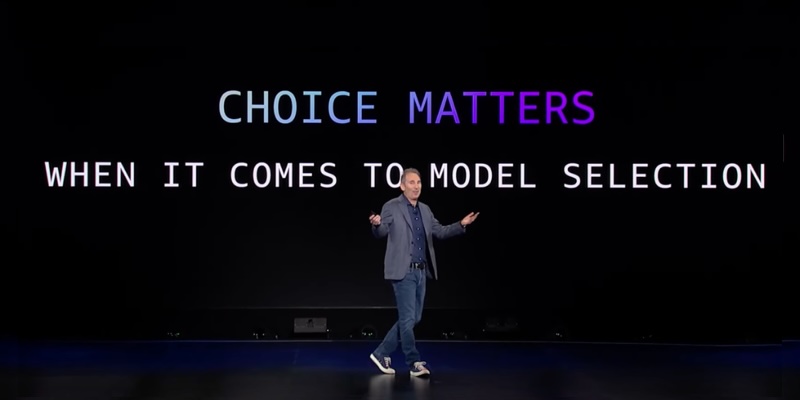
The landscape of enterprise artificial intelligence underwent a significant shift last week with the integration of cutting-edge frontier models onto Amazon Bedrock. Amazon Web Services (AWS) announced the availability of OpenAI’s GPT-6 Sol and GPT-6 Luna, alongside Anthropic’s Claude Opus 5.5. This strategic expansion underscores a broader industry evolution: rather than relying on a monolithic approach to artificial intelligence, organizations are increasingly demanding granular control over model selection to balance intelligence, latency, and cost-efficiency.
The newly introduced models arrive at a critical juncture for enterprise technology adoption. As businesses scale their generative AI implementations from proof-of-concept stages to production-grade, mission-critical workflows, the primary architectural question has shifted from absolute capability to operational optimization. Enterprises now evaluate models based on exact cost-per-token metrics, inference latency, and task-specific alignment, driving cloud providers to curate highly specialized model portfolios.
Main Facts and Model Specifications
The latest additions to the Amazon Bedrock ecosystem are engineered to address specific operational bottlenecks across diverse enterprise workloads. OpenAI’s GPT-6 Sol and GPT-6 Luna represent a tiered approach to application performance, offering distinct advantages over their GPT-5.6 predecessors.
GPT-6 Sol has been architected specifically for demanding, recurring development and operations (DevOps) environments. It handles complex, multi-step programming tasks, automated code refactoring, and real-time infrastructure troubleshooting with enhanced accuracy. Crucially, OpenAI and AWS have priced GPT-6 Sol significantly lower than the previous generation, addressing enterprise concerns regarding the long-term total cost of ownership for high-tier intelligence models.
Conversely, GPT-6 Luna is optimized for high-volume, focused, and repeatable tasks. Designed to handle routine enterprise automation—such as automated data categorization, standard customer query resolution, and batch document processing—Luna delivers rapid inference times while maintaining low operational expenditures. This makes high-frequency, high-volume automated workflows economically viable at scale.
Complementing the OpenAI releases, Anthropic’s Claude Opus 5.5 marks the debut of the Claude 5.5 product family on AWS. Claude Opus 5.5 introduces advanced token efficiency, executing complex instructions and long-running analytical tasks utilizing fewer tokens than its predecessor, Opus 5. The model is specifically tuned for agentic coding—where autonomous software agents write, test, and deploy code independently—and deep analytical reasoning over extensive corporate datasets.
Chronology and Strategic Deployment
The integration of these models on Amazon Bedrock follows a rapid acceleration in the deployment cadence of foundational models throughout 2025 and 2026. Over the past year, enterprise demand for multi-model architectures has prompted cloud providers to streamline integration pipelines, reducing the time-to-market for newly released frontier models from months to mere days.
Anthropic’s release of Claude Opus 5.5 initiates the rollout of a broader 5.5 generation, positioning Anthropic to capture market share in autonomous software engineering and complex workflow orchestration. Meanwhile, the simultaneous introduction of GPT-6 Sol and Luna demonstrates OpenAI’s strategy to segment its offerings directly against specialized enterprise use cases, ensuring that organizations do not over-provision compute resources for simpler, repetitive tasks.
The rapid onboarding of these systems onto Amazon Bedrock highlights the platform’s architectural flexibility. By abstracting the underlying infrastructure through standardized application programming interfaces (APIs), Bedrock allows enterprise engineering teams to hot-swap models, conduct A/B testing across different model providers, and implement fallback logic without re-architecting their underlying applications.
Supporting Data and Economic Implications
The economic pressures driving enterprise AI adoption are clearly reflected in the pricing structures of the newly launched models. Historically, deploying top-tier reasoning models incurred prohibitive costs, limiting their use to executive summaries or complex exploratory queries. The introduction of GPT-6 Sol at a reduced price point compared to GPT-5.6 signals a deflationary trend in raw intelligence costs.
Industry analysts estimate that the cost of inference has dropped by an order of magnitude over the past twenty-four months, while hardware efficiency has improved through advanced quantization and specialized silicon, such as AWS Trainium and Inferentia chips. This reduction in cost enables businesses to transition from human-in-the-loop validation to fully autonomous agentic workflows, where AI systems execute multi-step business processes independently.
Furthermore, token efficiency gains, such as those demonstrated by Claude Opus 5.5, directly mitigate the hidden costs of context windows. By processing denser instructions and larger payloads with fewer tokens, enterprises save significantly on input/output (I/O) processing costs, which often constitute the bulk of recurring operational expenditure in large-scale language model deployments.
Official Responses and Ecosystem Reactions
While specific financial terms of the partnerships between AWS, OpenAI, and Anthropic remain confidential, leadership across the technology sector has emphasized the democratization of high-performance AI as a primary driver for these releases.

Cloud architects and enterprise technology leaders have responded favorably to the emphasis on model diversity. In technical forums and industry briefings, developers have highlighted that the ability to route specific sub-tasks to distinct models—such as routing a quick classification task to GPT-6 Luna while reserving Claude Opus 5.5 for deep architectural planning—significantly optimizes overall system latency.
Moreover, the concurrent advancement in cloud observability tools has kept pace with these model releases. As multi-agent systems become more prevalent, maintaining visibility into model behavior, latency bottlenecks, and cost attribution has become paramount. AWS has continued to expand its monitoring and telemetry services to track agentic workflows in real time, ensuring that enterprise compliance and security standards are maintained even as automation scales.
Broader Impact and Future Outlook
The addition of GPT-6 Sol, GPT-6 Luna, and Claude Opus 5.5 to Amazon Bedrock marks a mature phase in the enterprise artificial intelligence market. The era of the general-purpose, one-size-fits-all AI model is rapidly giving way to specialized, modular ecosystems where applications orchestrate multiple models tailored to exact functional requirements.
For AWS, expanding its managed service portfolio with these advanced models solidifies Amazon Bedrock’s position as a premier orchestration layer for enterprise AI. By insulating customers from the underlying infrastructure complexity while offering immediate access to the latest frontier models, AWS enables organizations to focus on application logic and business value rather than model maintenance.
As the industry looks toward upcoming developer conferences and the remainder of the year, the focus is expected to shift toward autonomous agent reliability, cross-model orchestration, and fine-grained cost management. Enterprises that successfully master this multi-model paradigm will be best positioned to extract sustained competitive advantage from generative artificial intelligence, transforming experimental deployments into core operational efficiencies.