AWS Weekly Roundup: Enterprise Vulnerability Management, Trainium Updates, and Generative AI Expansions

The landscape of cloud computing and enterprise technology continues to evolve at a breakneck pace, driven by the convergence of proactive cybersecurity, hardware-agnostic machine learning, and advanced generative artificial intelligence interfaces. Recent developments across Amazon Web Services (AWS) highlight a decisive shift in how organizations manage application architecture, secure critical infrastructure, and deploy localized AI models at scale. From the general availability of end-to-end vulnerability management tools to major upgrades in text-to-speech synthesis and native hardware support, enterprise technology strategies are increasingly defined by speed, security, and operational efficiency.
This week’s updates reflect a broader maturation in cloud services, where the traditional boundaries between network management, application deployment, and artificial intelligence integration are rapidly blurring. Industry leaders are no longer questioning the viability of transformative technologies like generative AI or automated remediation; instead, they are heavily focused on practical implementation, precise delivery mechanisms, and minimizing the critical windows of vulnerability that threaten global digital infrastructure.
Transforming Vulnerability Management: The General Availability of AWS Continuum
Security operations have entered a new era characterized by compressed threat timelines, where the traditional delay between the public disclosure of a software vulnerability and its active exploitation has effectively vanished. Addressing this reality, AWS has announced the general availability of AWS Continuum, an advanced vulnerability management service designed to transition security teams from reactive scanning to comprehensive, end-to-end remediation.
Unlike conventional vulnerability scanners that merely output a static list of Common Vulnerabilities and Exposures (CVEs) tagged with generic severity labels, AWS Continuum constructs a dynamic, contextual graph mapping code repositories directly to live AWS environments. By analyzing these relationships, the service assigns evidence-based risk levels and actively reproduces exploitable findings within an isolated sandbox environment. Security teams are presented with concrete proof-of-concept code rather than abstract risk metrics.
Furthermore, Continuum prioritizes issues based on how closely an active attack path approaches business-critical systems. Once a vulnerability is validated and prioritized, the system automatically generates a fix and opens a pull request for review. To maintain rigorous operational governance, remediation remains strictly gated behind human approval; engineering teams must review and merge the proposed code changes, ensuring that safety controls remain intact while dramatically accelerating the patching lifecycle.
The urgency behind tools like AWS Continuum was underscored by recent telemetry data published by Amazon Threat Intelligence. Findings from Amazon’s internal honeypot networks revealed active exploitation attempts targeting the PHP2Shell vulnerability (associated with CVE-2026-109618 and CVE-2026-109619) on October 17. Crucially, this exploitation occurred four days prior to the public disclosure of the vulnerabilities, while proof-of-concept exploit code was observed circulating globally twelve hours before the official embargo was lifted.
This empirical evidence demonstrates that relying on a multi-day patch window is no longer viable in modern threat landscapes. Consequently, incident responders and security architects are being advised to measure their vulnerability timelines from the earliest recorded exploitation attempts rather than official vendor disclosure dates. Alongside the release of Continuum, AWS has published updated AWS WAF (Web Application Firewall) mitigation rules to help organizations protect their perimeter against these specific Remote Code Execution (RCE) vectors. Currently, AWS Continuum is available in the US East (N. Virginia) and US West (Oregon) commercial regions.
Streamlining Microservices Architecture with Amazon ECS Gateway
In the domain of containerized application architecture, managing the exposure of microservices to external traffic has historically required complex coordination between networking teams and application developers. To alleviate this operational friction, AWS has introduced Amazon ECS Gateway, a new service designed to decouple network boundary management from application logic.

Under the traditional model, application teams often had to navigate intricate configurations involving load balancers, target groups, and security certificates every time a new service was exposed. Amazon ECS Gateway reimagines this workflow by empowering platform teams to define a centralized gateway encompassing organization-wide subnets, security groups, Transport Layer Security (TLS) certificates, listener settings, and AWS WAF web access control lists (ACLs).
Once the foundational network parameters are established by platform engineers, application teams can seamlessly opt in by attaching a simple gateway connector directly to their Amazon Elastic Container Service (ECS) definition. Upon connection, ECS automatically provisions an AWS Certificate Manager (ACM) certificate, assigns a unique DNS hostname, establishes listener rules, configures target groups, and applies strict security group rules that restrict inbound traffic exclusively to the designated Application Load Balancer (ALB).
The economic and architectural efficiencies of this approach are substantial. Organizations can scale densely, with up to 25 distinct microservices sharing a single ALB. The infrastructure scales dynamically; ECS provisions the initial load balancer upon the first service connection and automatically decommissions ALBs when they are no longer actively required. Furthermore, a single gateway can associate with up to 10,000 clusters, with a maximum of five gateways per cluster.
Organizations can adopt the ECS Gateway incrementally using standard UpdateService commands without disrupting existing load balancer configurations or incurring downtime. Amazon ECS Gateway is available at no additional charge in all commercial AWS regions where Amazon ECS is supported.
Expanding Machine Learning Capabilities: Trainium, SageMaker, and Bedrock
Artificial intelligence infrastructure and model customization pipelines have also received significant updates, lowering the barriers to entry for high-performance machine learning workloads while offering developers greater architectural flexibility.
Native PyTorch Support on AWS Trainium with TorchNeuron
Addressing the growing demand for specialized hardware alternatives that prevent vendor lock-in, AWS announced the public beta of TorchNeuron. This open-source PyTorch backend enables developers to execute complex machine learning models directly on AWS Trainium instances with minimal code refactoring. Instead of rewriting model architectures, developers can route workloads to Trainium hardware simply by modifying initialization code to .to('neuron'), preserving eager execution and standard torch.compile workflows.
Integrated with the Neuron Kernel Interface for custom operator development, TorchNeuron supports both Trainium2 and Trainium3 hardware instances. This release, arriving alongside the deployment of AWS Neuron 2.33, reinforces the broader strategic principle that hardware selection should not dictate or restrict future software development choices.
Advanced Model Customization via Amazon SageMaker AI
For organizations seeking to fine-tune foundational models without managing underlying GPU infrastructure, Amazon SageMaker AI has introduced generally available training sessions. This capability grants developers granular control over the post-processing and training loops—including custom loss functions and specialized reward signals—while SageMaker AI autonomously manages GPU allocation, distributed execution, fault recovery, and checkpoint storage.
Billing is calculated strictly on the basis of processed tokens, with meters pausing while custom reward functions evaluate specific training batches. Alongside this capability, SageMaker AI has expanded its ecosystem support to include advanced models such as Muse Glimmer, Qwen 3.8, and Ministral 3, providing enterprises with a diverse toolkit for specialized domain training.

Structured Outputs and Conversational AI Enhancements
In the realm of managed generative AI, Amazon Bedrock has rolled out native support for structured outputs across all Anthropic Claude models. Accessible via both bedrock-runtime and bedrock-mantle endpoints, this feature allows developers to enforce strict JSON schema compliance directly at the model inference level. By eliminating the need for complex custom parsing scripts, retry logic, and post-processing validation routines, enterprises can automate high-stakes, precision-dependent workflows—such as financial report auditing, clinical data parsing, and automated support ticket routing—with dramatically higher reliability.
Simultaneously, Amazon Polly has delivered a major upgrade to its Generative text-to-speech engine. The expanded catalog now encompasses 57 distinct generative voices spanning 11 languages and 25 locales, introducing 14 new voices across 9 locales, including Hindi and Finnish for the first time. Notably, the update introduces two new Brazilian Portuguese voices, Leo and Carolina. Implemented as a drop-in architectural upgrade, the enhancement preserves existing API structures, voice names, and pricing models while delivering significantly more natural, expressive audio output.
Infrastructure Modernization, Database Migration, and Autonomous Agents
Beyond core machine learning and security releases, recent AWS announcements highlight ongoing advancements in database modernization, serverless caching, and autonomous agent orchestration.
In enterprise database management, large-scale migrations continue to demonstrate the viability of cloud-native architectures for mission-critical financial systems. Highlighting this trend, U.S. Bank successfully completed the migration of four massive Oracle Exadata databases—totaling approximately 119 terabytes of data—to Amazon RDS for Oracle. Utilizing a configuration-driven pipeline powered by Oracle XTTS, AWS DataSync, and Amazon EFS, the initial baseline data transfer was accomplished in approximately seven days with zero data loss. Subsequent database cutovers averaged roughly four hours each over a bandwidth-constrained AWS Direct Connect link.
In serverless caching, Amazon ElastiCache Serverless for Valkey has introduced native support for zero-downtime online migrations. Organizations can now seamlessly transition self-managed Valkey or Redis OSS databases running on Amazon EC2 directly into ElastiCache Serverless without employing third-party replication tools. The migration process allows teams to synchronize data continuously and execute automated or manual cutovers while returning zero errors to client applications throughout the transition.
Meanwhile, developer tooling for autonomous agent systems has advanced with the introduction of AWS Agent Registry. Operating as a managed catalog for Model Context Protocol (MCP) servers, agents, and specialized skills, the registry allows orchestration engines to discover approved capabilities dynamically at runtime rather than hardcoding tools during the build phase. Security is maintained by ensuring that runtime discovery returns connection metadata while strictly withholding sensitive invocation credentials.
Complementing these architectural advancements, emerging discussions around "tokenomics" for coding assistants have emphasized the unique cost structures associated with AI-driven development tools. Because coding assistants frequently replay expanding interaction transcripts on every turn, infrastructure costs scale differently than standard batch inference. New open-source benchmarking tools enable engineering organizations to evaluate model, harness, and hosting configurations against internal codebases, establishing cost-and-quality performance frontiers tailored to specific enterprise needs.
Upcoming Industry Events and Global Community Engagement
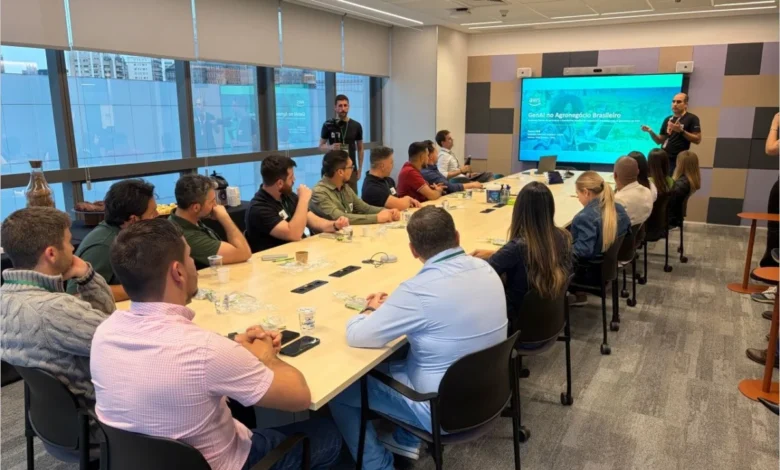
As the 2026 technology calendar enters its final quarter, global engagement within the cloud computing community remains robust. The AWS Brazilian community season concluded recently with AWS Community Day Brasil Norte, hosted in Belém on October 31, bringing together regional developers, architects, and technology leaders to discuss localized implementation strategies and cloud adoption trends.
Looking ahead, preparation is well underway for the flagship annual conference, AWS re:Invent, scheduled to take place from November 30 to December 4 in Las Vegas, Nevada. Featuring over 2,200 specialized technical sessions, workshops, and keynote presentations, the event serves as the primary global forum for unveiling major platform capabilities, detailing architectural best practices, and charting the strategic direction of cloud and artificial intelligence technologies for the coming year. Registration and session catalog reservations remain open as global engineering teams finalize their schedules for the premier industry gathering.
Related posts: