Mastering Autonomous Engineering: Inside Google Cloud’s Blueprint for Agent Harnesses and Production-Ready AI Workflows

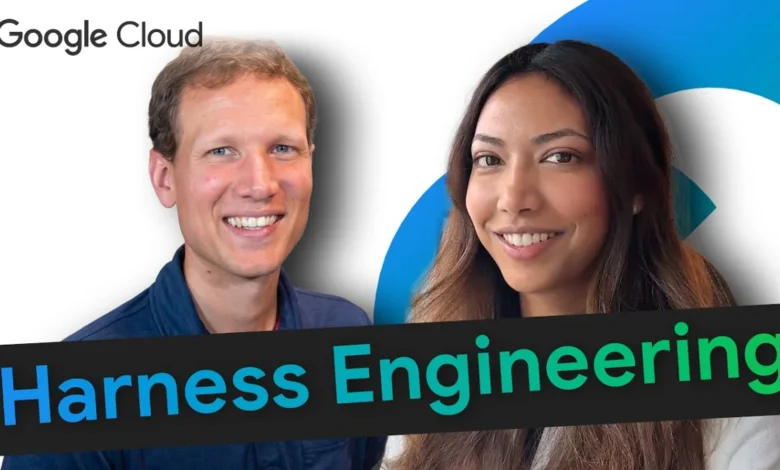
The rapid evolution of artificial intelligence in software engineering has shifted the primary challenge from raw model capability to operational execution. In a recent episode of The Agent Factory, developer relations engineers Mollie Pettit and Smitha Kolan explored the realities of deploying fully autonomous coding agents with Ryan Lopopolo, a software engineer at Google Cloud and the innovator who coined the term "agent harness." The discussion detailed a paradigm shift in software development: instead of treating large language models (LLMs) as chat-based assistants, engineering teams are learning to build robust computational environments that turn probabilistic models into deterministic, highly reliable automation partners.
Defining the Agent Harness and the Death of the Manual Editor
At its core, an AI agent is defined as an LLM combined with an agent harness. While an unassisted model can answer abstract questions or generate isolated snippets of code, it lacks the contextual awareness required to interact with live file systems, check real-time system states, or execute complex multi-step workflows. The harness acts as the computational wrapper—handling intent detection, querying live tools, bundling relevant context, and passing structured data back to the model.
This architecture underpins a broader transition in how software is written. Lopopolo revealed that he has maintained a streak of writing zero manual lines of production code since May of the previous year, a practice he sustained through his transition to Google Cloud. In this new workflow, software engineers operate primarily at the level of natural language specifications. Rather than manually authoring syntax or debugging individual lines of code, engineers review final artifacts—such as pull requests, architectural documentation, and data configurations—to ensure they meet organizational and functional standards.
Harness Engineering versus Prompt Engineering
The central thesis of modern harness engineering is that upfront infrastructure investment frees developers from the inefficiencies of trial-and-error prompting. Lopopolo introduced the concept of "prompt and pray" to describe the ineffective practice of pasting massive walls of text into a prompt box and hoping for a correct outcome.
By contrast, when a repository is equipped with structured documentation, clear interfaces, and discoverable command-line tools, the model leverages its harness to dynamically fetch the context it needs. Lopopolo emphasized his aspiration to be an "incredibly lazy prompter," noting that meticulous environment design allows the model to figure out execution details independently. This approach reduces cognitive overhead and ensures that engineering efforts compound over time rather than becoming obsolete with every subsequent frontier model upgrade.
Shifting Left: Guardrails and Environmental Best Practices
When autonomous agents encounter failures, traditional development instincts often lead engineers to tweak prompts or rerun the task. However, Lopopolo argued that this reactive approach fails to scale across engineering organizations. Instead, teams must "shift left" by moving interventions earlier into the software development lifecycle, where automated safeguards are cheaper and more reliable.
Shifting left involves embedding organizational standards directly into the development environment. Tools such as static linters, comprehensive unit test suites, and explicitly defined workspace guidelines (like AGENTS.md configuration files) act as durable memory for the agent. These components function as automated guardrails, ensuring that the model stays on track without requiring constant human intervention or micro-management.

Furthermore, integrating established command-line tools aligns the agent’s operations with patterns heavily represented in pre-training data. This design choice leverages determinism, shifting the burden of context aggregation away from the probabilistic reasoning of the model and onto reliable, deterministic software systems. Lopopolo also highlighted a practical formatting technique for context efficiency: structuring markdown files so that link anchors sit directly beneath corresponding prose blocks. This simple adjustment prevents context clutter and mitigates the "lost in the middle" retrieval degradation often observed in long-context models.
Expanding the Agentic Loop and Curated Team Leverage
Achieving high levels of autonomy requires designing workflows that mirror human organizational cadence. Software is rarely produced through single-shot execution; rather, it is built through iterative refinement. Harness engineering uses tightly scoped, reviewable pull requests to narrow an agent’s state space. By stacking high-confidence changes end-to-end, engineering supervisors can gradually expand the autonomous loop size, building institutional trust over time.
This incremental trust model paves the way for executing large-scale initiatives, including complex language migrations and massive infrastructure overhauls. Moreover, Lopopolo compared the integration of diverse team expertise into an agentic system to building out an RPG character sheet. When a React architect or a backend infrastructure specialist contributes domain knowledge and documentation to the repository, the agent absorbs those strengths. Consequently, the agent functions as a versatile producer of work, capable of dynamically calling upon specialized front-end or back-end capabilities on demand.
Technical Demonstrations: Building Custom Harnesses
Following the theoretical overview, Billy Jacobson provided a technical walkthrough on constructing custom agent harnesses, emphasizing that a great engineer must understand the underlying mechanics of a framework rather than treating it as a black box. Jacobson demonstrated three distinct harness architectures tailored to different operational needs:
- Linear Agent Harness: Designed for deterministic, single-pass execution where looping is unnecessary. This pattern suits targeted file transformations or single-turn data analyses requiring identical execution paths every time.
- Closed-Loop Agent Harness: Built for iterative, test-driven repair. When an agent applies a code edit that fails a unit test, the runtime captures standard failure logs and stack traces, feeding those diagnostics back into the agent’s memory. The cycle continues until tests pass, constrained by a strict iteration ceiling to prevent infinite loops and runaway compute costs.
- Guardrail Harness with Google’s Agent Development Kit (ADK): Provides built-in memory management and execution safeguards. The ADK uses context compaction to summarize older conversational turns, preventing context window bloat during extended debugging sessions. Additionally, interception hooks inspect and filter shell actions before execution, automatically blocking high-risk operations such as recursive file deletions or unauthorized remote git pushes.
The 3-Layer Agent Development Stack
Expanding on practical implementation, Smitha Kolan outlined the necessity of balancing the three foundational layers of the agent stack—Model, Harness, and Knowledge—rather than relying solely on heavier reasoning models.
- Layer 1 (Model): Utilizing lightweight, responsive inference engines such as Gemini 3.8 Flash. High-frequency agentic loops often execute between 20 and 60 sequential hops per task. A cost-effective and low-latency model makes real-time loops practical at enterprise scale.
- Layer 2 (Harness): Implementing orchestration environments like Google Antigravity. Using commands such as
/boost, developers can spin up orchestrators that coordinate specialized sub-agents in parallel, concluding with an independent audit pass before writing files. - Layer 3 (Knowledge): Injecting precise domain context through community-driven repositories like the Google Skills Repository. With over 100 curated domain packages covering Google Cloud, Firebase, Flutter, and Maps, this harness-agnostic layer prevents models from hallucinating proprietary configurations.
Implications and Industry Outlook
The insights shared by the Google Cloud engineering team point to a fundamental transformation in enterprise software development. By eliminating capability overhang—the gap between theoretical AI capabilities and practical production utility—organizations can scale their engineering output exponentially.
As frontier models continue to evolve, the advice to avoid bespoke, over-scaffolded custom frameworks remains critical. By focusing investments on robust tools, deterministic verifiers, and well-curated context, development teams ensure their engineering practices remain resilient, adaptable, and continuously aligned with the future of autonomous systems.
Related posts: