The landscape of digital content creation underwent a radical transformation in 2022, characterized by the widespread adoption of artificial intelligence (AI) as a primary tool for drafting, editing, and optimizing written material. As businesses face increasing pressure to maintain high-frequency publishing schedules, the reliance on manual content creation has increasingly yielded to sophisticated machine learning models capable of mimicking human writing styles. This shift is driven by the necessity for operational efficiency, with industry data suggesting that AI-augmented workflows can reduce content production time by as much as 50% to 80% while maintaining acceptable quality standards.

The emergence of these tools is not a recent phenomenon but the culmination of years of development in Natural Language Processing (NLP). Large Language Models (LLMs), such as those powered by GPT-3 and subsequent architectures, have moved from experimental research projects into the commercial mainstream. Today, companies ranging from independent startups to multinational corporations utilize these platforms to handle diverse tasks, including search engine optimization (SEO), social media engagement, and technical documentation.
The Evolution of Automated Content Generation
The chronology of AI writing tools began with rudimentary predictive text and keyword-stuffing software. However, the paradigm shifted around 2020-2021 when models began to demonstrate a nuanced understanding of context, tone, and intent. By 2022, the market reached a saturation point, with dozens of competing platforms offering specialized solutions. The current generation of tools is designed to bridge the gap between algorithmic speed and the creative flair required for effective marketing.
1. Jasper AI: The Industry Standard for Versatility
Jasper, formerly known as Jarvis, represents the high-end tier of AI writing assistants. It utilizes advanced machine learning to adapt to specific brand voices. Its core strength lies in its "Boss Mode," which allows for the creation of long-form content, such as blog posts and whitepapers, by providing a cohesive narrative structure. In 2022, its integration with SurferSEO made it a preferred choice for teams prioritizing organic search rankings.
2. Copy.ai: Efficiency for Marketing Teams
Copy.ai has positioned itself as the go-to utility for short-form marketing assets. By offering over 90 templates, the tool reduces the "blank page syndrome" that plagues many copywriters. Data suggests that its primary user base consists of social media managers and advertising agencies who require rapid iterations of ad copy, email subject lines, and landing page headlines. Its architecture focuses on high-conversion outputs rather than long-form storytelling.

3. Frase: The Convergence of AI and SEO
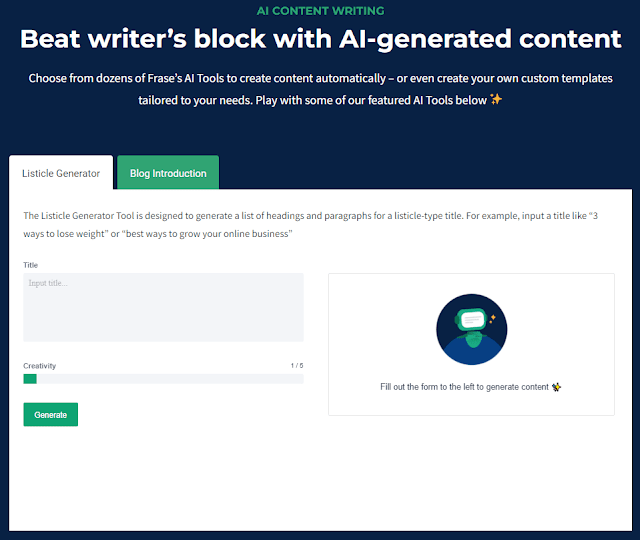
Frase distinguishes itself by focusing on the research phase of content creation. Unlike tools that simply generate text, Frase analyzes the top-ranking search results for a given keyword, identifying the gaps in existing content. By providing an automated content brief and an optimization dashboard, it aligns machine-generated text with the specific requirements of search engine algorithms. This makes it an essential tool for companies prioritizing high-volume SEO traffic.
4. Article Forge: Scalability through Automation
Article Forge operates on a keyword-input model, differing significantly from the interactive drafting style of Jasper or Copy.ai. Its primary advantage is volume; it is engineered to produce complete, end-to-end articles based on a single prompt. This approach is highly effective for large-scale content operations where speed and throughput are prioritized over deep, human-led creative refinement.
5. Rytr: Accessible Assistance
Rytr has gained traction as a cost-effective solution for solopreneurs and students. Its minimalist interface hides a robust engine capable of generating content across various tones and formats. While it lacks some of the complex, enterprise-level integrations of its competitors, its inclusion of a built-in plagiarism checker and its ability to maintain grammatical integrity make it a reliable entry-point for smaller organizations.
6. Writesonic: Balanced Feature Sets
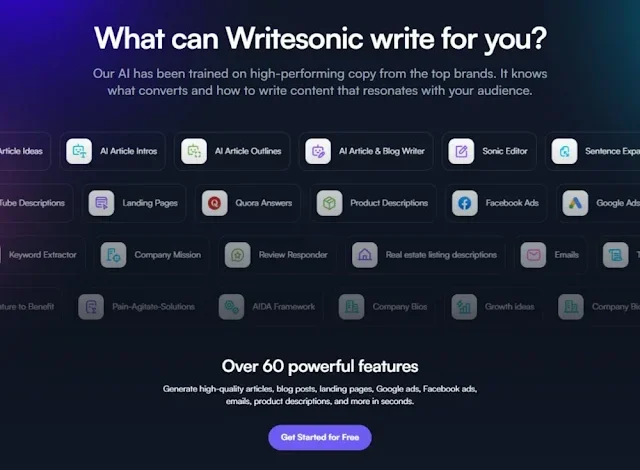
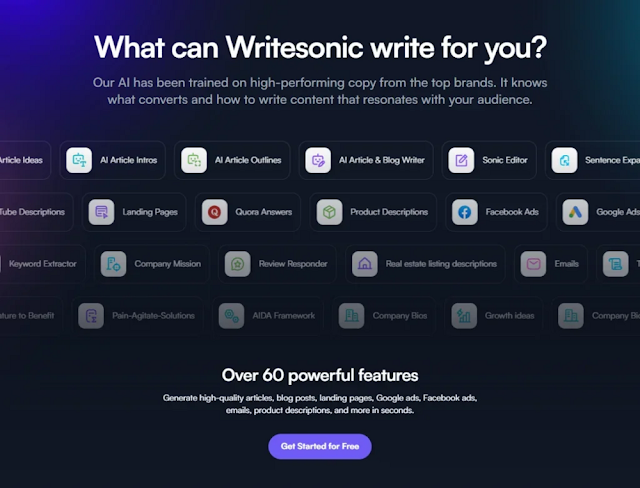
Writesonic offers a compelling middle ground between technical SEO capabilities and creative writing. It includes specialized modules for e-commerce, such as product description generators, and offers a robust long-form writing assistant. Its integration with Grammarly and various plagiarism detection services ensures that the generated text adheres to professional publishing standards.

7. CopySmith: Enterprise-Grade Collaboration
CopySmith caters to the needs of larger marketing teams by emphasizing collaboration. Its interface is built to support bulk content creation and team workflows, making it a staple for retail brands that need to generate thousands of unique product descriptions. By automating the bulk creation process, it allows creative directors to focus on strategy rather than the minutiae of product specs.
8. Hypotenuse.ai: Specialized E-commerce Solutions
Hypotenuse.ai excels in the e-commerce sector, where the sheer volume of products often makes manual description writing unsustainable. The tool utilizes data-driven inputs to generate accurate, persuasive, and SEO-friendly product pages. Its ability to maintain consistent tone across vast inventories is its primary differentiator in a crowded market.

9. Kafkai: Niche-Specific Generation
Kafkai utilizes a unique approach to content generation by training its models on specific niches. This allows for a higher degree of subject-matter accuracy compared to generalized models. For users in highly technical or specialized fields, such as finance or legal services, Kafkai provides a level of depth that is often absent in more generalist AI platforms.
10. Peppertype.ai: Intuitive Content Creation
Peppertype.ai focuses on user experience and the ease of generating diverse content types. By utilizing a "virtual content assistant" approach, it allows users to specify the type of content they need—be it a LinkedIn post, a blog outline, or a tweet—and provides tailored suggestions. Its rapid adoption in 2022 highlights a growing market demand for simplified, task-oriented AI tools.
Implications for the Future of Work
The proliferation of these tools has sparked an industry-wide debate regarding the role of the human writer. Professional organizations and content strategists argue that while AI is adept at pattern matching and linguistic structure, it lacks the ability to provide genuine critical insight or original thought. The prevailing consensus is that the future of content production lies in a "human-in-the-loop" model, where AI acts as an accelerator for the drafting process, while humans provide the oversight, fact-checking, and strategic direction.
From an economic perspective, the shift toward AI content generation is expected to continue as the cost of these services stabilizes and their accuracy improves. Businesses that fail to integrate these tools into their workflows risk being outpaced by competitors capable of producing high-quality content at a fraction of the time and cost.

However, the reliance on AI also introduces risks, particularly regarding data privacy, potential copyright infringement, and the homogenization of online content. As search engines like Google continue to update their algorithms to prioritize helpful, human-centric content, the challenge for creators will be to use AI to enhance, rather than replace, the creative process. The next phase of development in this sector will likely focus on "multimodal" AI, which can generate not just text, but images, video, and audio, further automating the digital marketing lifecycle. As these tools become more sophisticated, the focus for professionals must remain on quality control and the preservation of brand authenticity.